Mount Qiyun Shan
Mount Qiyun Shan
Welcome to Mount Qiyun Shan, a hidden gem in Anhui Province that discerning travelers are now adding to their China itineraries.
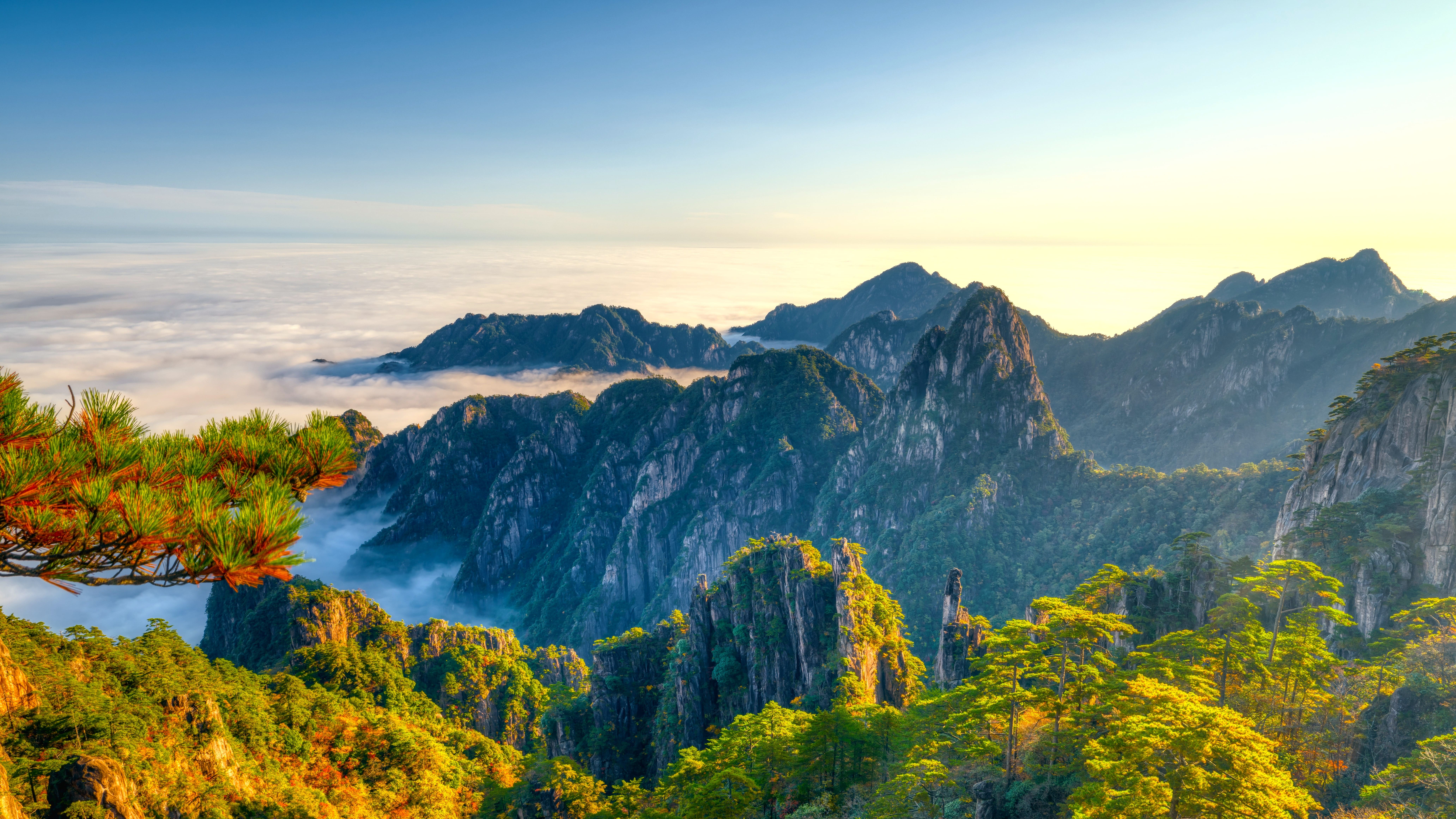
Imagine a mountain where mist clings to red sandstone cliffs, where the sound of temple bells echoes through pine forests, and where Taoist monks have meditated for centuries in caves carved into the living rock. Welcome to Mount Qiyun Shan, a hidden gem in Anhui Province that discerning travelers are now adding to their China itineraries.
Less crowded than its neighbor Huangshan, Qiyun Shan nonetheless offers an equally captivating experience. Here, there are no packed cable cars or dense crowds. Just you, the trails, the temples, and an atmosphere steeped in timeless spirituality.
Mount Qiyun Shan at a glance
Location: Anhui Province (Xiuning District), eastern China
Altitude: 585 meters at the summit
Status: One of China's four sacred Taoist mountains
Distance from Huangshan: Approximately 33 km from the city (Tunxi) and 50 km from Huangshan's peaks
Recommended visit duration: 1 day (or 2 days including surrounding villages)
Best season: Spring (March-May) and autumn (September-November)
History and spirituality: a sacred mountain for centuries
Mount Qiyun Shan is one of China's four great Taoist mountains, alongside Wudang, Qingcheng, and Wuyi. Its name literally means "mountain as high as the clouds"—an image that perfectly captures its Danxia relief, with red sandstone peaks often shrouded in mist.
The site's Taoist history dates back to the Tang Dynasty (618-907 AD), when the first hermits arrived to practice their spiritual art. During the Song and Ming periods, the influence of Taoism here reached its zenith. Dozens of temples, hermitages, and pavilions were constructed, attracting pilgrims, scholars, and emperors alike.
The site today houses over 600 rock inscriptions carved into the stone over a thousand-year period. These calligraphed texts, veritable open-air archives, stand as a fascinating testament to the devotion and artistic mastery of past generations.
Must-see sites to visit
Zhenxian Palace (Zhenxian Gong)
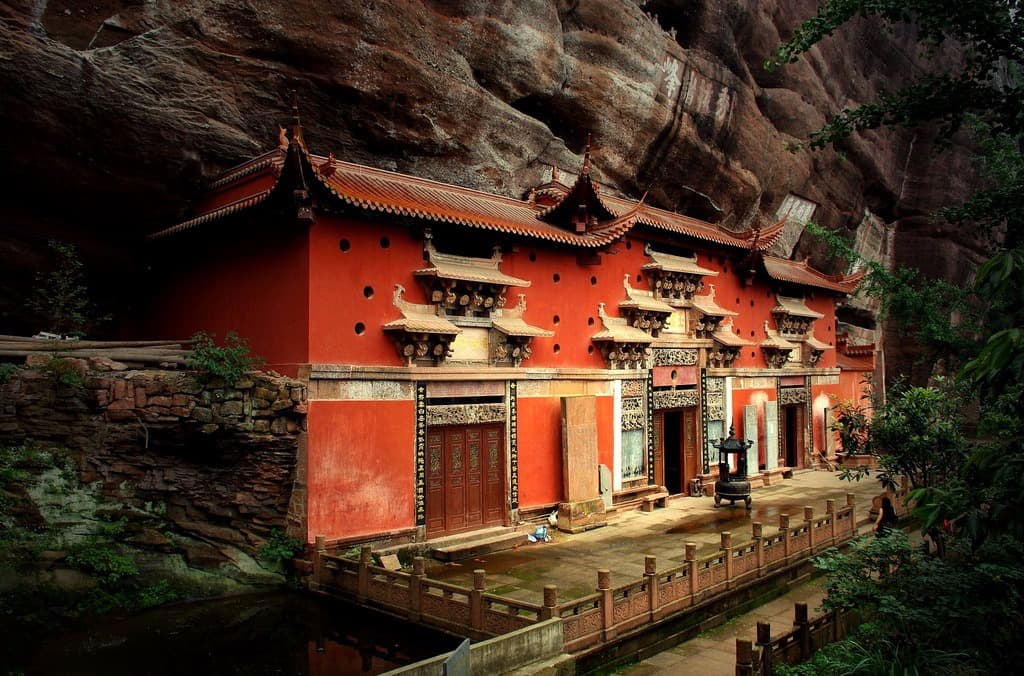
This is the spiritual heart of Qiyun Shan. The main temple, nestled in a natural alcove of the cliff face, impresses with its seamless integration into the rock. Golden Taoist statues, wisps of incense, and vibrant offerings create a deeply reverent atmosphere. Arrive early in the morning to enjoy the calm and observe the ritual practices of resident monks.
Red sandstone cliffs and caves
Qiyun Shan is renowned for its Danxia relief featuring striking orange-red sandstone cliffs that seem to burn in the setting sun. These spectacular geological formations shelter numerous natural caves, transformed into chapels or retreats by Taoist hermits. The Moon Cave (Yue Hua) and the Immortal's Cave rank among the most visited. Their walls are covered with ancient inscriptions and carvings.
Villages at the mountain's base
The Hengjiang River flows at the mountain's foot. The village below the site (Qiyunshan Zhen) and surrounding hamlets showcase magnificent Huizhou-style architecture, with their whitewashed facades and dark-tiled roofs. A sunset stroll along the river offers an unforgettable moment of tranquility.
Hiking Mount Qiyun Shan: trails and tips
Main hiking options
Unlike Huangshan, Qiyun Shan is accessible to most travelers. Its modest altitude (585 m) and well-maintained trails make it ideal for hikers of all levels.
Short loop (2-3 hours): Cable car ascent or via main stairs to Yuehua village and Zhenxian Temple. Suitable for families.
Medium loop (4-5 hours): Complete exploration of the summit plateau, passage through Celestial Street (Yuehua Street), sacred caves, and valley viewpoints.
Full-day circuit: Hiking from the base, traversing all peaks, and descending via secondary trails.
Practical hiking tips
Wear hiking shoes with good non-slip soles (stone stairs can be slippery in humid conditions).
Bring water and snacks, though Yuehua's elevated village has small shops.
Pack a lightweight wind jacket: ridge winds can be surprising.
Start early to benefit from morning light and avoid summer heat.
Respect places of worship: speak quietly and avoid intrusive photography during ceremonies.
Huizhou culture: treasures surrounding the mountain
Mount Qiyun Shan sits at the heart of the ancient Huizhou region, a culturally distinct territory that produced some of imperial China's most beautiful artistic and architectural expressions.
Architecture and heritage villages
Huizhou villages are immediately recognizable by their whitewashed walls and grey-tiled roofs bordered by "horse-head walls" (Ma Tou Wall). These structures once protected homes from fire while adding distinctive elegance. The villages of Xidi and Hongcun, UNESCO World Heritage sites, lie about 45 minutes' drive from Qiyun Shan.
Local gastronomy
Huizhou cuisine (Hui Cai) is one of China's eight great regional cuisines. Must-try dishes include:
Stinky mandarin fish (Chouguiyu): Fermented fish braised to perfection, strong-smelling but delicate and savory.
Moldy tofu (Mao Doufu): Fermented tofu coated in white mold, grilled or fried, highly prized locally.
Bamboo shoots and mountain vegetables: Foraged from local slopes and wok-tossed.
Keemun (Qimen) or Huangshan Maofeng tea: Grown in nearby hills, among China's most renowned teas.
How to reach Mount Qiyun Shan?
From Shanghai: Take a high-speed train (G-train) from Shanghai Hongqiao Station to Huangshan Beizhan (Huangshan North). The journey takes approximately 2.5 to 3 hours. From there, take a direct bus, taxi, or ride-hailing service (via Alipay/Didi) to Qiyun Shan (approximately 45 minutes).
From Hangzhou: The high-speed train to Huangshan Beizhan takes approximately 1.5 hours. Same connecting transport follows to the mountain.
From Huangshan City (Tunxi): Local buses from the bus station to Xiuning District or directly to Qiyun Shan complete the journey in approximately 45 minutes.
Combining Qiyun Shan and Huangshan: the ideal itinerary
Suggested 4-5 day itinerary
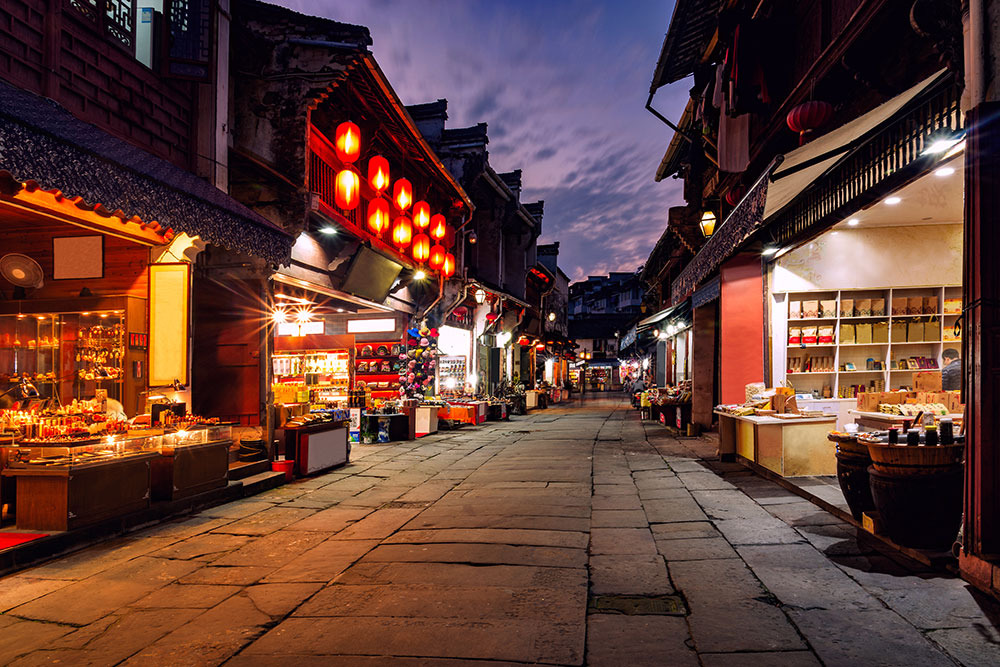
Day 1: Arrival in Huangshan (Tunxi). Stroll through the old town (Tunxi Old Street) and savor Huizhou cuisine for dinner.
Days 2-3: Exploration of Mount Huangshan (overnight at the summit for sunrise).
Day 4: Descend Huangshan, transfer to Qiyun Shan. Visit temples and overnight at the mountain's base or in the elevated Yuehua village.
Day 5: Morning hike along Qiyun Shan's ridges. Afternoon visit to Hongcun or Xidi villages, then return to Shanghai or Hangzhou.
Practical information
Admission and hours: Entry ticket approximately 80-100 CNY. Cable car (optional) approximately 60 CNY one-way. Typical hours: 7:30 AM to 5:30 PM.
Payment methods: Set up Alipay or WeChat Pay linked to your international bank card before departure. These are universally accepted in China (ticketing, meals, taxis). Keep a small amount of cash (CNY) as backup.
Accommodation: Charming guesthouses available at the mountain's base or directly on Yuehua's shopping street for a complete sunrise immersion experience.
Frequently asked questions
Mount Qiyun Shan is situated in Anhui Province, in eastern China, approximately 30 km southwest of Huizhou City (Xiuning). It is accessible from Shanghai by train followed by local bus.
Mount Qiyun Shan is one of China's four sacred Taoist mountains. It hosts numerous temples, hermitages, and rock inscriptions spanning several centuries, making it a major pilgrimage and meditation site within Taoism.
Yes, the two mountains are geographically close (approximately 60 km apart). They can easily be combined over 3 to 5 days from Huangshan Shi, dedicating one or two days to Qiyun Shan and the remainder to Huangshan.
Spring (March-May) and autumn (September-November) are ideal seasons to visit Mount Qiyun Shan. Temperatures are pleasant, vegetation is lush, and landscapes are often wrapped in mist, offering spectacular views.
Mount Qiyun Shan offers trails of varying difficulty. Most main sites are accessible via well-maintained stairs, suitable for beginner to intermediate hikers. Good footwear is recommended, and plan for several hours of walking.
Mount Qiyun Shan is classified as a national scenic area in China. While not directly designated a UNESCO World Heritage site itself, it is frequently visited alongside the Huangshan sector, which has held this designation since 1990.
Want to discover this destination?
Our local advisors design your tailor-made trip.