Wuzhou
Wuzhou
At the confluence of Guangxi and Guangdong, Wuzhou preserves a unique arcade street in China and rare colonial heritage. A guide to this overlooked stop in southern China.
Name: Wuzhou
Chinese name: 梧州
Province: Guangxi
Status: Prefecture-level city
Population: 3,273,300
Area: 12,588 km²
Wuzhou is a city located in the southeast of Guangxi province at the border of Guangdong, at the confluence of the Gui and Xun rivers. This city, often merely a stopover on a journey through southern China, nonetheless possesses several qualities that make it a pleasant destination.
History
Wuzhou boasts a history spanning over 2,000 years. Once called Cangwu County during the Han Dynasty (206 BC–220 AD), it only acquired the name Wuzhou later, in 621 under the Tang Dynasty (618–907).
Wuzhou subsequently became an important political and military hub for the southern provinces of China.
It thrived as a commercial city thanks to its river port. In 1897, the British established themselves here and set up steam river shuttles to Guangzhou, Hong Kong, and Nanning.
In 1927, Wuzhou became a prefecture-level city, the first in Guangxi province.
During the 1960s, in the midst of the Cultural Revolution, the city was devastated by napalm bombs dropped by Wei Guoqing, a prominent Chinese military and political figure.
Today
Wuzhou city is divided into two districts: the Hexi quarter, modern and well-developed, and Donghé, older but far more interesting to visit.
Its arcade-lined street showcases nearly 30 different architectural styles, complete with Roman columns, arched windows, and vaulted ceilings. The street unfolds in a unique colonial style, inviting leisurely strolls—especially on rainy days—among its many boutiques. Home to nearly 560 buildings, it is today considered the museum of arcade streets.
Encircled by roughly twenty mountains, Wuzhou is also traversed by the Gui and Xun rivers, making it a significant river port in southern China. Its natural environment is Wuzhou's greatest strength, offering refreshing, clean air.
For the adventurous, Wuzhou hosts a large snake reserve. This farm exports thousands of snakes to Hong Kong and Macao, where locals prize their tender meat. An on-site restaurant offers dishes featuring this reptile for the curious diner.
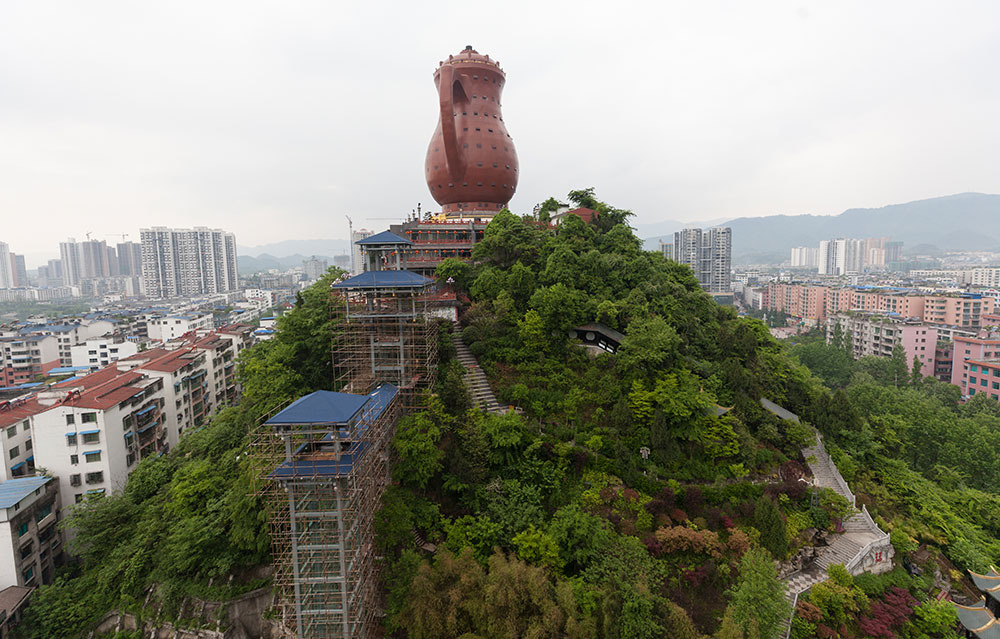
The Zhongshan Park on Beishan Mountain houses the charming Temple of Western Bamboos and a memorial to Sun Yat-sen. The verdant park promises a pleasant outdoor walk.
Baiyun Mountain, Wuzhou's highest peak, features cliff-side trails set against an enchanting landscape.
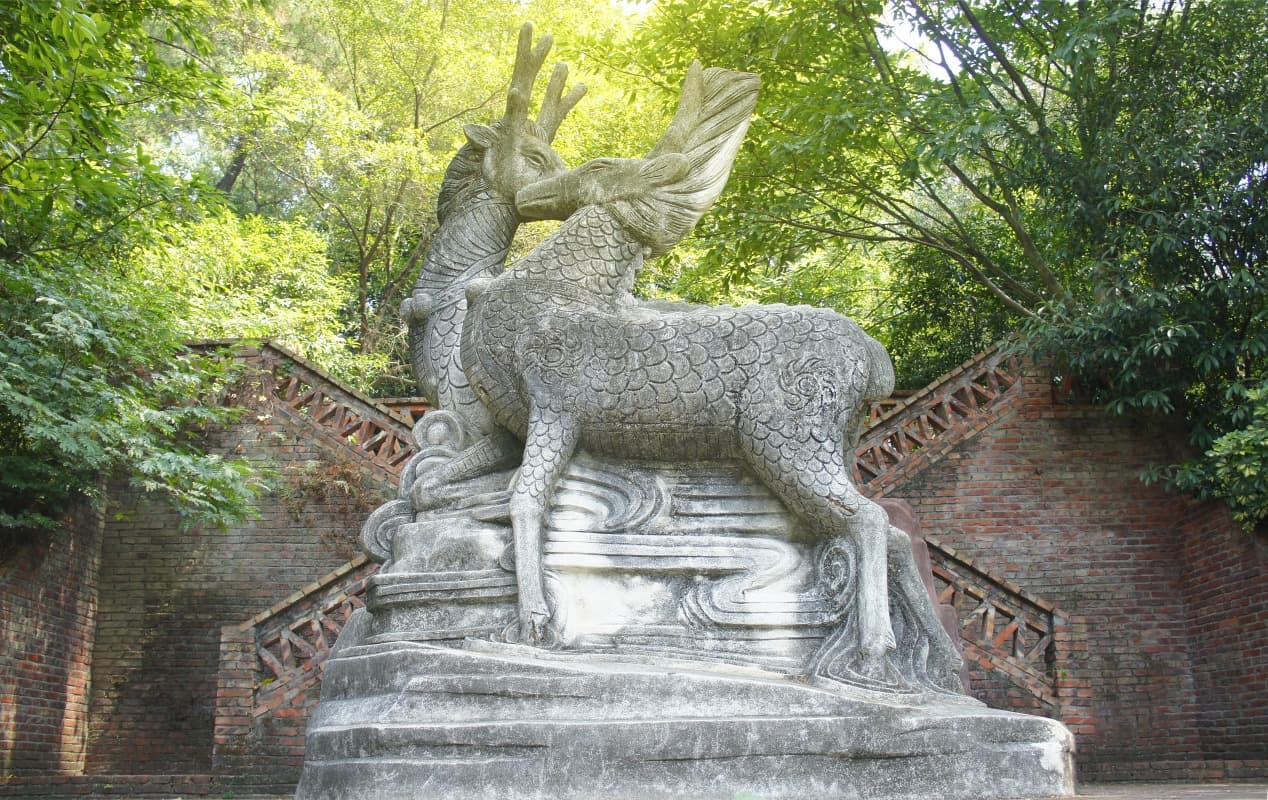
Lastly, the Dragon Sea Temple, or Longmu Taimiao, was erected during the Northern Song Dynasty in honor of the dragon that gave birth to a mythical sovereign. Perched on a cliff overlooking the water, it stands as a sacred site.
Climate
Wuzhou lies in a subtropical monsoon climate zone. It remains relatively warm and humid year-round, with an average annual temperature of 21.05°C. July temperatures average 28.2°C, while January averages a mild 11.9°C.
Wuzhou experiences short winters and long, humid summers. The rainy season extends from spring through summer.
Autumn brings sunshine and dryness, making it the best period to plan a stay in Wuzhou.
Air
Wuzhou's modern airport connects to Nanning and Chongqing. The route list is expected to expand soon.
Bus
Wuzhou has two bus stations with regular departures and arrivals to and from Nanning, Guilin, Liuzhou, Yangshuo, Guangzhou, and Shenzhen.
Most visits are best done on foot. Take a taxi to reach various points of interest.
What to do in Wuzhou?
- Conquer your fears at the Snake Reserve.
- Stroll around Baiyun Mountain.
- Stop by the impressive Dragon Sea Temple.
- Spend time at Zhongshan Park and visit the Sun Yat-sen Memorial.
- Shop in the arcade street.
Want to discover this destination?
Our local advisors design your tailor-made trip.