Fubo Hill: The Wave-Breaking Peak
Fubo Hill: The Wave-Breaking Peak
A limestone karst peak on the banks of the Li River in Guilin, Fubo Hill shelters Buddhist caves, Tang and Song sculptures, and an overlook of the city.
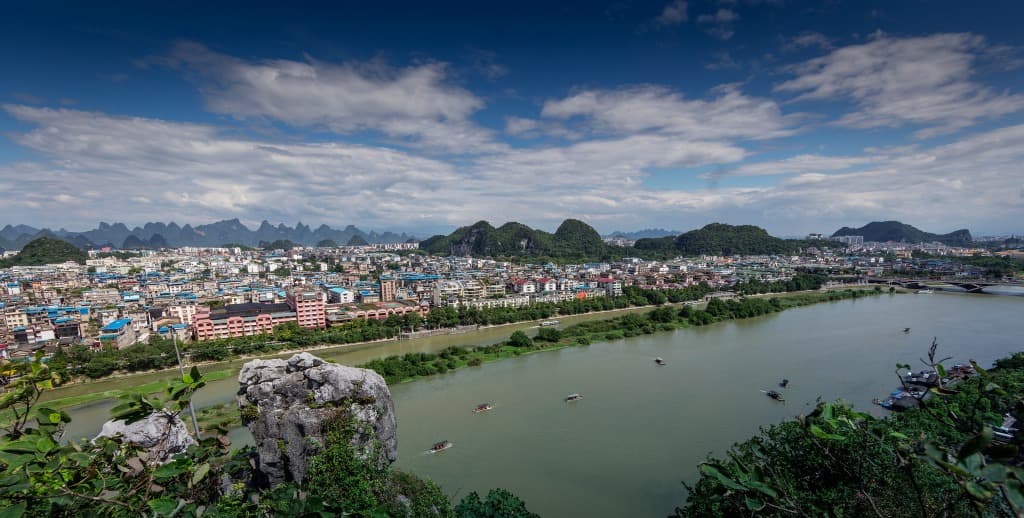
The Wave-Breaking Peak, also known as Fubo Hill, rises to the northeast of Guilin, on the western bank of the Li River. This isolated limestone outcrop, located 2 km from Elephant Trunk Hill and at the heart of Fubo Park, concentrates Buddhist caves adorned with sculptures, thousand-year-old inscriptions, and an overlook onto the city and river, all within 7,000 m².
Why Visit Fubo Hill
The site brings together three rarely combined features on a single karst peak: carved Buddhist heritage dating from the 7th to 13th centuries, a landscape characteristic of the Li River accessible from the city's edge, and historical significance linked to General Fubo of the Eastern Han Dynasty. The visit remains compact (plan for 1 to 2 hours) and connects easily with Guilin's other iconic hills.
History and Origin of the Name
The western slope of the hill drops sheer into the Li River and breaks the waves that crash against the rock—this is where the name "Wave-Breaking Peak" originates. The other name, Fubo Hill, refers to General Fubo of the Eastern Han Dynasty (1st century), who reportedly repelled invaders from the region. Local people honored his memory by dedicating the hill to him.
Nearby, the Mayuan Buddhist Temple was built during the Tang Dynasty as a tribute to this figure. From the 7th to 13th centuries, the site became a center for Buddhist rock carvings and poetry, much of which remains visible today.
What to See On Site
Pearl Returned Cave
At the foot of the eastern slope, this cave descends to the Li River. It preserves over 100 inscriptions carved into stone, as well as poems and Buddha statues dating from the Tang Dynasty (7th century). Near the entrance stands a bronze bell cast during the Qing Dynasty, standing 1.7 m tall and weighing approximately 2.5 tonnes (2,524 kg precisely), testament to the site's monastic past.
Inside the cave, the Sword Trial Rock is a stone pillar detached from the vault, its shape evoking a blade. Tradition holds that General Fubo sharpened and tested his sword here before heading into battle.
Cave of a Thousand Buddhas
Connected to Pearl Returned Cave by a network of tunnels, the Cave of a Thousand Buddhas lies in the heart of the peak. It spans three levels, with the first measuring 7.4 m long, 6 m wide, and 12 m high. It contains 239 Buddha statues carved in stone during the Tang Dynasty, along with murals from the Song Dynasty (960-1279).
Among the most remarkable sculptures are portraits of painter Mi Fu and writer Fan Chengda, each standing 1.2 m tall, carved during the Song Dynasty.
Tingtao Pavilion and the Ascent to the Summit
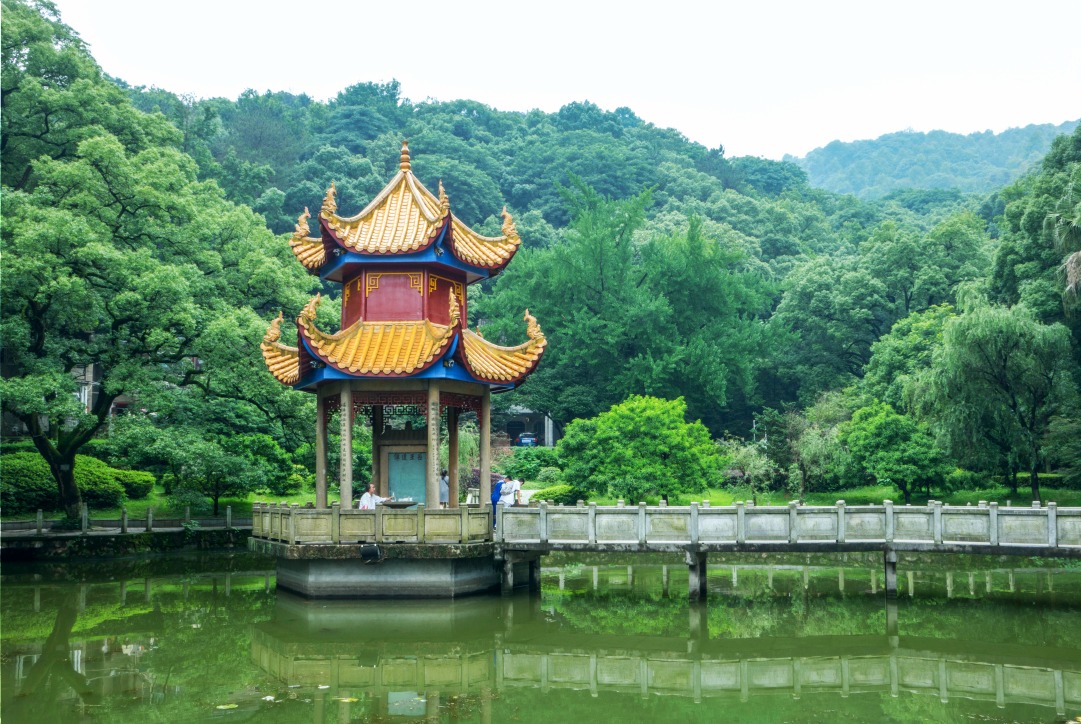
Halfway up the southeastern cliff face, the Tingtao Pavilion ("listening to the waves") was built in 1964. This two-story building of approximately 106 m², crowned with glazed yellow tiles, serves as an observation point over the Li River.
A stone staircase of 325 steps winds up the western slope to the ridge, approximately 60 m above the river. The summit offers a clear view of Guilin's rooftops, the course of the Li, and neighboring karst peaks.
Along the way, you'll notice a giant iron cauldron, capable of preparing a meal for 1,000 people: it once served the Dingyue Monastery during the Qing Dynasty.
Practical Information
- Duration of visit: 1 to 2 hours depending on pace and time spent in the caves.
- Admission: modest entry fee, payable on-site.
- Hours: daytime opening, generally from early morning to late afternoon, with reduced hours in winter.
- Tip: wear sturdy shoes for the 325 steps and sometimes damp cave floors.
When to Visit
Guilin enjoys a humid subtropical climate. The months of April to June and September to early November offer the most pleasant conditions, with lush vegetation and a well-stocked Li River. Summer (July-August) is hot and stormy, which can make the climb challenging. Winter remains passable but foggier, reducing visibility from the summit. Early morning brings fewer crowds and flattering light for the karst landscape.
How to Get There
From central Guilin, the hill is accessible on foot: follow Binjiang Road northward; approximately 200 m past Liberation Bridge, the peak dominates the Li River bank.
By public transport, several bus lines serve the edges of the park, notably lines 2, 13, 15, 58 and special line 4A. Taxi remains a practical option from more distant neighborhoods.
Nearby
The hill fits easily into a day of exploring Guilin:
- Elephant Trunk Hill, 2 km along the Li River, the city's emblem.
- A cruise on the Li River, with departure points accessible from the city center.
- Other historical and cultural sites in Guilin.
To extend cultural exploration elsewhere in Chine, Beishan Temple and the Bell and Drum Towers offer other perspectives on Chinese Buddhist and urban heritage.
Frequently Asked Questions
Frequently asked questions
Including Fubo Hill in Your Journey
Fubo Hill fits naturally into an itinerary combining Guilin, the Li River, and the karst landscapes of Guangxi. To plan a custom stay incorporating this site and other stops in the region, consult our trips to Chine.
Interested in this visit?
We can include it in your personalised itinerary.