The Two Rivers and Four Lakes
The Two Rivers and Four Lakes
In Guilin, the Two Rivers and Four Lakes form a navigable loop through the heart of the city, dotted with Ming pagodas, inscribed bridges and scenic riverbanks.
In Guilin, the hydraulic network known as the "Two Rivers and Four Lakes" (Liang Jiang Si Hu) connects the historic center to a string of landscaped water bodies. A circular cruise, by day or night, allows you to navigate the city through its canals and observe its pagodas, bridges and characteristic karst landscapes.
Why visit the Two Rivers and Four Lakes
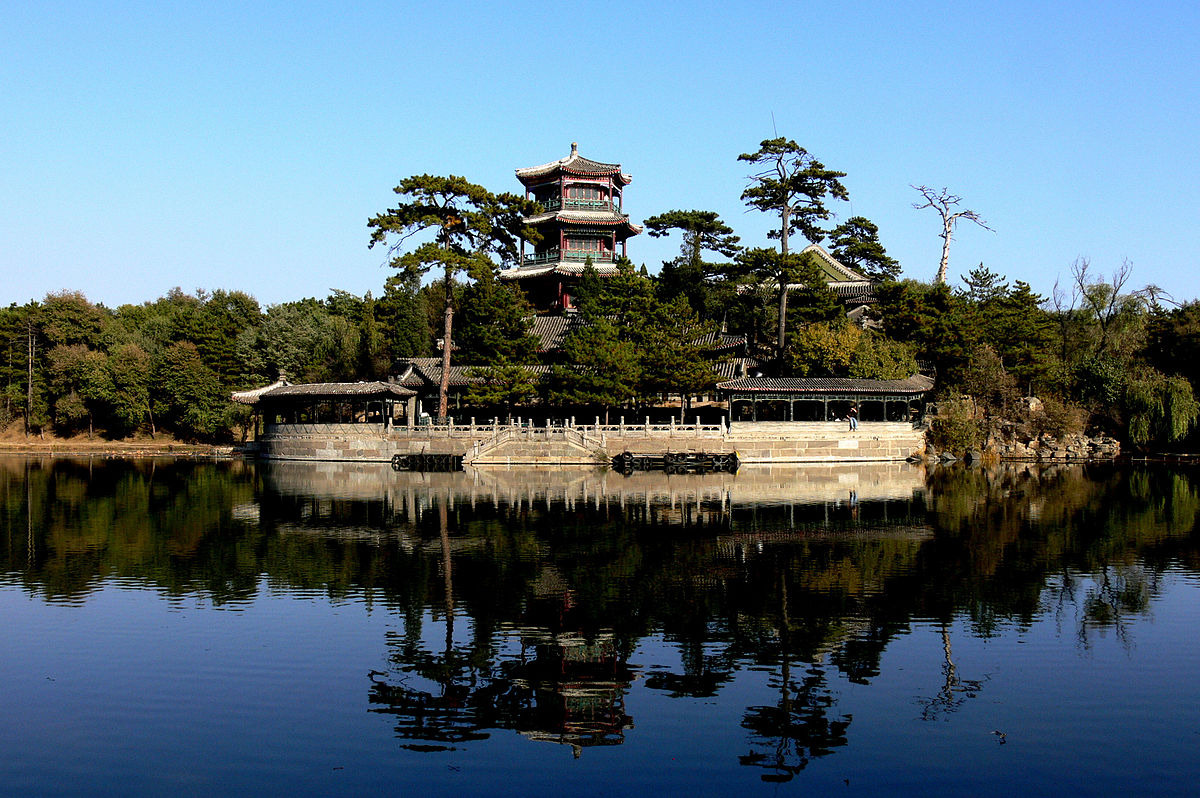
The site combines three rarely matched interests: a continuous navigable route through the heart of a Chinese city, architectural heritage spanning several dynasties, and carefully maintained vegetation that transforms the riverbanks into an urban garden. The tour is effortless from a boat and offers a coherent understanding of Guilin, whose urban planning has largely been organized around water.
Architecture enthusiasts will find Ming dynasty pagodas and bridges covered with ancient engravings and calligraphy. Travelers seeking memorable images will photograph cormorant fishermen on the Li River, who continue a technique documented for centuries in the region.
History of the site
Development began in the Tang dynasty (618-907), when Guilin was equipped with its first hydraulic structures. Under the Song dynasty (960-1279), the ensemble was little more than a ditch: what now forms Shan Hu Lake and Gui Hu Lake was then a long waterway called the Nanyang River.
Significant expansion occurred during the Yuan dynasty (1271-1368), when the ditch became an inner lake bordered by important administrative buildings. The pagodas at Shan Hu Lake were built later, under the Ming dynasty.
The site's current appearance dates from a much more recent project: the reconstruction of Guilin's water system, launched in 1998 and completed in 2002. This undertaking reconnected lakes and rivers with locks, created a navigable loop, and developed the riverbanks into a continuous park.
What to see along the route
The four lakes
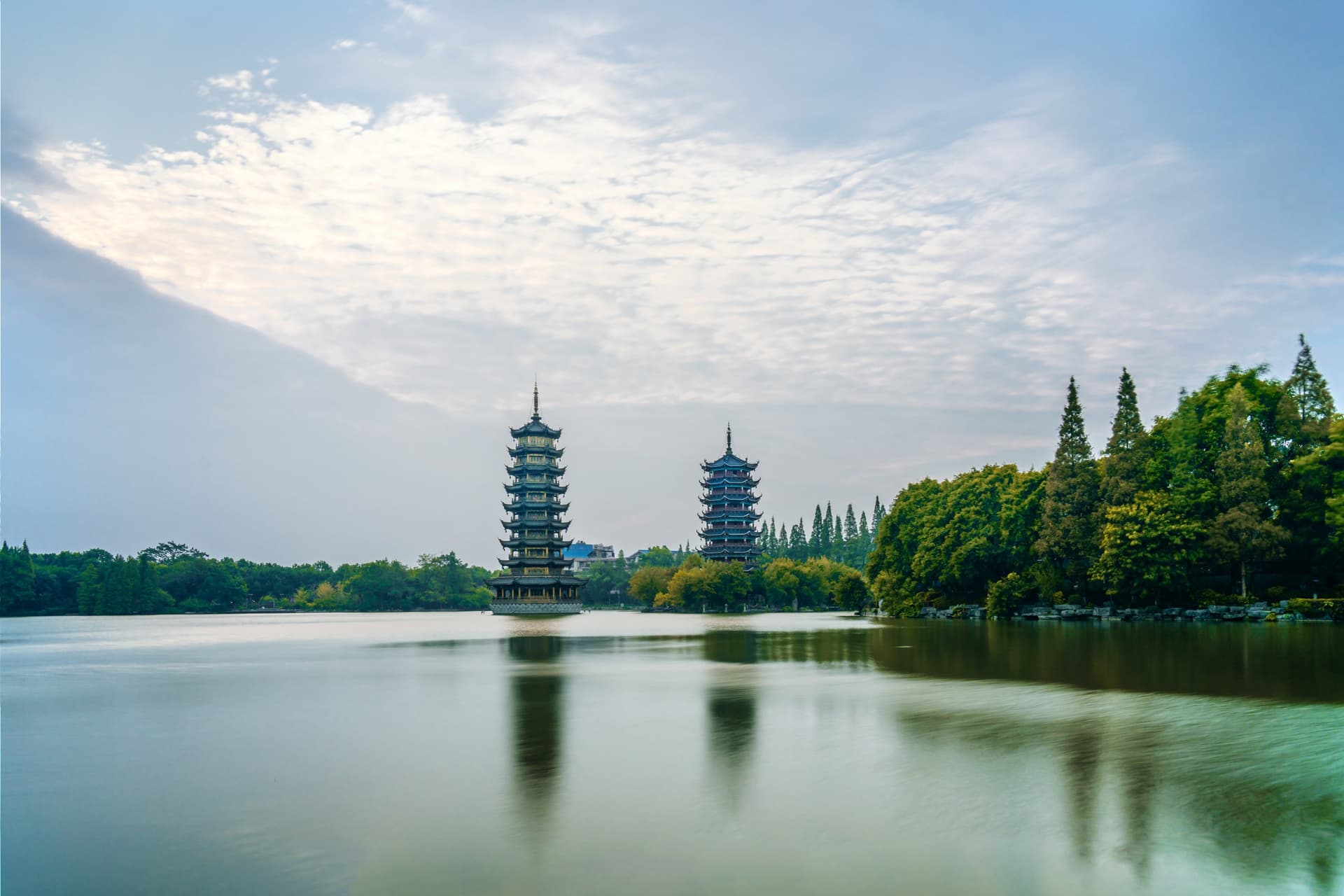
- Shan Hu Lake (Lake of the Cryptomerias): the historic heart of the system, home to Guilin's two most photographed pagodas.
- Banyan Lake: lined with ancient banyan trees, it extends Shan Hu Lake to the west.
- Gui Hu Lake (Lake of the Osmanthus): the largest, opening onto wide vistas.
- Mulong Lake (Wood Dragon Lake): the northernmost, set in a more scenic area.
The two rivers
The Li River flows through the city center and offers views from the Riyuewan dock near the Liberation Bridge (Jiefangqiao) of the karst formations that define Guilin's landscape. The Taohua River (Peach Blossom River) runs along the western part of the city and takes its name from a seasonal landscape particularly striking in spring.
The pagodas of Shan Hu Lake
The Sun Pagoda, made of copper, and the Moon Pagoda, made of porcelain, erected during the Ming dynasty, stand side by side in the water. Connected by an underwater tunnel, they illuminate at dusk and form the iconic image of the site.
Riverbanks and architecture
The shores alternate banyan trees, ginkgos, pines, magnolias and palms, punctuated by bridges and arches covered with engravings and calligraphy. On the Li River, you may encounter cormorant fishermen, living witnesses to a traditional practice.
When to visit
The site can be visited year-round, but two seasonal windows stand out:
- Spring (March-April): peach blossoms along the Taohua River, mild temperatures.
- Autumn (October-November): red foliage of local shrubs, clear light, somewhat less crowded than summer.
Evening cruises, which showcase the illumination of the pagodas and bridges, operate year-round. Summer is warm and humid, with possible thunderstorms.
Practical information
- Duration of visit: allow 1 to 1.5 hours for a cruise of the four lakes; longer if you combine it with the Li River.
- Admission: moderate prices, with a surcharge for evening cruises; a separate ticket is required to visit inside the Shan Hu Lake pagodas. Prices vary: check at the ticket office or your hotel.
- Hours: departures by day and evening. Evening cruises typically end around 9 p.m.–10 p.m.
- Tickets: booths at the Riyuewan dock (near Liberation Bridge) and along Binjiang Street.
How to get there
The main dock, Riyuewan, is located in central Guilin, near Liberation Bridge. From most central hotels, it is accessible on foot in 10 to 20 minutes. Several urban bus lines and a tourist bus serve nearby stops (Yangqiao, Xiangshan Park); as route numbers change regularly, it's best to check on arrival. Taxis and ride-hailing services are the simplest option for reaching Mulong Lake, which is more remote.
What to see nearby
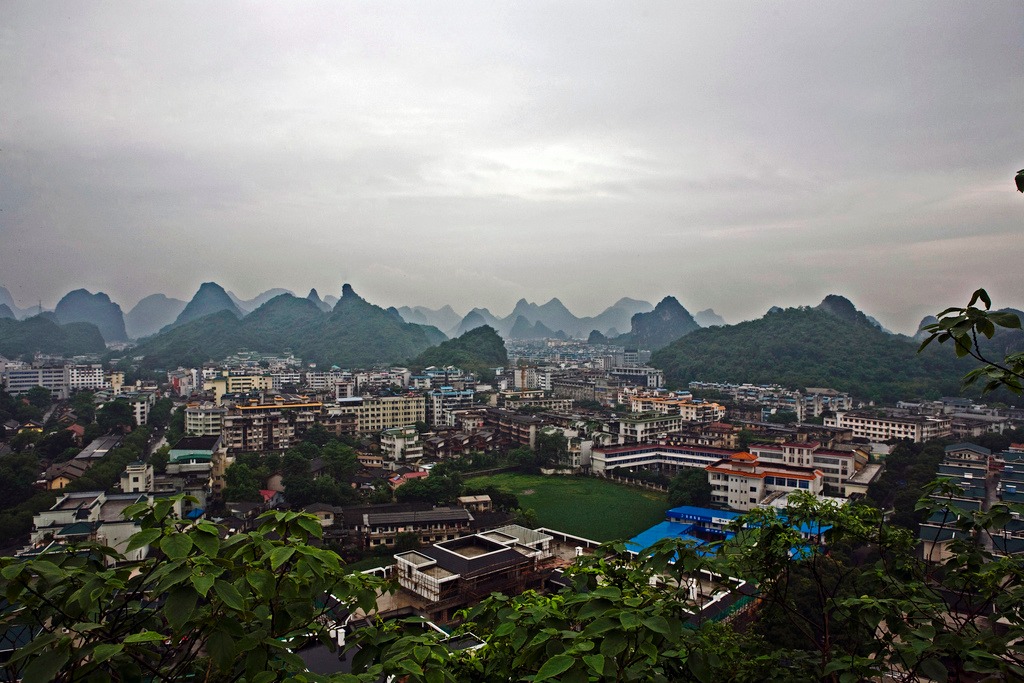
The site naturally fits into a broader visit to Guilin and its karst surroundings. Travelers extending their Chine itinerary can compare this urban cruise with other very different water settings, such as Aiding Lake in Xinjiang, or move on to heritage sites such as the Bell and Drum Towers and Beishan Temple.
Frequently asked questions
Frequently asked questions
Both experiences complement each other. Daytime highlights the riverside vegetation and karst formations visible from the Li River. At night, the illumination of the Shan Hu Lake pagodas and bridges creates photogenic reflections on the water. If you can only choose one, the evening cruise is the most visually striking.
A full cruise lasts about 1 to 1.5 hours. Adding a walk along the banks and a visit to the Shan Hu Lake pagodas, allow half a day to enjoy the site without rushing.
Yes. The banks are developed as a continuous promenade, punctuated by bridges, pavilions and gardens. Walking allows you to approach the pagodas and photograph bridges covered with calligraphy, but it doesn't provide the overall perspective that a boat offers.
On the Li River, yes, but not guaranteed. These fishermen mainly offer evening demonstrations, particularly on evening cruises, and generally welcome photographs.
Yes, cruises operate year-round. Winter in Guilin is mild but humid; bring a warm jacket for evening outings on the water.
Planning your trip
The Two Rivers and Four Lakes make an excellent entry point to Guilin before continuing to the karst landscapes of Yangshuo and the rice terraces of Longsheng. To build a tailor-made itinerary incorporating this stop, consult our Chine trips.
Interested in this visit?
We can include it in your personalised itinerary.