Karakul Lake
Karakul Lake
At 3,600 m altitude at the foot of Muztagh Ata, Karakul Lake is a highlight of the Karakorum Highway, 196 km from Kashgar.
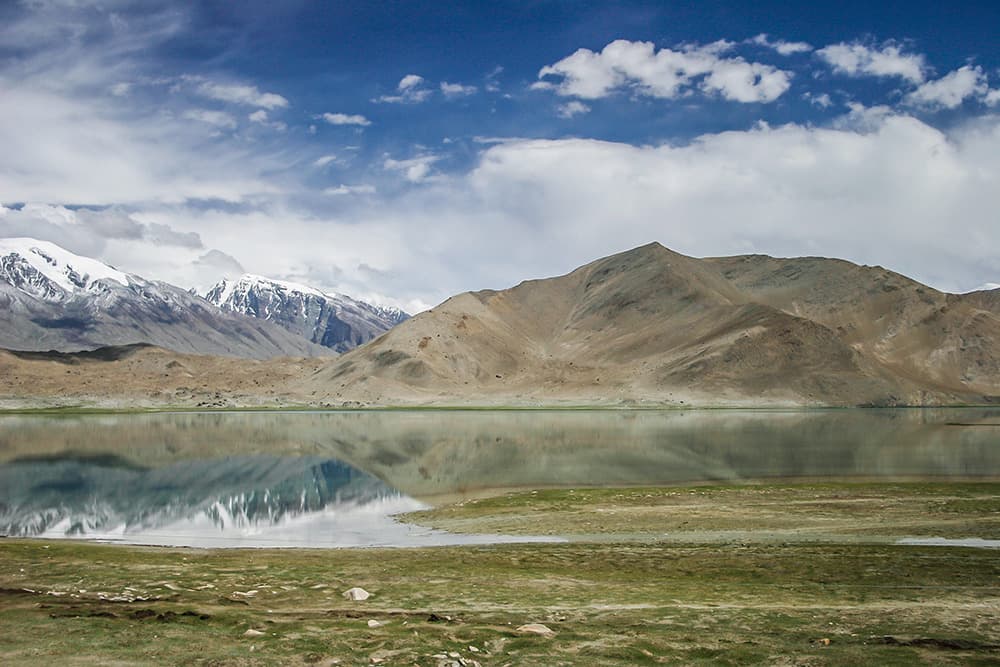
196 km southwest of Kashgar, in the Xinjiang Uygur Autonomous Region of Chine, Karakul Lake stretches at 3,600 meters altitude at the foot of Muztagh Ata. Nicknamed the "father of glaciers" (Karakul meaning "black lake" in local Turkic), it occupies a glacial basin framed by three peaks exceeding 7,000 meters. A visit almost always forms part of a journey along the Karakorum Highway, one of Central Asia's most spectacular routes.
Why visit Karakul Lake
Karakul Lake is worth the detour for three reasons:
- A high-mountain landscape: the snow-capped peaks of Muztagh Ata (7,546 m), Kongur Tagh (7,649 m) and Kongur Tiube reflect in dark waters, hence the nickname "black lake".
- A window into Kyrgyz culture: herding families settled on the shores welcome visitors in their yurts, a rare encounter in Chine.
- A stopover on the Karakorum Highway: the route connecting Kashgar to the Pakistani border crosses the Pamir plateau and the spectacular Ghez gorges before reaching the lake.
History and legend of the lake
Karakul Lake formed through the accumulation of glacial meltwater in a depression bordered by Pamir massifs. Its depth reaches approximately 30 meters and its surface covers about ten square kilometers.
Kyrgyz tradition attributes a different origin to it. A princess loved a man whom her father, the king, forbade her to marry. To prevent their reunion, the sovereign struck the ground with his staff and split the mountain in two. Inconsolable, the princess wept without ceasing: her tears flooded the void left between the two slopes and formed the lake. This legend is still told by herders living on the shores.
What to see and do
The panorama of three giants
The lake is framed by three peaks: Muztagh Ata to the south, Kongur Tagh to the north, and Kongur Tiube to the east. On clear days, their glaciated faces reflect on the surface. The best photographic viewpoints are found on the eastern shore, accessible on foot from the main road.
Kyrgyz way of life
The lake shores are home to Kyrgyz families who graze yaks and horses during summer. Several concrete yurts, funded by the Chinese government to partially settle this minority ethnicity, welcome travelers for a night or meal. The experience provides insight into the daily life of a pastoral, high-altitude population.
Walks around the lake
The shores are conducive to walking, with easy trails along the water. Herders also offer horseback rides or camel treks, negotiated on-site. High-altitude hiking is possible but requires prior acclimatization, as the lake already sits beyond 3,500 meters.
When to visit
The most favorable period runs from June to September. During this season, pastures are green, herds move to summer pastures, and daytime temperatures remain manageable (10 to 20 °C). Nights are cool even in midsummer: bring several layers.
From November to April, access is more difficult, the lake may partially freeze, and not all yurts remain open. Spring remains windy and landscapes still dry.
Practical information
- Altitude: 3,600 m. Drink plenty of water, avoid strenuous activity on your first day.
- Border permit: mandatory as the lake lies in a zone near Tajik and Pakistani borders. It is obtained in Kashgar, typically through a local agency or your hotel.
- Entrance fee: a site access fee is requested on-site, a modest amount subject to variation.
- Accommodation: nights in yurts with local families, basic comfort but authentic atmosphere. A few simple guesthouses exist in the nearby village of Subash.
- Money: no ATM on-site, bring cash from Kashgar.
How to get there
Access is via the Karakorum Highway (G314), which connects Kashgar to the Pakistani border by crossing the Pamir plateau and Ghez gorges. The journey takes approximately 4 to 5 hours for 196 km.
- Long-distance bus: from Kashgar's international bus station, tourist buses serve the lake. This is the most economical option.
- Private car with driver: the most flexible option, allowing stops in Ghez gorges and at Bulunkul Lake.
- Organized tour: numerous agencies in Kashgar offer day trips or two-day stays with overnight yurt accommodation.
What to combine in the region
- Kashgar, an oasis city on the Silk Road and gateway to the Chinese Pamir.
- The Bezeklik Thousand Buddhas caves, another major stop in Buddhist Xinjiang.
- Continuing the Karakorum Highway to Tashkurgan, the last city before the Pakistani border.
Frequently asked questions
Frequently asked questions
Plan your trip
Karakul Lake is best discovered as part of a broader itinerary around Kashgar and Xinjiang. To build a custom journey including the Karakorum Highway, consult our trips to Chine.
Interested in this visit?
We can include it in your personalised itinerary.