Mao Zedong Mausoleum
Mao Zedong Mausoleum
Located on Tian'anmen Square in Beijing, the Mao Zedong Mausoleum houses the remains of the founder of communist Chine in a symbolic edifice inaugurated in 1977.
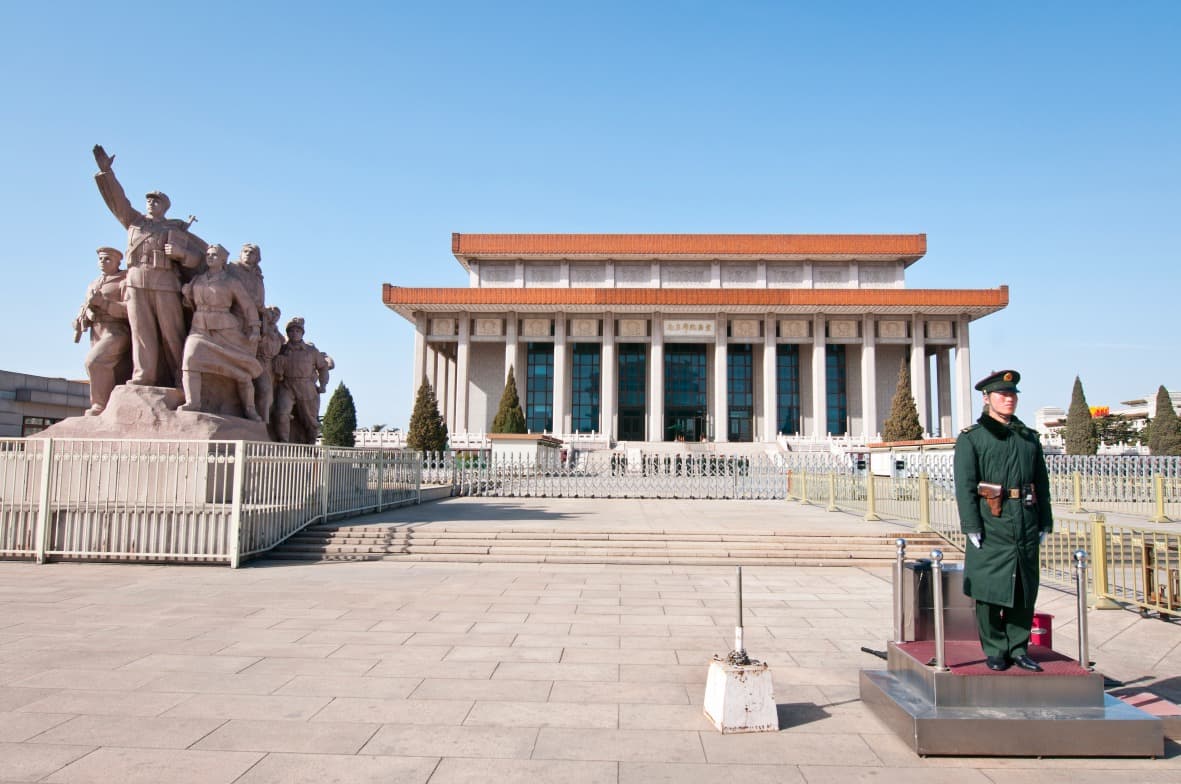
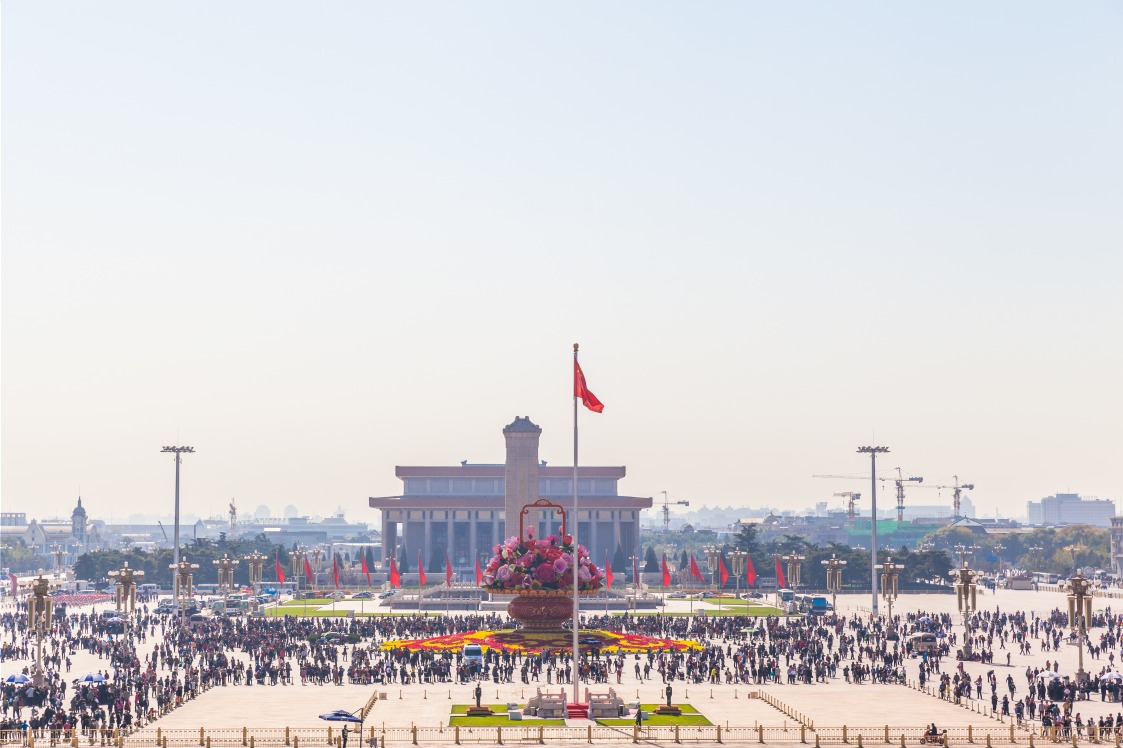
The Mao Zedong Mausoleum (Maozhuxi Jinian Tang) houses the embalmed remains of the founder of the People's Republic of Chine. Situated at the center of Tian'anmen Square in Beijing, south of the Monument to the People's Heroes, the building stands as both a political memorial and a major architectural landmark of the Chinese capital.
Why visit the Mao Zedong Mausoleum
Few monuments concentrate so many memorial dimensions in a single space. The mausoleum sheds light on the place Mao Zedong still occupies in contemporary Chinese political consciousness, through highly codified symbolic architecture and commemorative staging. The visit will particularly appeal to travelers interested in 20th-century history, socialist urbanism, and the role of major ceremonial sites in modern Chine. Entry follows a strict sequence observed daily by thousands of Chinese visitors coming to pay their respects.
History of the mausoleum
Born in 1893 in the rural province of Hunan, Mao Zedong led the Politburo of the Chinese Communist Party from 1943, then chaired the Party's Central Committee from 1945 until his death on September 9, 1976. His passing prompted the swift decision to erect a mausoleum in his memory.
Construction began in November 1976, just weeks after the leader's death. Despite the scale of the project, work took only six months. Over 700,000 people from across the country participated symbolically as volunteer workers. The mausoleum was officially inaugurated in September 1977. According to Chinese sources, its cost far exceeded that of the neighboring People's Assembly Hall on the square.
The edifice stands on the site of the former Gate of Chine, known as Zhonghuamen, which once marked the southern entrance to the imperial city.
What to see on site
The mausoleum covers an area of 57,200 m², measuring 220 m from east to west and 280 m from south to north. The architecture blends traditional Chinese vocabulary with clean modern lines: 44 granite columns support a double-pitched glazed golden roof. Above the main entrance, a white marble plaque bears the golden inscription "President Mao Memorial Hall".
On either side of the entrance, two groups of rammed-earth figures symbolize New Democracy and the socialist construction period. Thirty red flags arranged outside represent the provinces, municipalities, and autonomous regions of the country.
The main building rises over two stories:
- First floor: the Great Northern Hall, the Memorial Hall, and the Great Southern Hall.
- Second floor: a cinema hall and six memorial rooms dedicated to Zhou Enlai, Liu Shaoqi, Zhu De, Deng Xiaoping, and Chen Yun, leading Chinese statesmen. Each room houses a marble statue of the relevant figure.
The Great Northern Hall
Located north of the Memorial Hall, it is dedicated to commemorative rites. At its center stands a seated statue of Mao Zedong, 3.45 m tall. The hall's background is covered by a vast silk tapestry wall measuring 23.74 m wide by 6.6 m high, depicting the landscapes of Chine.
The Memorial Hall
This is where Chinese visitors come to pay respects before the leader's remains. The body rests in a crystal coffin covered with the flag of the Chinese Communist Party, flanked by the emblems of the Party, the State, and the army, as well as the birth and death dates of the leader.
The Great Southern Hall
Upon exiting the Memorial Hall, visitors pass through the Great Southern Hall. On the marble wall appears, in golden letters, a calligraphy in Mao's hand reproducing the word Manjianghong, the title of a classical Chinese poem associated with rectitude and honor.
Practical information
Entry is free and the mausoleum is generally open in the morning, Tuesday through Sunday, with extended hours around the anniversary dates of Mao Zedong's birth (December 26) and death (September 9). Since hours may vary, it is recommended to verify current information with your accommodation before visiting.
The site attracts long queues of visitors daily, particularly Chinese nationals. It is best to arrive early, before opening, to minimize wait times. Before joining the queue, deposit your belongings at the nearby cloakroom: handbags, backpacks, cameras and video equipment, cups, and beverages are prohibited inside. Proper attire and a quiet demeanor are expected throughout the visit.
How to get there
The mausoleum is very well served by Beijing's public transport:
- Metro Line 1: Tian'anmen West station (Tian'anmen Ouest), a few minutes' walk away.
- Metro Line 2: Qianmen station, south of the square.
- Bus: several lines (1, 2, 5, 52, 59, 82, 99, 120, 126) stop at the east or west edges of Tian'anmen.
Given the heightened security around the square, allow extra time for access controls.
Nearby
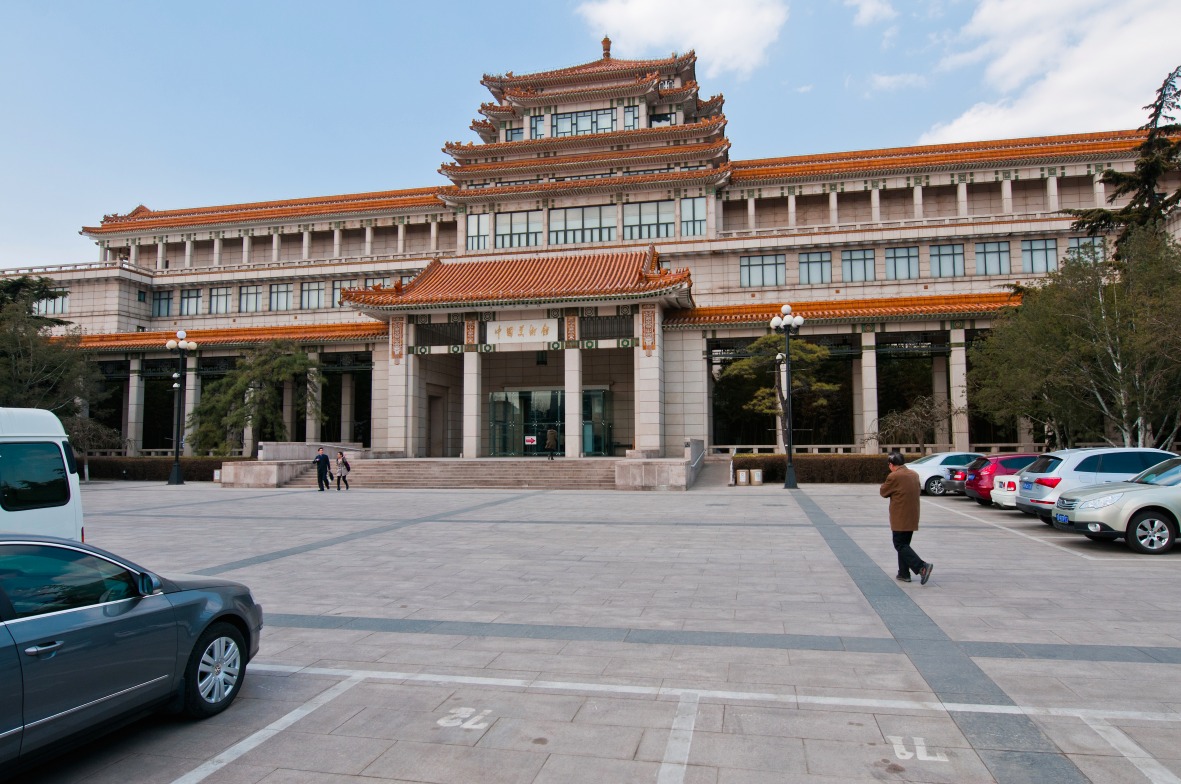
Tian'anmen Square itself concentrates several major sites: the Forbidden City to the north, the People's Assembly Hall to the west, the National Museum of Chine to the east, and the Monument to the People's Heroes. Expanding your radius, your stay in Beijing can extend to other emblematic sites of the Chinese capital and beyond:
- The Great Wall at Juyongguan, one of the most accessible fortified passes from Beijing.
- The Great Wild Goose Pagoda, a Buddhist gem in Xi'an.
- The Bezeklik Thousand Buddha Caves, rock art of Xinjiang.
Frequently asked questions
Frequently asked questions
Yes, access is free. However, a valid ID (passport for foreign visitors) is required at entry.
The passage through the interior of the mausoleum is quick, usually just a few minutes, as the flow of visitors is continuous. However, allow 1 to 2 hours including the cloakroom, security check, and queue.
No. Cameras and video equipment are prohibited, as are backpacks, handbags, cups, and beverages. All of these must be deposited at the cloakroom before your visit.
Arriving early in the morning, before opening, helps minimize wait times. Crowds are particularly heavy around September 9 and December 26, the anniversary dates of Mao Zedong's death and birth.
The site generally opens Tuesday through Sunday in the morning, with occasional closures for maintenance. Since hours may change, verify current information before your visit.
Include the mausoleum in your trip
The Mao Zedong Mausoleum is naturally visited during a stop in Beijing, alongside the Forbidden City and the Great Wall. To build a tailor-made itinerary combining imperial capital, historical sites, and grand landscapes, explore our Chine travel ideas.
Nearby
Interested in this visit?
We can include it in your personalised itinerary.