Beijing Olympic Park
Beijing Olympic Park
Built for the 2008 Olympics and reused for the 2022 Winter Games, Beijing Olympic Park brings together the Bird's Nest and Water Cube across 11 km².
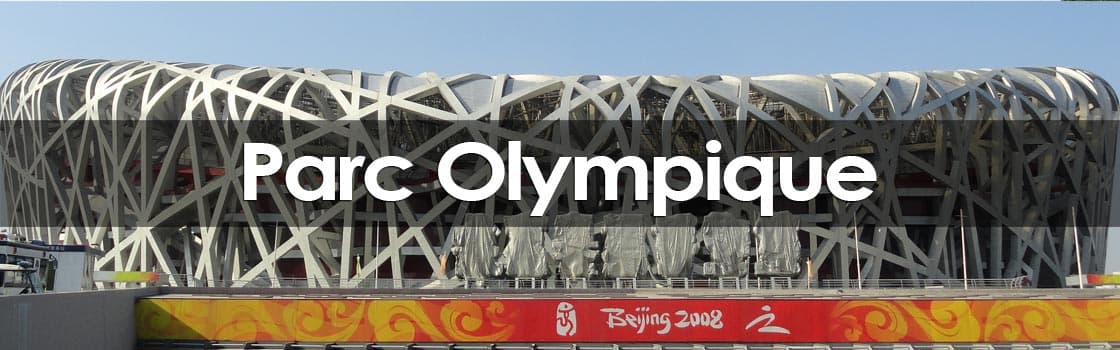
Built for the 2008 Summer Olympic Games, Beijing Olympic Park spreads across more than 11 km² some of the most striking architectural achievements of contemporary Chine. The site, nicknamed the Olympic Green, is home to the National Stadium (Bird's Nest) and the National Aquatics Centre (Water Cube), two structures that have become emblematic of the Chinese capital.
Why Visit Beijing Olympic Park
- Two buildings designed by world-renowned architects, including the Swiss firm Herzog & de Meuron
- A preserved Olympic legacy still active, which also hosted the 2022 Winter Games
- A site converted into a leisure destination, with water park and sporting or cultural events
- Nighttime lighting that transforms the site and offers a different perspective on the buildings
History of the Site
In 2001, Beijing is named as the host city for the 2008 Summer Olympic Games. For this event, the municipality commissions a large sports complex and calls upon several architecture firms, among them the Swiss agency Herzog & de Meuron, partnered with Chinese architects Li Xinggang and Demei Lin for the National Stadium.
The Olympic National Stadium is inaugurated on June 28, 2008, just weeks before the opening ceremony of the Games, which took place there on August 8, 2008. Since then, the site has maintained its sporting vocation while reinventing itself: it hosted the opening and closing ceremonies of the 2022 Winter Olympic Games, making Beijing the first city to have organized both the Summer and Winter editions.
What to See on Site
The Bird's Nest (National Stadium)
The structure gets its nickname from its interlaced steel lattice design. The numbers speak for themselves: 42,000 tons of steel, a footprint of 258,000 m², 333 meters long, 294 meters wide and 69 meters high, with a capacity of 91,000 seats.
During the 2008 Games, it hosted track and field events and the football tournament final. Now open to visitors, it serves as a venue for sporting competitions, concerts and major cultural events.
The Water Cube (National Aquatics Centre)
Facing the Bird's Nest, the Water Cube stands out for its façade of ETFE cushions evoking soap bubbles. The building measures 178 meters long and 31 meters high, covers approximately 65,000 m² and can accommodate 17,000 spectators during competitions.
Its design incorporates ecological principles: partial electricity generation and rainwater harvesting. Inside, three pools sit side by side: a 3-meter-deep competition swimming pool, a training pool and a diving pool. Part of the complex has been converted into a water park with slides, water jets, fitness facilities, bars and restaurants, making it also a family leisure destination.
The Olympic Green
Beyond the two flagship stadiums, the site features wide tree-lined esplanades, a water feature, pedestrian areas and several other sports facilities. It is a popular walking destination for locals, particularly at day's end.
Practical Information
- Duration of visit: allow 2 to 3 hours to walk the esplanade and visit one of the two stadiums, or a half-day if you want to enjoy the water park
- Admission fees: paid entry to visit inside the Bird's Nest and Water Cube (moderate rates, combined ticket available); the outdoor esplanade is free to access
- Opening hours: both stadiums open during the day, with extended hours in warm season compared to winter; check updated hours before your visit
- Accessibility: largely pedestrian site, flat and easily accessible
When to Visit
The site can be visited year-round, but spring (April-May) and autumn (September-October) offer the most pleasant conditions, with mild temperatures and generally better air quality. Summer is hot and humid, winter very cold and windy.
Visiting late in the day is particularly rewarding: as night falls, the Bird's Nest illuminates in red and the Water Cube glows in changing blue hues, offering a photogenic spectacle that makes it worthwhile to extend your visit into the evening.
How to Get There
The simplest way is by metro: Line 8 serves the Olympic Sports Centre station (Olympic Sports Center) as well as the Olympic Park station (Olympic Park), both located just a few minutes' walk from the main buildings. Several city bus lines also serve the area, but the metro remains the clearest option for foreign travelers.
By taxi or rideshare, ask to be dropped at the south entrance of the park to reach the Bird's Nest and Water Cube directly.
Nearby Attractions
- Beijing: the Forbidden City, Temple of Heaven and Summer Palace can be visited in the same day if you plan your time well
- The Great Wall at Juyongguan: one of the most accessible sections from Beijing, approximately 60 km northwest
Frequently Asked Questions
Frequently asked questions
Prepare Your Trip to Chine
Beijing Olympic Park fits easily into a few-day stay in Beijing, complementing the capital's historic sites and a Great Wall excursion. To build a bespoke itinerary, consult our trips to Chine.
Nearby
Interested in this visit?
We can include it in your personalised itinerary.