Shanhua Monastery
Shanhua Monastery
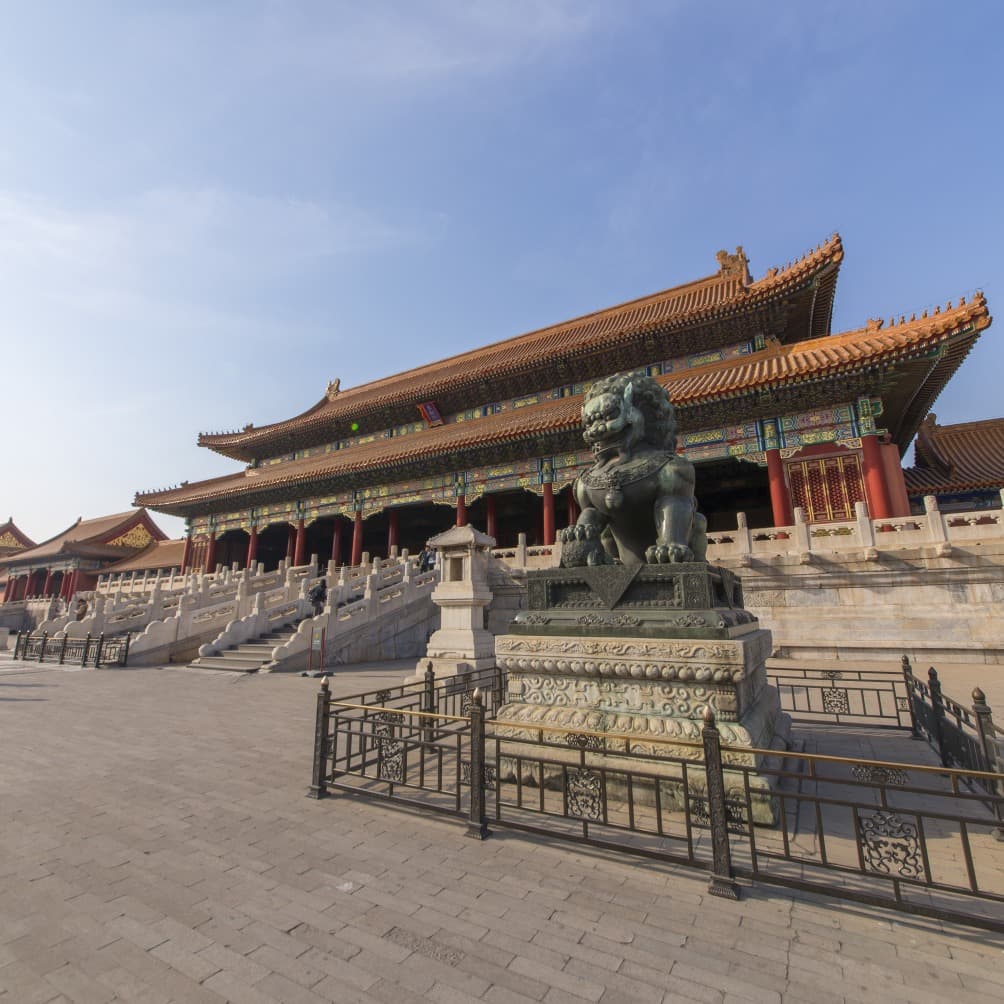
Founded during the Tang dynasty and marked by Liao architecture, Datong's Shanhua Monastery brings together ancient halls, monumental statues and wall paintings.
Shanhua Monastery is located less than 2 km from Huayan Temple, in the heart of the old city of Datong, in Shanxi province. Founded in the 8th century, it ranks among the major Buddhist complexes in northern Chine and preserves several original buildings dating back to the Liao dynasty (12th century).
Why visit Shanhua Monastery
Three reasons motivate a visit:
- Rare ancient Buddhist architecture: the Mahavira Hall and the Hall of Three Saints rank among the best-preserved wooden structures from the Liao dynasty in Chine.
- A coherent sculptural and pictorial ensemble: monumental statues, wall paintings and frescoes inherited from the Jin and Ming dynasties.
- A central location: within walking distance of Huayan Temple and the Nine Dragons Wall, the site easily integrates into a day of exploring the old city.
History of the monastery
The monastery was built in the 8th century under the Tang dynasty, under the name of Kaiyuan Monastery. At the end of the Tang period, it came under Liao control, which significantly developed Datong, then the western capital of their empire.
In 1120, under the Jin dynasty, the building underwent major renovation. Only three buildings survived the destruction linked to conflicts of the period; the temple was renamed Dapu'en Temple.
Around 1421, the monk Dayong undertook several reconstruction campaigns. In 1445, the complex took its current name of Shanhua Monastery. The buildings visible today result from this overlap of construction projects spanning more than seven centuries.
What to see on the site
The monastery extends over approximately 14,000 m². Three main buildings, dating from the Liao period, align on the north-south axis:
- The main gate (Shanmen): monumental entrance opening the perspective onto the succession of courtyards.
- The Hall of Three Saints (Sansheng): dedicated to the three sacred figures of the Pure Land School.
- The Mahavira Hall: the most imposing building of the complex.
To the west of the Hall of Three Saints stands the Puxian Pavilion. On either side of the Mahavira Hall, two lateral pavilions house the bodhisattvas Kwan-yin (Guanyin) and Ksitigarbha.
The Daxiongbao Hall contains a remarkable sculptural ensemble: four monumental Buddha statues arranged at the four cardinal points, framing the central statue of Sakyamuni. The Wenshu Pavilion, renovated by the government in 2008, completes the complex. The walls of the various halls preserve paintings inherited from earlier dynasties, notably Jin and Ming.
Practical information
- Duration of visit: allow 1 to 1.5 hours to tour all the halls.
- Entrance fee: paid entry, moderate price (check on site, subject to change).
- Opening hours: open daily during the day, closing in late afternoon with reduced hours in winter.
- What to bring: comfortable shoes, clothing suitable for the season (Datong winters are harsh, with temperatures frequently below freezing from November to March).
When to go
The best period to visit Datong and Shanhua Monastery extends from May to October. Spring and autumn offer dry weather and pleasant temperatures, ideal for walking in the old city. Summer remains warm but manageable. Winter, on the other hand, is marked by dry, sharp cold linked to the altitude (approximately 1,000 m) and the continental latitude of Shanxi.
How to get there
The monastery is located in Datong's old city, easily accessible:
- On foot from the historic center: the area is pedestrian and compact.
- By local bus: several lines serve the edges of the old city.
- By taxi or ride-hailing (Didi): an economical and quick option from the station or hotels.
Datong is connected to Beijing by high-speed train (approximately 1 hour 40 minutes) and has a regional airport.
What to see nearby
Shanhua Monastery is part of a collection of major Buddhist sites around Datong:
- Huayan Temple: less than 2 km away, one of the largest wooden Buddhist temples in Chine.
- The Nine Dragons Wall: a Ming glazed ceramic panel located a short walk away.
- Yungang Caves: about twenty kilometers away, a set of rock sanctuaries listed by UNESCO.
- The Hanging Monastery of Hengshan: approximately 65 km to the southeast.
To continue the Buddhist theme in Chine, one can mention the Great Pagoda of the Wild Goose in Xi'an or the Bezeklik Thousand Buddhas Caves in Xinjiang.
Frequently asked questions
Frequently asked questions
Allow between 1 and 1.5 hours to tour the main halls. Combined with Huayan Temple and the Nine Dragons Wall, plan a full half-day in Datong's old city.
The site today functions essentially as a heritage museum, although certain Buddhist worship practices may occasionally take place there. Respectful behavior is expected in the halls housing statues.
Photography is generally prohibited inside the halls to preserve wall paintings and statues. Exteriors and courtyards are free for photography.
Both temples date back to the Liao period but present different configurations: Huayan is larger and separates an upper sector from a lower sector, while Shanhua offers a more compact axial alignment with a sculptural ensemble concentrated in the Mahavira Hall.
Advance booking is generally not necessary. During peak Chinese tourist seasons (October Golden Week, school holidays), it may be useful to arrive early in the morning to avoid crowds.
Include Datong in your trip
Shanhua Monastery is naturally visited as part of a circuit in Shanxi, often combined with Yungang Caves and the Hanging Monastery of Hengshan. To incorporate Datong into a bespoke itinerary, consult our travels in Chine.
Interested in this visit?
We can include it in your personalised itinerary.