Pagoda of the Six Harmonies
Pagoda of the Six Harmonies
Perched on Yuelun Hill, south of Hangzhou, the Pagoda of the Six Harmonies has overlooked the Qiantang River for more than a thousand years. Buddhist architecture, symbolism and visiting tips.
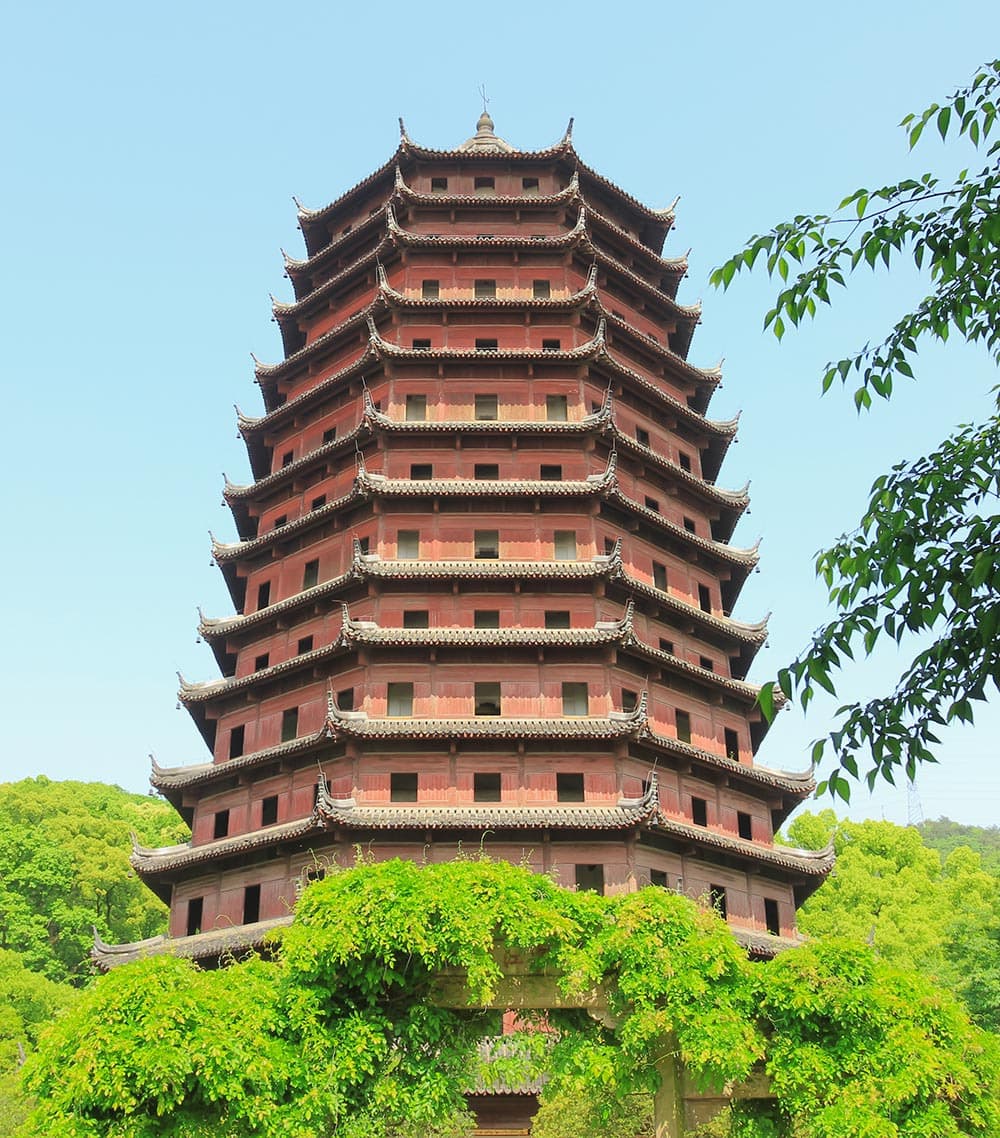
The Pagoda of the Six Harmonies, also known as the Liuhe Pagoda, stands on Yuelun Hill, south of Hangzhou, and overlooks the Qiantang River. Rising 60 meters high, this wooden and brick tower still serves as a landmark for night navigation and remains one of Zhejiang's most iconic Buddhist structures.
Why visit the Pagoda of the Six Harmonies
The pagoda condenses more than a thousand years of Chinese history into a site that merges religious architecture, riverside panorama and woodland walks. Its name refers to the liuhe, the six harmonious precepts of Buddhism: the harmony of heaven, earth, and the four cardinal directions. This symbolism is reflected in the octagonal structure and the seven exterior levels (thirteen interior levels) of the building.
Beyond the monument itself, Yuelun Hill offers a verdant refuge within a metropolis of more than ten million inhabitants. The Qiantang Bridge, built in the 1930s and visible from the pagoda, provides a striking contrast between ancient heritage and modern infrastructure.
History of the pagoda
The pagoda was built in wood towards the end of the 10th century, during the Kaibao era of the Northern Song dynasty. Its purpose was twofold: to serve as a beacon for boats ascending the Qiantang, and to appease the forces thought responsible for the bore, the spectacular tidal surge that strikes the river mouth twice yearly.
The structure was destroyed during the civil disturbances of 1121. It was rebuilt during the Shaoxing era of the Southern Song dynasty, in the 12th century. Major restoration work took place during the Qing era, with significant works undertaken in the late 19th century under the Guangxu reign, which gave the pagoda its present-day appearance.
The monument is now listed on the national register of protected historical and cultural sites.
What to see on site
Exterior architecture
The pagoda displays an octagonal silhouette with layered roofs, covered in glazed tiles and bordered with bells that chime in the wind. The upturned eaves and wooden framework exemplify classical Chinese Buddhist architecture.
Interior levels
Access to the various floors is via an interior staircase. Each level features carvings, frescoes and coffered ceilings decorated with floral, animal and geometric motifs. From the summit, the view encompasses the Qiantang River and its namesake bridge.
The Chinese Pagoda Park
Arranged nearby, this garden displays scale models of the country's major pagodas, helpful for situating Liuhe within the broader Chinese architectural tradition.
Trails on Yuelun Hill
The paths leading up to the pagoda are dotted with Buddhist chapels, small stelae and statues. The peony blooms in April make the walk particularly delightful in spring.
Practical information
- Duration of visit: allow 1.5 to 2.5 hours including the climb and exploration of the hill.
- Admission: moderate entry fee, with an additional charge to access the summit of the pagoda.
- Hours: open during daytime hours; verify seasonal timings before your visit.
- Accessibility: the interior climb involves narrow staircases and is not well suited for those with reduced mobility.
- What to bring: comfortable shoes for the hill trails.
When to visit
The most favorable period extends from April to May, when peonies bloom on Yuelun mountain and temperatures remain mild. October and November also offer excellent conditions, with clearer skies and the possibility of witnessing the Qiantang bore, particularly spectacular around the 18th day of the 8th lunar month (mid-September to mid-October). Summer is hot and humid; winter is grey but attracts fewer crowds.
How to get there
The pagoda is located southwest of Hangzhou, approximately 8 km from West Lake. Several bus lines serve the site, notably lines 3, 4, 287, 318, 334 and 354, with a stop near the entrance. From the city center, expect 30 to 45 minutes by taxi or ride-hailing depending on traffic. Visitors with a full day available can combine the pagoda with a walk along the Qiantang or a visit to Lingyin Temple, located further north.
Nearby attractions
- Hangzhou: capital of Zhejiang, renowned for its West Lake, a UNESCO World Heritage site.
- Big Goose Pagoda: another outstanding example of pagoda architecture, located in Xi'an.
- The Great Wall at Juyongguan: an accessible and well-preserved section near Beijing.
Frequently asked questions
Preparing your trip
The Pagoda of the Six Harmonies fits naturally into an itinerary around Hangzhou and the Zhejiang region. To build a coherent stay centered on this site, consult our suggested itineraries on our China travel page.

Interested in this visit?
We can include it in your personalised itinerary.