Gong Prince's Palace
Gong Prince's Palace
A Qing imperial residence among the best preserved in Chine, Gong Prince's Palace reveals in Beijing its Siheyuan architecture and the Shicha Lake garden.
Gong Prince's Palace is one of the best-preserved princely residences in Chine. Located east of Houhai Lake, on Qianhai Xijie Street in Xicheng District, in Beijing, it spans nearly 6,000 m² and includes a garden of 2,800 m² nicknamed "the pearl of Shicha Lake". A visit here illuminates the lifestyle of Manchu princes and the architectural evolution of the late Qing dynasty.
Why visit Gong Prince's Palace
Three main reasons make this visit worthwhile:
- An intact princely residence: more than 40 Siheyuan-style houses, arranged around courtyards, gateways and pavilions, showcase rare aristocratic architecture on mainland Chine.
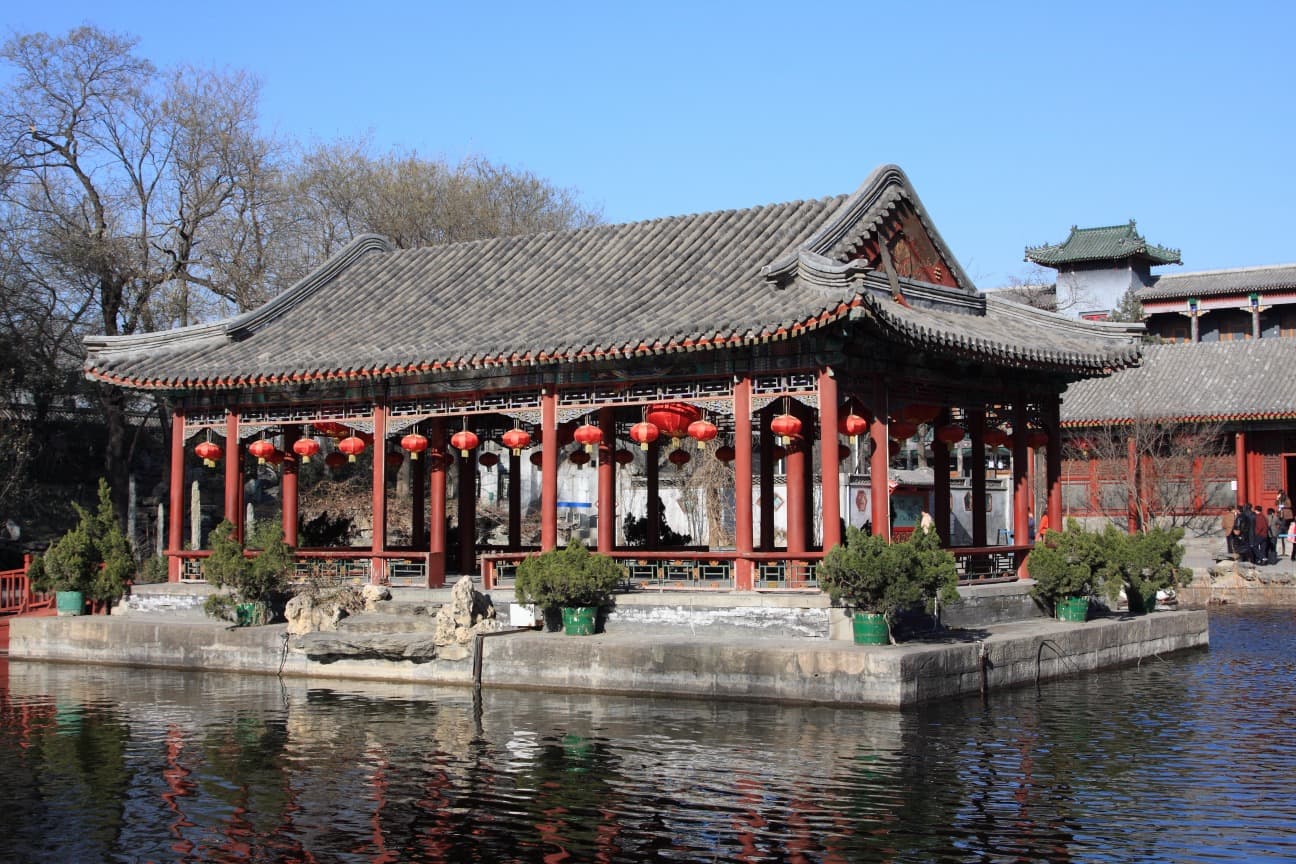
- An emblematic garden: its artificial mountains, ponds, ancient trees and pavilions blend the aesthetic codes of southern gardens (Suzhou, Hangzhou) with the architectural rigor of the north.
- A rich history: the site spans two turbulent centuries, from fallen imperial favorite to Gong Prince, brother of the emperor, through its diverted uses in the 20th century.
Palace history
The palace was built in 1776, under the Qing dynasty (1644-1911). It served as a residence for He Shen, judicial official and favorite of Emperor Qianlong (reign 1735-1796). It was called at that time the "He House". Renowned for his colossal fortune, He Shen fell from grace upon Qianlong's death and was forced to commit suicide in 1799.
The residence subsequently changed hands several times before becoming, in 1851, under Emperor Xianfeng's reign (1850-1861), the residence of Prince Yixin, brother of the emperor, better known as "Gong Prince". The site took its present name from then on.
In the 20th century, after 1949, the palace underwent several successive uses: girls' school at Furen University, dormitory of the Ministry of Public Security, then a fan factory. It was inscribed in 1982 on Chine's national cultural heritage list and opened to the public in 1988, after extensive restoration.
What to see on site
The palace is divided into three axes (east, center, west) and combines official residence, private quarters and pleasure garden.
Main buildings
- Yan'an dian, the Palace of Silver and Peace, main reception hall.
- Duofu Xuan, the Pavilion of Multiple Happiness.
- Ledao Tang, the Hall of the Joyful Way.
- Jiale Tang, the Hall of Sweet Joy.
- The Hall of Taoism and the Hall of Precious Light.
Exhibition pavilions
- Yin'an Pavilion: thematic exhibitions of paintings, furniture and porcelain from Ming and Qing dynasties.
- Xijinzhai Pavilion, at the rear of the site: personal objects of Gong Prince, which illuminate the material culture of a great princely house.
The garden
With its 2,800 m², the garden blends the classical style of southern Chine with northern architecture. It features artificial mountains, ponds, ancient trees and several pavilions. A teahouse and a covered theater where Beijing opera performances are held enliven the visit.
When to go
The palace can be visited year-round, but the garden is particularly photogenic in spring (April-May), for the blooms, and in autumn (October-early November), when the foliage reveals the pavilions. Beijing's summer is hot and humid, winter dry and freezing: plan accordingly.
The site is very busy in the middle of the day, especially weekends and during Chinese holidays (Lunar New Year, National Day on October 1st). Prefer morning opening or late afternoon.
Practical information
- Address: 17 Qianhai Xijie, Xicheng District, Beijing.
- Hours: open daily, with reduced hours in winter low season. Check official hours before your visit.
- Admission: moderate entrance fee; a combined ticket including a Beijing opera performance in the covered theater is available at a higher price.
- Duration of visit: allow 1.5 to 2.5 hours depending on your interest in exhibitions and the garden.
- Good to know: present your passport at the entrance (online reservation often required for Chinese public sites).
How to get there
- By metro: Ping'anli station (lines 4 and 6), then 10 to 15 minutes' walk through the hutongs.
- By bus: several lines serve stops near Houhai Lake; check the updated route via a local app.
- On foot or by pedicab: the palace fits naturally into a stroll through the hutongs around Shichahai Lake.
Nearby
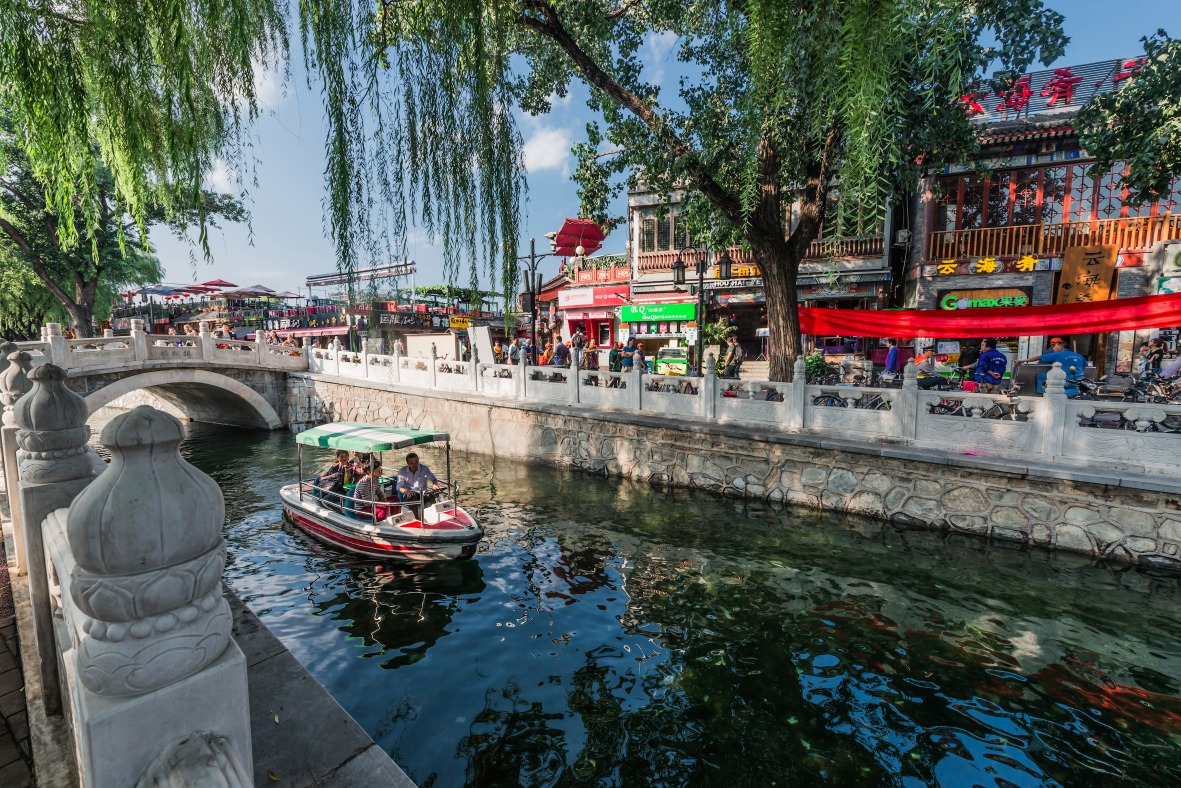
The palace is located in the heart of the historic Shichahai neighborhood, one of Beijing's last preserved hutong complexes. Within a few minutes' walk, you can stroll along Houhai Lake and Qianhai Lake, cross Yinding Bridge, or continue to the Drum Tower and the Bell Tower. The Forbidden City and Beihai Park are also accessible on foot or by taxi. To further explore the capital and its surroundings, see also our page on the Great Wall at Juyongguan.
Frequently asked questions
Frequently asked questions
Allow 1.5 to 2.5 hours to explore the main buildings, exhibition pavilions and garden. Add 30 to 45 minutes if you attend a Beijing opera performance in the covered theater.
Yes. The most convenient station is Ping'anli (lines 4 and 6). From there, allow 10 to 15 minutes' walk through the hutongs to the main entrance on Qianhai Xijie Street.
Spring (April-May) and autumn (October-early November) offer the best balance between pleasant temperatures and the garden's enhancement by blooms or fall foliage colors.
The palace was built in 1776 for He Shen, Qianlong's favorite, and called "He House". After He Shen's fall, it was confiscated and then granted in 1851 to Prince Yixin, brother of Emperor Xianfeng and better known as Gong Prince. It is the latter who gave the site its definitive name.
Yes, a covered theater located in the palace offers Beijing opera performances. A combined ticket including the performance is generally available at the entrance.
Plan your trip
Gong Prince's Palace easily combines with a day dedicated to the hutongs and Shichahai Lake, as a complement to the Forbidden City and the Temple of Heaven. To build a complete itinerary including Beijing and other regions, consult our Chine tours or explore our Beijing guide.
Nearby
Interested in this visit?
We can include it in your personalised itinerary.