Yadan National Park
Yadan National Park
Located 180 km from Dunhuang, Yadan Park unfolds a landscape of yardangs carved by wind over 7 million years, along the ancient Silk Road.
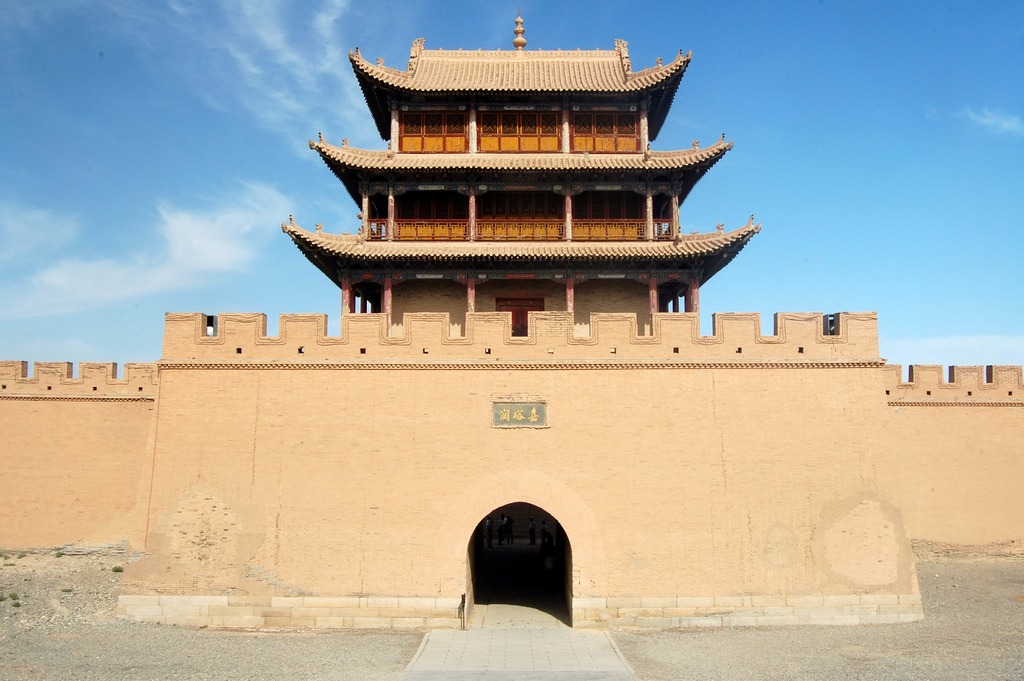
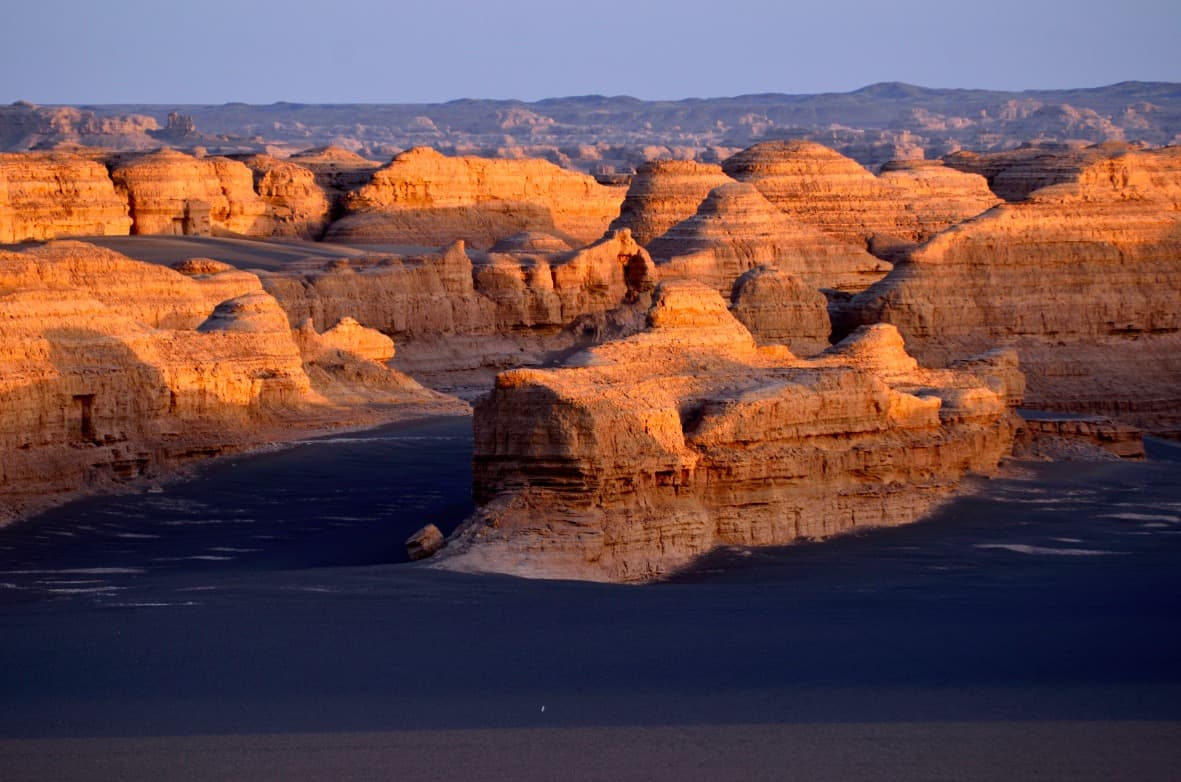
Yadan National Park is a vast geological site located approximately 180 km northwest of Dunhuang, in Gansu Province. Shaped by wind erosion for over 7 million years, this yardang landscape stretches across nearly 450 km² and constitutes one of the world's largest formations of its kind. Close to the Yumen Pass and the section of the Great Wall built under the Han Dynasty, it once marked the Silk Road.
Why Visit Yadan Park
- A landscape of yardangs sculpted by wind over millions of years, designated as a state-protected geological site.
- A historic stop on the Silk Road, in immediate proximity to the Jade Gate and remnants of the Han Great Wall.
- Rock formations compared by visitors to the Temple of Heaven in Beijing, the Potala Palace, mosques, Roman relics, or the pyramids of Egypt.
- A singular atmosphere at sunset, when low-angle light reveals the relief of the landscape.
History and Geology
Once a mountain massif riddled with fissures, the site is the result of a long geological process marked by wind erosion over more than 7 million years. The hard soil, light reddish in color, and rocks called yardangs are characteristic of arid regions swept by prevailing winds, with geological features similar to those of the Gobi Desert.
Located 85 km west of the Jade Gate Pass, Yadan was an important passage point along the Silk Road. Caravans crossed the section of the Great Wall built under the Han Dynasty here, whose ruins still remain in the surrounding area.
The "Ghost City of Dunhuang"
The area is nicknamed the "ghost city of Dunhuang" because of the wind whistling between the rocks, evoking howls. Travelers who passed through at night reported these strange sounds, and local inhabitants believed the place to be haunted — which gave the site this name that has remained attached to it.
What to See
Spanning approximately 25 km in length and 18 km in width across nearly 450 km² of area, Yadan is like an open-air museum to explore. The most striking formations evoke, depending on angles and imagination, animal shapes (lions, peacocks, tortoises), caravans in motion, or architectures from around the world:
- a miniature version of the Temple of Heaven in Beijing;
- forms reminiscent of the Potala Palace;
- silhouettes evoking mosques, ancient Roman relics, or the pyramids of Egypt.
The whole, carved by wind, gives the impression of a ruined medieval city and complements the traces left by the Han ruins in the surrounding area.
When to Visit
The park is mainly visited from May to October, when temperatures are milder. Summer is hot and windy, winter very cold and exposed. Sunset is generally considered the best time to visit: the low-angle light reveals the relief of the yardangs and the color of the soil. Bring water, sun protection, and a windbreaker: the site is completely open.
Practical Information
- Duration of visit: plan for half a day on site, accounting for travel from Dunhuang.
- Bus tour: visits take place by park bus, with stops at main viewpoints. The guided circuit lasts approximately 1.5 hours and is narrated in Chinese.
- Rates and hours: an entrance fee including the tourist bus is charged (moderate amount, to be confirmed on-site). The site opens early in the morning and closes in early evening; the last bus departure is usually in late afternoon.
- What to bring: water, snacks, clothing suited to wind and desert temperature fluctuations.
How to Get There
The park is located approximately 180 km northwest of Dunhuang, the most convenient starting point. Several options are available:
- Direct bus: from Dunhuang's bus station, a direct bus connects the city to Yadan.
- Taxi or private vehicle: it is possible to book a taxi or a vehicle with driver for the day, allowing you to combine Yadan with other desert sites.
- Organized excursion: the simplest option, often combined with the Yumen Pass and the Han Great Wall.
Nearby
- Yumen Pass (Jade Gate): ancient guard post of the Silk Road, 85 km east of the park.
- Han Section of the Great Wall: rammed earth remains among the oldest preserved, in the same sector.
- Dunhuang and the Mogao Caves: the oasis city and its Buddhist complex are the other highlight of the region.
FAQ
Frequently asked questions
Plan for half a day to a full day, including travel from Dunhuang. The bus tour within the park lasts approximately 1.5 hours.
Sunset is generally considered the most photogenic time: the low-angle light highlights the yardangs and their light red color.
Access to the heart of the site is by park bus, with stops at main viewpoints. Free walking visits are limited for preservation reasons.
The wind rushing between the rock formations produces a whistle evoking howls. Silk Road caravans believed the place was haunted, which gave it this nickname.
Yes, the Yumen Pass and the Han Great Wall section are on the way and are often visited in the same day from Dunhuang.
Include Yadan in Your Trip
Yadan Park naturally fits into an itinerary around Dunhuang, between the Silk Road, desert, and Buddhist heritage. To plan your stay, consult our ideas for customized travel in Chine.

Interested in this visit?
We can include it in your personalised itinerary.