Sangke Prairie
Sangke Prairie
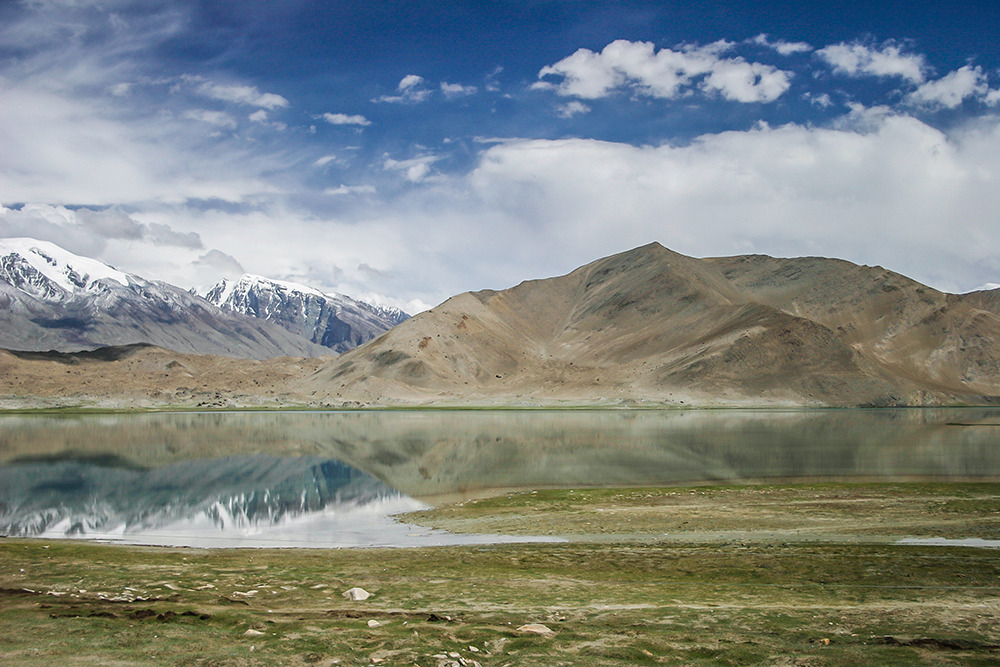
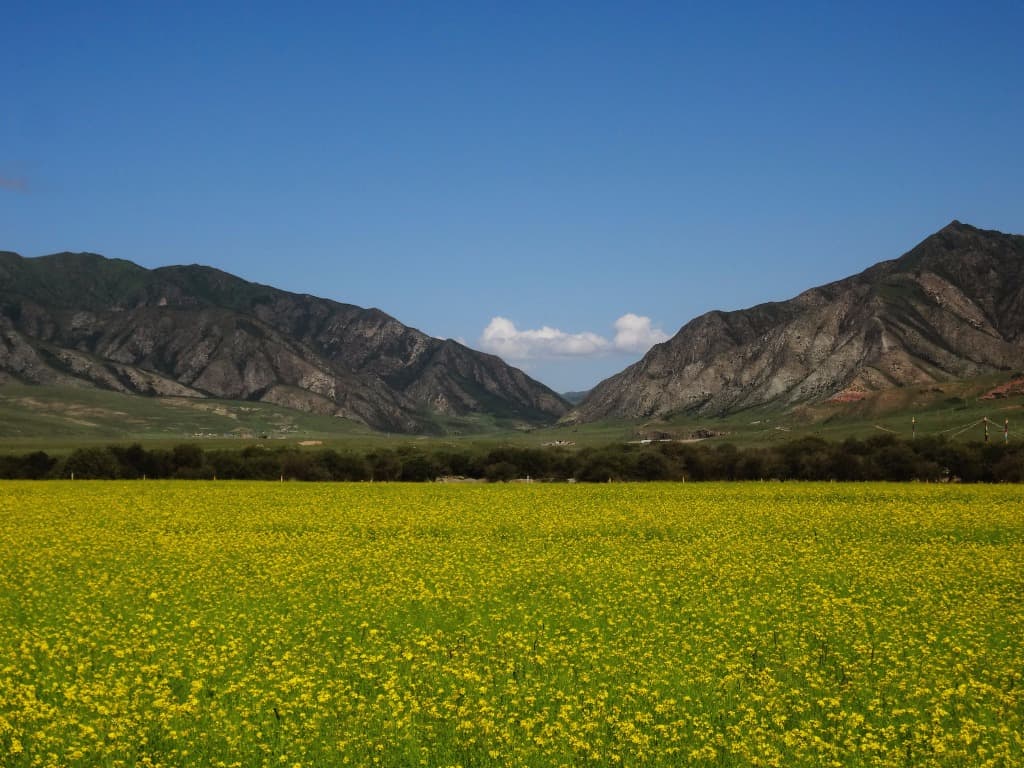
Located 15 km from Xiahe in Gansu, Sangke Prairie stretches across 70 km² at 3,000 m altitude, where nomadic yurts, yak herds, and the Daxia River converge.
Sangke Prairie extends 15 km west of Xiahe, in Gansu province, around the village of the same name. Bordered by the Daxia River, it covers approximately 70 km² at 3,000 m altitude and remains a grazing ground for Tibetan herders, frequented by travellers en route to Labrang Monastery.
Why visit Sangke Prairie
Sangke offers a genuine glimpse into Tibetan pastoral life apart from Gansu's major sites. Yak and sheep herds, white yurts scattered across the valleys, and the silhouette of Phoenix Mountain in the distance compose a coherent landscape discoverable in just a few hours of walking or horseback riding.
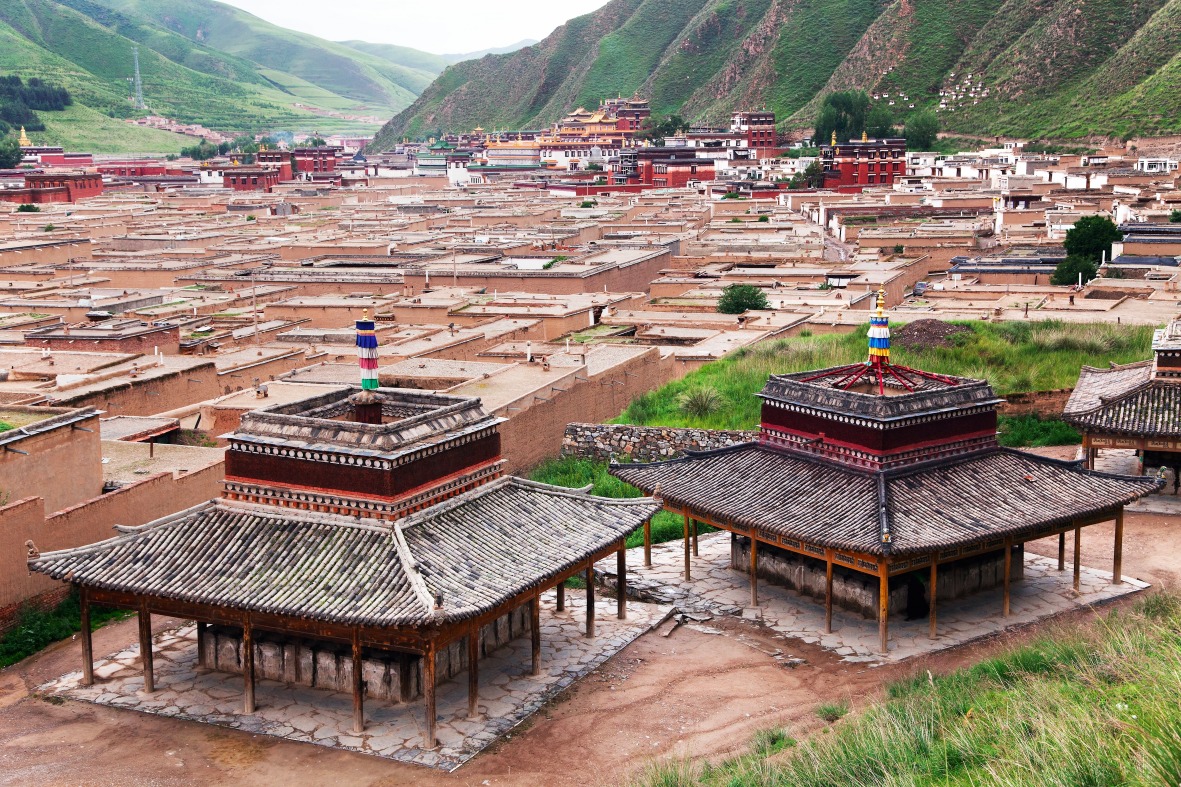
The altitude (3,000 m) significantly transforms the experience compared to the rest of the province: dry air, bright light, cool temperatures even in the height of summer. The prairie often serves as a natural extension to visiting Xiahe and Labrang Monastery, one of the six great monasteries of the Gelug school of Tibetan Buddhism.
History and context
Before opening to tourism, Sangke was a grazing ground used by Tibetan communities of Amdo, a historical region that today encompasses southern Gansu, eastern Qinghai, and northern Sichuan. Tourism development began in the late 1980s, parallel to Labrang Monastery's reopening after the Cultural Revolution.
The prairie takes its name from Sangke flowers that carpet the valleys in season. The herders who live here part of the year belong essentially to the Amdo Tibetan culture, distinguished by its language and customs from central Tibetan traditions.
What to see and do
The landscape and Daxia River
The Daxia River winds through the prairie in meanders and serves as the main orientation point. The banks offer the best vantage points over the herds and, in clear weather, views of Phoenix Mountain closing the horizon to the south.
Horseback riding
Herders offer horseback or yak rides, by the hour or half-day. Tariffs are negotiated on-site and remain moderate. Helmets are rarely provided: less experienced riders will prefer short, supervised outings.
Meeting the nomads
Several families open their yurts for butter tea, meals, or overnight stays. It's an opportunity to taste local preparations made with roasted barley (tsampa), yak yoghurt, and dried meat. Respect for customs—entering the yurt from the left, not pointing at the domestic altar—is appreciated.
Buddhist festivities
In summer, several religious gatherings and horse festivals take place in the Xiahe region. Inquire locally: dates follow the Tibetan calendar and vary each year.
When to go
Seasonality is pronounced:
- June to August: most favourable period. Sangke flowers are in bloom, daytime temperatures are mild, and yurt accommodations are operational. This is also peak Chinese tourist season.
- May and September: decent conditions, fewer crowds, but already cold nights.
- October to April: yellowed prairie, sub-zero nights, possible snow. Most nomadic accommodations close.
Pack warm clothing in all seasons: at 3,000 m, temperatures drop rapidly after sunset.
Practical information
- Altitude: 3,000 m. Acclimatization recommended if arriving directly from low altitude.
- Duration of visit: a half-day suffices for an overview; allow a full day with horseback riding, or an overnight yurt stay for genuine immersion.
- Entry: a nominal access fee is collected at the site entrance.
- Accommodation: yurt stays with herders in season, conventional hotels in Xiahe.
How to get there
Access is from Xiahe, the typical base for visiting Labrang Monastery.
- Lanzhou → Xiahe: long-distance bus from Lanzhou's south bus station, approximately 4 to 5 hours.
- Xiahe → Sangke Prairie: 15 km by road. Taxi, shared taxi, or bicycle rental from Xiahe are common options.
Nearby
- Xiahe and Labrang Monastery, 15 km away.
- Ganjia Pass and neighbouring Buddhist caves, approximately one hour's drive.
- The Langmusi region, on the Sichuan border, accessible by bus from Xiahe.
Frequently asked questions
Frequently asked questions
June to August, when flowers are in bloom and yurt accommodations are open. Outside this season, the site remains accessible but loses most of its visual appeal.
Yes, in summer season. Several nomadic families host travellers in yurts. Conventional hotels are found in Xiahe, 15 km away.
At 3,000 m, most travellers experience only mild fatigue. Avoid intense exertion on the first day and stay well hydrated, especially if arriving directly from lowlands.
Yes, herders offer short, supervised outings. The horses are accustomed to the terrain and to tourist passage.
The visit integrates naturally into a stay in Xiahe (Labrang Monastery) and can extend towards Langmusi and then northern Sichuan.
To integrate Sangke Prairie into a broader itinerary across Gansu and Amdo Tibet, explore our China trips.
Interested in this visit?
We can include it in your personalised itinerary.