Fuxi Temple
Fuxi Temple
A Ming sanctuary dedicated to Fuxi, first of the Three Sovereigns, the Taihao gong temple in Tianshui brings together 76 buildings and preserves a vibrant annual ceremony.
The Fuxi Temple, also known as Taihao gong, is often confused with the imperial palace of the venerable Fuxi. It stands on Fuxi Street in the city of Tianshui, in the heart of Gansu Province. Dedicated to Fuxi, the first of the Three Sovereigns in Chinese mythology, this sanctuary ranks among the most significant repositories of ancient pantheon heritage.
Why visit the Fuxi Temple
The site combines three major interests for visitors. First, its mythological significance: Fuxi is held to be the founding father of traditional Chinese medicine, the inventor of written characters and the author of the 64 hexagrams of the Yi Jing. Second, rare architectural heritage: the Ming complex, restored to its original state, unfolds 76 buildings across 13,000 m² in strict axial symmetry. Finally, its living dimension: the temple remains an active pilgrimage site, punctuated by annual ceremonies that draw both the faithful and the curious. Inscribed in 2001 on the list of China's key cultural relics, it far transcends mere tourist appeal.
History of the temple
The Fuxi Temple was built in 1490 under the Ming Dynasty (1368–1644) to honor the first of the Three Sovereigns. Legend recounts that Fuxi was born in Tianshui and married his sister Nuwa to repopulate humanity after the great floods that devastated the primordial world. This mythical lineage makes Tianshui a cradle of identity claimed by Chinese culture.
The building has been reconstructed more than nine times over the centuries. The 1524 reconstruction faithfully follows the original Ming architecture: three rows of south-facing buildings, carved rafters, enameled tile roofs. Another major restoration campaign took place during the reign of Emperor Guangxu in the late 19th century.
Since 1988, the temple has hosted the Dragon's Birthday Festival each year, celebrated on the 13th day of the fifth lunar month. This revival of ritual worship accompanied the temple's designation as a protected site in 2001.
What to see
The architectural complex
The complex spans 13,000 m² and groups approximately 76 buildings arranged in four sections, all facing south according to fengshui principles. Ming architecture is recognizable by its rigorous symmetry, carved and painted rafters, arcades, terraces, towers and galleries that punctuate the visitor's progression from courtyard to courtyard.
The main hall
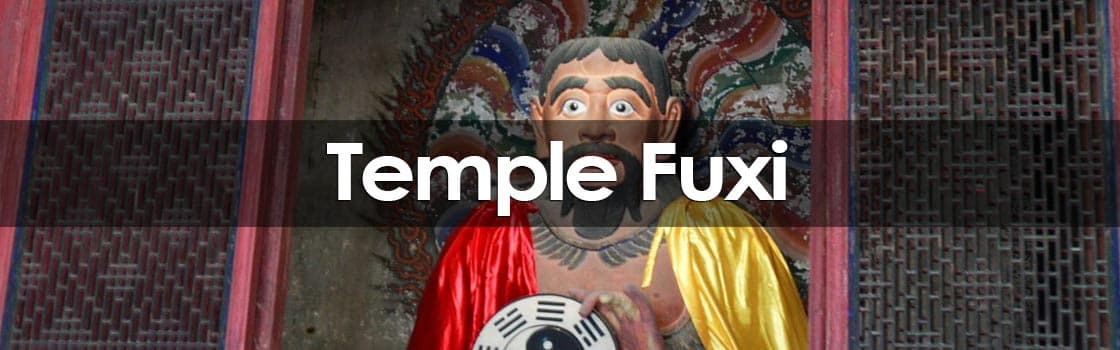
This is the centerpiece of the site. It houses a monumental clay statue of Fuxi, depicted as a founding patriarch. The roof is covered with enameled tiles and the interior ceiling is adorned with wooden sculptures depicting the 64 hexagrams attributed to Fuxi—an iconographic program that transforms the hall into a veritable manual of cosmology.
The Guyue Pavilion
Located south of the great hall, the Guyue Pavilion, or Hall of Drums and Music, is linked to the tradition that Fuxi taught the principles of music and literature there. This more intimate building offers a serene counterpoint to the solemnity of the main hall.
When to visit
The busiest period extends from January 15th to May 13th of the lunar calendar, when the great annual sacrificial ceremony dedicated to Fuxi takes place. Peak crowds concentrate around May 13th, the Dragon's Birthday: the atmosphere is dense, ritualistic and spectacular, though the site becomes very crowded. For a quieter visit, favor autumn, when Gansu's climate remains mild and the light is favorable for photography.
Practical information
- Duration of visit: allow 1 to 2 hours to explore all the courtyards and buildings.
- Hours: open daily throughout the year; check exact times with the local tourist office before your visit.
- Admission: modest entry fee, subject to change.
- Dress code: active place of worship; respectful attire is recommended.
How to get there
From Tianshui railway station, two straightforward options are available:
- Take bus line 1 or 6 to Tianshui Square, then proceed to the temple on foot or by taxi (short journey).
- Take bus n°21 directly, which serves the Fuxi Temple stop.
The temple is located in the historic center of Tianshui, making access easy from most accommodations in the city.
Nearby attractions
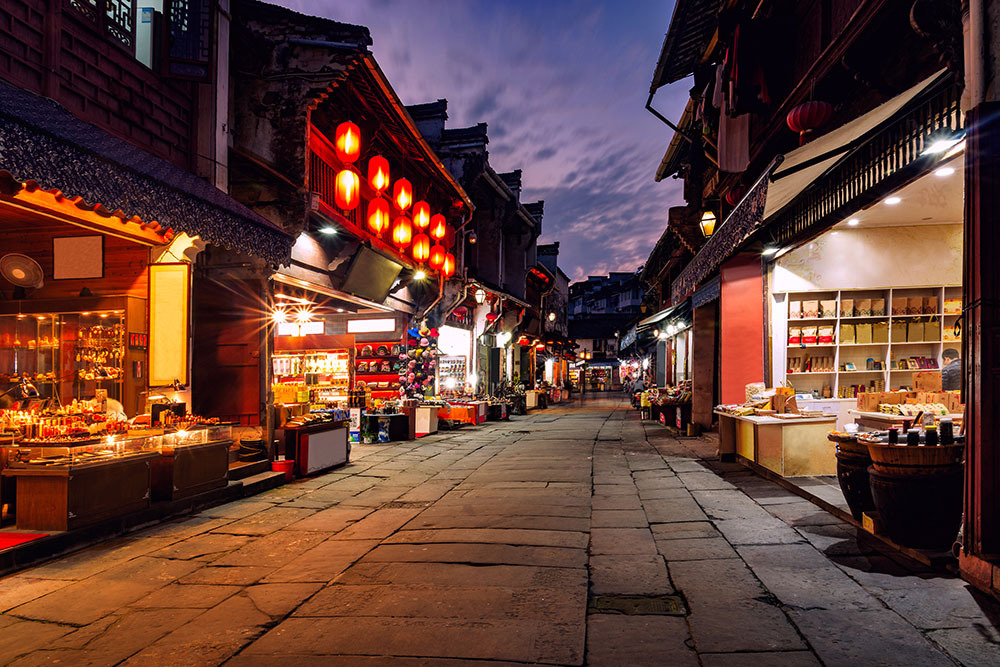
Tianshui is a strategic stop on the Gansu route, close to several major sites. Make the most of your visit by exploring Tianshui city and its ancient alleyways. For the rest of your China itinerary, extend the mythological and Buddhist theme with the Bezeklik Caves of the Thousand Buddhas, the Great Pagoda of the Wild Goose in Xi'an, or the Longgong Cave. For monument heritage enthusiasts, the Great Wall at Juyongguan rounds out your itinerary.
Frequently asked questions
Frequently asked questions
Include the Fuxi Temple in your journey
A mythological and architectural milestone, the Fuxi Temple naturally fits into an itinerary dedicated to Gansu and the Silk Road. To build a tailor-made route incorporating Tianshui and neighboring sites, explore our China tours.
Interested in this visit?
We can include it in your personalised itinerary.