The Leitai Tomb of the Han Dynasty
The Leitai Tomb of the Han Dynasty
An Eastern Han necropolis discovered in 1969 in Wuwei, the Leitai Tomb brought to light the galloping bronze horse, which became the official logo of Chinese tourism.
North of Wuwei's city center, in Liangzhou District (Gansu Province), the Leitai Tomb of the Han Dynasty occupies the Leitai Park. This necropolis from the Eastern Han dynasty takes its name from the elevated platform on which it stands. It is chiefly known for having yielded one of the most celebrated pieces of Chinese archaeology: the bronze horse statue that became the official logo of national tourism.
Why Visit the Leitai Tomb of the Han Dynasty
- An exceptionally well-preserved Eastern Han necropolis, accessible via an underground tunnel of bricks and stone.
- The discovery site of the galloping bronze horse, emblem of Chinese tourism since 1985.
- More than 200 artifacts unearthed: weapons, jade, pottery, and a miniature funeral procession of 99 copper chariots with horses and soldiers.
- A short visit (allow 1 to 1.5 hours) easily combinable with other historic sites in Wuwei.
History of the Site
The tomb was discovered in 1969 by farmers who were digging a tunnel as part of defense works in preparation for war. Beneath the platform, they stumbled upon an intact burial dating to the end of the Eastern Han dynasty.
Inscriptions found on the artifacts allow the construction to be dated between 186 and 219 CE. The tomb is believed to have been built for a high-ranking military officer stationed in Zhangye, a city that then held a strategic position on the Silk Road. The burial yielded remains attributed to General Zhang and the prefect of Wuwei at the time, though the precise identity of the general remains debated by historians.
What to See on Site
Funerary Architecture
The tomb rests on a platform 10 m high, covering an area of 106 m long by 60 m wide. From the entrance gate facing east, an underground tunnel of bricks and stone measuring 19 m leads to three successive chambers: the antechamber, the central hall, and the rear chamber. This tripartite division is characteristic of Han aristocratic tombs.
The Taoist Pavilions
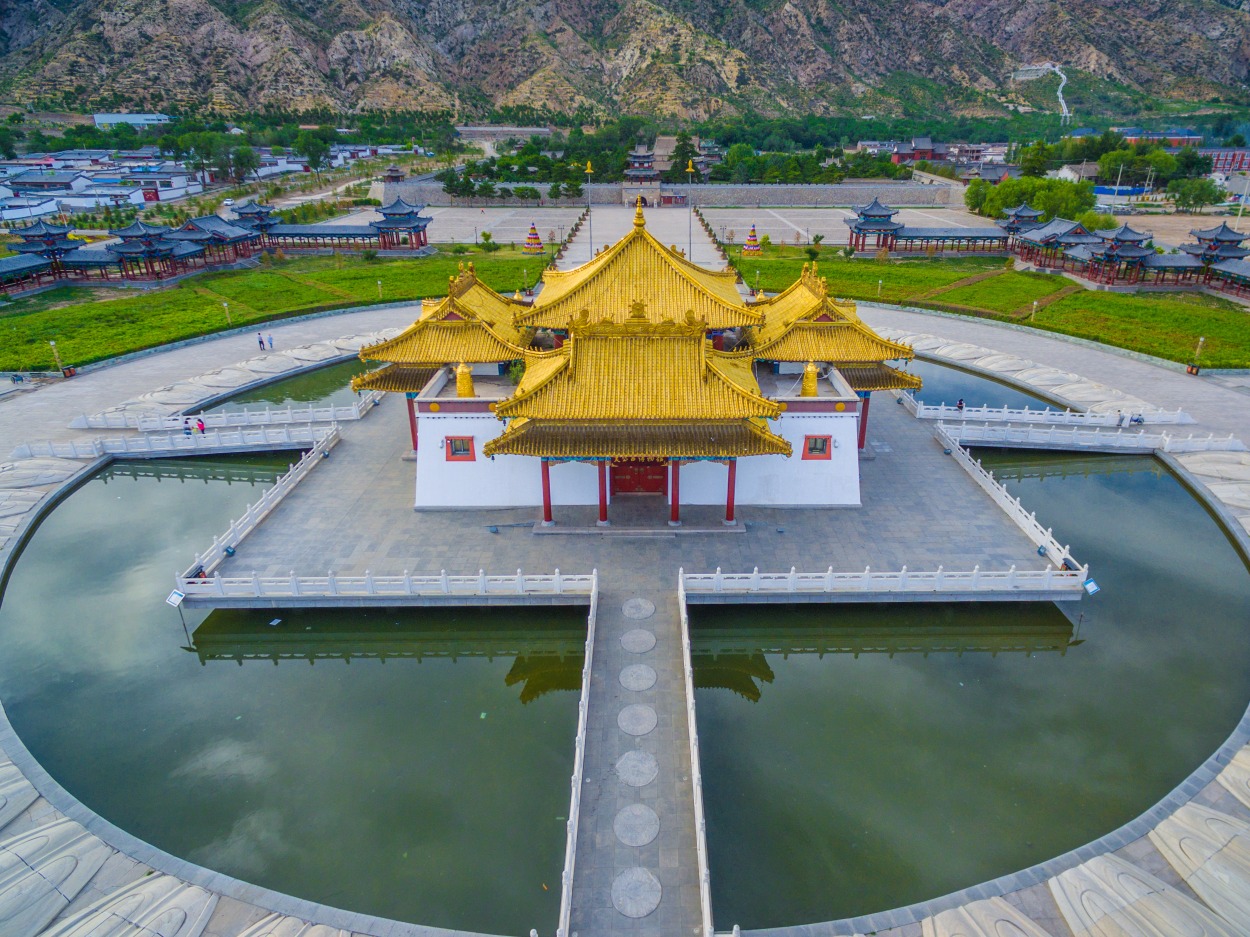
On the platform stand a dozen structures erected later, under the Ming and Qing dynasties. They are dedicated to Taoist deities: you will recognize the Sanxing, Leizhu, Big Dipper, Sagittarius Six Stars, and Passing halls, as well as the West and East halls. The ensemble testifies to the long religious continuity of the place, transformed into a ritual site long after the burial.
The Bronze Funeral Procession
The tomb yielded 211 artifacts: objects in gold, silver, copper, stone, iron and jade, as well as pottery. The masterpiece is a miniature procession of 99 copper chariots, accompanied by horses and soldiers, which presumably represent the military command of the deceased.
The Wuwei Bronze Horse
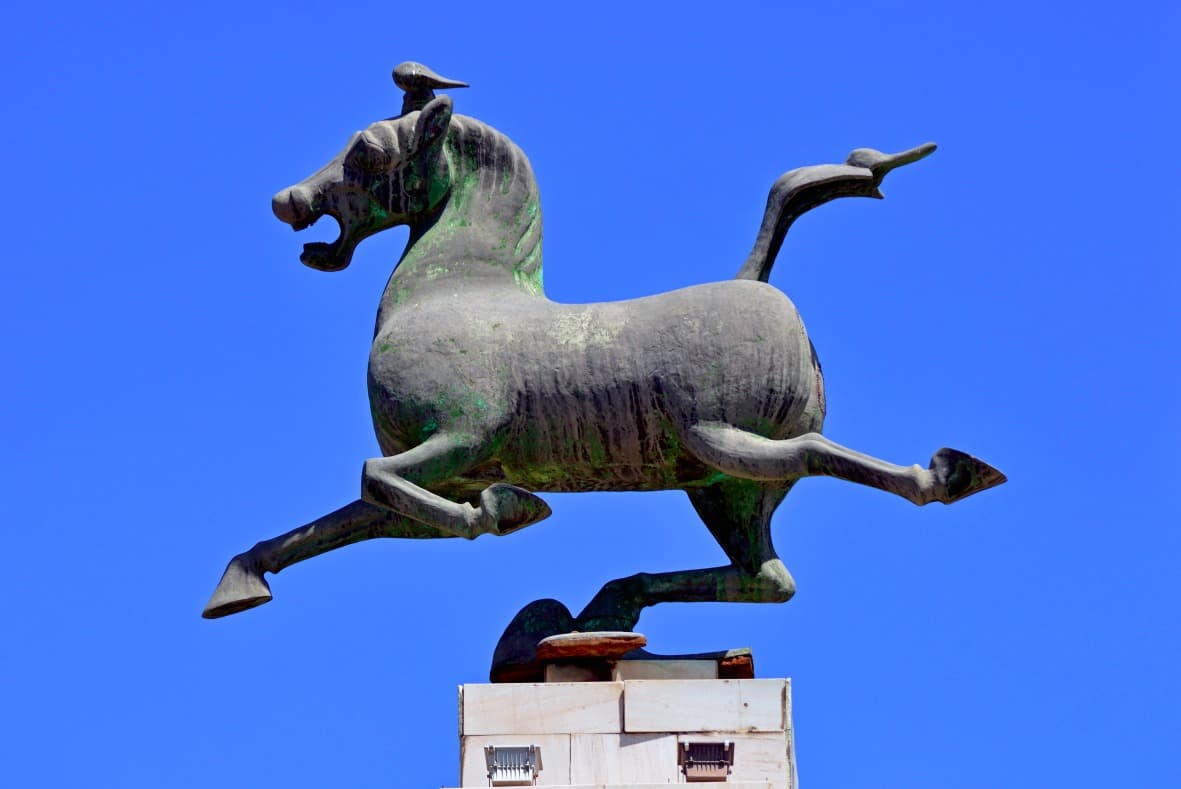
Among the artifacts, a bronze horse statue brought fame to the site. The sculpture depicts a stallion in full gallop, head held high, balanced on a single hind leg. It measures 34 cm high by 45 cm long and weighs 7.15 kg. In 1985, the National Tourism Bureau of Chine adopted it as the official logo of Chinese tourism; it also became the symbol of Wuwei.
Due to the risk of looting in the region, the original is today preserved at the Gansu Museum in Lanzhou. On site at Leitai, visitors will discover a faithful replica.
Practical Information
- Duration of visit: 1 to 1.5 hours for the tomb and platform; allow 2 hours if you explore the entire Leitai Park.
- Hours: open daily, continuous schedule. Exact hours vary by season; inquire locally.
- Admission: paid entry at moderate cost.
- Best time to visit: May to October. The dry continental climate of Gansu makes winters harsh and summers hot but manageable. Spring and early autumn offer the most pleasant conditions.
How to Get There
From Wuwei's city center, several bus lines serve the site directly: take lines 1, 6, 9, or 101 and get off at the Leitaishizi stop, located just steps from the entrance. On foot, the tomb is about 20 minutes away from Dayun Temple, which allows you to combine both visits in the same half-day.
Nearby Attractions
Wuwei and the Hexi Corridor harbor other major sites linked to the Silk Road and Chinese Buddhism:
- The Bezeklik Thousand Buddha Grottoes, a rock sanctuary in Xinjiang.
- The Hexigten Geopark, for its geological landscapes.
- The Great Wild Goose Pagoda, a Buddhist landmark in Xi'an, another key stop on the Silk Road.
Frequently Asked Questions
Frequently asked questions
Include Wuwei in Your Journey Through Chine
The Leitai Tomb of the Han Dynasty is a worthwhile stop for travelers interested in the Silk Road and Chinese archaeology. To build a bespoke itinerary integrating Wuwei, the Hexi Corridor, and other major sites in the country, explore our journeys through Chine.
Interested in this visit?
We can include it in your personalised itinerary.