Taiyuan
Taiyuan
Capital of Shanxi and gateway to Pingyao, Mount Wutai and the Yungang Grottoes: what you need to know before visiting Taiyuan.
Name: Taiyuan
Chinese name: 太原市
Province: Shanxi
Status: Prefecture-level city
Population: 4,201,591 inhabitants
Area: 6,959 km²
Taiyuan is the capital of Shanxi province. As a major industrial and commercial hub for the province and northern Chine, Taiyuan is a large urban center renowned for its iron and coal production.
Despite its rich 2,500-year history, Taiyuan offers relatively few attractions for tourists. However, Taiyuan remains a pleasant city, sufficiently cosmopolitan and perfect for enjoying modern amenities without the bustle of larger metropolises.
History
Formerley known as Jinyang, Taiyuan served as the capital of Chine during the reign of King Xiang of the Xia dynasty.
At the beginning of the Warring States period, it was also the capital of the Zhao Kingdom. As the birthplace of the Tang dynasty, it holds tremendous historical significance. The city was subsequently destroyed during attacks by the Song army in 979. It was later rebuilt and renamed Songcheng in 982.
Its strategic position provided numerous advantages for military campaigns and attracted the attention of many dynastic rulers.
It was only during the Qing dynasty that the city was named Taiyuan.
Today
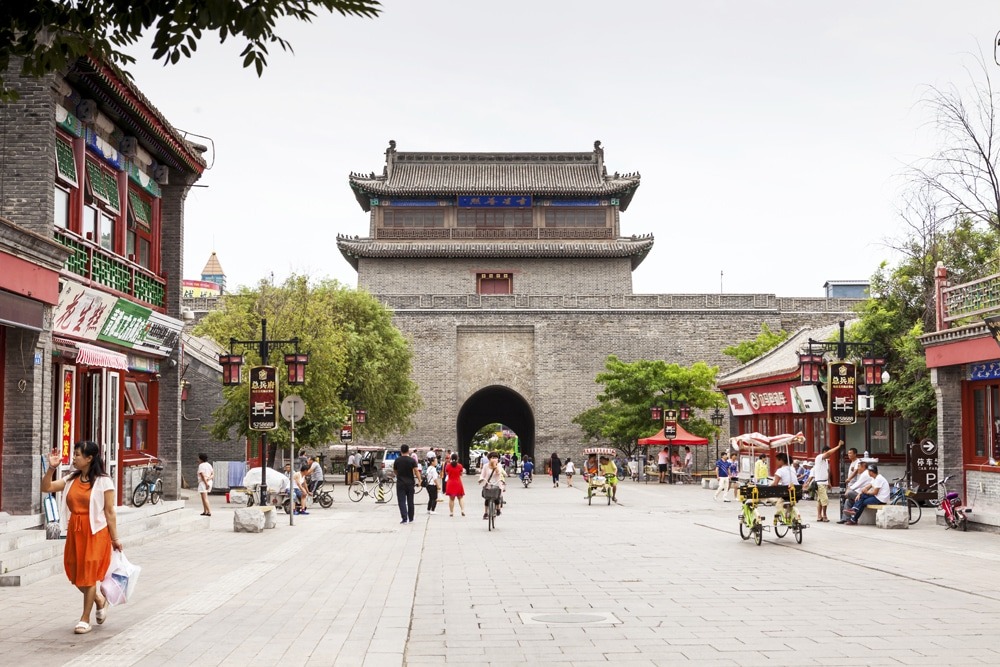
As a modern city and capital of Shanxi province, Taiyuan boasts several assets that ensure a pleasant stay for visitors. Often seen as a springboard for discovering the rich cities and landscapes that define the province, Taiyuan offers its passing visitors some compelling attractions.
During your stay in Taiyuan, do not miss the new Shanxi Museum, ranked among Chine's finest provincial museums. It houses rare funerary remains from the Northern dynasties. The museum perfectly illustrates the province's entire history through engaging exhibitions and creative displays.
Beyond its museum, which alone merits a trip to Taiyuan, the city contains several other historic structures such as the Jinci Temple or the Temple of Two Pagodas, which has become a symbol of the city due to its unique architecture. The Chongshan Monastery, which houses impressive statues of Samantabhadra, Guanyin and Manjusri, also deserves a visit.
Climate
Taiyuan experiences a semi-arid climate. Spring is dry with occasional dust storms and precedes very hot and wet summers. Winters are long and cold but dry and sunny.
The average temperature recorded in January is -5.5°C while in July it rises to 23.4°C, with an annual average of 9.96°C.
The best time to visit Taiyuan is from late spring through autumn.
Air
Taiyuan Wusu International Airport is Shanxi's largest airport. It currently welcomes nearly 20 airlines operating 80 domestic flights from Beijing, Tianjin, Shanghai, Chengdu and Xi'an.
It also offers international flights, notably from Paris, London, New York, Singapore, Kuala Lumpur and Seoul.
Train
Taiyuan is located on the high-speed rail line connecting Datong, Pingyao and Xi'an. Both train stations provide easy access to the city from Beijing, Xi'an, Zhengzhou, Wuhan and other cities throughout the province.
Long-distance bus
The city benefits from excellent road connections and can be reached by bus from most major cities in surrounding provinces.
It is relatively easy to move around the city using local buses. Taiyuan has 230 bus lines covering the entire city and its surroundings.
Numerous taxis also operate throughout the city.
What to do in Taiyuan?
- Explore the history of the province at the Shanxi Museum.
- Discover the Temple of Two Pagodas, one of the city's iconic symbols.
- Visit the Jinci Temple, an impressive wooden structure typical of Shanxi architecture.
Want to discover this destination?
Our local advisors design your tailor-made trip.