Yinchuan
Yinchuan
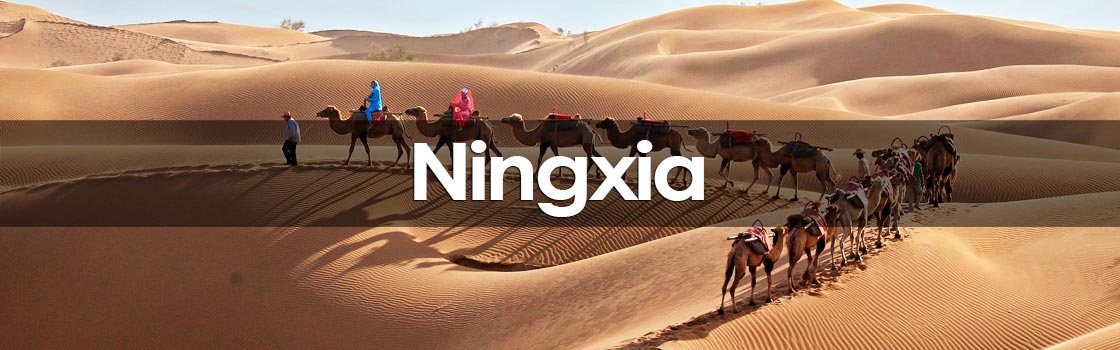
Capital of the Hui Autonomous Region of Ningxia, Yinchuan blends Sino-Muslim culture, Xi-Xia heritage and access to the Tengger Desert.
Name: Yinchuan
Chinese name: 银川
Province: Ningxia
Status: City-Prefecture
Population: 1,993,088 inhabitants
Area: 9,555 km²
Yinchuan is a city located at the heart of Chine. Capital of the Hui Autonomous Region of Ningxia, it sits west of the Yellow River and east of the Helan Mountain Range.
Yinchuan has recently become a sought-after destination among travelers since the launch of new flights connecting the city's airline to those of Arab nations. The majority of this city's population, the Hui, are Muslim and cultivate a fascinating Sino-Muslim culture worth discovering during a trip to Chine.
History
In the first century before Christ, the city of Yinchuan was a county named Fuping. In the sixth century, it was renamed Huaiyan.
In 907, at the end of the Tang Dynasty, the Xi-Xia Dynasty dominated the county.
In 1227, the Mongols arrived to conquer the city. They pillaged it and massacred its inhabitants. The city was then renamed Iryai.
It was only under the rule of the Ming and Qing dynasties (1368–1911) that the county became a city-prefecture of Ningxia. A few years later, in 1928, a part of Ningxia province was merged with Gansu province, and from that date onwards, Yinchuan became a capital.
Yinchuan was integrated into Gansu province when Ningxia was abolished in 1954. In 1958, Yinchuan once again became the capital of Ningxia during the establishment of the Hui Autonomous Region.
Yinchuan was an important commercial and administrative city. Since its appointment as provincial capital, the city has evolved considerably. It managed to benefit from coal minerals near Shizuishan to develop its economy while preserving its traditions.
Today
With its nickname of the "Phoenix City," Yinchuan is a city experiencing strong economic growth. Indeed, the capital still boasts numerous plains dominated by intensive, highly productive farming dating back to the Han and Tang eras. Yinchuan is also characterized as the heart of the country's agricultural distribution and cattle markets.
Regarding culture and religion, this provincial capital was and remains today the city that welcomes the Hui minority, known as the Muslims of Chine.
Yinchuan has also become an important commercial exchange center between the West and the East.
Yinchuan is defined as a city of many ethnic minorities. Among its population, one can find the Han, the Hui, the Manchu, the Mongols, and the Chaoxian people. 26.3% of the capital's total inhabitants are Hui. This population still maintains its customs and traditions. The Hui represent the blend of Muslim religion with Chinese culture.
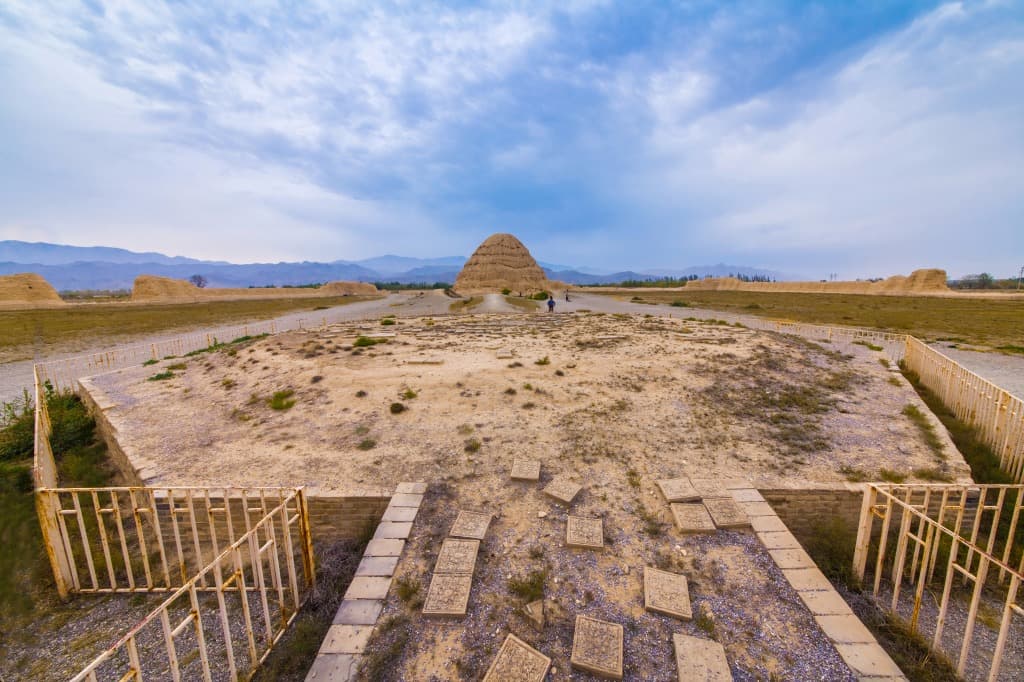
During a visit to Yinchuan, you will quickly notice that it is divided into two parts: the modern city and the old town. You can discover some remnants of the past, such as numerous pagodas and mosques, including the Nanguan Mosque. The Haibao Pagoda, in the northern suburbs of the city, is surrounded by a monastery and offers a pleasant visit. The Chengtian Pagoda to the west of the old town also deserves a detour. Take the opportunity to stop and see the 193 imperial Xi-Xia tombs. Push your walk a bit further south to glimpse a section of the Great Wall of Chine.
The Xinhua Street, located in the center of the old town, is a tourist street that attracts many locals and foreigners. It is lined throughout with shopping galleries, boutiques and restaurants.
Enterprises, universities and colleges are all concentrated in the new city. They are clustered around the main train station. The old town is more pleasant and reveals more of the city's charm than the new one.
The city of Yinchuan is served by several practical transportation options with many types of vehicles, air routes and rail transportation.
Airplane
Yinchuan Airport, named Hedong, will take you across all of Chine's cities. The airport has over 40 domestic flights departing to Beijing, Guangzhou, Shanghai, Xi'an, Hong Kong, Nanjing, Chengdu, Wuhan, Kunming, Taiyuan, Urumqi, Jinan, Hangzhou, Zhengzhou, Qingdao and Dunhuang. International flights to Dubai, Seoul and Bangkok are also available. Taxis and shuttles can also greet you upon arrival.
Train
Rail transport from Baotou Station to Lanzhou also passes through Yinchuan. This connects Beijing to Baotou; there is also rail service from Lanzhou to Xinjiang, from Lanzhou to Qinghai, and from Lanzhou to Lianyungang.
Bus
Yinchuan is accessible by bus from cities in the Region as well as from the neighboring Gansu province.
Buses No. 1 and 3 from the railway station will take you to downtown Yinchuan.
Yinchuan is equipped with four bus stations: Yinchuan New Bus Station, Yinchuan Nanmen Bus Station in the south, Yinchuan Tourist Bus Station in the north and west. Several national roads also cross the capital, allowing taxis to travel through the city and drop you off at your desired locations.
Yinchuan New Bus Station
The Yinchuan New Bus Station is located on South Qinghe Street, in Xingqing District. Buses are available daily from 7:30 a.m. to 6:30 p.m. Buses departing from this station operate on lines No. 1, 3, 12, 23, 19, 101, 37, 38, 102 and 302.
Yinchuan Nanmen Bus Station
Yinchuan Nanmen Bus Station is located on East Road 22 Nanxun. Buses run from 6:30 a.m. to 5:00 p.m. Buses available at this station are lines No. 1, 31 and 102, which will take you to downtown.
Yinchuan Tourist Bus Station
The Yinchuan Tourist Station is located on North Road 40 Donghuan in Xingqing District. Buses will transport passengers to the Xi-Xia Dynasty Mausoleum, Zhenbeibao City, Suyukou National Forest Park and Jinshui Gold Water Garden. Buses available at this station are lines No. 3, 11, 18, 20, 30, 37 and 49.
Yinchuan Western Bus Station
Yinchuan's western bus station is located on North Road 109 Xingzhou. You can take buses No. 1, 11, 18, 30, 36, 41, 42, 45, 101 and 502.
What to Do in Yinchuan?
- Discover the tombs of nine emperors and 200 royal members of the Xi-Xia Dynasty at the Xi-Xia Dynasty Mausoleum.
- Marvel at the architectural style of the Najiahu Mosque, the oldest mosque in the city.
- Venture out for a visit to the Ningxia Great Wall.
- Be amazed by the beauty of the landscape, golden sand and turquoise waters of Shahu Lake.
- Stop at the Western Pagoda for its impressive architecture or the Haibao Pagoda.
Want to discover this destination?
Our local advisors design your tailor-made trip.