Ningxia
Name : Ningxia
Chinese name : 宁夏回族自治区 (Níngxià Huízú Zìzhìqū)
Status : Autonomous region
Capital : Yinchuan
Population : 6,541,900 inhabitants (2013)
Area : 66,000 km2
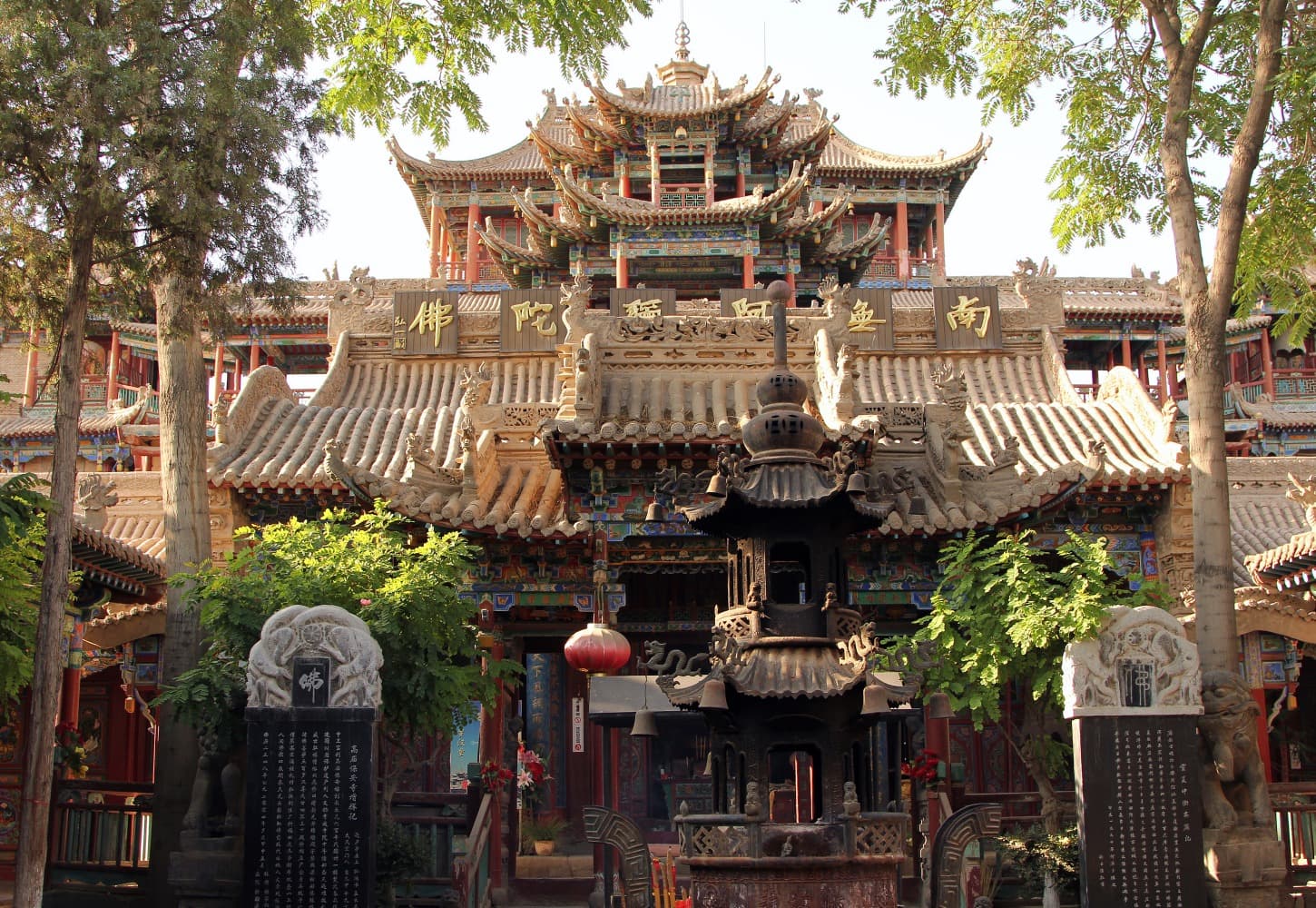
Located in the northwest of China, Ningxia is one of China's five autonomous regions. This small region is predominantly inhabited by the Hui, a Muslim ethnic minority. Recognized worldwide for its cultivation of goji berries, Ningxia stands out equally for its unique arid landscape and historic local customs. A journey through Ningxia will introduce you to a rich and diverse region still largely untouched by tourism.
History
Ningxia enjoys a long history. The region is believed to have been inhabited by humans approximately 30,000 years ago.
Ningxia and its surroundings were incorporated into the Qin dynasty as early as the 3rd century BC. Throughout the Han dynasty and the Tang dynasty, several important major cities in the region served as strategic bases. The Liang Province Rebellion at the end of the Han dynasty significantly affected Ningxia.
In the 11th century, the Tanguts established the Western Xia dynasty on the periphery of the Song dynasty. The region subsequently fell under Mongol domination after Genghis Khan conquered Yinchuan (the present-day capital) in the early 13th century. Muslims from Central Asia also began moving into western Ningxia and launched a revolt in the 19th century that affected the region.
In 1914, Ningxia was merged with Gansu Province but was separated in 1928 to become a province in its own right. During this period of merger, the Xibei San Ma ruled over Qinghai and Gansu provinces (including Ningxia).
The Muslim Kuomintang granted absolute authority of the province to General Ma Hongkui, military governor of Ningxia. The Muslim conflict in Gansu, which lasted from 1927 to 1930, spilled over into Ningxia. From 1950 to 1958, a Kuomintang Islamic uprising drew the entire northwest of China into its struggle, including Ningxia. In 1954, the Chinese government merged Ningxia with Gansu once again, but in 1958 the province officially became an autonomous region of China.
Today
Established in 1958 as an autonomous region for the Hui people, the province is a relative newcomer, both in terms of its creation date and its small size. The Hui, descendants of Muslim merchants from Arab and Persian origins who came to settle in China under the Tang dynasty, represent one-third of the population. They live predominantly in the south, where the region is poorest.
Daily life here is far from easy. Beyond the Yellow River and the ancient irrigation canals that branch from it, water is scarce—a major problem for this predominantly rural population. Poor agricultural reforms, insufficient social aid, and recurring drought have transformed them into migrant workers, forced to seek work in major cities like Lanzhou and Hohhot to support their families.
Far from the beaten path, this small province invites travelers to discover its desert, magnificent yet harsh, the remains of the enigmatic Western Xia, and a glimpse into the practice of Islam in a forgotten corner of China.
Climate
Ningxia Province, composed mainly of mountain ranges and arid deserts, is part of the Loess Plateau. In summer, temperatures climb during the day while winters are long and often very cold. Precipitation and snow are extremely rare.
In winter, temperatures can drop to as low as -22°C. January is the coldest month with an average temperature of -8°C.
Temperature variations between day and night are very pronounced in the region and can differ by about fifteen degrees. It is recommended to bring warm clothing if you wish to visit Ningxia.
Spring is a very pleasant season despite the wind. Prefer the months of April, May, September, and October for your trip to Ningxia.
How to reach Ningxia?
It is very easy to reach the province by bus or train from neighboring provinces.
How to get around Ningxia?
Train is the simplest way to cross the deserts that surround Ningxia. However, it is easier to travel by bus within this small province. Journeys are generally short and the province can be crossed in just a few hours.
Language
For linguists, the group formed by the dialects of Ningxia and the Northwest (Gansu and Qinghai) belongs to the Lanyin linguistic family.
What to do in Ningxia?
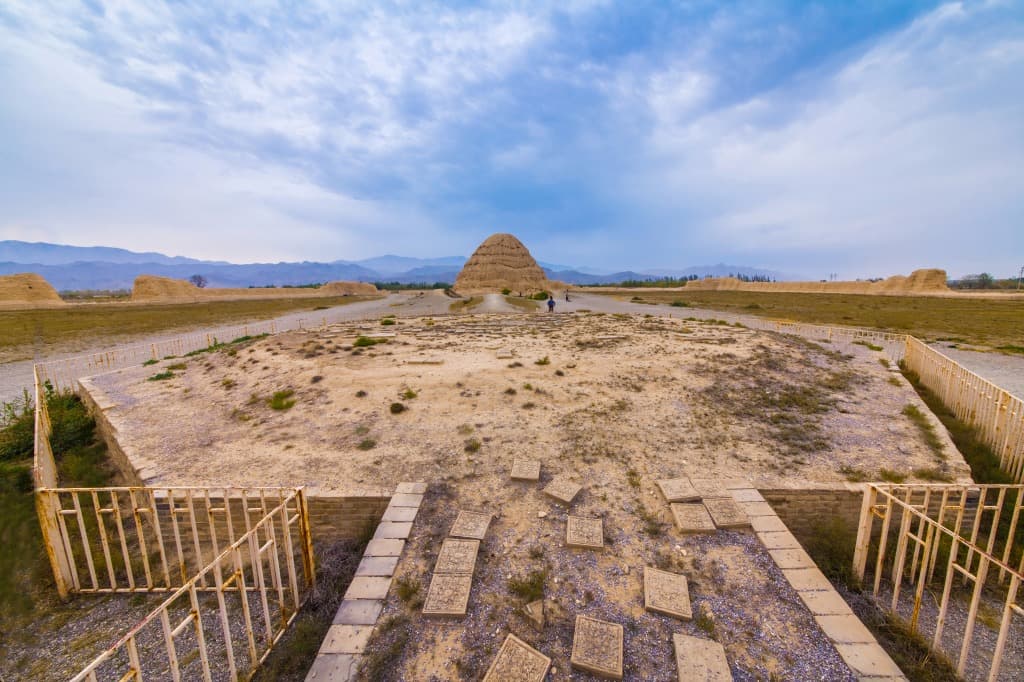
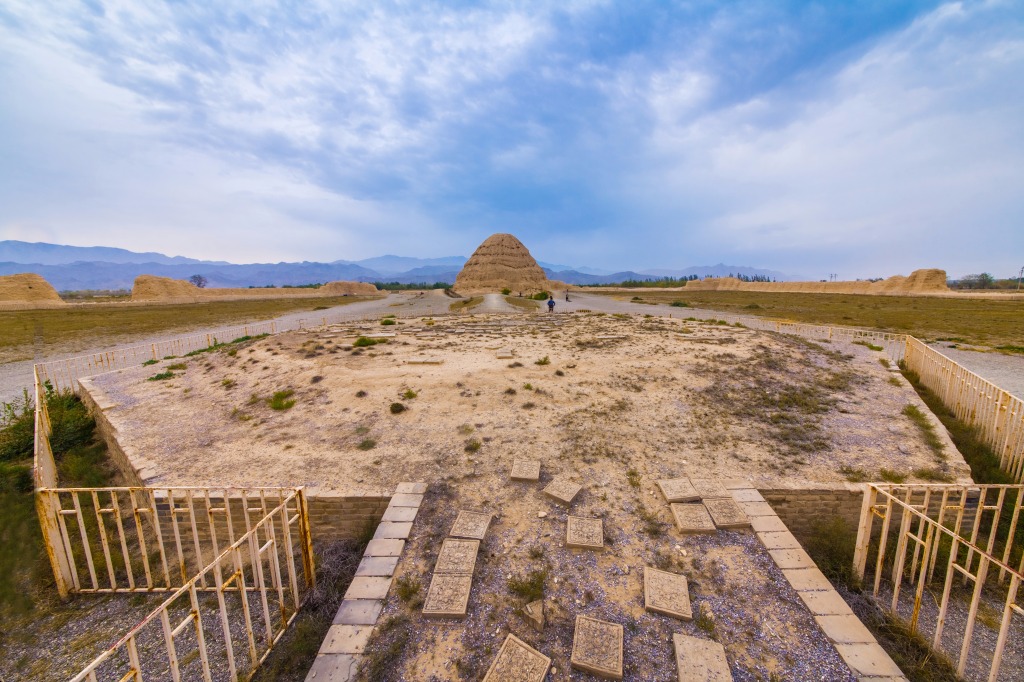
- Discover the mysterious pyramids of the Western Xia near the capital, Yinchuan.
- Raft down the Yellow River across the sand dunes of the Tengri Desert.
- Visit the Buddhist caves of Xumi Shan, isolated from the rest of the world.
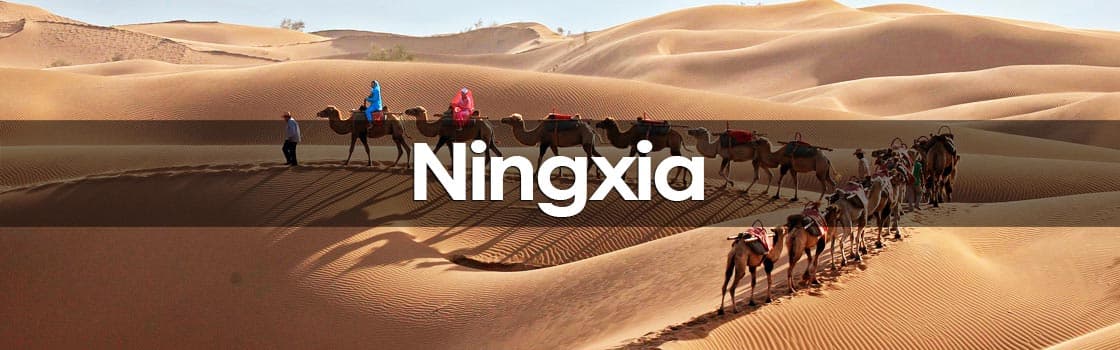
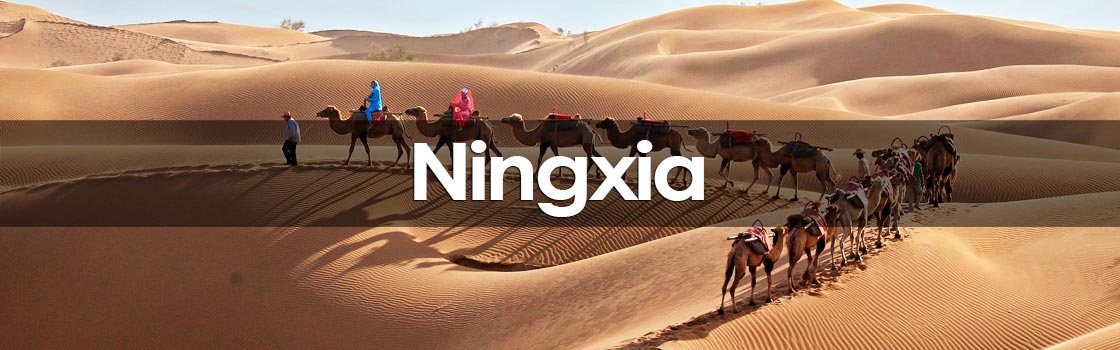
- Take a camel trek through the desert near Yinchuan.