Binlingsi Buddha Caves and Temple
Binlingsi Buddha Caves and Temple
Located 35 km from Lanzhou, the Binlingsi caves bring together 183 Buddhist sanctuaries carved into the cliff face, accessible by boat on the Yellow River. A UNESCO World Heritage site since 2014.
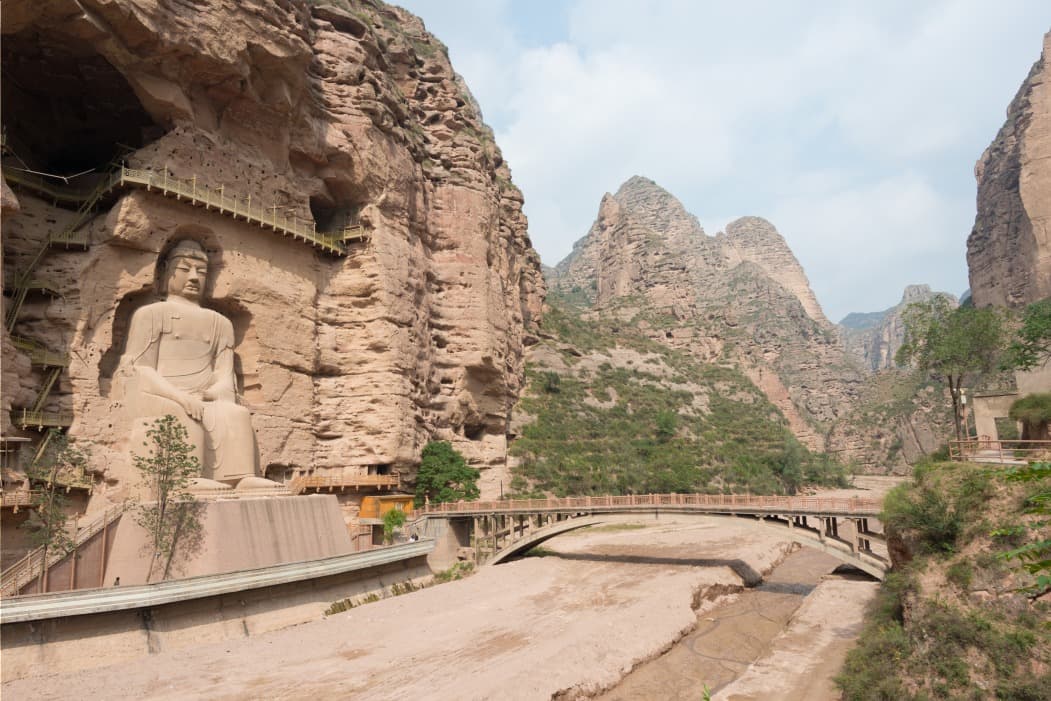
The Binlingsi temple and its Buddha caves nestle within an ochre cliff face, 35 km west of Lanzhou, in Gansu province. Inscribed as a UNESCO World Heritage site on June 22, 2014, the site comprises 183 caves carved across a 200-meter rock wall, overlooking the Yellow River. Access is by boat from the Liujiaxia reservoir.
Why visit Binlingsi
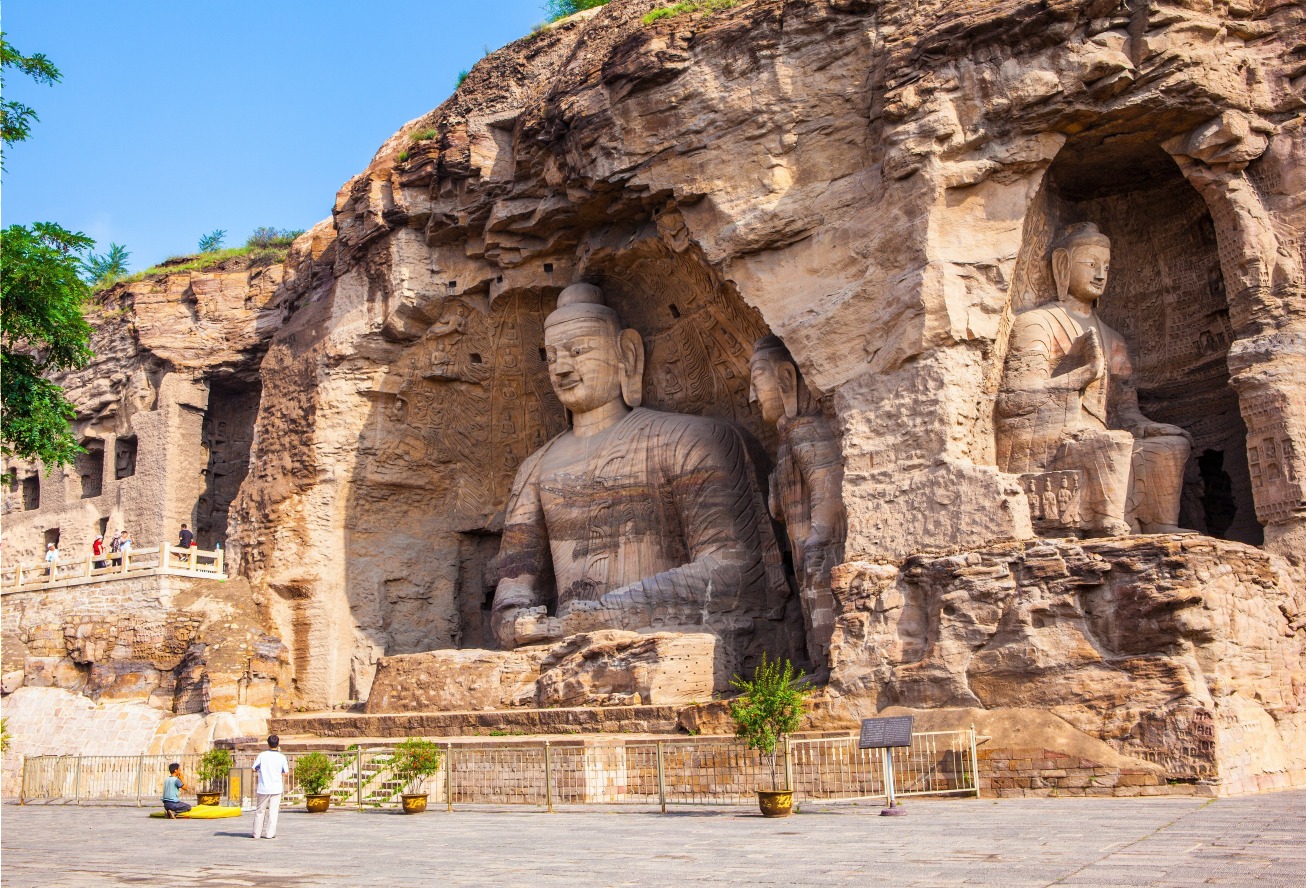
Binlingsi (literally "the thousand buddhas") ranks among China's great carved Buddhist sanctuaries, alongside Mogao (Dunhuang), Yungang, and Longmen. The site stands apart for its geography: isolated between cliffs and the Yellow River's waters, it is accessible only by boat, which limits visitor numbers.
The artworks preserved here span fifteen centuries of Buddhist sculpture and painting, from the Northern Wei to the Qing dynasties. They reveal a blend of Indian iconography, brought along the Silk Road, and Chinese tradition—a fusion characteristic of Gansu, a frontier province of Central Asia.
Site History
The first Binlingsi cave was carved in 420, during the Northern Wei dynasty (386-534). Work continued, with no major interruptions, through the Qing dynasty (1644-1912), with each period leaving its own artistic mark. The Tang era (618-907) represents the site's artistic peak, notably marked by the great Maitreya statue.
The site's recent history is tied to a hydraulic project: the Liujiaxia dam, built in 1967 on the Yellow River, regulated floods that threatened the cliff and created the reservoir now used by access boats. This infrastructure paradoxically made Binlingsi more accessible to visitors than it had ever been.
UNESCO inscription in 2014 came as part of a collective dossier devoted to the Silk Roads, grouping some thirty sites across China, Kazakhstan, and Kyrgyzstan.
What to See
The Great Maitreya
Carved directly into the rock face during the Tang dynasty, the Maitreya statue—the Buddha of the future—stands 27 meters tall. It is the site's largest figure, visible immediately upon arrival by boat. Its seated silhouette, hewn from stone, serves as a landmark for the entire journey.
Cave No. 169
Dated to the Jin dynasty (317-420), it ranks among China's oldest surviving Buddhist caves. It contains 24 niches, 19 stone buddhas, and 39 clay figurines. A dated inscription—rare for the period—allows art historians to place it precisely in time.
The Sculpted and Painted Ensemble
In total, the site houses 694 stone statues, 82 clay sculptures, and approximately 900 m² of wall paintings. The visit follows a network of walkways and spiral staircases clinging to the rock face, providing access to niches across multiple levels.
The Monastery and Panoramic Terrace
At the cliff's summit, a small active monastery overlooks the valley. Its terrace offers an open view of the Yellow River's north bank and the reservoir, whose waters take on an ochre hue as they mix with sediments.
How to Get There
The usual starting point is Lanzhou, Gansu's capital, served by train and air connections to the rest of China. From Lanzhou, there are two stages:
- Lanzhou → Liujiaxia Dam: by long-distance bus on the Lanzhou-Linxia route, getting off at the dam stop. Plan for approximately two hours of travel.
- Dam → Caves: the remaining journey is by boat across the reservoir from the Liujiaxia dock (Yongjing commune). Two options exist: slow tour boats, economical but lengthy (approximately three hours round trip), and fast speedboats, more expensive but reducing the crossing to roughly one hour.
An agency excursion from Lanzhou typically includes transport, boat, and site entry for the day.
Practical Information
- Visit duration: allow 2 to 3 hours on site, excluding boat travel.
- Admission: a modest entrance fee applies on top of the boat crossing price. Fast speedboats are considerably more expensive than slow boats.
- Hours: open in the morning and early afternoon, with a midday break. Check the day of visit, as boat departures structure the schedule.
- What to bring: closed-toe shoes (for stairs and metal walkways), water, sun protection—the cliff is exposed and offers no shade.
- Photography: permitted outside, restricted or forbidden in certain painted caves.
When to Visit
The most favorable period extends from May to October. In winter, the reservoir level drops and boat services may be suspended; some caves are also closed for conservation. Spring and autumn offer the best conditions: mild temperatures, clear skies, navigable waters.
Summer (July-August) remains feasible but coincides with the rainy season in the Yellow River basin; the water's color intensifies then, laden with silt. Avoid Chinese national holiday weeks (May 1st, October 1st), when boat crowds become overwhelming.
What to Combine With
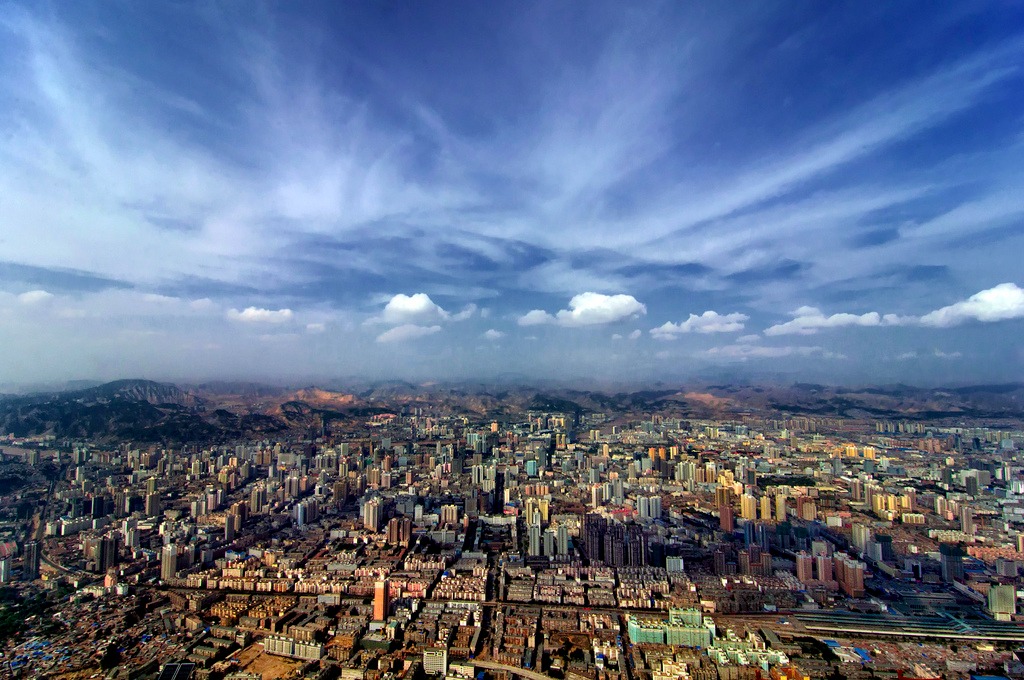
Binlingsi fits naturally into an itinerary departing from Lanzhou, a junction point between inner China and the Hexi corridor. On a broader scale, Buddhist cave art enthusiasts will continue westward to Dunhuang. To explore China's major cultural landmarks, the Great Wild Goose Pagoda in Xi'an tells another chapter of Chinese Buddhism, linked to the pilgrim Xuanzang.
Frequently Asked Questions
Frequently asked questions
Extend Your Journey
Binlingsi works well as a cultural stop within a larger circuit through Gansu and the Silk Roads. To build a custom itinerary including Lanzhou, the Hexi corridor, and China's major Buddhist cave sites, consult our China tours.
Interested in this visit?
We can include it in your personalised itinerary.