Mati Si, a temple carved into the cliff
Mati Si, a temple carved into the cliff
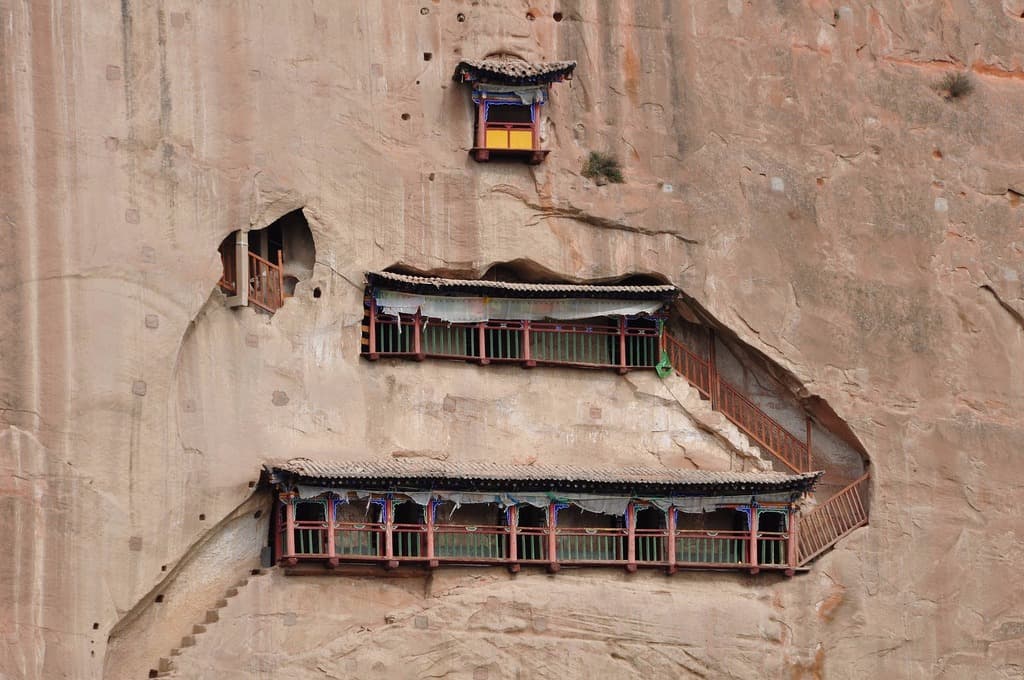
Buddhist cave temples carved into the Qilian mountainside 65 km from Zhangye, Mati Si preserves 70 cavities, frescoes and statues across five levels.
Mati Si, literally the "Temple of the Horse's Hoof", designates a complex of cave temples carved into the flanks of the Qilian mountains, approximately 65 km south of Zhangye, in Gansu province. This Buddhist site, a heritage of the Yugur tribe originating from Mongolia, combines cave architecture, religious art and ochre cliff landscapes.
Why visit Mati Si
The complex brings together three dimensions rarely found in a single location: ancient Tibetan Buddhist heritage, architectural prowess (caves perched over 60 m high, connected by staircases carved into the stone) and a natural setting marked by the foothills of Qilian. Listed since 1996 among the major historical and cultural monuments of the People's Republic of China, Mati Si offers a less-crowded alternative to major Buddhist sites in Gansu, such as the Mogao caves in Dunhuang.
The site remains a living place of worship, maintained by Yugur communities, and preserves Tibetan Buddhist traditions: prayer flags, offering halls, and a discreet monastic presence.
History of the site
The first caves were carved during the Jin Dynasty (266-420), at a time when Buddhism was spreading from Central Asia into central China. The sanctuary then occupied a strategic position on the Silk Road: a landmark for travelers heading to Gansu, a refuge for trading caravans, and a place of prayer for monks and pilgrims.
During the Yuan Dynasty (13th-14th centuries), Mati Si became a leading Tibetan Buddhist institution, welcoming at its peak over 1,000 monks. The site then served as a relay point for spreading Tibetan Buddhism throughout northwestern China.
The complex subsequently endured two periods of destruction. It was ransacked during the 19th-century Muslim uprising, then looted and damaged during the Cultural Revolution: Buddha statues were smashed, murals erased, and pavilions burned. Restoration efforts, undertaken from the late 20th century by Yugur communities, have successfully rehabilitated a significant portion of the site and ensured its preservation.
What to see
The complex contains a total of 70 caves, including 21 cave temples and 30 religious niches, distributed across five levels etched into the cliff face. The cavities are connected by a network of vertical, horizontal and diagonal tunnels; some chambers are only accessible via narrow staircases carved directly into the rock, at heights exceeding 60 m.
Main caves
- Puguang Temple: the central core of the complex, the most accessible.
- Shenguo Temple: renowned for its rock sculptures.
- Qianfo Cavern ("Thousand Buddhas"): houses over 500 Buddha statues and approximately 1,200 m² of frescoes.
- Jinta Temple: remarkable for its impressive sculpture of an Apsara, a celestial nymph from Buddhist mythology.
- Upper, middle and lower Guanyin caves: dedicated to the goddess of compassion, arranged at different levels of the cliff face.
Art and iconography
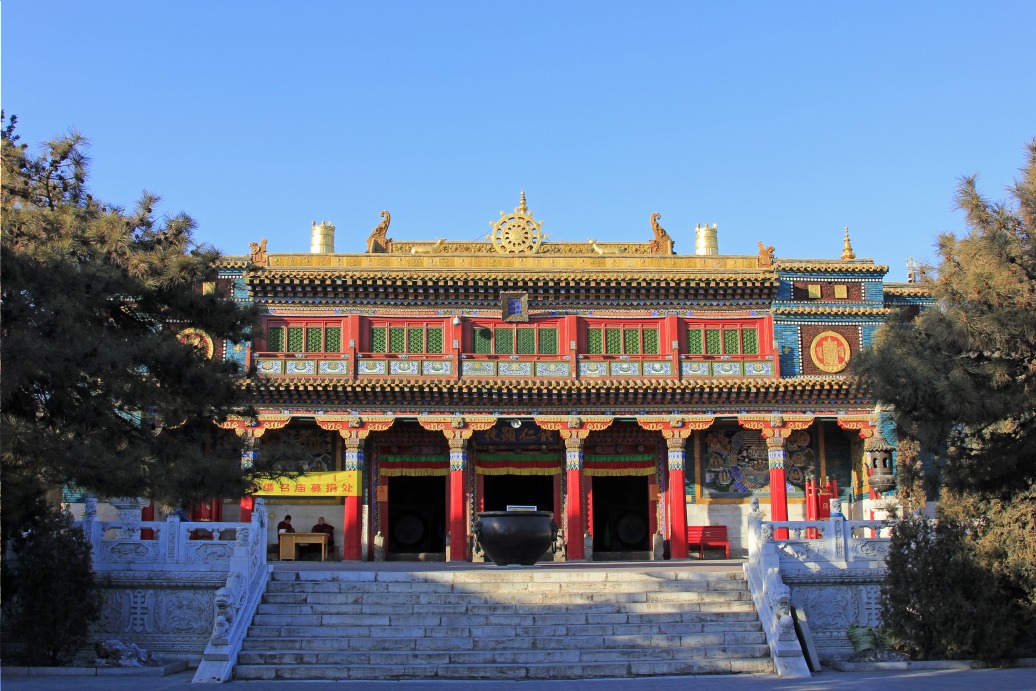
The walls preserve murals, clay Buddha statues, wooden sculptures and stone carvings. They feature representations of stupas, arhats and Buddhist figures, in a style blending Han and Tibetan influences. Outside, wooden pavilions with upturned eaves and glazed facades contrast with the cliff's ochre tones.
The legend of the horse's hoof
The site owes its name to a legend: a celestial horse, while clinging to the cliff face, allegedly left the imprint of its hooves there, at the origin of the first cavities. The mark attributed to the animal is visible in the main hall of the temple. Thousands of prayer flags, typical of Tibetan Buddhism, adorn the entire site.
Practical information
- Duration of visit: allow 2 to 4 hours to explore the main caves, longer if you venture through all levels.
- Admission fee: paid entry, at a moderate rate for a classified site in China.
- Hours: open daily during daylight hours. Exact hours vary by season.
- Visit conditions: narrow staircases, low passages and cramped tunnels in some caves; wear sturdy shoes and avoid bulky bags.
When to go
Gansu experiences a continental climate: hot summers, harsh and dry winters. The most favorable period extends from May to October, with peak visitor numbers in July-August. Spring and early autumn offer a good balance between mild temperatures and favorable light on the cliff face. Winter access remains possible but conditions can be challenging (snow, cold at altitude).
How to get there
Mati Si is reached from Zhangye, approximately 65 km to the south:
- By bus: departures from Zhangye's southern bus station, roughly every two hours, from early morning until mid-afternoon (between 7:25 and 16:30 depending on season).
- By taxi or private car: a more flexible option, worthwhile if you combine the visit with other nearby sites.
Nearby
Mati Si fits naturally into a broader itinerary around the Silk Road and northwestern China:
- Zhangye and the Danxia geological park, famous for its mountains with colorful strata.
- The Bezeklik Thousand Buddhas caves, another pinnacle of Buddhist rock art.
- The Great Wild Goose Pagoda, a classical stage of Chinese Buddhism further east.
Frequently asked questions
Frequently asked questions
Mati Si literally means "Temple of the Horse's Hoof". The name refers to a legend according to which a celestial horse, while clinging to the cliff, left the imprint of its hooves there, at the origin of the caves. This imprint is visible in the main hall.
The site comprises 70 caves in total, including 21 cave temples and 30 religious niches, distributed across five levels carved into the Qilian mountainside.
The Qianfo cavern, with over 500 Buddha statues and approximately 1,200 m² of frescoes, is generally considered the most spectacular. Jinta Temple, which houses a striking sculpture of an Apsara, is also worth visiting.
Buses depart every two hours from Zhangye's southern bus station during the day. Taxi or private car are more flexible alternatives for the approximately 65 km journey.
From May to October, with spring and early autumn preferred. Winter is accessible but conditions are rigorous in this part of Gansu.
Plan your trip
Mati Si fits naturally into an itinerary around Gansu and the Silk Road. To build a tailor-made journey including Zhangye, Danxia and major Buddhist sites, explore our China tours.
Interested in this visit?
We can include it in your personalised itinerary.