Governor's Residence
Governor's Residence
Former residence of Qingdao's German governor, Ying Bin Guan exemplifies Jugendstil style and preserves original Qing Dynasty furnishings.
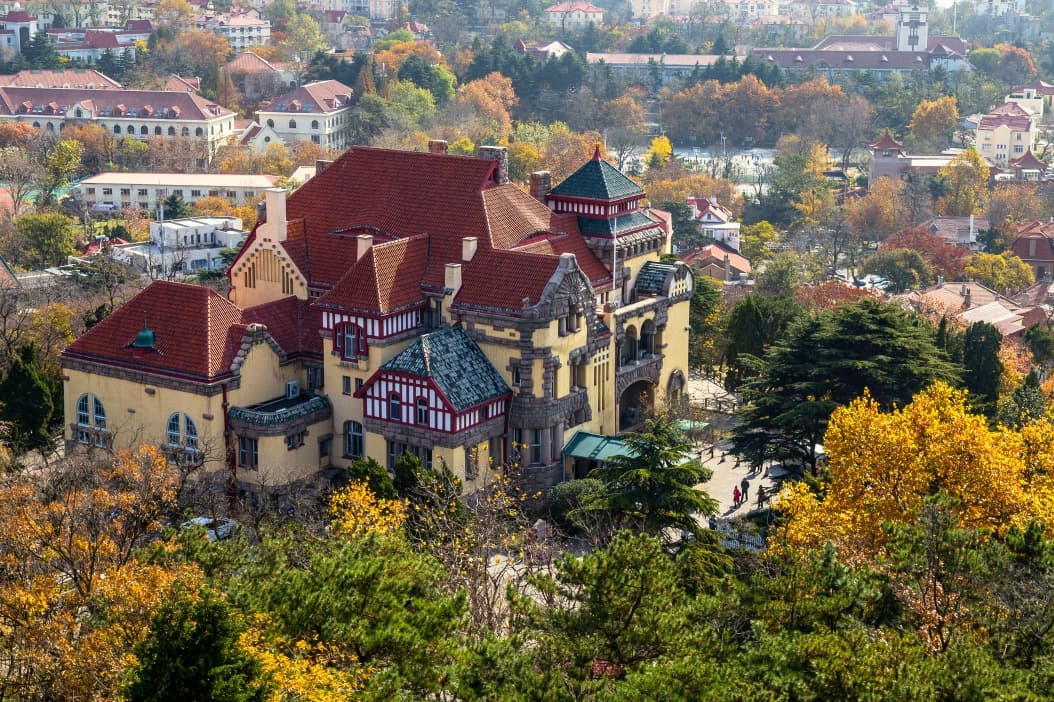
The former Governor's Residence, also known as Ying Bin Guan or Qingdao Guest House, is a German-inspired edifice perched on Longshan Hill in Qingdao. Built in the early twentieth century to house the German governor of the Kiautschou concession (Jiao'ao in Chinese), it exemplifies Jugendstil architecture and bears witness to the city's German colonial past.
Why Visit the Governor's Residence
The residence offers a rare testament to Belle Époque German architecture transplanted to Chine. It combines three points of interest:
- Jugendstil architecture (German Art Nouveau) in excellent condition, with rough granite exterior and red and blue tile roofing;
- Period furnishings from the Qing Dynasty (1644–1911) preserved in most rooms;
- Historical significance linked to the German concession, Emperor Wilhelm II, and Mao Zedong's stay in 1957.
The visit appeals equally to architecture enthusiasts and travelers curious about modern Chine history and its contacts with European powers.
History
The building was constructed between 1903 and 1908 to serve as the residence of the German governor of the Jiao'ao concession (Kiautschou), territory ceded to the German Empire by treaty in 1898. Its cost, which reached 2.5 million silver taels, sparked a scandal reaching Berlin: Emperor Wilhelm II, deeming the expenditure excessive, recalled the sitting governor and relieved him of his duties.
The building belongs to the Jugendstil movement, the German equivalent of Art Nouveau, and reflects the decorative codes of German high society at the turn of the century. Rather than a strict replica of an existing palace, it draws inspiration from aristocratic residential architecture of the German Empire.
In 1934, the residence was renamed Guest House and became a reception residence for political and military dignitaries. In 1957, Mao Zedong stayed there with his family during a vacation in Qingdao. A room is now dedicated to him, preserved with its original furnishings and personal effects.
What to See
The Exterior and Grounds
The building covers approximately 4,000 m² and rises to 30 meters in height. The rough granite facades, sloped roofs with red and blue tiles, narrow windows flanked by balconies, and superimposed landings compose a characteristic Jugendstil silhouette. An interior courtyard planted with fruit trees provides shaded strolling at the end of the tour.
The Interiors
The residence comprises 30 rooms, all equipped with fireplaces and decorated differently. Visitors observe:
- spiral staircases and carved relief woodwork;
- vaulted ceilings and marble interior balconies;
- original furnishings from the Qing Dynasty — furniture, curios, paintings and calligraphy.
The Ballroom
The most remarkable room preserves a German piano with ivory keys and a crystalline brass chandelier in the shape of a flower, weighing approximately 1,000 kg.
Mao Zedong's Room
Maintained unchanged since 1957, it displays the furniture and personal effects used by Mao during his family stay. This room particularly attracts Chinese visitors.
The residence also hosts temporary art exhibitions throughout the year.
Practical Information
- Duration of visit: allow 1 to 1.5 hours to tour the rooms and courtyard.
- Hours: open daytime year-round, with slightly reduced hours in cold season. Verify current hours before your visit.
- Admission: moderate entrance fee, payable in yuan on-site.
- What to bring: comfortable shoes (stairs, multiple landings) and a camera — photography is generally permitted outdoors.
How to Get There
The residence sits on Longshan Hill in Qingdao's historic district, near the waterfront. The nearest bus stop is Longjiang, served by several city routes. From the stop, signage directs you on foot to the entrance. A taxi or ride-share remains the simplest option from downtown hotels.
Nearby Attractions
Qingdao concentrates most of its colonial and seaside heritage within a confined perimeter, making it possible to chain several visits in a single day. To plan the rest of your stay, consult our comprehensive Qingdao guide.
If you extend your journey through Chine, other historic and natural sites merit a visit, such as the Great Wall at Juyongguan, the Great Wild Goose Pagoda or Hexigten Geopark.
Frequently Asked Questions
Frequently asked questions
A complete tour of the residence and its interior courtyard typically takes between 1 and 1.5 hours, depending on your interest in architectural details and current exhibitions.
Not in the strict sense. The building draws inspiration from residential architecture of German high society in the early twentieth century, in Jugendstil style, but does not reproduce a specific existing palace in Germany.
The construction cost, which totaled 2.5 million silver taels, was deemed excessive by the emperor. When the bill reached him, he recalled the governor to Berlin and relieved him of his duties.
Yes. The room occupied by Mao Zedong and his family in 1957 is preserved intact, with its original furnishings and personal effects. It is part of the tour route.
Spring and autumn offer the most pleasant conditions in Qingdao, with a temperate climate ideal for combining a visit to the building with a stroll through the fruit-tree courtyard.
Plan Your Trip
The Governor's Residence fits naturally into a broader discovery of Shandong and Chine's colonial heritage. To build a custom itinerary including Qingdao and other stops, explore our Chine travel ideas.
Interested in this visit?
We can include it in your personalised itinerary.