Nanjing Massacre Memorial
Nanjing Massacre Memorial
A place of remembrance dedicated to the 300,000 victims of the 1937 massacre, the Jiangdongmen memorial retraces this episode through exhibitions, sculptures and archives.
The Nanjing Massacre Memorial occupies the Jiangdongmen district, southwest of Nanjing in Jiangsu Province. This memorial site commemorates the 300,000 victims of the massacre perpetrated by the Japanese Imperial Army in December 1937. Opened in 1985, it stands today as one of China's principal places of remembrance and historical testimony.
Why Visit the Nanjing Massacre Memorial
The visit is suited to anyone seeking to understand a pivotal episode of the Second Sino-Japanese War. The memorial combines a documentary approach (archives, photographs, films) with a commemorative pathway (sculptures, ossuaries, walls of names). It is essential historical context for those staying in Nanjing, the former imperial capital whose rich heritage stands in stark contrast to the memory of this tragedy.
The site welcomes several million Chinese and international visitors each year, making it one of the country's most visited memorial sites. Entry is free, and the recommended visit duration is between 1.5 to 2.5 hours depending on how thoroughly you explore the exhibitions.
History of the Site
The massacre began on December 13, 1937, when Japanese troops entered Nanjing, then capital of the Republic of China. The atrocities spanned six weeks and claimed disarmed soldiers, civilians, women, children, and the elderly as victims. Much of the city's urban fabric was looted or burned during this period. The death toll generally accepted in China is approximately 300,000 victims.
Nanjing, which served as capital to ten dynasties of ancient China, carries a profound memory of this event. It was in this context that the municipal administration built the memorial in 1985, on a site where mass graves had been discovered. The site was expanded and renovated in 1995, then enriched multiple times to incorporate new collections and testimonies.
What to See
The memorial spans 28,000 square meters and is organized into three distinct sections.
Outdoor Exhibitions
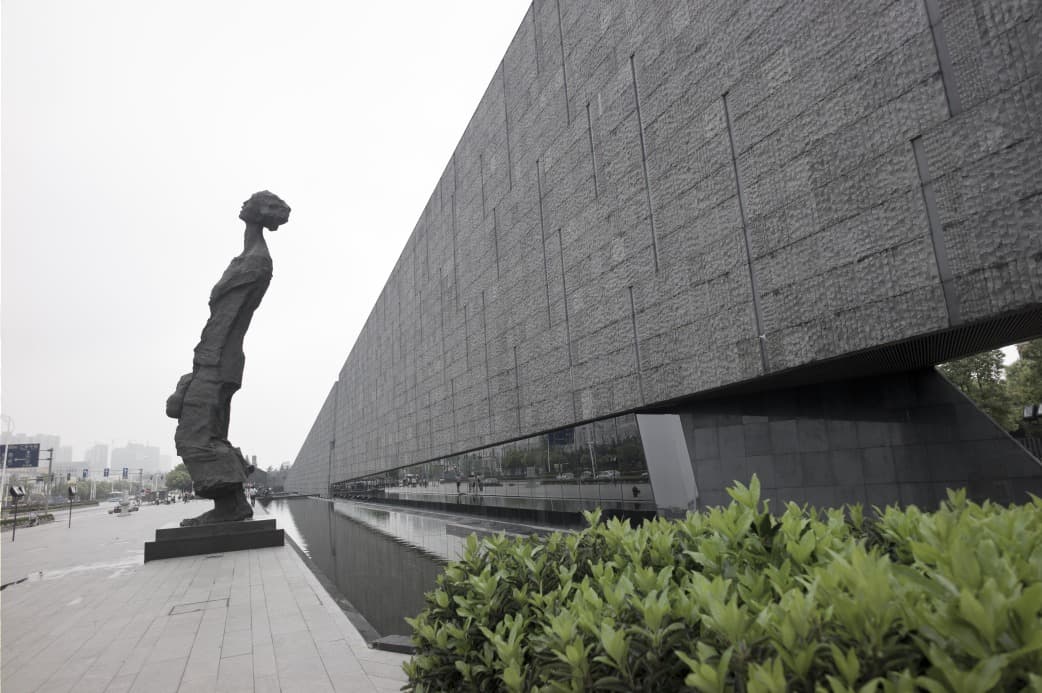
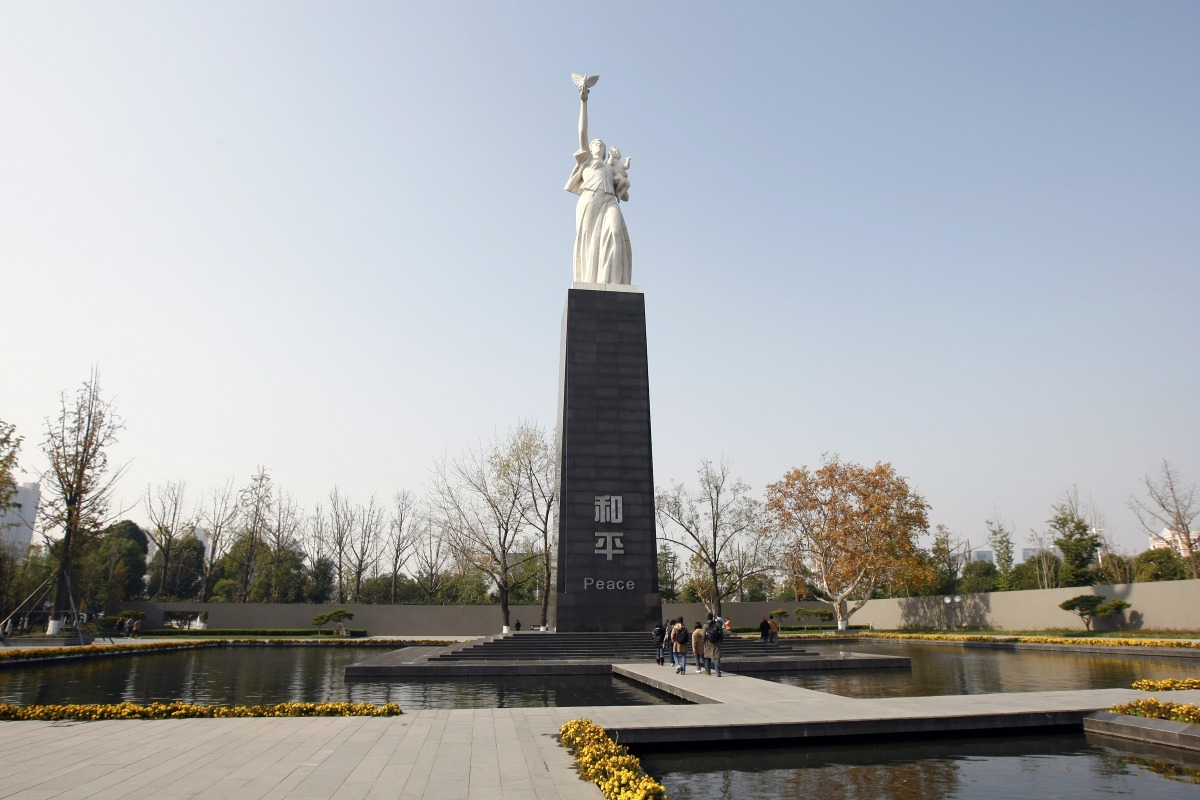
The plaza and open spaces feature monumental sculptures and seventeen engraved tablets recounting the historical facts. Two long walls bear the names of the 300,000 documented victims, while three principal sculptures mark the commemorative pathway. The dates of the massacre are inscribed on the monument's surfaces.
The Bone Chamber
This exhibition hall, designed in the form of a coffin, preserves the human remains exhumed on site. Over 200 bone fragments were recovered between 1985 and 1998 during successive archaeological campaigns. The austere presentation is designed to testify without theatrical effect.
The Documentary Exhibition Hall
The main building houses over 1,000 pieces: photographs, paintings, sculptures, display cases with personal objects belonging to the victims, and documentary films shown continuously. Multilingual panels enable foreign visitors to follow the chronology and international context of the events.
Practical Information
- Access: free entry with presentation of identification or passport
- Hours: opens in the morning through mid-afternoon, closed Mondays (hours subject to change; verify before visiting)
- Recommended duration: 1.5 to 2.5 hours
- Atmosphere: place of remembrance, silence requested, photography sometimes restricted in certain areas
The memorial can be combined with other Nanjing sites in a single day, but it is advisable to plan a break after your visit given the density of the material.
How to Get There
The memorial is easily accessible by public transport from central Nanjing. Bus lines 7, 37, 61, 63, 161, 170, and 807 serve the Jiangdongmen stop, located immediately adjacent to the entrance. Nanjing's metro also offers a station within short walking distance. Urban transport fares remain very affordable.
What to See Nearby
Once you have completed your visit to the memorial, several major Chinese sites allow you to continue exploring national heritage. In Hangzhou, the West Lake offers a UNESCO-listed environment. In Shanghai, the Yuyuan Garden exemplifies Ming landscape architecture. In Xi'an, the Great Wild Goose Pagoda testifies to Buddhism's introduction into China.
Frequently Asked Questions
Frequently asked questions
Yes, entry to the memorial is free. Identification or a passport may be requested at the entrance for security reasons.
Allow between 1.5 and 2.5 hours to explore the three sections (outdoor areas, bone chamber, documentary hall). The density of the material encourages a measured pace.
The memorial is closed on Mondays. Precise hours may vary by season or official commemorations; it is best to verify before traveling.
The content is difficult (photographs, remains, testimonies). The memorial is better suited to teenagers and adults; parents should judge based on their child's sensitivity.
Several bus lines (7, 37, 61, 63, 161, 170, 807) serve the Jiangdongmen stop, a few minutes' walk from the entrance. The metro is also a convenient option.
Planning Your Trip to China
The Nanjing Massacre Memorial fits within a comprehensive cultural itinerary across China. To craft a cohesive journey combining major cities, historical sites, and imperial heritage, consult our bespoke trips to China.
Interested in this visit?
We can include it in your personalised itinerary.