POTALA PALACE
POTALA PALACE
The former winter residence of the Dalai Lamas, rising on the red hill of Marpori in Lhasa, Potala Palace combines political power, religious authority, and 20,000 Tibetan works of art.
Rising above the red hill of Marpori, at the heart of the Lhasa valley, Potala Palace has dominated Tibet's capital for more than thirteen centuries. Once the winter residence of the Dalai Lamas, seat of the Tibetan government, and a sacred site in Vajrayāna Buddhism, it merges political, religious, and residential functions within a single architectural ensemble. Inscribed as a UNESCO World Heritage Site in 1994, it now operates as a museum under Chinese authority.
Why Visit Potala Palace
The Potala is one of the rare buildings to have united, beneath a single roof, both spiritual and temporal power over a state. A visit grants access to audience halls, funerary chapels, and libraries that chronicle Tibet's history from the 7th century through the 14th Dalai Lama's flight in 1959. The building houses nearly 20,000 artworks (sutras, thangkas, sculptures, and murals) and remains an active pilgrimage site for Tibetan Buddhists, who perform kora—ritual circumambulation—at dawn.
For travelers, it is also an opportunity to witness large-scale traditional Tibetan architecture in its entirety: battered walls, trapezoidal windows, gilded roofs, and a vertical organization split between two interlocking palaces (white and red) on the hillside.
History
The first structure dates to King Songtsen Gampo (609–650), who built a fortress on Marpori Hill to commemorate his marriage to the Chinese princess Wencheng. The original building, destroyed by fire in the 9th century, fell into ruin for centuries.
The monumental reconstruction was the work of the 5th Dalai Lama, Lobsang Gyatso (1617–1682). During his audience with Qing emperor Shun Zhi, he received the title "Great Ocean," affirming his spiritual authority. Upon his death in 1682, construction remained incomplete: his regent Sangye Gyatso kept the death secret for over a decade to see the project through. The red palace was finished in 1694.
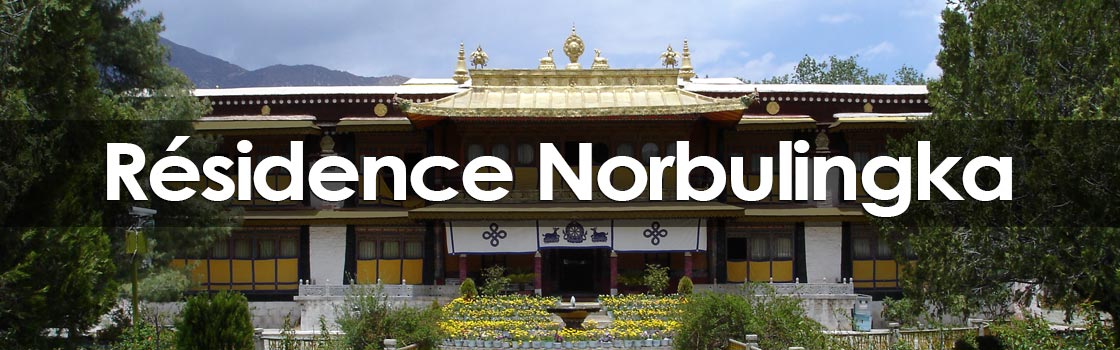
For three centuries, the Potala served as the winter residence of successive Dalai Lamas, who occupied it from mid-March to late October before retiring to the summer palace of Norbulingka. The 14th Dalai Lama was the last to reside here: he escaped to Dharamsala, India, in 1959. In 1961, the structure was converted into a museum by the People's Republic of Chine.
What to See
The White Palace
Built across 13 floors and more than 400 meters in length, the white palace contained the private apartments of the Dalai Lamas and the offices of the Tibetan government. It houses multiple audience halls, secondary chapels, and administrative spaces. Its primary function was political and residential: it embodied the fusion of spiritual and temporal authority.
The Red Palace
Constructed in 1694 by Sangye Gyatso, the red palace crowns the complex and concentrates religious spaces: meditation halls, libraries of sacred texts, and funerary chapels. It contains the tombs of 13 Dalai Lamas within eight gilded stupas (chörtens). The most impressive is that of the 5th Dalai Lama: a 14-meter-tall cenotaph covered in gold leaf and inlaid with pearls, turquoise, and diamonds.
Collections
The Potala holds nearly 20,000 works in total:
- sutras and ancient manuscripts from the Tibetan Buddhist canon;
- thangkas (painted textiles) and scrolls;
- murals covering approximately 2,500 m²;
- sculptures, statues of Buddha Shakyamuni, and representations of Dalai Lamas;
- tapestries and liturgical objects in gold, silver, jade, and porcelain.
Practical Information
- Advance booking required: an official daily limit of 4,000 visitors is strictly enforced. Tickets are distributed as timed slots; during peak season, booking through a local English-speaking agency is strongly recommended, as they can secure slots one or more days in advance.
- Tibet Travel Permit: visiting Tibet (and the Potala) requires a Tibet Travel Permit, obtainable through an authorized agency.
- Duration of visit: plan for 2 to 3 hours on-site, including roughly 1 hour for the climb and interior circuit. Time in chapels is strictly managed (usually one hour maximum indoors).
- Admission fees: entrance is paid and varies by season; expect a reasonable rate for a site of this magnitude.
- Restrictions: photography is prohibited inside chapels; hats are not permitted, nor are beverages. Respectful attire is required.
Best Time to Visit
The optimal period for visiting Lhasa and Potala Palace runs from April to October, with peak crowds in July–August. May–June and September offer the best balance of favorable weather and manageable visitor numbers. Winter (November–March) is colder but far quieter, with reduced admission prices and minimal queues.
Lhasa sits at approximately 3,650 meters elevation, with Potala Hill reaching nearly 3,700 m. Acute mountain sickness is common: plan 2 to 3 days of acclimatization in Lhasa before your visit, which involves climbing more than 300 steps. Avoid strenuous activity in your first days and drink plenty of water.
Getting There
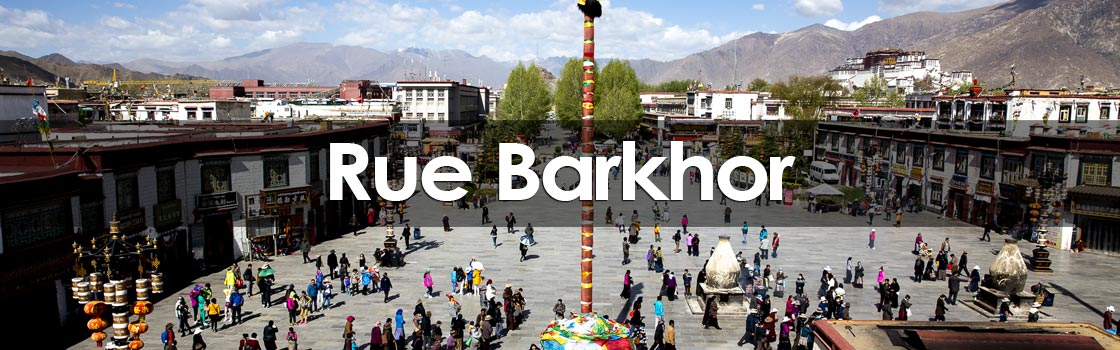
The palace sits in central Lhasa, roughly 2 km from the old town and Jokhang Temple. Several urban bus lines serve the site's periphery from major districts, and a taxi ride is inexpensive. Most travelers reach it on foot from Barkhor or via a transfer arranged by their agency. The visitor entrance is on the western side, at the ticket office at the base of the hill.
Nearby Attractions
The region surrounding Lhasa and central Tibet contains multiple historical and natural sites that complement a Potala visit:
- Gyantsé Dzong: Tibetan fortress overlooking the Nyang Chu valley.
- Mingyong Glacier: one of the most accessible glaciers on the Himalayan plateau.
- Dongba Museum: to deepen your understanding of western Chinese cultures.
- Cangshan: sacred range in Yunnan, another major stop on a western Chinese itinerary.
Frequently Asked Questions
Frequently asked questions
Yes. The daily limit of 4,000 visitors is strictly enforced. During peak season (May–October), tickets regularly sell out. Booking through a local English-speaking agency is the most reliable approach: they secure your slot, manage your Tibet permit, and can arrange a guided visit.
Between 2 and 3 hours total, including the climb and interior circuit. Time in chapels is restricted (roughly 1 hour) to accommodate visitor rotation.
Yes. At 3,700 m, oxygen levels are roughly 35% lower than at sea level. Most travelers experience headaches, shortness of breath, and fatigue in their first days. A 2 to 3-day acclimatization period in Lhasa before visiting Potala is highly recommended.
No. Photography is forbidden in chapels and interior halls. Exteriors, staircases, and terraces remain open to photography.
No. The 14th Dalai Lama, the last resident, fled Tibet in 1959 and has lived in exile in Dharamsala, India, ever since. The palace is now a state museum.
Plan Your Journey
The Potala fits naturally into a broader tour of Tibet and western Chine, combining Lhasa, the Yarlung Tsangpo valley, and the high plateaus. To build a custom itinerary including necessary permits, explore our Chine journeys.
Nearby
Interested in this visit?
We can include it in your personalised itinerary.