Pingyao City Walls
Pingyao City Walls
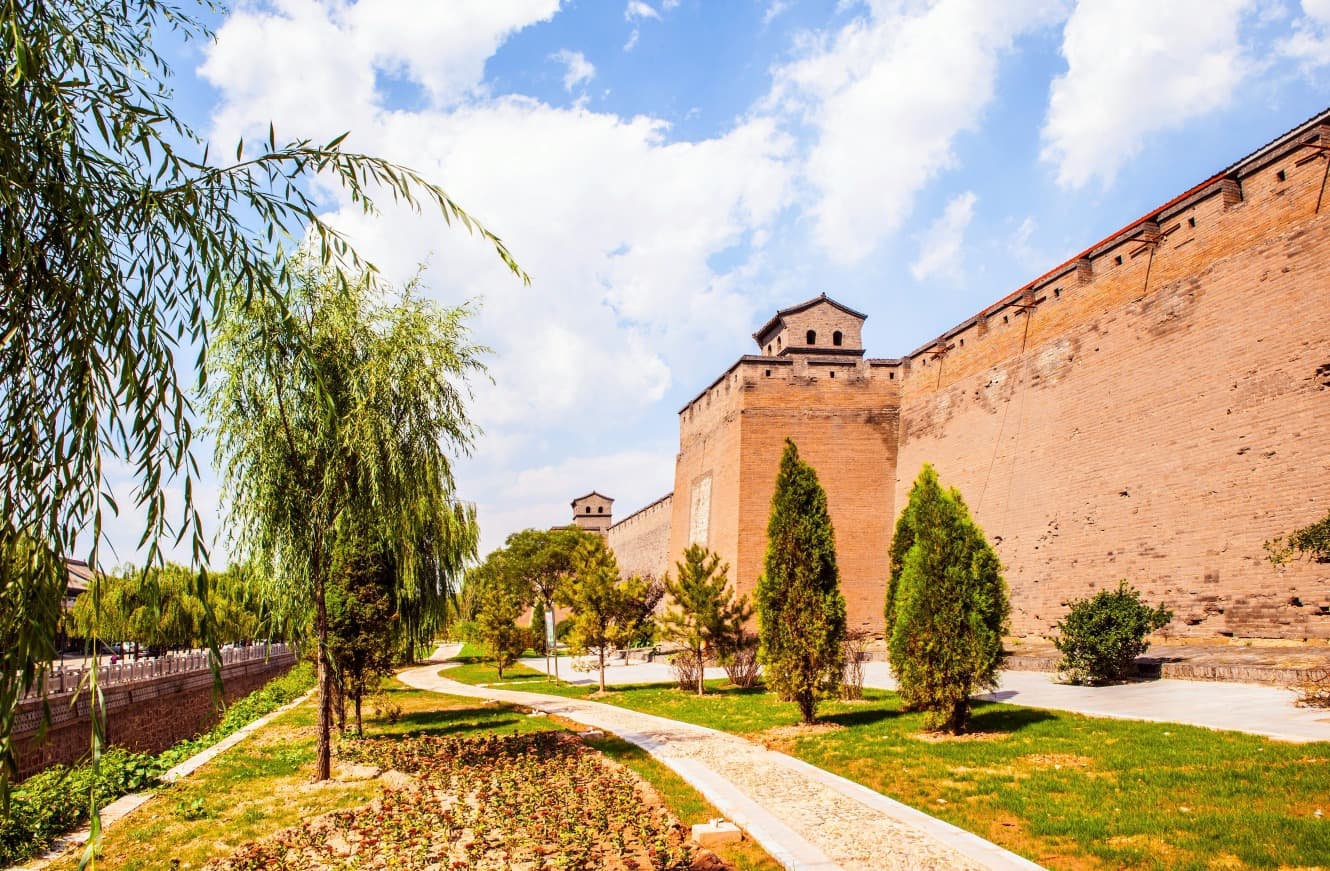
The Ming city walls of Pingyao, in Shanxi, encircle the "Turtle City" for 6 km. Inscribed on the UNESCO World Heritage List, they offer one of the most complete panoramas of a fortified Chinese city.
The city walls of Pingyao encircle the old fortified city of Shanxi, nicknamed the "Turtle City" because of its layout evoking the silhouette of the animal. With their 6 km circumference, six gates and 72 watchtowers, they constitute one of the best-preserved fortified complexes in Chine and one of the reasons Pingyao was inscribed as a UNESCO World Heritage Site in 1997.
Why visit Pingyao's city walls
- An intact Ming rampart that still completely encircles an inhabited city, a rare case in Chine.
- A unique panorama over the grid-patterned layout of the ancient city, readable from the walkway along the top of the walls.
- A UNESCO heritage site accessible in just a few hours, easily combined with a visit to the old city.
- A testimony to ancient Chinese military architecture: rammed earth, bricks, fortified pavilions, defensive moat.
History of the city walls
According to tradition, Pingyao's first fortifications date back to the reign of King Ji Jing of the Western Zhou dynasty, between 827 and 782 BC. They were used to delimit and protect Zhou territory. However, the walls visible today date from the Ming dynasty, around 1370: it was during this period that the entire enclosure was rebuilt in rammed earth covered with bricks, in the form it has maintained since.
Restored several times under the Ming and Qing dynasties, the walls were inscribed on the UNESCO World Heritage List in 1997, at the same time as the entire old city. In October 2004, a section on the south side collapsed; consolidation work was carried out until 2005 to restore the integrity of the wall.
What to see on site
Dimensions and structure
The rampart measures approximately 10 meters in height, 3 to 5 meters in width at the top, and stretches just over 6 km in circumference around the old city. The walls are made of rammed earth covered with bricks, a technique common to Chinese fortification.
A defensive moat more than 3 meters deep and 3 meters wide encircles the entire complex. Six access bridges, located opposite each of the gates, allow crossing it.
Gates, towers and crenellations
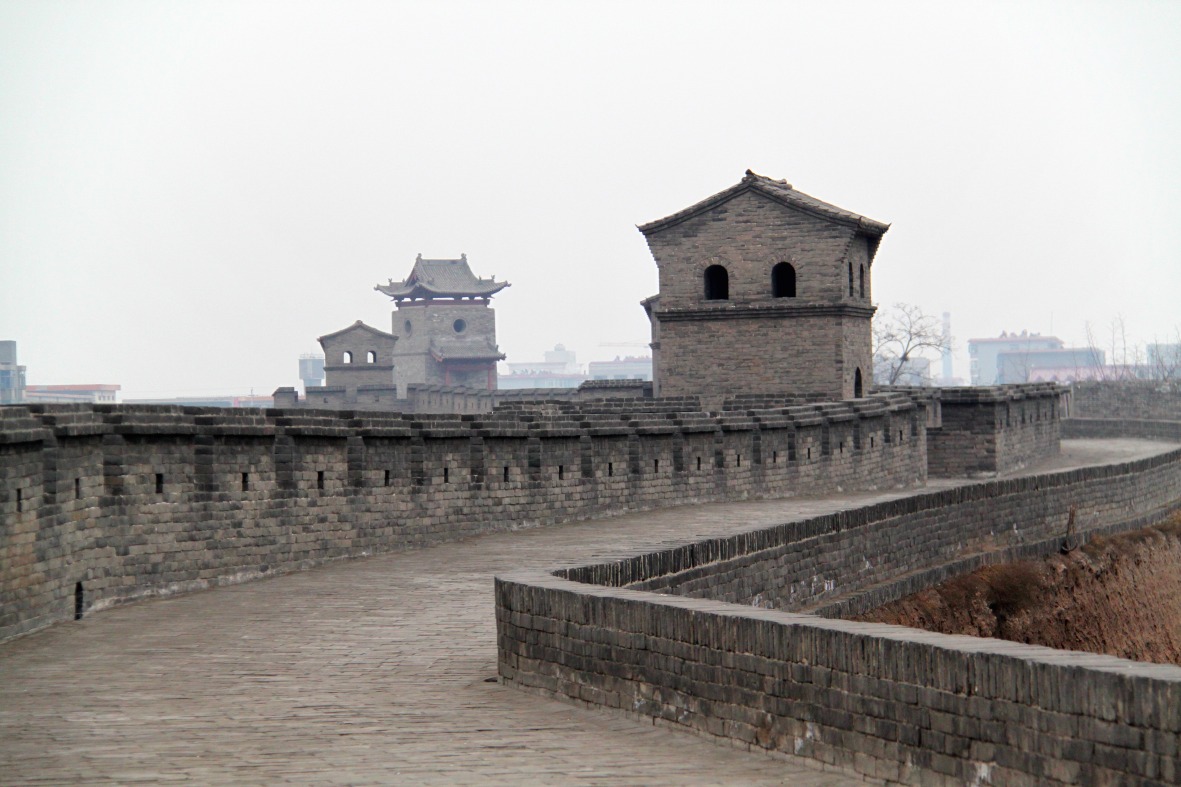
The enclosure has six gates, 72 watchtowers and approximately 3,000 crenellations. The number is not arbitrary: local tradition sees it as a tribute to the 72 sages and 3,000 disciples associated with Confucius, whose teachings remain central to Chinese scholarly culture.
Each gate is topped by a fortified pavilion, a refined architectural element composed of fine colonnades and roofs with glazed tiles. A rainwater drainage system has been installed on the crown of the rampart to preserve the masonry.
The panorama over the city
From the walkway along the top of the walls, you can take in the checkerboard layout of the ancient city at a glance—its alleyways, courtyards, and gray-tiled roofs characteristic of Shanxi. This is one of the rare places in Chine where you can read with the naked eye the urban layout of a Ming fortified city.
Practical information
- Length of visit: allow 1.5 to 2.5 hours to walk a good portion of the wall and photograph the main gates.
- Admission: access to the walls is included in the combined ticket for Pingyao's old city, which also grants entry to several historical sites inside the walls. Reasonable price; ticket valid for several days.
- Hours: open during the day, from morning to early evening depending on the season.
- Tips: wear good walking shoes (uneven ground), a hat in summer and a windbreaker in shoulder seasons.
When to go
The climate of Shanxi is continental, marked by hot summers and cold, dry winters. The most pleasant periods for walking the walls are spring (April to June) and autumn (September to early November), when temperatures are mild and light is favorable for photography. Winter offers a hushed atmosphere, sometimes snow-covered, but requires appropriate clothing. Avoid the first days of October, when China's National Day holiday brings large crowds.
How to get there
Pingyao is reached from Taiyuan, the capital of Shanxi, located about 90 km to the north. From Taiyuan Wusu Airport, a city shuttle connects downtown and the train station, from which regular trains depart to Pingyao (approximately 1.5 hours by conventional train, 30 minutes by high-speed rail). Once in Pingyao, several local bus lines serve the main gates of the old city; most visitors access the walls on foot from their accommodations inside the walls.
What to see nearby
The city walls are part of a broader visit to the old city, whose merchant houses, ancient banks (piaohao) and temples deserve a full day. If you extend your journey in Chine, several fortified or Buddhist heritage sites complement this stop nicely:
- The Great Wall at Juyongguan, another monumental example of Ming defensive architecture.
- The Big Goose Pagoda in Xi'an, a classic stop on the route between Pingyao and central Chine.
- The Bezeklik Thousand Buddhas Caves, to continue toward the Silk Road.
Frequently asked questions
Frequently asked questions
Allow 1.5 to 2.5 hours to walk a representative portion of the wall. Walking the full 6 km circuit takes about 3 hours.
Yes, but it is included in the combined ticket for Pingyao's old city, which also provides access to several museums and historic residences inside the walls.
The enclosure can be walked for most of its 6 km, with access via several gates. Some sections may be temporarily closed for maintenance.
The layout of the walls, with its six gates positioned like the head, tail and four legs of an animal, evokes the silhouette of a turtle, a symbol of longevity in Chinese culture.
Spring (April-June) and autumn (September-early November) offer the most pleasant conditions, with mild temperatures and good light.
Plan your trip
Pingyao's city walls fit perfectly into a cultural itinerary between Beijing, Xi'an and Shanxi. To tailor your stay, explore our ideas for travel in Chine.
Interested in this visit?
We can include it in your personalised itinerary.