Shitoucheng, the Stone Village
Shitoucheng, the Stone Village
Perched on a rocky outcrop above the Jinsha, Shitoucheng is a Naxi village entirely built of flat stone, a former garrison post of the Qing dynasty.
Shitoucheng, literally "the city of stone", is a Naxi village perched on a rocky spur overlooking the Jinsha valley (upper Yangtze), northwest of Lijiang, in Yunnan province. Built entirely from local flat stone, it spans approximately 10 km² at 400 meters above the river and ranks among the best-preserved traditional villages in the region of the Naxi, Mosuo and Yi ethnic groups.
Why visit Shitoucheng
Three elements make this village unique:
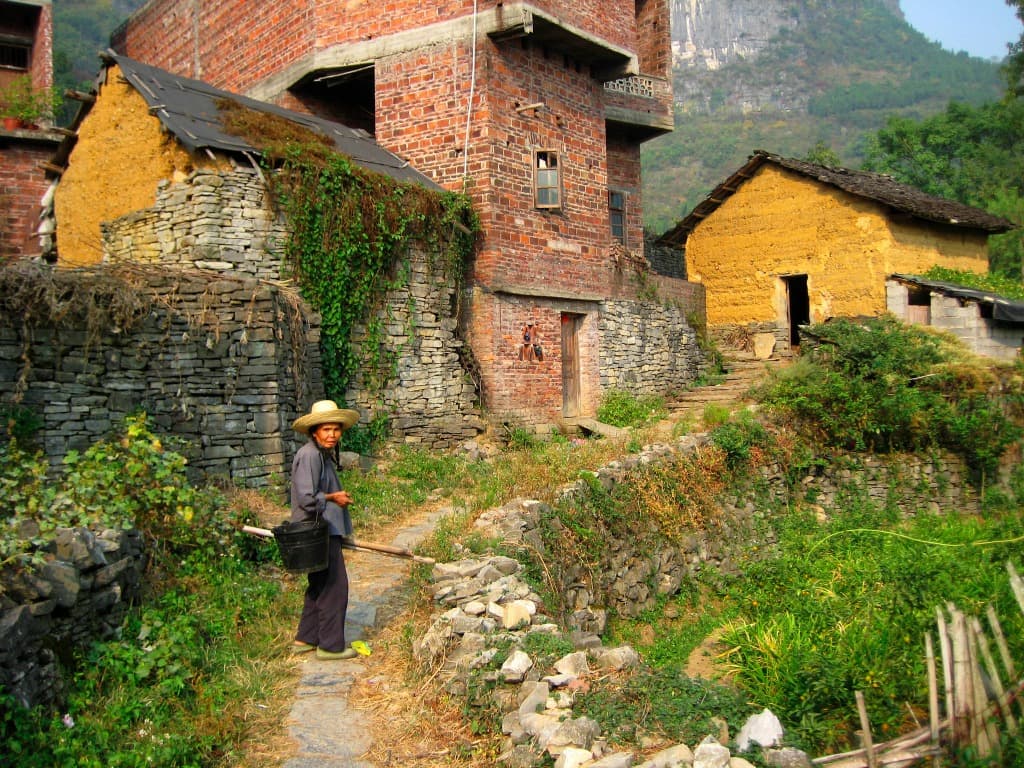
- Entirely mineral architecture: houses, perimeter walls and pathways are assembled from small flat stones of varying sizes, with no visible mortar.
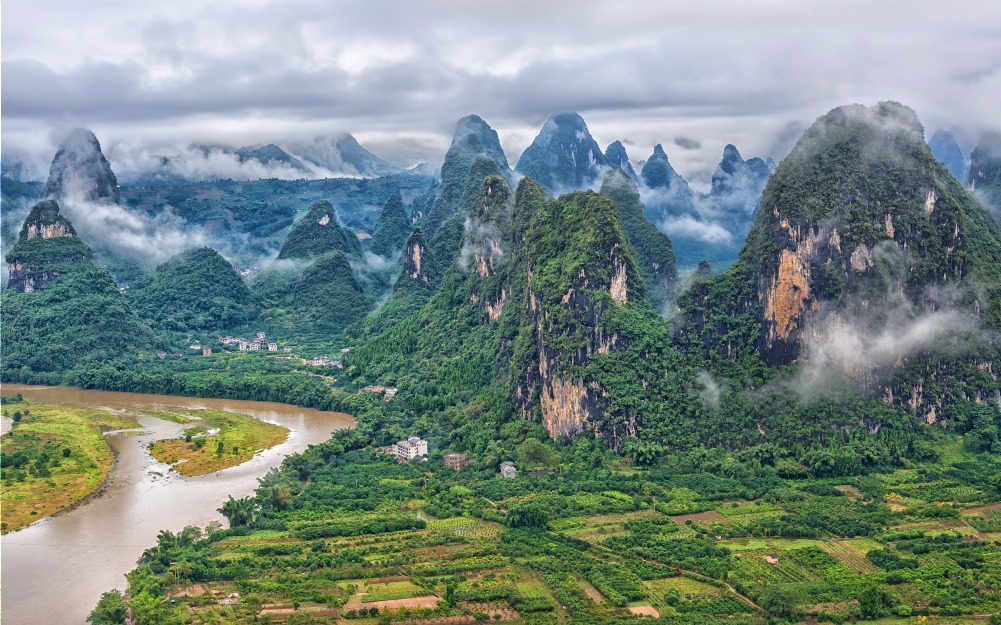
- An exceptional natural setting: the settlement sits atop an isolated limestone peak within the massif linked to Jade Dragon Mountain (Yulong), with sweeping views over terraced rice paddies and the winding Jinsha.
- Authentic Naxi village life, still relatively untouched by mass tourism compared to Lijiang's old town.
History: a Qing dynasty garrison post
Shitoucheng played a strategic role under the Qing dynasty (17th-20th centuries), serving as a garrison center controlling caravan routes between Yunnan and Tibet. The rocky spur's naturally defensive position explains the site's selection: the village has only 4 main entrances, complemented by 18 interior arched gates that still structure movement between districts today. This military organization, combined with traditional Naxi residential architecture, has endured through the centuries with minimal modification.
What to see and do
The village heart
Exploration is necessarily on foot: the alleyways are narrow, steeply sloped and paved with irregular stone. Allow 2 to 3 hours to walk through the settlement, taking time to observe the rooflines, interior courtyards and carved lintels.
The history and culture museum
A small village history and culture museum houses a modest but useful collection: agricultural tools, Naxi costumes, Qing period documents and artifacts relating to garrison life. A good introduction before wandering the lanes.
Hiking around the village
The rugged terrain lends itself to walking. Two notable routes stand out:
- The trek to Liuqing hamlet, through fields and neighboring Naxi villages (half-day).
- The Yangsi road, which runs along terraced rice paddies, particularly photogenic in summer and early autumn.
Practical information
- Visit duration: half a day for the village alone, a full day if you add a hike.
- Difficulty: rocky trails, sometimes muddy after rain; hiking shoes recommended.
- Accommodation: a few Naxi guesthouses in the village, simple comfort. Most visitors stay in Lijiang.
- Fee: modest village entrance fee, payable on site.
When to go
The region can be visited year-round, with two more favorable periods:
- April to June: mild temperatures, flooded rice paddies and spring blooms.
- September to early November: clear skies, golden rice paddies before harvest, ideal light for photography.
Summer (July-August) remains accessible but can be rainy; winter is dry, colder at altitude, and some hikes become less pleasant.
How to get there
Shitoucheng is reached from Lijiang, the region's main entry point:
- Private transport (taxi, hired car): the simplest option, given the distance and infrequent local buses. Allow several hours of mountain road driving.
- Local buses from Lijiang toward Jinsha towns, with the final leg to arrange locally.
- By motorcycle or scooter for independent travelers: the Putao road offers the quickest route.
Given the remote location, many travelers incorporate Shitoucheng into a multi-day itinerary combining Lijiang, Tiger Leap Gorge and nearby Naxi villages.
Nearby attractions
- Lijiang's old town, a UNESCO World Heritage site, ideal as a logistics base.
- Jade Dragon Mountain (Yulong Xueshan), a snow-capped peak visible from the village.
- Naxi villages throughout the Jinsha valley, accessible by hiking.
To explore other spectacular natural formations in Chine, the Hexigten geopark in Inner Mongolia offers another type of mineral landscape. For heritage sites, the Wild Goose Pagoda in Xi'an and the Great Wall at Juyongguan complement an overview of China's major historical sites.
Planning your trip
Shitoucheng fits into a broader exploration of rural Yunnan and minority cultures. To build a custom itinerary including Lijiang, Naxi villages and Jinsha landscapes, consult our journeys through Chine.
Interested in this visit?
We can include it in your personalised itinerary.