Urumqi
Urumqi
Capital of Xinjiang and a former stop on the Silk Road, Urumqi is the gateway to the Tian Shan mountains and Uyghur oases. Our practical guide.
Name: Urumqi
Chinese name: 乌鲁木齐 (ئۈرۈمچى)
Province: Xinjiang
Status: City Prefecture
Population: 1,569,769 inhabitants
Area: 10,989 km²
Urumqi, a former stop on the Silk Road, is today a modern city and capital of the Uyghur Autonomous Region of Xinjiang.
Because of its geographical position, Urumqi is the place farthest from any ocean in the world, lying some 2,250 kilometers from the nearest sea. Surrounded by desert, Urumqi stands as an urban oasis, now perfectly organized and regarded as an economic hub and transport center for western Chine.
History
Urumqi does not have a long history. Though it was once a waystation on the Silk Road, its importance was minimal.
In 1767, the city of Dihua on the eastern bank of the Urumqi River was founded. It began to develop with the opening of mines. In 1864, the city was devastated by a Muslim rebellion. Gradually it was rebuilt and became the capital of Xinjiang in 1882.
In 1916, an unprecedented massacre took place. Governor Yang Zengxin invited all his rivals to dinner and had them all beheaded during the meal.
In 1935, another Muslim rebellion broke out, led by Ma Zhongying, but Soviet troops were called in to stop it.
In July 2009, the Xinjiang riots in Urumqi erupted between Uyghurs and Han Chinese, resulting in several hundred casualties.
Today
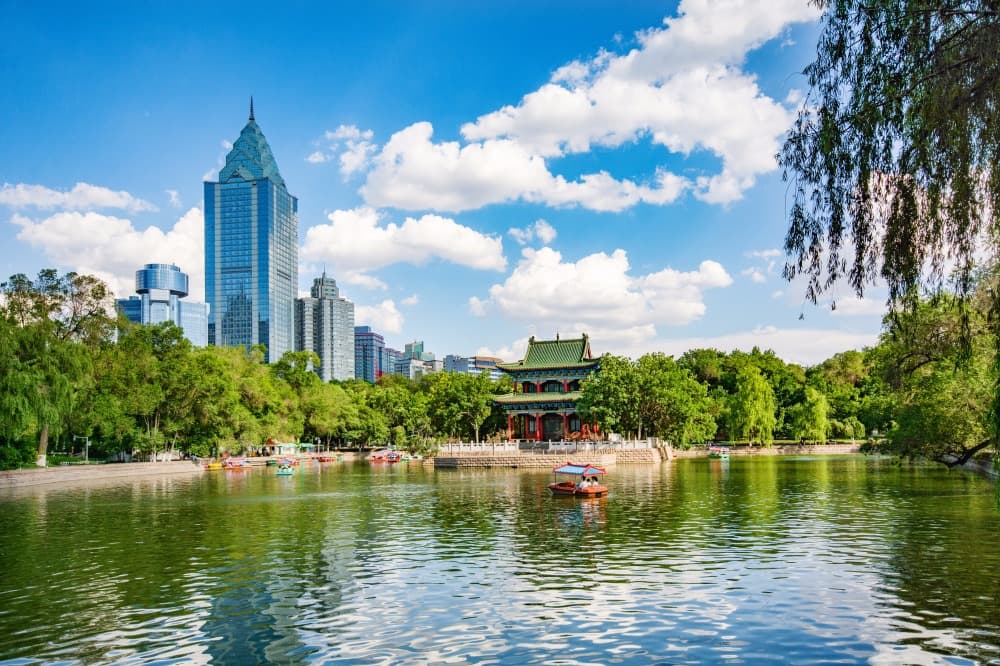
Situated on the ancient Silk Road, it is hard to imagine Urumqi today as a simple oasis dotted with tents, modest shops, and camels. Traveling merchants have given way to tall glass buildings, wide roads, bridges, and tunnels that make Urumqi a surprisingly modern city.
The city, in the midst of economic growth, derives its revenue from mining and oil extraction.
While the city offers no major tourist attractions, it makes an excellent base for exploring this remarkable region.
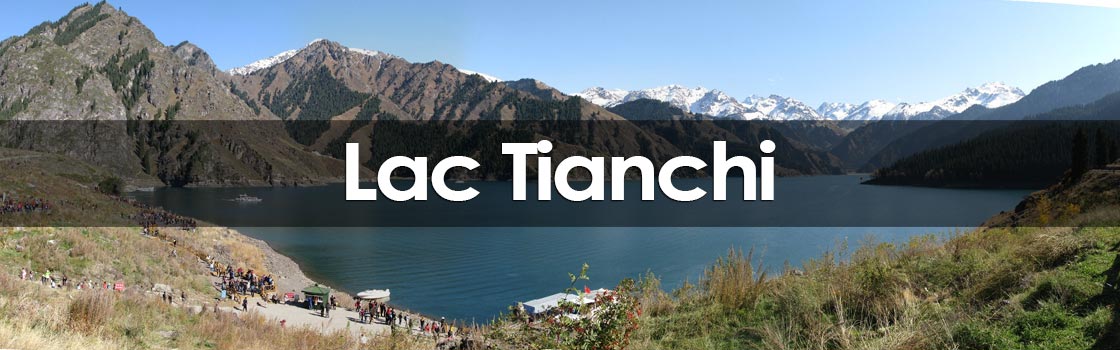
Nevertheless, when passing through Urumqi, it would be a shame to miss the beauty of Tian Chi, this deep blue lake nestled in the Tian Shan mountain range at 2,000 meters altitude. Just 2 hours by bus from the city, you'll find yourself in a landscape that starkly contrasts with urban development. Yurts, sheep, yaks, and mountains fill the scene, promising a pleasant and exotic excursion.
Take a short trip to the Xinjiang Autonomous Region Museum to learn more about the region before exploring it and fully appreciating your journey.
To ensure you don't miss anything from your Xinjiang trip, spend some time at Erdaoqiao Market to pick up a few souvenirs.
Climate
Urumqi's geographical location gives it an extreme desert climate with very cold winters and hot summers.
The average annual temperature hovers around 6°C due to an average winter temperature of -12°C and a summer average of 23.7°C.
Autumn is the most favorable season to visit Urumqi. Temperatures become mild and the city takes on lovely warm hues.
Air
Served by an international airport, Urumqi is easily accessible from major Chine cities such as Beijing, Xi'an, Shanghai, Guangzhou, and Yichang.
It is possible to reach Urumqi from Ulaanbaatar in Mongolia, Kabul, Osh, and other cities.
Train
Urumqi has four train stations connecting the city by rail to Xi'an, Shanghai, Beijing, Chengdu, Zhengzhou, and Lanzhou. Trains also link numerous cities within Xinjiang Province.
Long-Distance Bus
The Xinjiang Autonomous Region boasts an excellent road network radiating from Urumqi. The city is therefore easily accessible by long-distance bus from other cities in the region.
Taxis are an excellent way to get around the city.
A few buses also serve the city.
What to Do in Urumqi?
- Learn more about the region and city at the Xinjiang Autonomous Region Museum.
- Stroll through the People's Park and Hongshan Park.
- Venture out to Tian Chi Lake for an outdoor excursion in the mountains.
Attractions in Urumqi

Marché Erdaoqiao
Avec 3 000 boutiques sur 40 000 m², Erdaoqiao est le grand bazar ouïgour d'Urumqi : artisanat, soie d'Aidelai, cuisine du Xinjiang et architecture musulmane.
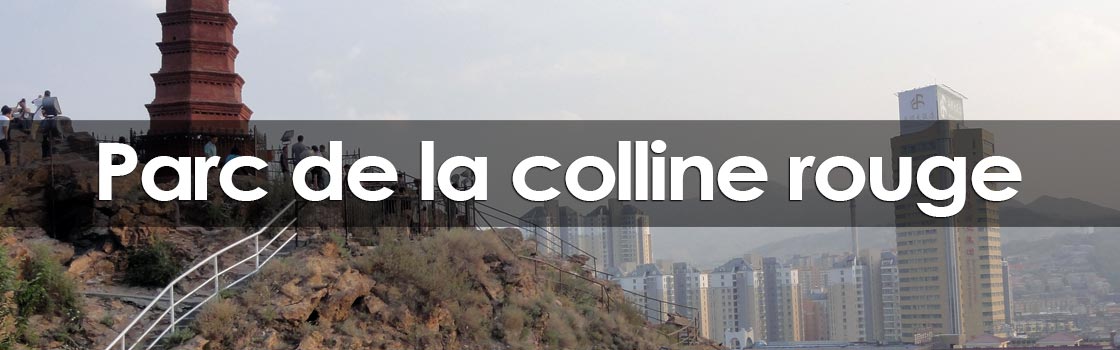
Parc de la colline rouge
Parc emblématique d'Urumqi, la Colline rouge abrite la pagode Qing de Zhenlong, des jardins aménagés et un panorama sur le centre-ville du Xinjiang.
Lac Tianchi
À 110 km d'Urumqi, le lac Tianchi déploie ses eaux émeraude à 2 000 m d'altitude au pied du mont Tianshan, entre randonnées et yourtes kazakhes.
Want to discover this destination?
Our local advisors design your tailor-made trip.