Erdaoqiao Market
Erdaoqiao Market
With 3,000 shops spread across 40,000 m², Erdaoqiao is Urumqi's great Uyghur bazaar: crafts, Aidelai silk, Xinjiang cuisine and Muslim architecture.
Erdaoqiao Market stretches along Tianchi Street, in the heart of Urumqi, capital of the Xinjiang Uyghur Autonomous Region. Nicknamed "the window onto Xinjiang's ethnic culture" and "the folk museum," it brings together more than 3,000 shops across approximately 40,000 m² and stands as the city's main Uyghur commercial hub.
Why visit Erdaoqiao Market
Erdaoqiao is one of the rare places in Urumqi where you can grasp the ethnic diversity of Xinjiang in just a few hours. The market concentrates crafts, textiles, spices and cuisine from several minorities, with Uyghur culture at the forefront. Its Uyghur-style architecture, domes and colorful tilework make it as much a visual destination as a commercial zone. It's also a useful landmark for understanding Urumqi's historic role on the Silk Road.
Market history
The site originally functioned as a trading platform between Xinjiang and Central Asia, extending the commercial routes active under the Han and Tang dynasties. This merchant tradition, spanning some 130 years in the neighborhood, preceded the modern market's development.
Erdaoqiao Market was officially opened in 1982. Quickly becoming saturated, it underwent rehabilitation in 1999 funded by Urumqi's municipal government. New spaces dedicated to Uyghur products opened in 2001, followed by the grand Xinjiang international bazaar in 2003, giving the site its current configuration.
What to see and do
Typical products
The aisles offer a wide range of regional items:
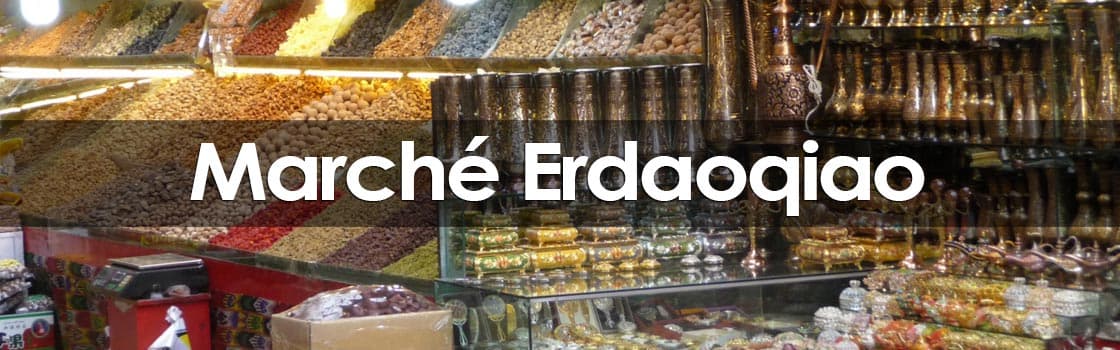
- Aidelai silk (atlas), woven in traditional Uyghur patterns;
- hand-embroidered Uyghur caps (doppa);
- ethnic costumes and colorful fabrics;
- silver jewelry, stones and coral;
- dried fruits, nuts, grapes and apricots from Xinjiang;
- spices, teas and local pastries.
Haggling is customary, as throughout Chine. Plan for an average margin of 30 to 50% on the initial asking price for non-food items.
Architecture and atmosphere
The main buildings display a Uyghur-Muslim style, with ogival arches, decorative minarets and ceramics. The grand international bazaar is the landmark building, recognizable by its tower. As dusk falls, lanterns light up and restaurant terraces fill: this is when the market comes alive at its most vibrant.
Cuisine and performances
Restaurateurs offer the classics of Xinjiang cuisine: lamb skewers (chuan'r), hand-pulled laghman noodles, manti dumplings, naan bread and polo rice. Uyghur musicians and dancers perform periodically on the central square, especially in the evenings and on weekends.
When to visit
The market is lively year-round, but the atmosphere varies notably by season. From May to October, terraces operate in the open air and evenings extend late. In winter, temperatures in Urumqi drop well below freezing and activity concentrates in covered buildings.
During Ramadan, the majority of food stands slow down or close during the day, but the evening atmosphere intensifies after the breaking of the fast. On Fridays, the day of prayer, some vendors temporarily close mid-day.
Practical information
- Address: Tianchi Street, Tianshan District, Urumqi.
- Hours: open daily, generally from late morning until evening. Better to avoid early morning, which is quiet.
- Visit duration: plan 2 to 3 hours to walk through the bazaar and dine on-site.
- Payment: cash and Chinese mobile apps (WeChat Pay, Alipay) widely accepted; foreign cards are rarely usable.
- Security: frequent identity checks at the entrance, passport required. The area is heavily monitored; allow extra time for passage.
- Photography: ask before photographing people, particularly in front of the neighboring mosque.
How to get there
The market is located about 3 km south of Urumqi's administrative center. Several options exist:
- Bus: line 110 serves the market directly; other city lines stop near Tianchi Street.
- Taxi or ride-hailing: short journey from most downtown hotels, expect a moderate fare.
- On foot: accessible from Tianshan District hotels in 15 to 30 minutes depending on your starting point.
What to see nearby
The Erdaoqiao neighborhood concentrates several complementary sites. The grand mosque is a few minutes' walk away and allows you to extend your visit of the Uyghur quarter. The Silk Road Museum covers the region's role under the Han and Tang dynasties.
To extend your Xinjiang itinerary, the Bezeklik Thousand Buddha Caves, near Turpan, make a major cultural stop. Elsewhere in Chine, you can continue to the Great Wall at Juyongguan or the Wild Goose Pagoda in Xi'an.
Frequently asked questions
Frequently asked questions
It is located on Tianchi Street, in Tianshan District, in the heart of Urumqi, capital of the Xinjiang Uyghur Autonomous Region.
Plan 2 to 3 hours to walk through the main aisles, shop and dine on-site. Allow more time if you also visit the neighboring mosque.
You'll mainly find Aidelai silk, Uyghur caps, ethnic costumes, silver jewelry, dried fruits and spices, as well as many culinary specialties from Xinjiang.
Yes, haggling is customary for crafts, textiles and jewelry. It remains less common for food and items with price tags.
Bus line 110 serves the market directly. Taxi and ride-hailing services remain the simplest option, with a short journey from most downtown hotels.
Planning your trip
Erdaoqiao Market fits naturally into a circuit dedicated to Xinjiang or into a broader discovery of northwestern Chine. To build a custom itinerary including Urumqi and Silk Road sites, consult our trips to Chine.
Interested in this visit?
We can include it in your personalised itinerary.