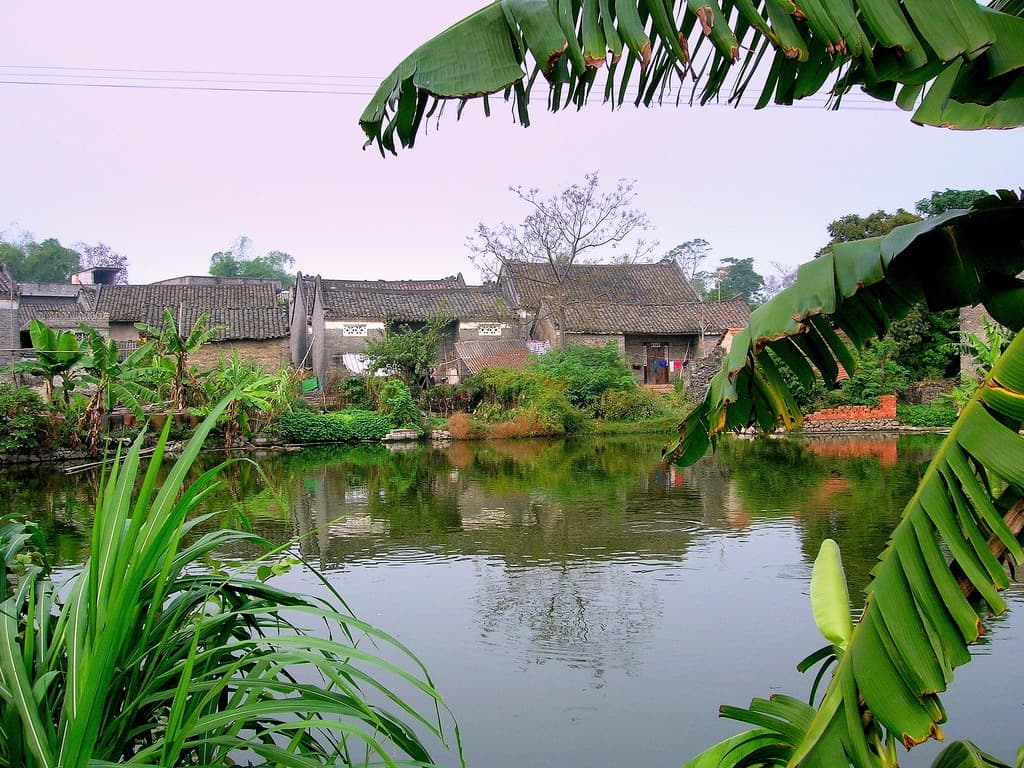
Yangmei Ancient Village (扬美古镇)
Yangmei Ancient Village (扬美古镇)
About fifty kilometers from Nanning, Yangmei retains its black stone-paved alleys, merchant houses from the Ming and Qing dynasties, and its wharf along the Zuojiang River — an authentic historic town rarely crowded with tourists.
Yangmei is a historic town located roughly fifty kilometers west of Nanning, along the Zuojiang River. Founded during the Song dynasty, it preserves cobbled alleyways, grey-brick houses, and merchant residences that speak to its prosperous commercial past. It ranks among the best-preserved ancient villages in the Guangxi Autonomous Region, far removed from the hustle of the regional capital.
Practical Information at a Glance
- Access: bus or minibus from Nanning's main bus station to Jiangnan, then local connection to Yangmei.
- Recommended duration: half a day is sufficient to explore the village; a full day if you wish to stroll along the riverbank.
- What to wear: no specific requirements; comfortable shoes recommended for uneven cobblestones.
What to See
The village is organized around a network of narrow alleys lined with dark-brick houses dating mainly from the Ming and Qing dynasties. Carved doorways, interior courtyards, and ornately worked wooden lintels reveal the former prosperity of merchant families. The Zuojiang River runs alongside the town, offering a serene setting punctuated by traditional boats.
History and Context
Yangmei owes its development to its strategic position on the Zuojiang, a commercial axis linking Guangxi to Vietnam. From the Song period onward, merchants settled here to trade salt, rice, and textiles. The town reached its peak under the Qing dynasty, as evidenced by the most ornate residences still visible today. It ranks among China's protected historic towns.
Highlights of Your Visit
Merchant Mansions
Several merchant houses are open to visitors. Their interior courtyards, stone wells, and gabled façades constitute the village's main architectural interest.
Cobbled Alleyways
The network of black stone-paved lanes is remarkably intact. Wandering through these passages, between brick walls and lush vegetation, is Yangmei's central experience.
The Riverside
The wharf on the Zuojiang allows you to observe local life: fishermen, washerwomen, flat-bottomed boats. It's also the best vantage point for views of the village's grey-tiled roofs.
Photography Tips
Morning light, before the arrival of visitors, is ideal for photographing the alleys without crowds. River reflections in late afternoon offer striking contrasts with the dark rooflines. Architectural details — hardware, carved lintels, interior courtyards — deserve close attention.
Location and Access
Yangmei is located in Jiangnan district, west of Nanning. The journey from the city center takes roughly one hour depending on your chosen transport. The village is accessible by public bus or rental car. Since the alleyways are cobbled and sometimes narrow, accessibility for people with reduced mobility is limited.
Nearby Attractions
- Qingxiu Park — Nanning's major landscape park, perfect for a half-day stroll.
- Guangxi Museum — collections covering the region's history and ethnic minorities, including the famous Zhuang bronze drums.
- Detian Waterfalls — impressive Sino-Vietnamese transborder falls, several hours' drive to the west.
Frequently asked questions
Autumn and spring offer pleasant temperatures. Summer is hot and humid; winter remains mild in this subtropical region. Avoid major Chinese holidays (National Day in early October, Lunar New Year) to escape crowds.
Access to the alleys and public spaces in the village is generally free. Some historic residences may charge a modest entrance fee; inquire locally.
Yes. A morning half-day at Yangmei leaves time to return to Nanning in the afternoon to visit the Guangxi Museum or Qingxiu Park.
Photography is permitted in public spaces and alleys. Inside private residences or paid sites, ask permission from the owners or caretakers.
A few small restaurants and food stalls offer local Guangxi specialties. The selection remains modest; plan to dine early or bring a snack if visiting on weekdays outside peak season.

Photos
Nearby
Interested in this visit?
We can include it in your personalised itinerary.