Xidi Historic Village
Xidi Historic Village
Listed as a UNESCO World Heritage site since 2000, Xidi preserves over 120 Ming and Qing residences of the Hu clan, its paved alleys and its archway from 1578, in southern Anhui.
The village of Xidi is located in southern Anhui province, 8 km from Yixian district, approximately 40 km south of Mount Huangshan and 54 km from Tunxi. Listed as a UNESCO World Heritage site since 2000, this rural village preserves the residential architecture of the Ming and Qing dynasties through more than a hundred dwellings, paved alleys and ancestral buildings of the Hu clan.
Why visit Xidi
Xidi offers a rare testament to pre-modern Chinese rural urbanism. The entire complex stretches nearly 700 m in length and 300 m in width, spanning 160,000 m², crossed by two streams and 99 paved alleys. You will find:
- 124 historic residences open to the public, including Jing'ai Hall, Yingfu Hall and Lingyun Pavilion
- The commemorative archway of Governor Hu Wenguang, a masterpiece of Ming stone carving
- Private gardens over two and a half centuries old
- A still-inhabited village, with approximately 1,000 residents predominantly from the Hu clan
Unlike a frozen museum site, Xidi remains a living place: inhabitants occupy a large portion of the 600 residences and continue a rural way of life.
History of the village
Xidi was founded during the Northern Song dynasty (960-1127), in the Huangyou era (mid-11th century). Its founders are descendants of Emperor Zhaozong of the Tang, through his son Li Ye. After the assassination of the entire imperial family in 907, at the fall of the Tang, the child was taken in by a neighboring village and abandoned the surname Li for that of his adoptive family, Hu. His descendants eventually settled at the present site of Xidi.
The village was originally named Xichuan, "Western River," because of the waterways running through it. It experienced initial growth under the Ming, then a period of prosperity under the Qing, when the Hu clan became a major player in commerce in the Huangshan region. This mercantile wealth explains the architectural quality and careful ornamentation of the residences still visible today.
Its inscription on the UNESCO World Heritage List dates to November 30, 2000, jointly with the neighboring village of Hongcun, under the designation "Ancient Villages of Southern Anhui."
What to see at Xidi
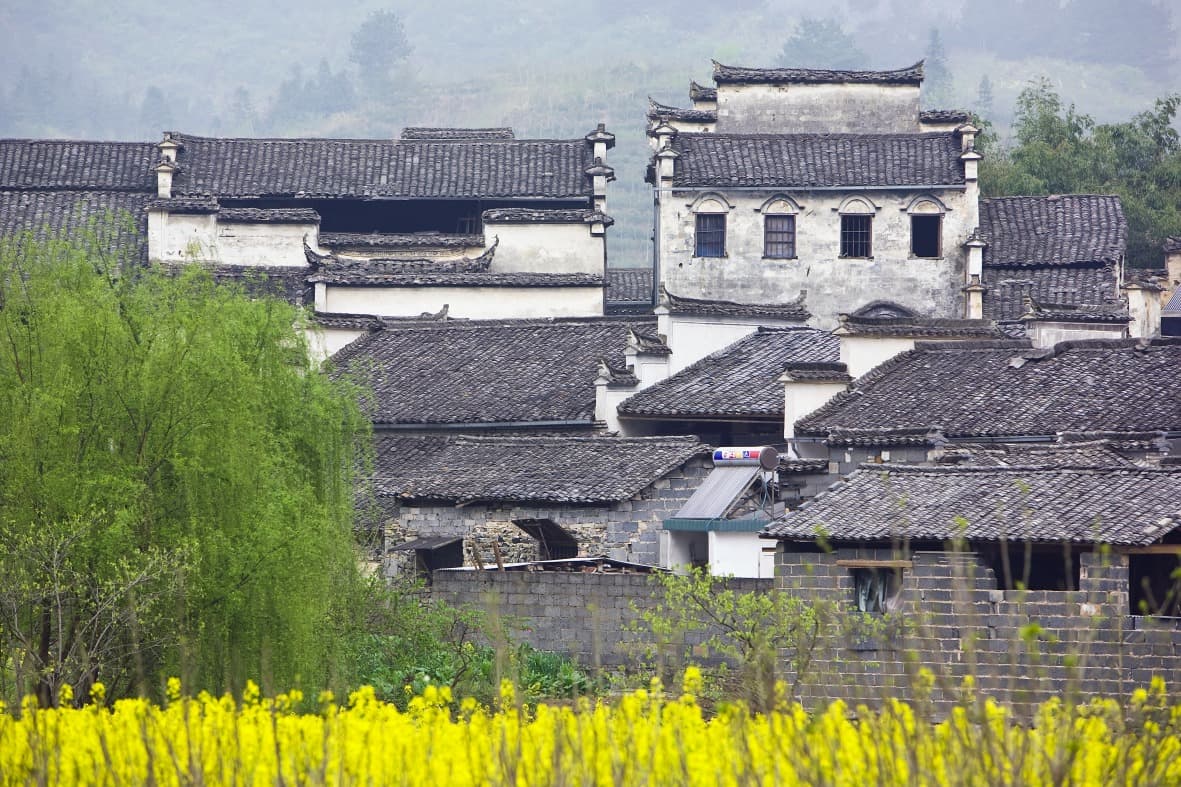
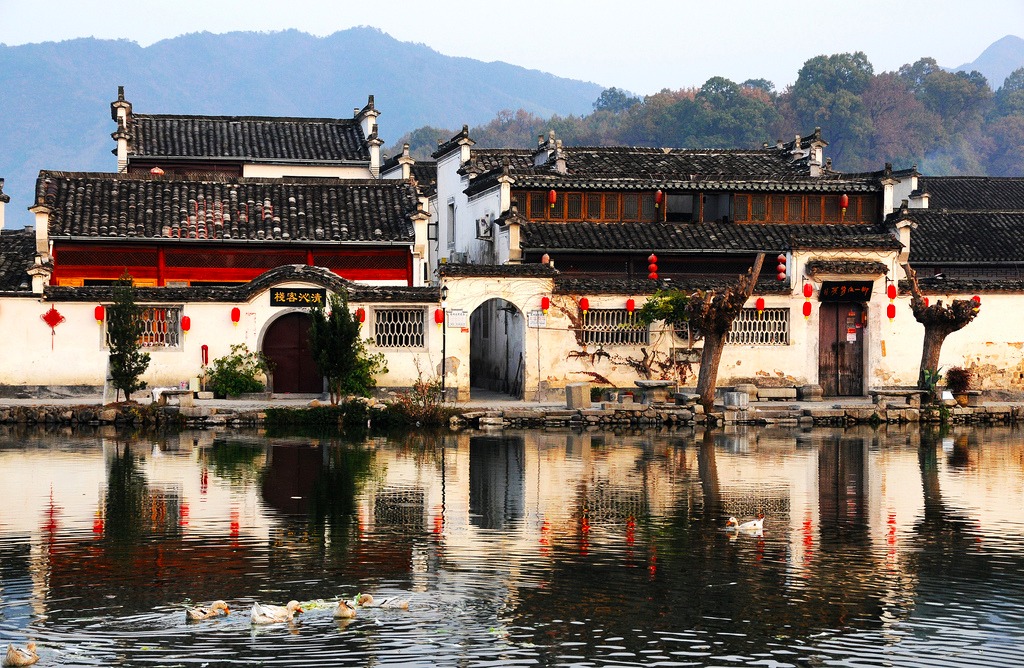
The village's urban layout is organized around a main street and two parallel streets oriented east-west, connected by a network of narrow alleys opening onto small squares. The traditional houses of the Hu clan are recognizable by their whitewashed walls, dark tile roofs, finely carved doors and framing in local black stone.
The Hu Wenguang Archway
Erected in 1578 at the entrance to the village, this dark stone archway marks the threshold of the historic town. It measures 12.3 m in height and 9.95 m in width, features three arches and five superimposed structures forming the roof. It is one of the rare Ming commemorative archways so well preserved in Chine.
Jing'ai Hall
With its 1,800 m² of floor space, Jing'ai Hall is the largest building in the village. Its structure combines wood and brick. Originally dedicated to the worship of ancestors of the Hu clan, it now hosts a permanent exhibition on the customs of Xidi.
Yingfu Hall
This residence was built for Hu Shangzeng, a high-ranking official of the Qing dynasty and the highest-ranking dignitary the village has known. The interior layout, courtyards and woodwork testify to the domestic refinement of Qing scholarly elites.
Streams, bridges and gardens
The Front Stream, Back Stream and Golden Stream flow through Xidi before meeting at Huiyuan Bridge. Three gardens dating back over 260 years complete the visit: the East Garden, the West Garden and the Taoli Garden. The immediate surroundings consist of verdant hills and terraced rice fields.
When to visit
Xidi can be visited year-round, but each season offers a different atmosphere:
- Spring (March-May): rapeseed flowers blooming in surrounding fields, soft light, moderate temperatures. A very photogenic period.
- Summer (June-August): humid heat and high visitor numbers, especially during Chinese holidays
- Autumn (September-November): clear skies, colors of ripe rice fields and surrounding forests. Often considered the most pleasant season.
- Winter (December-February): few visitors, morning mist on rooftops, sometimes light snow
Early morning and late afternoon, when the light is low, showcase the rooftops and alleys beautifully, and visitor numbers are lower.
Practical information
- Recommended visit duration: plan half a day to explore the main buildings without rushing, or a full day if you combine with Hongcun
- Entrance fee: a single ticket gives access to the village and open residences; moderate rate, payable at the main entrance
- Opening hours: open during the day, from morning until late afternoon; early arrival recommended
- Access to private residences: some houses are not accessible; ask permission from owners before entering
- Accommodation: several traditional guesthouses allow you to stay on site and enjoy the village after day-trippers depart
How to get there
The nearest station is Tunxi (Huangshan), well served by the high-speed rail network from Shanghai, Hangzhou and Hefei. From Tunxi, buses serve Yixian, from where local minibuses serve Xidi. Budget approximately 1.5 to 2 hours of travel from Tunxi depending on connections.
A direct shuttle also connects Xidi and Hongcun at regular intervals (approximately every 30 minutes during the day), making round-trip travel between the two villages very convenient.
In the surrounding area
- Hongcun: second UNESCO-listed village, organized around a central pond, about twenty minutes from Xidi
- Mount Huangshan: granite massif famous for its pines, sea of clouds and peaks, approximately 40 km to the north
- Tunxi (old street): historic commercial center of Huangshan, a logical base before or after your visit
Frequently asked questions
Frequently asked questions
The two villages are complementary and are listed together on UNESCO's World Heritage list. Xidi is distinguished by its Ming archway and merchant dwellings, Hongcun by its ox-shaped layout and pond. A day is enough to visit both thanks to regular shuttles.
Half a day allows you to see the main buildings (Hu Wenguang archway, Jing'ai Hall, Yingfu Hall, gardens). To explore the 124 open residences in detail and enjoy the atmosphere, an overnight stay is recommended.
Yes. Approximately 1,000 people live here, predominantly from the Hu clan, in 600 residences. This requires respecting the privacy of residents: some houses are private and can only be visited with the consent of the occupants.
Spring, for the blooming rapeseed fields, and autumn, for the light and colors, are the most appreciated. Winter offers a hushed atmosphere with few visitors.
Yes, several traditional residences have been converted into guesthouses. Spending the night allows you to enjoy the village once the tour groups have left.
Planning your trip
Xidi fits naturally into an itinerary centered on Anhui, combining listed villages and climbing Mount Huangshan. To build your customized stay, consult our travel guide to Chine and our itinerary suggestions.
Interested in this visit?
We can include it in your personalised itinerary.