Zhongshan Iron Bridge
Zhongshan Iron Bridge
The first metal bridge built over the Yellow River, Zhongshan Bridge is one of Lanzhou's iconic landmarks. Qing history, architecture and travel advice.
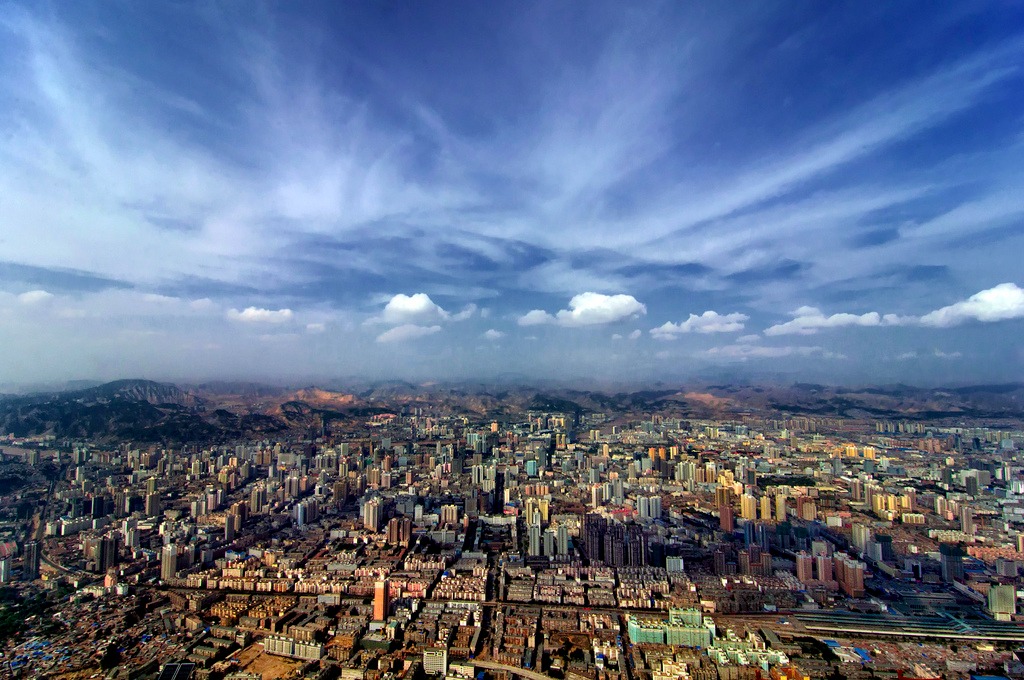
The Zhongshan Iron Bridge spans the Yellow River at Lanzhou, the provincial capital of Gansu. The first metal bridge constructed above the Yellow River, it connects the foot of Bai Ta Mountain to the Jin Cheng crossing and stands as one of the city's defining symbols.
Why visit Zhongshan Bridge
This bridge marks a pivotal moment in Chinese infrastructure history: it replaced in 1909 a century-old floating bridge and embodied the technical modernization of late Qing China. Walking across it freely and at any hour offers direct views of the Yellow River and the White Pagoda hill that rises above the northern bank. It also serves as a practical hub for exploring central Lanzhou, with several major sites within walking distance.
Bridge History
Before the metal bridge's construction, crossing the Yellow River at Lanzhou relied on a floating bridge. This structure is believed to have been established by Feng Sheng around 1372, during the Ming dynasty. In 1385, General Deng Yu relocated it roughly ten kilometers west and renamed it the Zhenyuan Bridge. Later, Yang Lian brought it back to its current location.
In 1907, the Qing government committed over 300,000 taels of silver to replace this floating structure with a permanent iron bridge. The German firm Shangtailai oversaw the project. The structure was initially called the Lanzhou Yellow River Iron Bridge.
In 1942, it was renamed Zhongshan Iron Bridge in memory of Sun Yat-sen (Sun Zhongshan in Chinese), the founding figure of the Republic of China proclaimed in 1912.
Architecture and Points of Interest
The bridge extends 234 meters in length and 7.5 meters in width. It rests on six pillars and combines iron, cement, and stone. Five steel beams reinforce the entire structure, added during consolidation work.
South Side
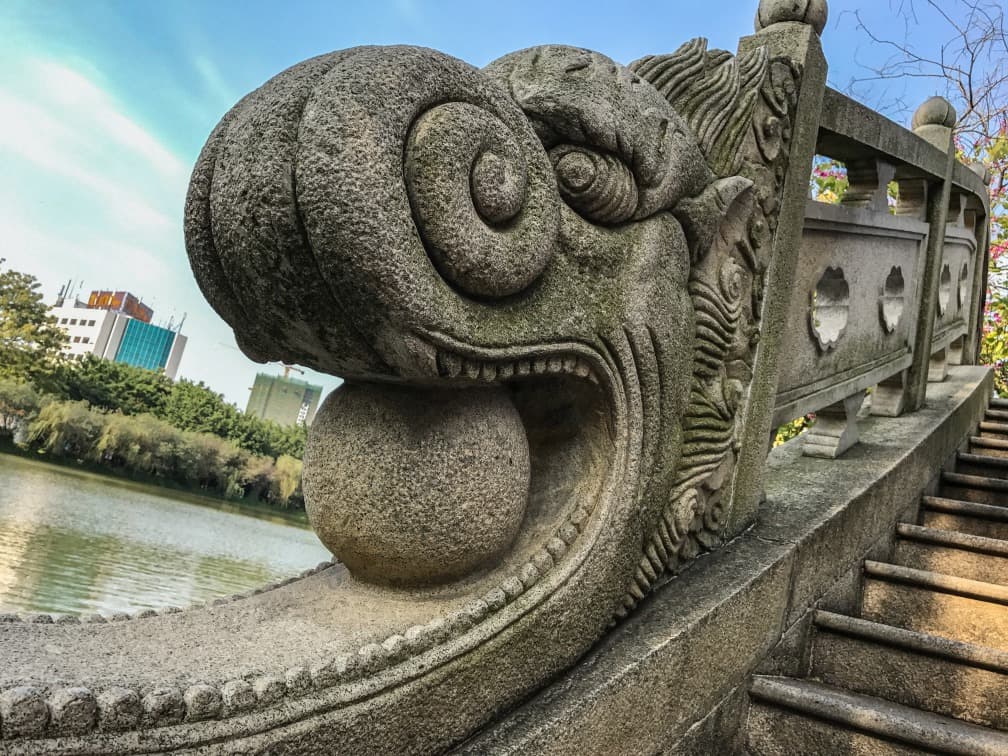
At the bridge's southern end stands a stone tablet on a tortoise pedestal inscribed with "The First Bridge of the Yellow River." The monument's crown is carved with two dragons playing with a pearl, a classical motif from Chinese imperial iconography.
River Views
Walking across allows you to observe the silt-laden current that gives the Yellow River its characteristic hue. Heading north, the bridge leads to the foot of the White Pagoda hill, whose trails offer sweeping views over the city and waterway.
When to Visit
The bridge is open year-round. Two moments stand out:
- During daylight: best for appreciating the metal structure, inscriptions, and urban surroundings. Favor late morning or late afternoon for softer light.
- At dusk and night: lighting that highlights the arches and water reflections.
Spring and autumn remain the most comfortable seasons in Lanzhou, with summers being hot and winters dry and cold.
Practical Information
- Access: free and unrestricted
- Hours: open around the clock
- Duration of visit: allow 30 minutes to 1 hour for crossing and surroundings
- Crossing method: walking recommended; vehicular passage also possible
How to Get There
The bridge lies north of central Lanzhou, at the foot of the White Pagoda hill.
- By bus: lines 2, 4, 6, 9, 13, 15, 101, and 102 serve the bridge's vicinity.
- On foot: from the south bank, the bridge is directly accessible from the Jin Cheng district. From the White Pagoda hill, expect a few minutes' descent.
- By taxi: an easy option from any point in the city.
Nearby Attractions
- White Pagoda Hill: just across the bridge, with walking trails and panoramic views over Lanzhou.
- Yellow River Mother Statue: an emblematic sculpture on the south bank, downstream.
- Danxia Geopark (Zhangye Danxia, a day trip from Lanzhou): sedimentary formations in striking ochre and red hues.
Frequently Asked Questions
Frequently asked questions
Yes. Access is free and unrestricted, open at any hour of the day or night.
A round-trip crossing with a stop at the south-side tablet takes roughly 30 minutes. Combined with White Pagoda Hill, allow half a day.
Both are complementary: daytime to appreciate the architecture and inscriptions, evening to see the illuminated bridge and its reflection on the river.
The bridge was renamed in 1942 in honor of Sun Yat-sen, whose Chinese courtesy name is Sun Zhongshan. He was the first president of the Republic of China, proclaimed in 1912.
To incorporate Lanzhou and Zhongshan Bridge into a broader itinerary, explore our journeys through China.
Interested in this visit?
We can include it in your personalised itinerary.