Tianjin
Tianjin
Just 30 minutes from Beijing by high-speed train, Tianjin reveals its concession-era architecture, a grand Ferris wheel on the Hai River, and a faded grandeur unique in China.
Name: Tianjin
Chinese name: 天津 (Tien-Tsin)
Status: Autonomous Municipality
Population: 14,722,100 (2013)
Area: 1,186 km²
Located 120 km from Beijing, Tianjin is China's fourth-largest city. Overshadowed by Beijing's prominence, Tianjin remains relatively unexplored by visitors. Yet its past under European occupation has left behind traces offering the city distinctive architecture and a vibrant atmosphere nearly as compelling as Shanghai's. Tianjin makes an excellent short getaway of a few days to discover an emerging people in a modern China.
History
Tianjin's destiny has always been intertwined with Beijing's. Once the ancient capital established by the Mongols in the 13th century, Tianjin rose to prominence as China's granary. When the Grand Canal became navigable to the capital, Tianjin found itself at the crossroads of river and maritime routes. By the 15th century, it had become a fortified garrison city. For Westerners, Tianjin was the ideal trading post. The French and English settled there, soon joined by the Japanese, Germans, Austro-Hungarians, Italians, and Belgians. Foreign nations eventually occupied a zone far larger than the original city. Each concession operated as an autonomous world with its own school, barracks, prison, and hospital. This balance was shattered in 1870 when Chinese residents attacked a French orphanage and killed 10 nuns. Misunderstanding the meaning of the Eucharist, locals believed children were being kidnapped for cannibalism. Three decades later, during the Boxer Rebellion, international troops eventually razed the old city walls and rebuilt them in Western style. European presence undeniably stimulated commerce and industry, particularly in salt, textiles, and glass. Tianjin lost its status as a premier port when silting of the Hai River necessitated building a port at Tanggu, 50 km downstream. The city has experienced rapid industrialization since 1949, focused on consumer goods production. Certain Tianjin brands like Flying Pigeon bicycles and Seagull watches enjoy national renown.
Today
Like Beijing, Shanghai, and Chongqing, Tianjin holds the status of "special municipality". It thus enjoys considerable autonomy. Its past as a foreign concession, its major port, and European architecture evoke Shanghai. Yet it remains often overlooked by travelers, who rush toward Beijing or Shanghai. The city boasts impressive buildings dating from the concession era, giving it a sort of faded grandeur. The 2008 Olympic Games allowed it to refresh its image and renovate many historic monuments. Tianjin too has launched into a frenetic urbanization race that engulfs entire neighborhoods: the metro has been modernized, new bridges span the Hai River, and buildings pierce the monotonous skyline. Tianjin illustrates contemporary China's contrasts, where luxurious buildings tower over ordinary courtyards populated by geese and chickens. This transformation unfolds against severe drought, which strikes here more harshly than in Beijing. In Tianjin, per-capita water resources are reportedly lower than Saudi Arabia's. Dust seeps everywhere, draping new construction in a grayish shroud. Tianjin retains a traditional face: taxi drivers cluster at the railway station exit, and on the streets, idle residents watch time pass. Accommodations are expensive, but since Beijing lies less than ninety minutes away, it's possible to visit for the day.
Climate
Tianjin sits in a transition zone between three climates: humid subtropical climate, humid continental climate, and semi-arid climate. Tianjin endures hot, humid summers with monsoons and cold, dry winters due to Siberian winds. Tianjin sometimes experiences spring sandstorms originating from the Gobi Desert. Maximum temperatures in July can reach 30°C. Conversely, winter temperatures can plummet to -5°C in January. It's best to visit Tianjin in autumn when humidity dissipates and temperatures become more pleasant.
Tianjin lies approximately 120 kilometers from Beijing, providing easy access from the capital.
Air
Tianjin Binhai International Airport serves international flights to Japan and North Korea. Domestic flights from the capital and Shanghai are also available. The airport primarily serves as a hub for Tianjin Airlines and private carriers like Okay Airlines and Air China.
Bus
Every hour, express buses depart from Beijing or return there. Tianjin is also served by buses from Dalian, Qingdao, and Nanjing. These are generally sleeper buses of varying comfort levels. Buses typically stop at or depart from Tianjin's main railway station.
Train
Three railway stations serve Tianjin: the main station, the North station, and the West station. Most trains depart from the main railway station. Tianjin offers regular trains to the capital and numerous connections with northeastern provinces. Trains heading south, particularly to Anyang, Ji'nan, Nanjing, Qingdao, Shanghai, and Zhengzhou, are available with varying comfort levels (seats or sleepers).
Navigating Tianjin is very easy thanks to the city's extensive bus network. The metro, recently renovated on several lines, provides a straightforward way to move from one part of the city to another. Taxis remain very affordable in Tianjin. If you know your destination's address in Chinese, a taxi can be a good option outside rush hours.
Languages
Tianjin has its own dialect derived from Mandarin. The Tianjin dialect has quite different sonorities from what one hears in Beijing despite the cities' proximity. Mandarin is of course widely spoken.
What to do in Tianjin?
- Appreciate the foreign concession architecture in the city center.
- Admire the city and its lights from the Tianjin Eye Ferris wheel.
- Browse for bargains at the antique market.
- Stroll through Ancient Culture Street and visit the Tianhou Temple.
- Venture outside the city for an excursion to the Shi Family Residence.
Attractions in Tianjin
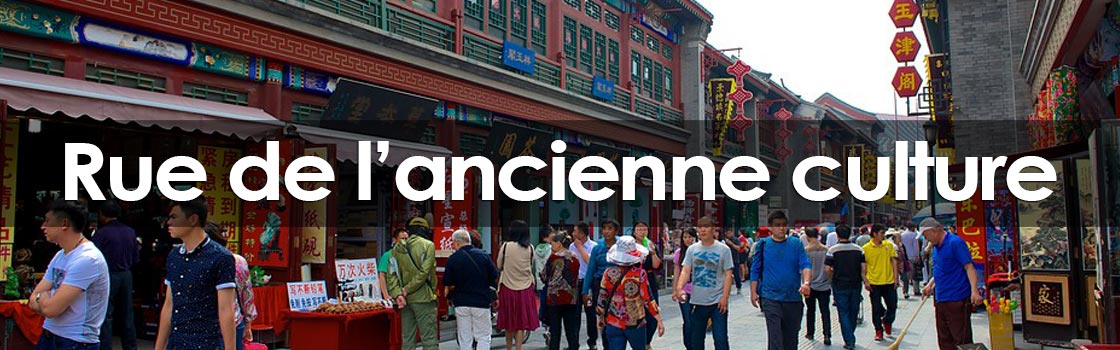
Rue de l'ancienne culture
Rue piétonne de 687 mètres au cœur de Tianjin, bordée de temples Ming, de boutiques d'artisanat traditionnel et de spécialités culinaires comme le Goubuli.
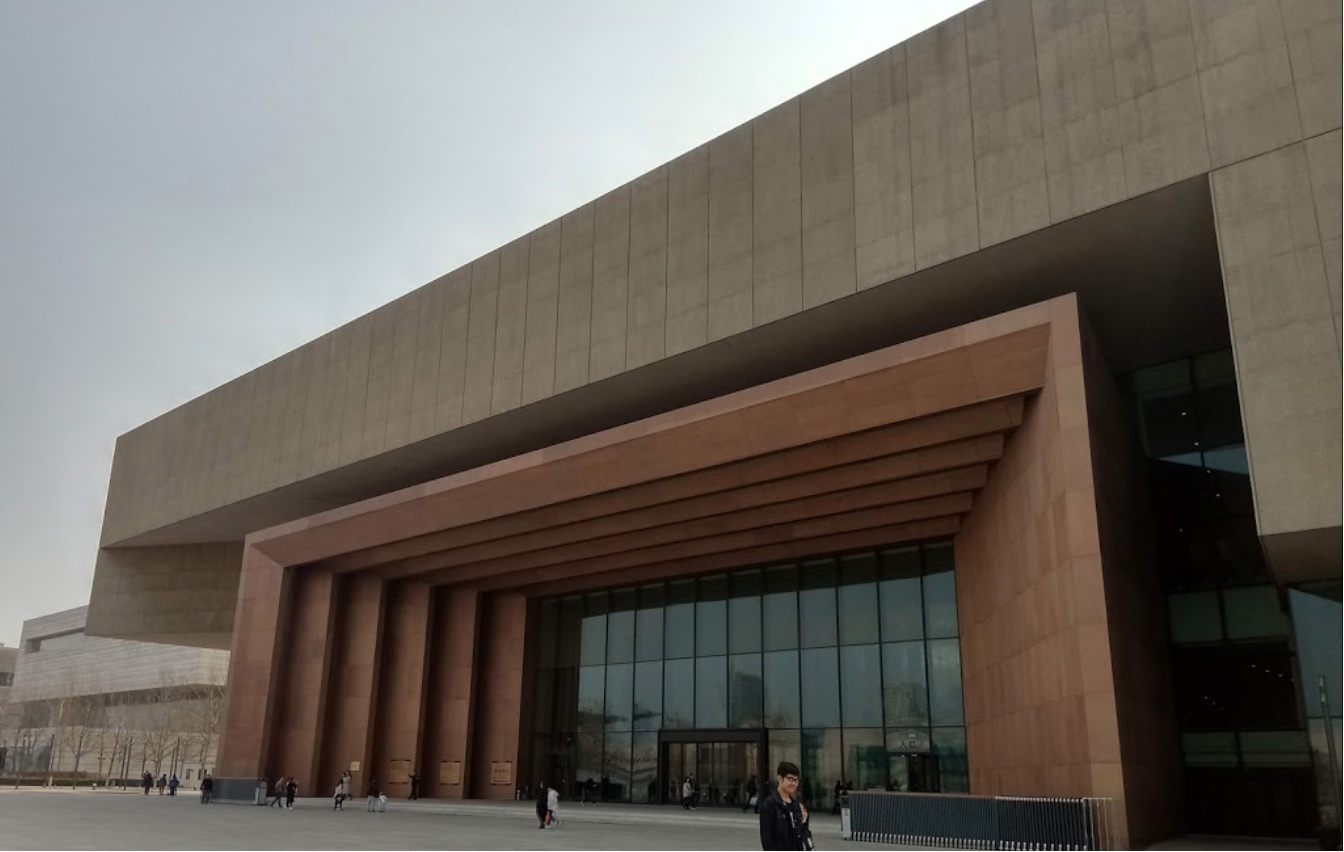
Musée du Théâtre de Tianjin
Au cœur du district de Nankai, le Musée du Théâtre de Tianjin retrace l'histoire de l'opéra chinois dans un bâtiment d'architecture Qing inauguré en 1986.
Want to discover this destination?
Our local advisors design your tailor-made trip.