Gansu
Name : Gansu
Chinese name : 甘肃
Status : Province
Capital : Lanzhou
Population : 25,821,800 inhabitants (2013)
Area : 454,000 km²
Located along the upper reaches of the Yellow River, in northwestern Chine, Gansu is one of the cradles of Chinese culture. While the province is renowned for its Silk Road heritage, it is also rich in a multinational population. The province is indeed composed of minority ethnic groups including Kazaks, Mongols, Tibetans, Hui, Dong Xiang, Yu, and Manchus.
History
Although the Quin Dynasty had a foothold in eastern Gansu, the first major conflict erupted to the west along the Hexi Corridor during the Han Dynasty.
An imperial envoy, Chang Ch'ien, was sent in search of trading partners and returned with detailed reports of Central Asia and an itinerary that would become known as the Silk Road.
Meanwhile, the Han expanded the Hexi Corridor westward to the Great Wall of China and built fortified cities there to extend their empire. As trade flourished along the Silk Road, increasing numbers of people arrived. Populations gradually began to concentrate in nearby towns.
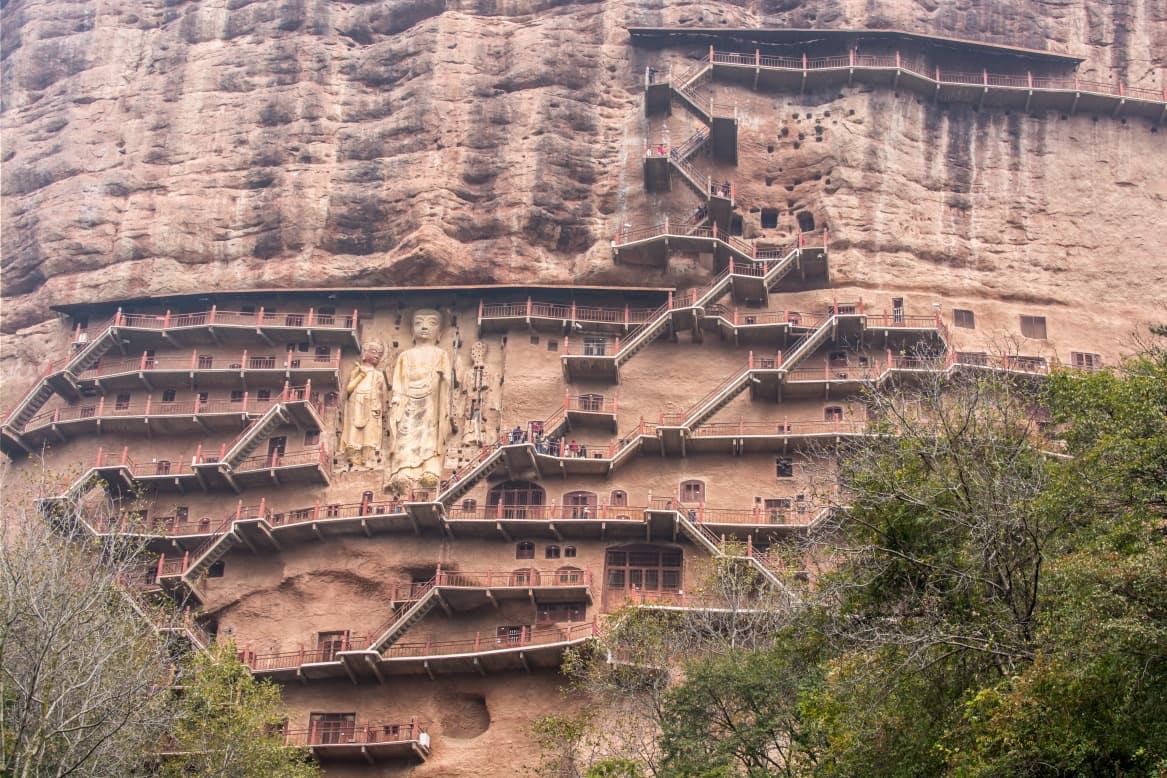
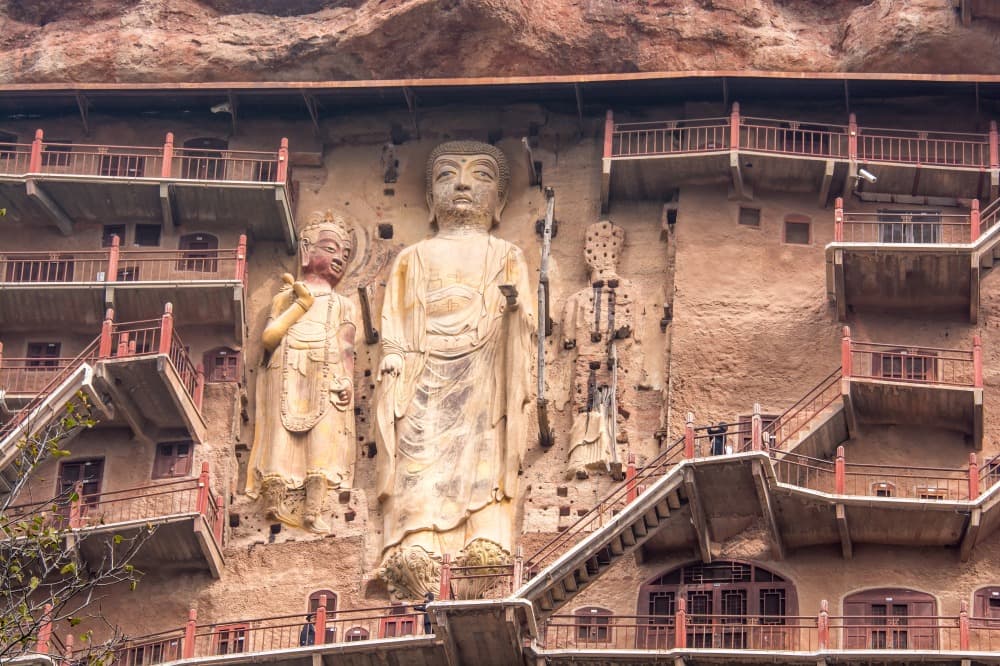
This influx of people and merchants from all directions became the multinational heritage of Gansu. The Buddhist caves of Mogao and Maiji Shan, for example, bear witness to the great flowering of religions and artistic schools along the Silk Road.
The mixing of cultures in Gansu unfortunately led to serious tensions, which culminated in the Muslim rebellions between 1862 and 1877. This conflict left millions dead and practically decimated Gansu's Muslim population. Ethnic tensions never truly left the province. In March 2008, pro-Tibetan demonstrations in Xiahe led to riots that injured nearly a hundred people.
In August 2010, a major mudslide caused by flooding destroyed entire villages and killed more than 700 people.
Today
For over a millennium, Silk Road caravans have crossed Gansu's mountains and desert corridors, transporting goods and new ideas between Chine and Central Asia, along the world's first "information superhighway." Travelers, pilgrims, artists, and merchants have always arrived in the Middle Kingdom following a string of oasis towns. The Buddhist art, garrisons, beacon towers, and tombs they left behind constitute one of the greatest treasures of the Silk Road.
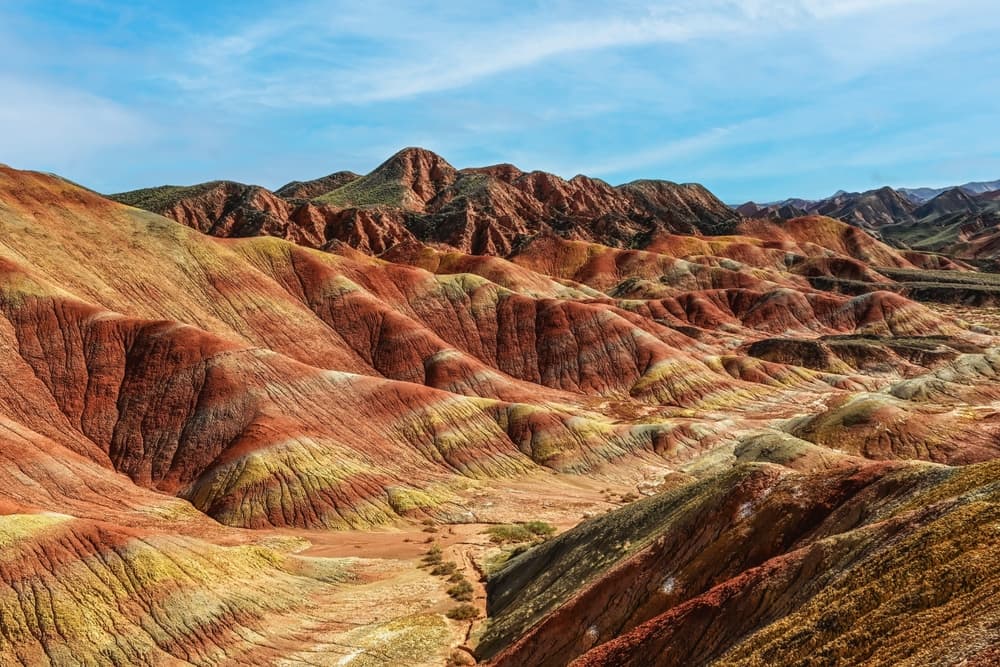
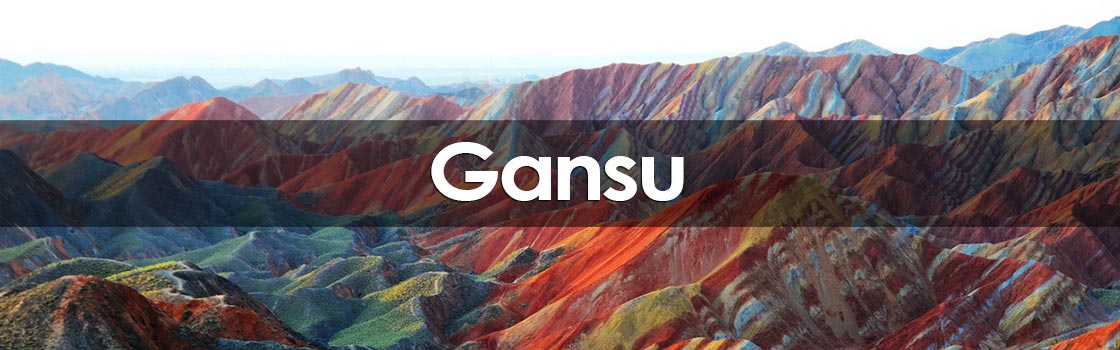
As for the landscapes, they are also one of the highlights of crossing Gansu. Beyond its illustrious past, the region has always suffered from a particularly arid climate. Apart from oases, most of the land west of the capital is virtually uninhabitable, and until recently, Beijing did little to break the province's isolation. Despite the completion of the Lanzhou-Urumqi railway line in 1963 and the development of mining and industrial activities, Gansu remains one of the five poorest provinces in the country.
However, with masterpieces of Buddhist art, idyllic rural landscapes in the southeast, a glimpse of the Tibetan culture of Amdo, and an extraordinary mosaic of ethnic minorities (Hui, Tibetans, Mongols, Salar, Dongxiang, and Kazakhs), Gansu has much to offer to captivate travelers.
For those who love wide open spaces, Gansu can be truly exotic with its vast sand dunes, mountains, and endless steppes.
Climate
Gansu roughly divides into three climate zones: the low-altitude green belt south of Tianshui, the arid Hexi corridor, which stretches from Lanzhou to Dunhuang, and the high pastures along the borders of Qinghai and Sichuan. Since rainfall is rare in the province, dust storms are common, especially in spring.
Winters are rather cold from November to March, with temperatures dropping to as low as -10°C.
In summer, temperatures are not very high, but the very dry weather makes this coolness pleasant to experience.
Prefer May, June, September, and October to visit the region. The "high season" runs from June to September. Nevertheless, even though temperatures are not very warm, the sun can be intense. Remember to bring sunscreen or other sun protection.
How to Get to Gansu?
From Lanzhou, flights serve destinations throughout the country. Other airports such as Dunhuang and Jiayuguan offer only a few flights to major cities, fewer during winter. Train travel is the best way to discover the province's Silk Road sites. It is also preferable to take the train to reach Xinjiang or Xi'an, using more frequently traveled routes. A major highway construction program has reduced travel times by bus to southern sites around Xiahe and Langmusi. A new station in Dunhuang and modernization of the Jiayuguan airport will further facilitate access.
Languages
Despite the great variety of ethnic groups, Gansu has its own set of regional dialects, gansuhua (which belongs to the northwestern lanyin language family). Along the borders with Qinghai and Sichuan, a significant Tibetan population speaks the Tibetan Amdo dialect.
What to Do in Gansu?
- Explore the Mogao caves where Chinese Buddhism flourished.
- Visit the Tibetan monastery of Labrang in Xiahe.
- Hike through the Moon Gorges or along the ridges of Qilian Shan
- Explore the forgotten remains of the Silk Road around Tianshui and Luomen