Shanghai and Lower Yangtsé
A megacity of 26 million inhabitants, the classical gardens of Suzhou and West Lake in Hangzhou, connected by less than an hour of high-speed rail.
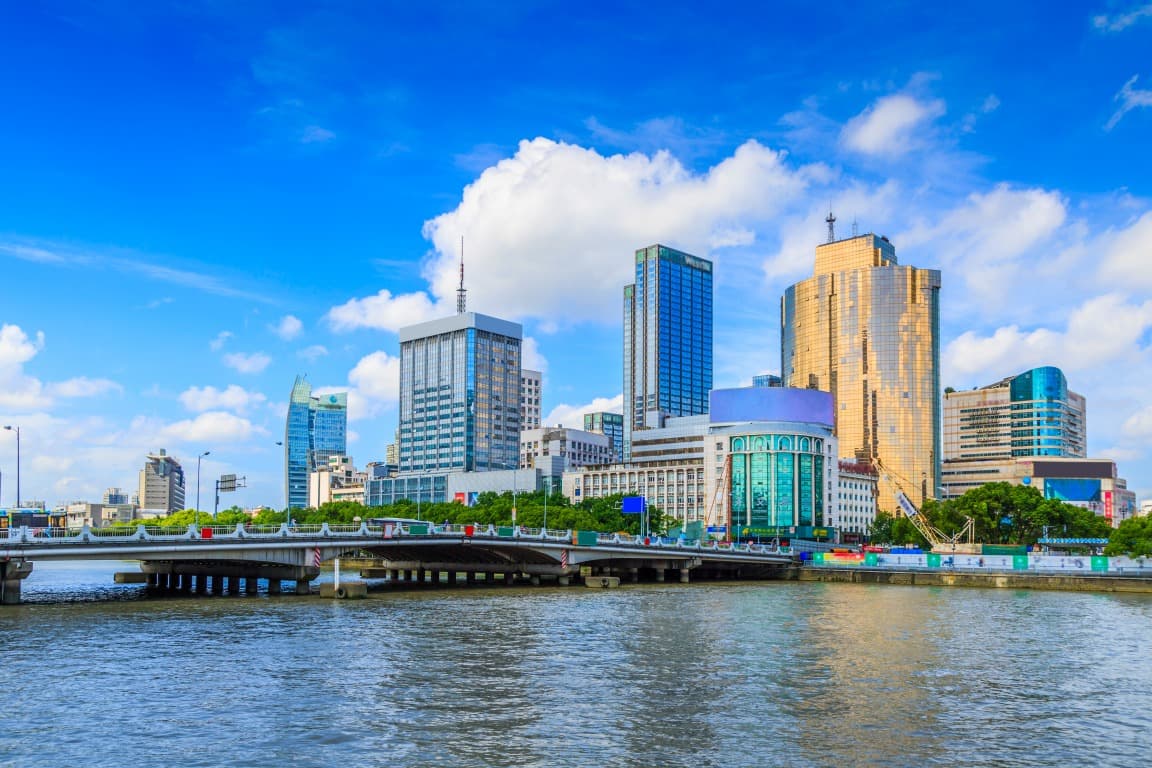
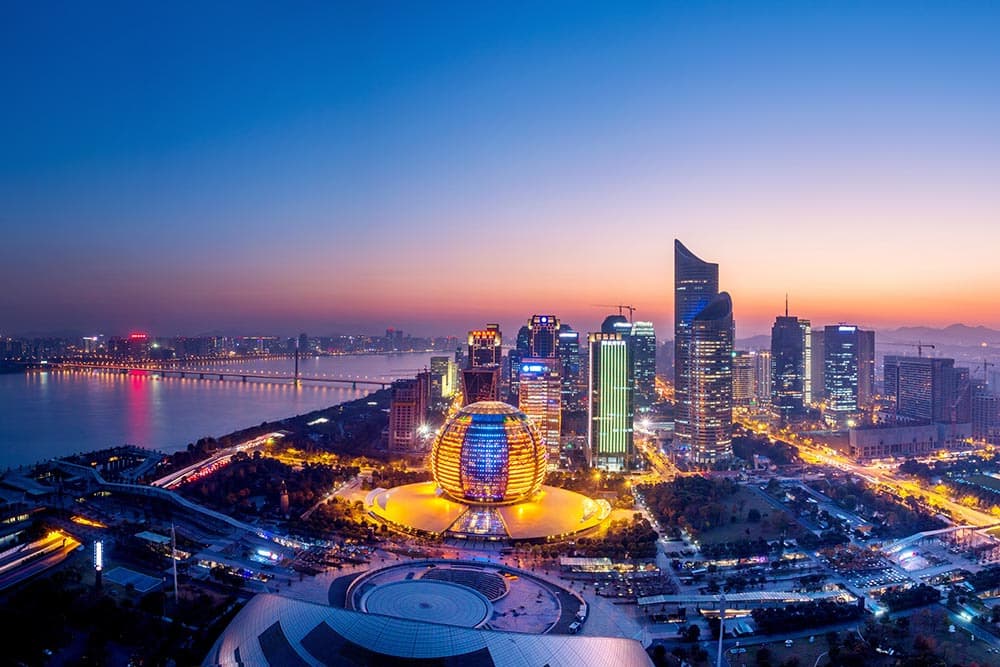
Shanghai concentrates twenty-six million inhabitants on the Yangtsé estuary, at the point where the river empties its sediments into the East China Sea. The city was built on this flat alluvial plain, crossed by the Huangpu River which separates the Bund—a waterfront of colonial buildings from the 1920s–1930s—from the Pudong towers erected since 1990 on what were then only rice paddies and warehouses. This visual duality, readable in five minutes from the Bund promenade, sums up a century of Chinese history.
The Lower Yangtsé, or Jiangnan (literally "south of the river"), historically designates China's most prosperous region since the Song dynasty. The provinces of Jiangsu and Zhejiang surrounding Shanghai form a delta striated with canals, lakes and ancient cities linked to the silk and rice trade. Suzhou, a 25-minute train ride from Shanghai, preserves nine UNESCO-listed classical gardens: the Garden of the Humble Administrator (5 hectares, founded in the 16th century) and the Master of the Nets Garden (barely half a hectare) illustrate two distinct scales of scholarly landscape art. Hangzhou, 45 minutes away by high-speed train, is organized around West Lake, celebrated by Song poets since the 10th century and also inscribed on the World Heritage list.
The climate is humid subtropical. Winters are grey and cold (4 to 9°C in January, rarely snowing), summers are stifling with temperatures exceeding 35°C in July–August and oppressive humidity. The rainy season known as "meiyu" (plum rains) extends from mid-June to mid-July and brings continuous rainfall. Typhoons sometimes move up from the Pacific in August–September.
Within Shanghai itself, the French Concession, laid out between 1849 and 1943, retains its aligned plane trees, Art Deco villas and lilongs—those characteristic narrow lanes of attached houses. The districts of Xintiandi, Tianzifang and the former Wukang Road concentrate cafés, designer boutiques and preserved architecture. In contrast, the Lujiazui district in Pudong lines up the Shanghai Tower (632 metres), Jin Mao and the Oriental Pearl. On the culinary side, Shanghai cuisine revolves around xiaolongbao (juicy steamed dumplings), shengjianbao (pan-fried dumplings) and the hairy crabs from Yangcheng Lake, harvested from October to November.
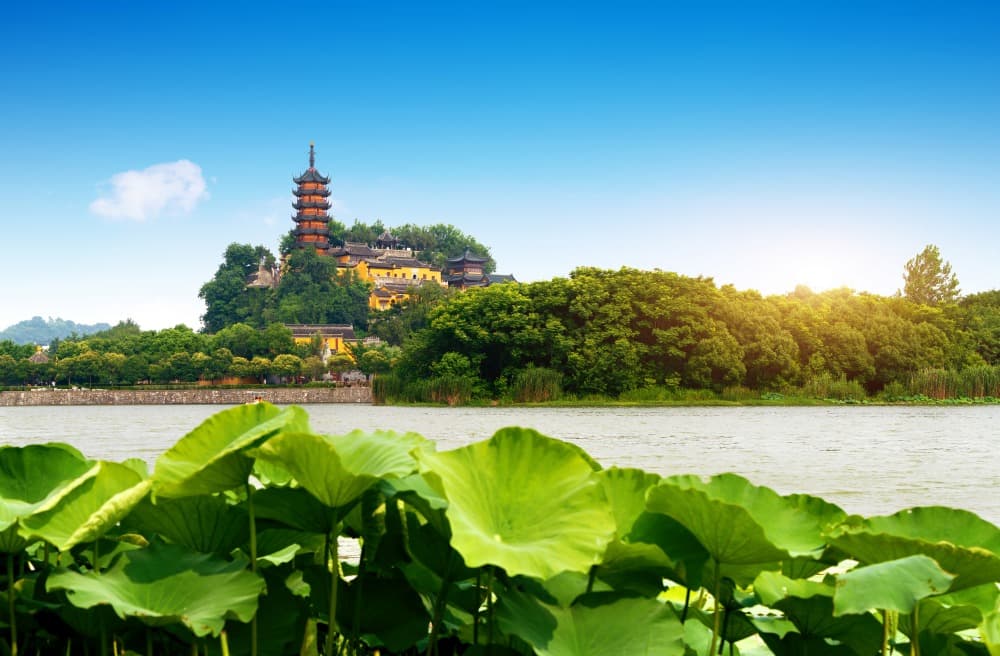
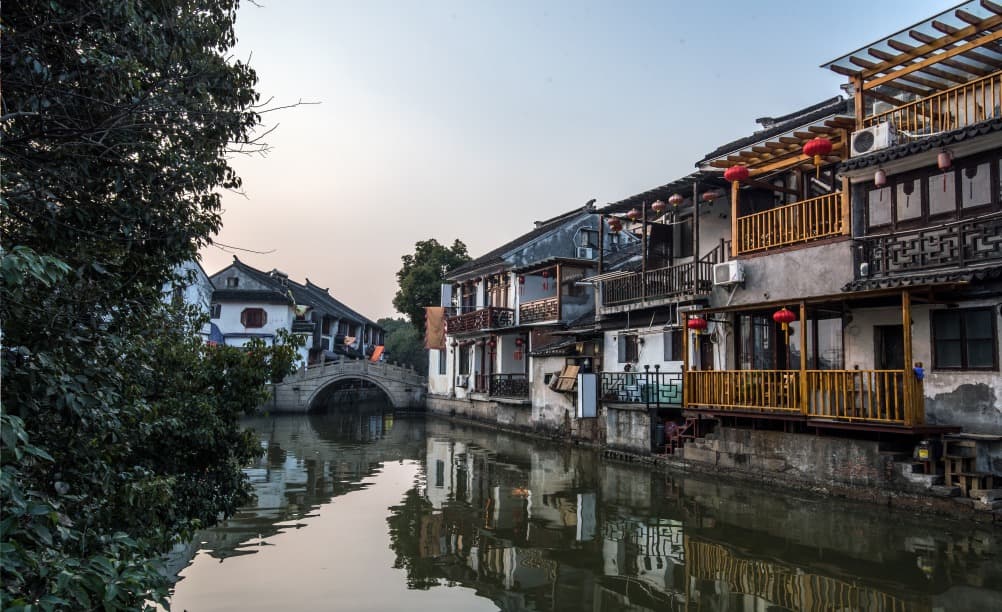
Suzhou and Hangzhou are far more than day trips. Suzhou complements Shanghai through its ancient urban layout around the canals of the Pingjiang district and the water towns of the surrounding area (Tongli, Zhouzhuang), where stone bridges and black boats offer another perspective on the delta. Hangzhou opens onto the Longjing tea hills, whose spring harvest (late March to mid-April) produces one of the country's most prized green teas, and onto the ancient pagodas that punctuate the shores of the lake.
The entire region is traversed exclusively by high-speed rail, on the world's densest network: three departures per hour between major stations, digital tickets linked to your passport, journeys of 25 to 50 minutes. This is also why Shanghai often serves as the entry or exit point for a larger Chinese circuit, via Pudong Airport (international flights) and Hongqiao Airport (domestic flights and trains).
To discover
The Bund at dusk. The 1.5 km promenade facing Pudong, where neoclassical façades light up around 6 p.m. as the towers on the opposite shore illuminate simultaneously. A more peaceful view from the rooftop of the Peninsula or the Fairmont Peace Hotel.
Classical gardens of Suzhou. The Master of the Nets Garden can be explored in an hour and concentrates the essence of Jiangnan art: Taihu rock gardens, pavilions over ponds, window-screens carving out the landscape. Combine with a walk along the Pingjiang Canal.
West Lake in Hangzhou. Traditional boat tour (45 minutes) between the Bai and Su dykes, planted with willows and plum trees. South of the lake, the Longjing hills can be explored on foot between the tea terraces.
French Concession by bicycle. Two hours between Wukang Road, the former residence of Soong Ching-ling and the Tianzifang district, in the shade of plane trees planted in the 1920s. Art Deco houses, independent bookshops, tea salons.
Hairy crab from Yangcheng Lake. A seasonal speciality from late October to mid-November, served steamed with black vinegar and ginger. Restaurants in Suzhou and Shanghai make it their autumn table.
When to go
The best windows are March–April (12 to 20°C, magnolia and cherry blossom blooms, spring tea harvest in Hangzhou) and October–November (15 to 22°C, clearer skies, hairy crab season). May remains pleasant but humidity returns, and Chinese holidays on May 1st saturate the sites. September is still warm and exposed to typhoon risk.
We advise against July and August: temperatures of 32 to 38°C, humidity above 80%, frequent storms in the late afternoon. The meiyu rainy season from mid-June to mid-July brings continuous rainfall that spoils the Suzhou gardens and walks in Hangzhou. Winter (December to February) remains visitable, especially in Shanghai where interiors are heated, but the gardens are bare and the sky often overcast, with an average of 4 to 9°C and a cold feel due to humidity.
Practical advice
Plan for 4 full days to combine Shanghai (2 days), Suzhou (1 day) and Hangzhou (1 day, or 2 if you wish to include the tea hills). Everything is organized by high-speed rail from Shanghai Hongqiao Station, with no need for a private car. Pudong International Airport serves Europe on direct flights (11 hours from Paris) and is a logical entry point for a Chinese circuit.
Shanghai and the Lower Yangtsé pair particularly well with Beijing and the North via overnight train or a 2-hour 15-minute domestic flight, for a classic 10–12 day circuit. Combining with Xi'an and the Silk Road also works, keeping Shanghai for the end. For a longer trip (15 days and more), an extension towards Guilin and the karst landscapes of the South provides a striking contrast between megacity and rural scenery. Comfort levels are high throughout: international hotels, restaurants at all levels, modern transport. The region suits urban travellers, architecture and garden art enthusiasts, families with children (short distances, minimal fatigue) and those drawn to Chinese scholarly culture. Less suited to hikers and lovers of wide open spaces.