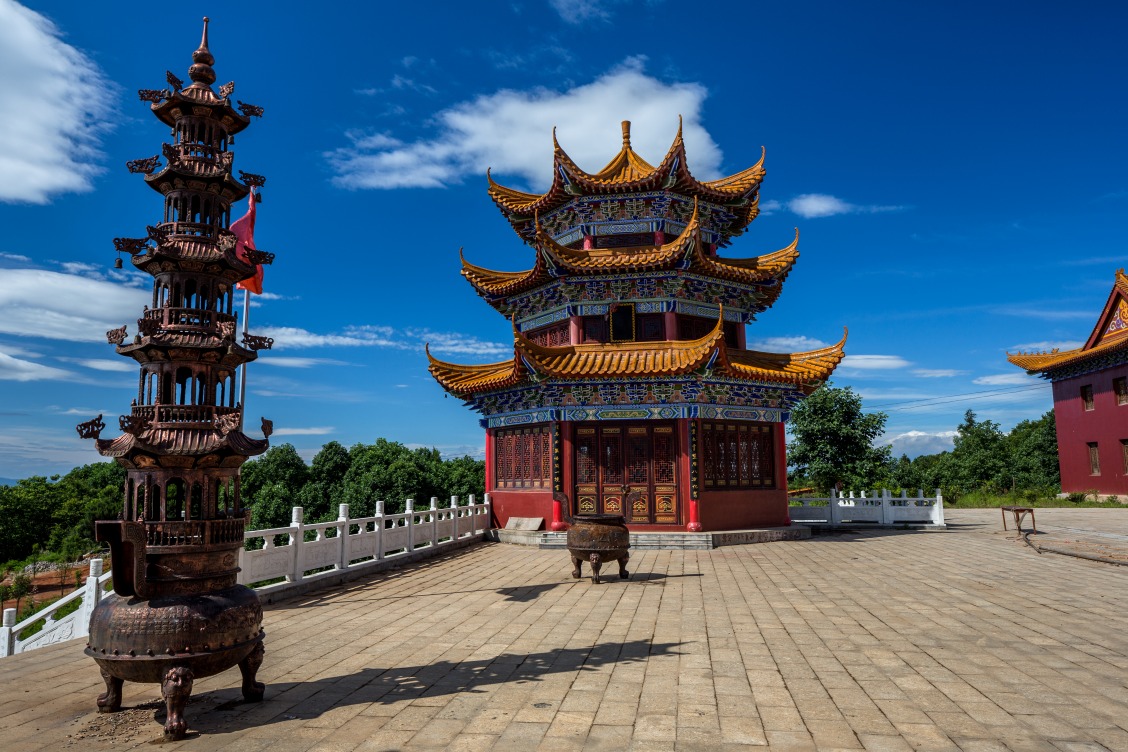
Xi'an and the Silk Road
From Xi'an's terracotta army to the Uyghur bazaars of Kashgar, 4,000 kilometers of Silk Road between Gansu oases, Buddhist grottoes and Xinjiang deserts.
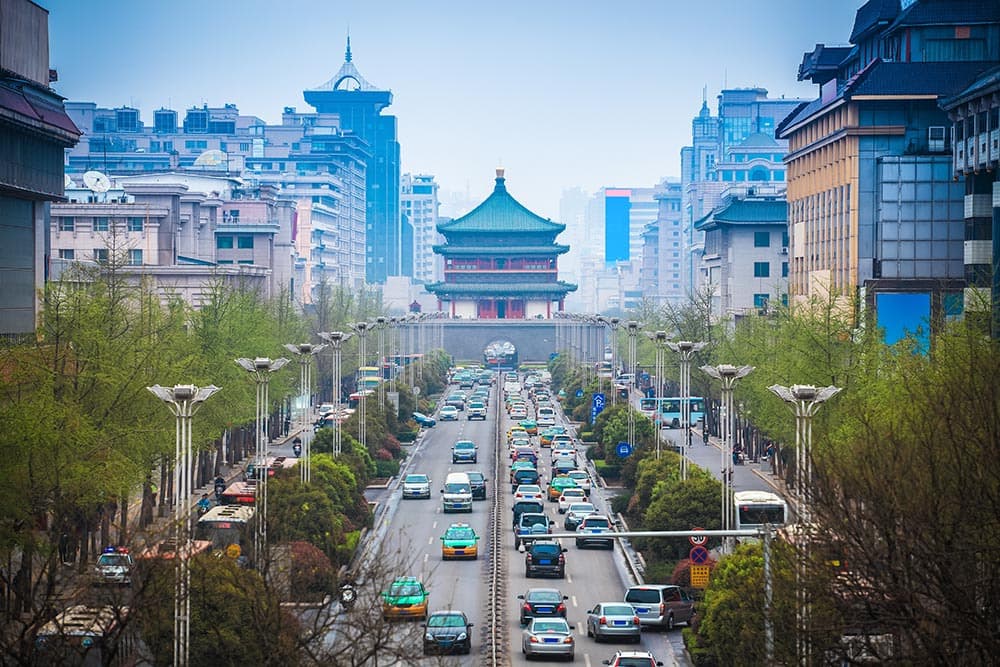
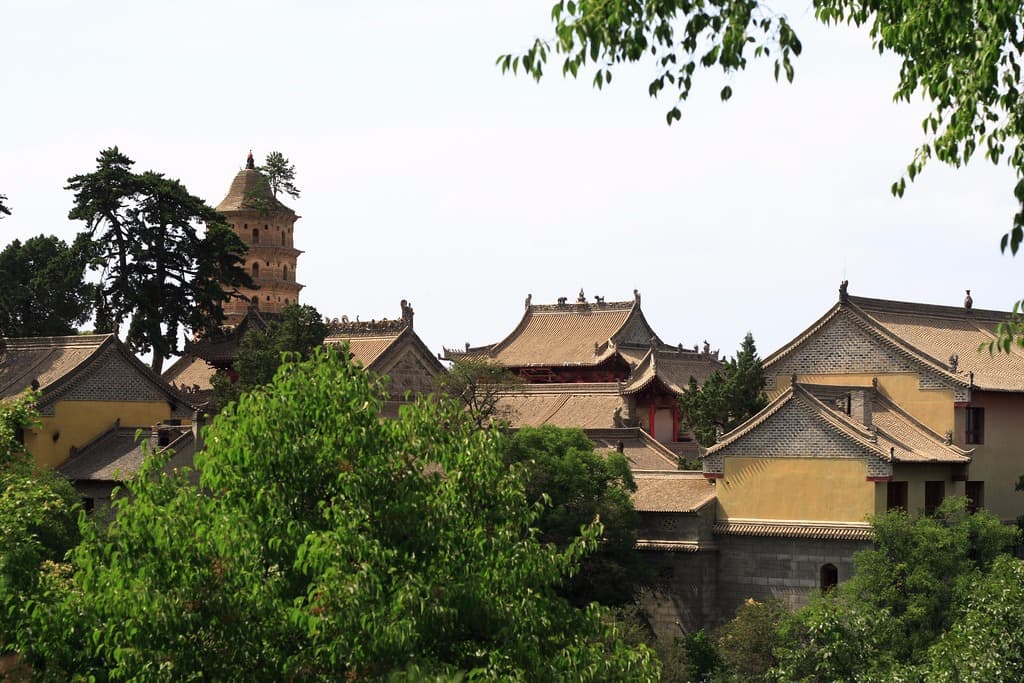
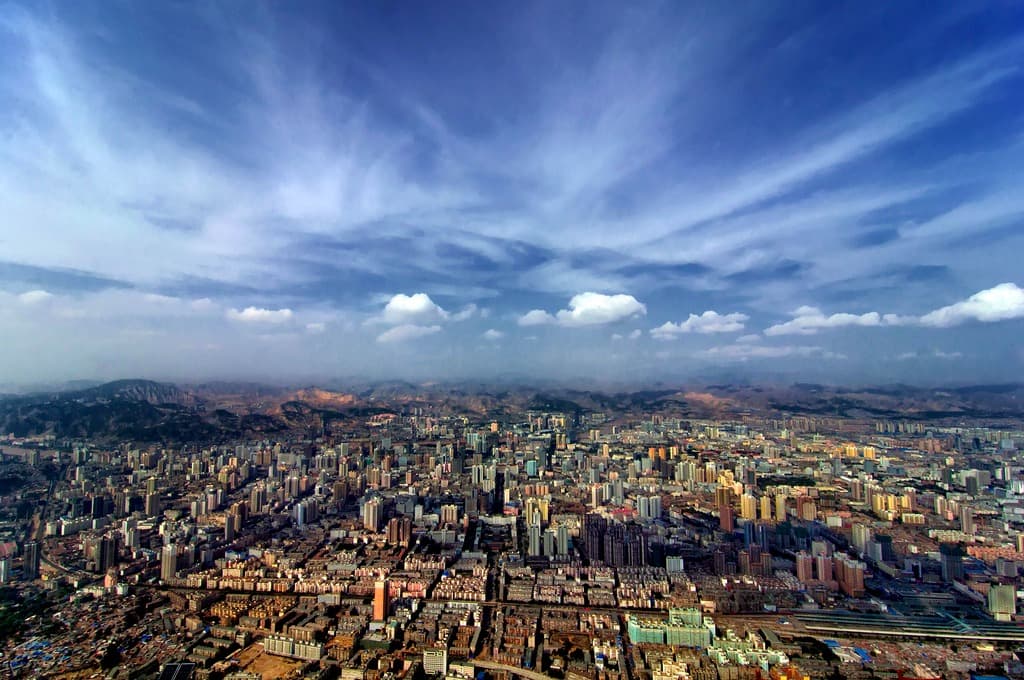
Xi'an sits at the geographic heart of Chine, in the Wei He plain, a river that witnessed the birth of the first imperial dynasties. The city served as capital to eleven dynasties, among them the Han and Tang, and marked the eastern starting point of the Silk Road. Its Ming ramparts, stretching 14 kilometers and measuring some twelve meters across at the summit, still frame the historic center today, which can be explored by bicycle in two hours. Some forty kilometers to the east, the mausoleum of Qin Shi Huang shelters the pits of the terracotta army, unearthed in 1974 by farmers digging a well.
The Muslim quarter, at the foot of the Drum Tower, concentrates the Hui community settled in Xi'an for over a thousand years. The alleys surrounding the grand mosque, itself built during the Tang and rebuilt under the Ming in Sino-Arab style, buzz with activity late into the night. Here you'll find lamb skewers grilled over charcoal with cumin, biangbiang noodles as wide as a belt, roujiamo—flatbreads stuffed with braised pork or beef—and bowls of yangrou paomo where you crumble bread into lamb broth yourself.
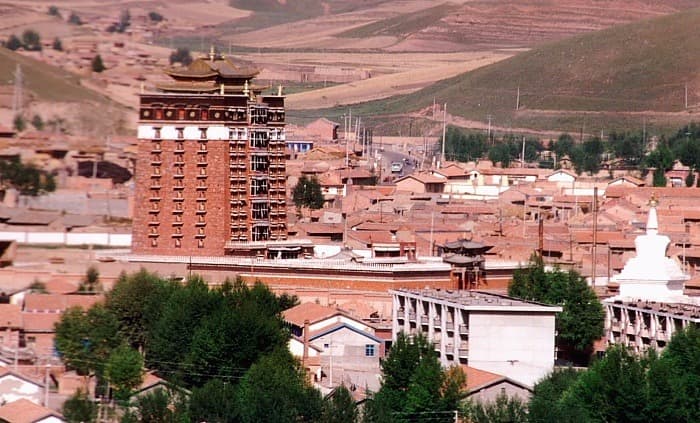
Heading west, the Gansu corridor stretches 1,200 kilometers between the foothills of the Tibetan plateau to the south and the Gobi desert to the north. This narrow passageway once channeled caravans, Buddhist monks, and Sogdian merchants. Xiahe, at an elevation of 2,900 meters, is home to Labrang monastery, one of six great Gelug monasteries of Tibetan Buddhism, where nearly two thousand monks still pursue a complete monastic curriculum. Further west, Zhangye and its layered sandstone mountains striped in reds, ochres and greens announce entry into desert zones.
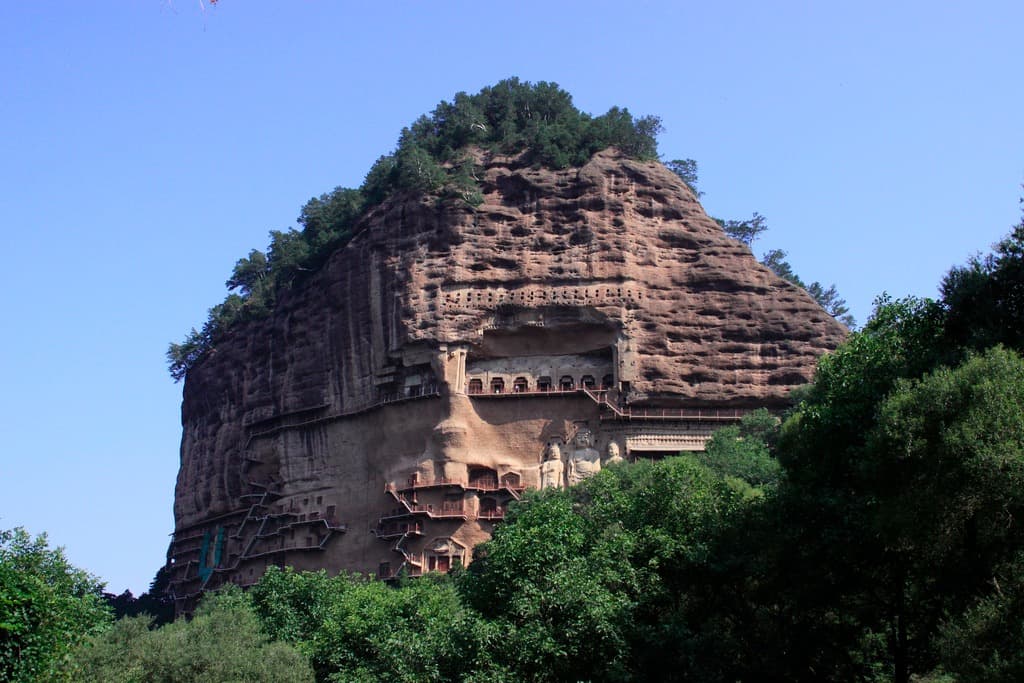
Dunhuang marks the western edge of Gansu. The Mogao caves, a UNESCO World Heritage site, comprise 492 grottoes carved between the 4th and 14th centuries, adorned with Buddhist frescoes spanning 45,000 square meters. Just outside the city, the Mingsha dunes rise to 250 meters and emit a muted rumble as sand shifts in the wind—hence their name, the singing dunes. The crescent-shaped Yueyaquan lake, nestled between the dunes, has never dried up despite the hyperarid climate.
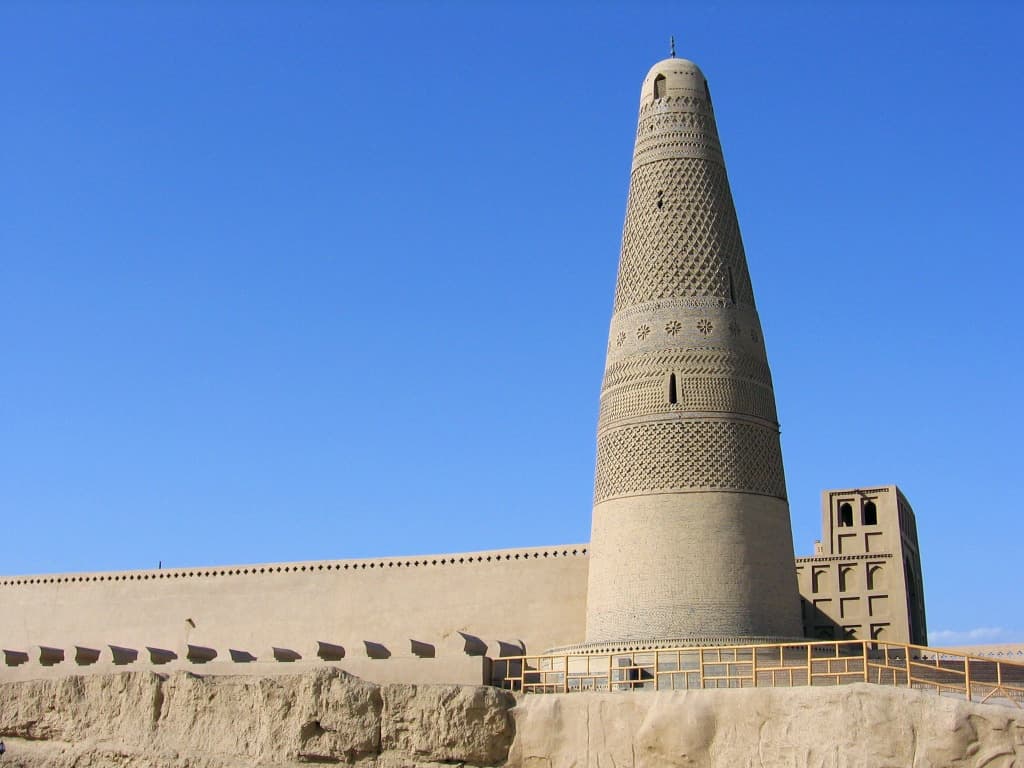
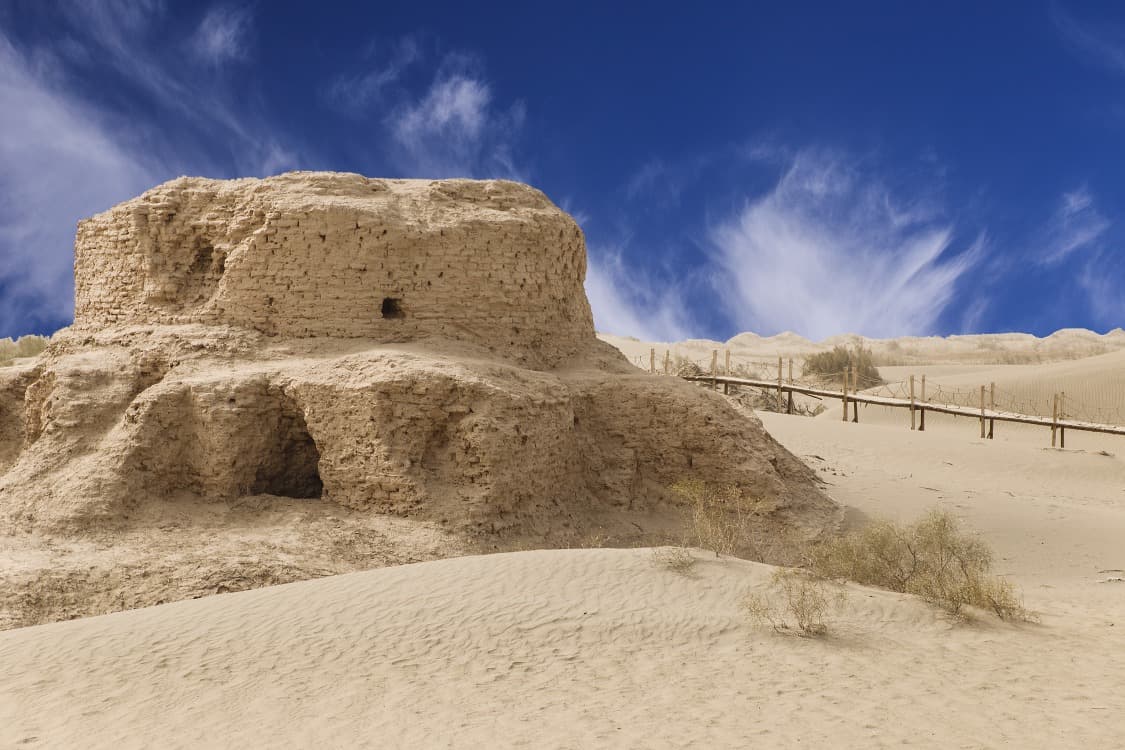
Beyond the Jiayuguan pass, where the terminal fort of the Ming Great Wall stands, you enter Xinjiang. Turpan, lying in a depression 154 meters below sea level, is the world's second-lowest continental depression after the Dead Sea. Its grapes, dried in latticed brick structures called chunche, supply the entire country. Kashgar, 4,000 kilometers from Beijing and closer to Baghdad than to Shanghai, preserves its Sunday market and its old Uyghur city of rammed-earth dwellings. The culture here is Turkophone and Sunni Muslim; cuisine centers on mutton, naan bread baked in a tandoor, and black tea.
The climate is dry continental throughout the route. In Xi'an, summers frequently exceed 35°C with stifling humidity in July and August, while winters hover around freezing. Further west, daily temperature swings intensify: Turpan can reach 45°C in July, while Dunhuang sees winter nights plummet to minus 15°C. A complete loop from Xi'an through Dunhuang to Kashgar requires ten to twelve days, combining overnight trains along the Gansu corridor with domestic flights for long stretches into Xinjiang.
Must-see attractions
Terracotta army of Qin Shi Huang. Three pits shelter more than 8,000 life-size terracotta soldiers, each with a distinct face. Pit 1, the largest, spans 230 meters and remains partially under excavation.
Mogao caves at Dunhuang. Guided tours of eight to ten rotating cavities among the 492 on site, by reservation only with torch to preserve pigments. Paintings from the Tang and Yuan dynasties are best preserved.
Labrang monastery at Xiahe. The three-kilometer kora circuit around the compound, where Tibetan pilgrims turn more than 1,700 prayer wheels each morning. The 7 a.m. prayer assembly convenes in the great dougang hall.
Muslim quarter of Xi'an. Evening stroll through Beiyuanmen street and the Huajue Xiang and Damaishi alleys, where Hui families have run the same shops for three or four generations. The grand mosque can be visited during the day, away from crowds.
Kashgar Sunday market. The livestock bazaar, at the city's eastern edge, draws Uyghur, Kyrgyz, and Tajik herders from dawn to negotiate sheep, goats, and horses. The central grand bazaar remains active throughout the week for textiles and spices.
When to visit
Ideal months are May, June, September, and October. Spring offers temperatures of 18 to 25°C in Xi'an and allows travel through Gansu without summer heat. Autumn, particularly from mid-September to mid-October, combines clear skies, grape harvest at Turpan, and temperatures of 15 to 22°C in the Gansu corridor. July and August should be avoided in Xi'an for the humid heat approaching 38°C, and in Turpan where temperatures regularly exceed 42°C, making late-morning visits impossible.
Winter, December through February, closes some higher-altitude sites. Xiahe and Labrang monastery remain accessible but nights drop to minus 20°C. The Mogao caves stay open year-round, and Dunhuang in low season offers the advantage of very small groups, though desert winds and sand may make some days challenging. Kashgar is accessible from April to November, with snowmelt from the Karakoram in May opening routes to Karakul lake.
Practical advice
We recommend a minimum of three full days in Xi'an to cover the terracotta army, the ramparts, the Muslim quarter, and the Great Wild Goose Pagoda. To push on to Dunhuang, allow seven to eight days adding Xiahe, Zhangye, and the Mogao caves, with two comfortable overnight trains in soft berths. A loop including Turpan and Kashgar requires ten to twelve days, as domestic flights from Dunhuang or Urumqi become essential to avoid losing two entire days on trains.
Xi'an, served by Xianyang airport 40 minutes from the center, connects logically with Beijing and the north via high-speed rail in 4.5 hours, making it a natural follow-up after the Forbidden City and the Great Wall. The region particularly appeals to travelers curious about imperial history, Buddhist archaeology, and Central Asian Muslim cultures. The distances, dry temperatures, and brisk pace suit young children less well. Comfort levels are high in Xi'an and Dunhuang, more rustic in Xiahe monasteries and certain Uyghur guesthouses in Kashgar, where we favor addresses run by local families.