Great Wall of China
"Whoever has never walked on the Great Wall is not a true man" said Mao Zedong (or Ségolène Royal). The time has come to remedy that.
"Whoever has never walked on the Great Wall is not a true man" said Mao Zedong (or Ségolène Royal). The time has come to remedy that.
Spoiled for choice
Three times lucky! We spoke in previous articles about the Temple of Heaven and the Forbidden City, heading today to another monument inscribed since 1987 on the UNESCO World Heritage List... And what a monument! Considered the most important architectural structure ever built by mankind, it is no doubt the step we have been most eagerly awaiting since our arrival in China. The Qianmen Hostel where we are staying in Beijing offers different tours on various sections of the Wall. You must know that it is subject to erosion and that only a few sites are accessible today to admire this fabulous structure. Among these, we can notably cite:
Badaling (43 miles north of Beijing): undoubtedly the most visited section and therefore the most touristy. Restaurants and hotels are nearby and it is apparently difficult to move about given the number of tourists.
Mutianyu (56 miles north of Beijing): reputed to be less commercial than Badaling, it offers magnificent views but remains very crowded.
Jinshanling (75 miles north of Beijing): much less frequented than the first two, it is located further northeast of Beijing and includes an impressive number of fortresses.
Simatai (75 miles north of Beijing): connected to Jinshanling via a suspension bridge and a 6-mile hike, it offers the steepest and most abrupt paths of the Great Wall.
After much deliberation we finally opted for the Jinshanling section, hoping to complete part of the route connecting it to Simatai. The problem is that departure and return are scheduled at a precise time, and we will need to manage our time well to see as much as possible. Departure at 7am from Qianmen Hostel, a bus awaits us outside the entrance and will make several stops at other hotels to pick up the remaining hikers. This is the first time we have seen so many Westerners on the same bus since arriving in China, and we will take the opportunity to chat with two English-speaking women returning from Mongolia. Perhaps a future destination...? ;-) It will take us over 3 hours to reach our destination. The ambient pollution of Beijing has dissipated and we finally enjoy a cloudless sky and radiant sunshine. The day was certainly well chosen...
Storming the Wall
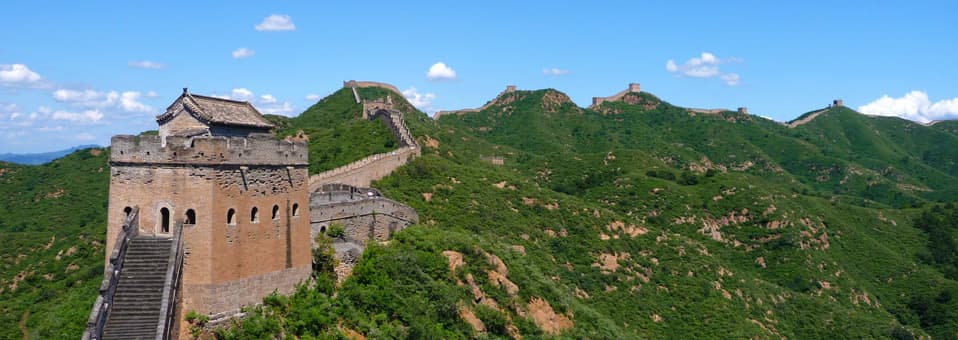
The guide informs us that we have free time for 4 hours (only...) and for now we have the option of climbing on foot to reach the wall (estimated time: 2 hours) or take the cable car directly (estimated time: 20 minutes including waiting). Not wanting to repeat the error of Wulingyuan which deprived us of some views, we opt for the second option in order to make the most of the wall. Once we reach the summit, a few steps are enough to reveal the panorama we have been eagerly awaiting. 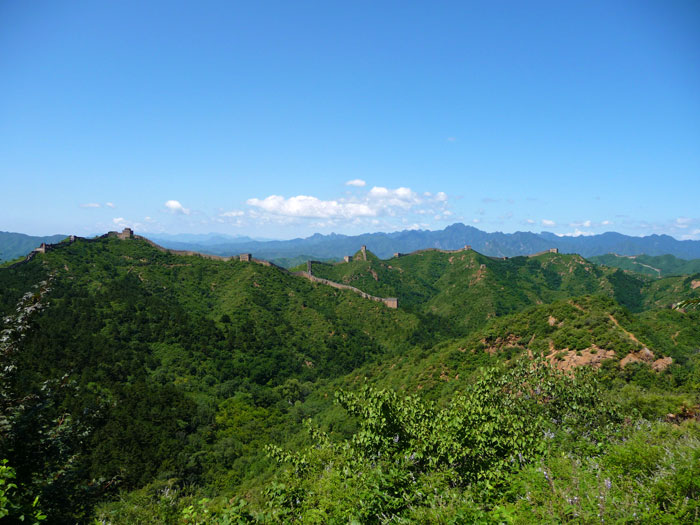
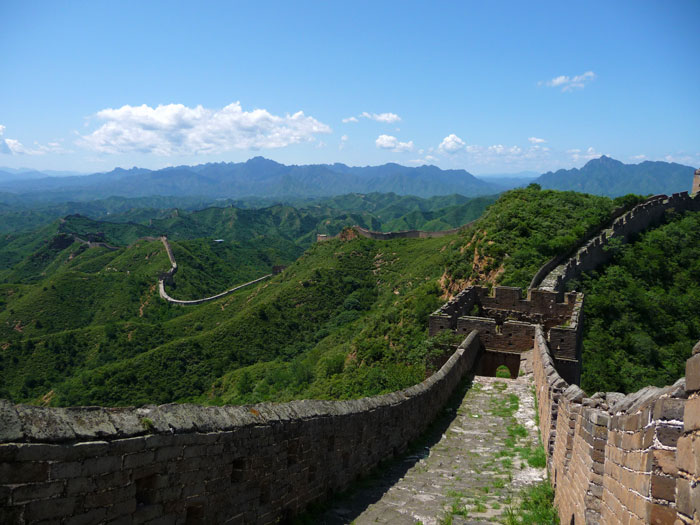
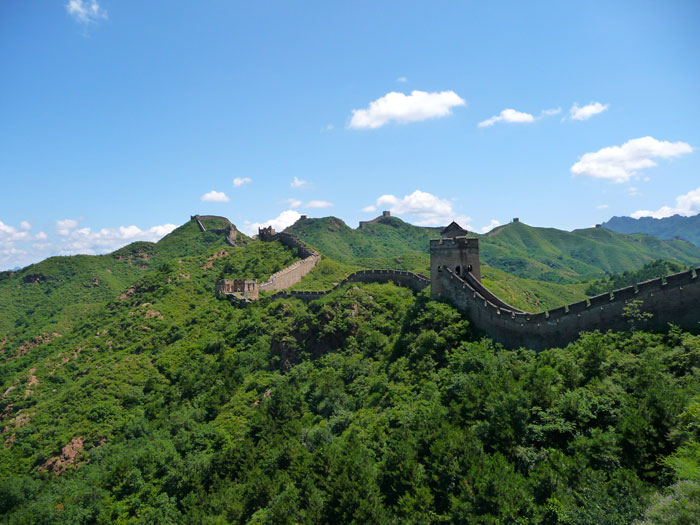 The wall stands proudly, like a dragon winding through the mountains as far as the eye can see. Note that even though it stretches over 4,160 miles from east to west (from the Yellow Sea to the Gobi Desert), the Great Wall is not actually a single continuous section. It consists indeed of multiple sections that were designed to protect China from invaders (mainly the Mongols). Past the surprise of this fabulous view, we move towards the first watchtower which apparently served as quarters for soldiers and offered tiny loopholes allowing arrows to be fired.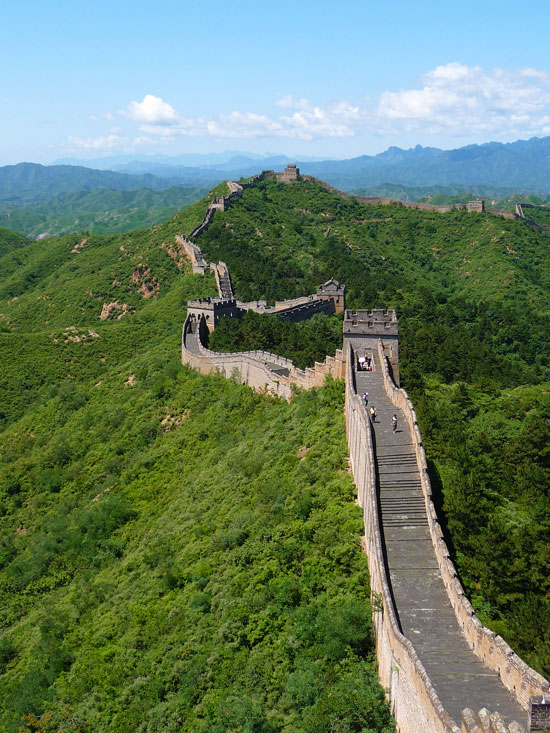
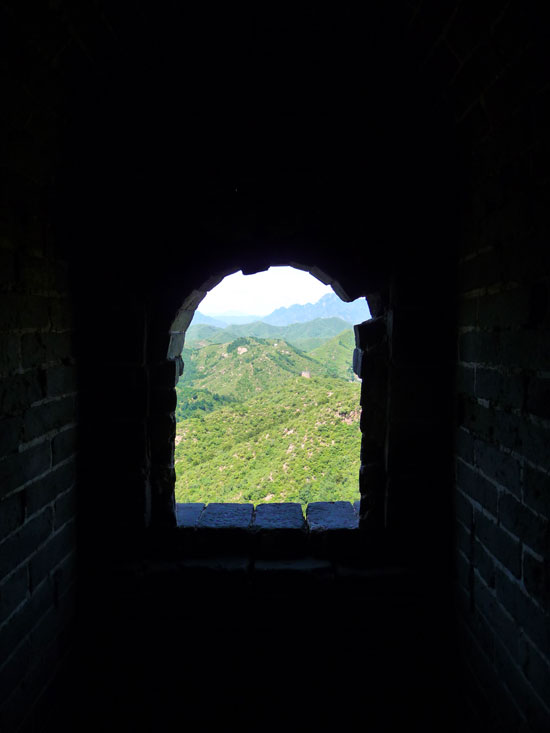
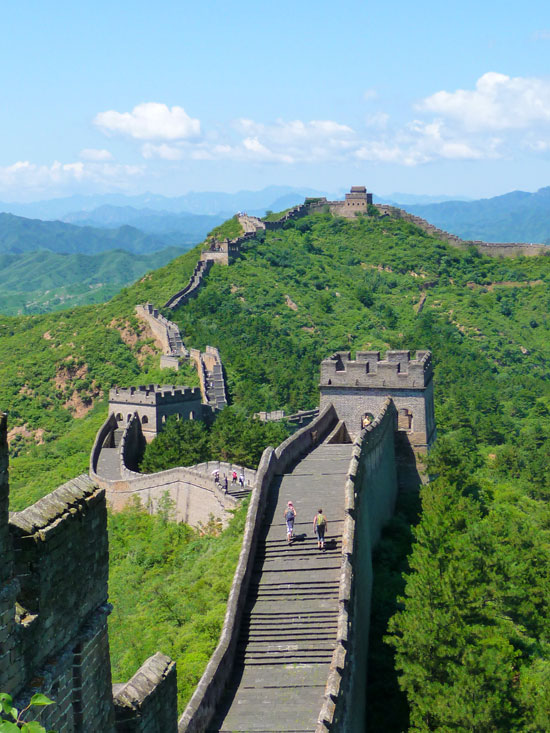 You find this type of tower every 300 feet or so, some in better condition than others. They are also ideal shaded spots to rest, where here and there some vendors of refreshing drinks persist.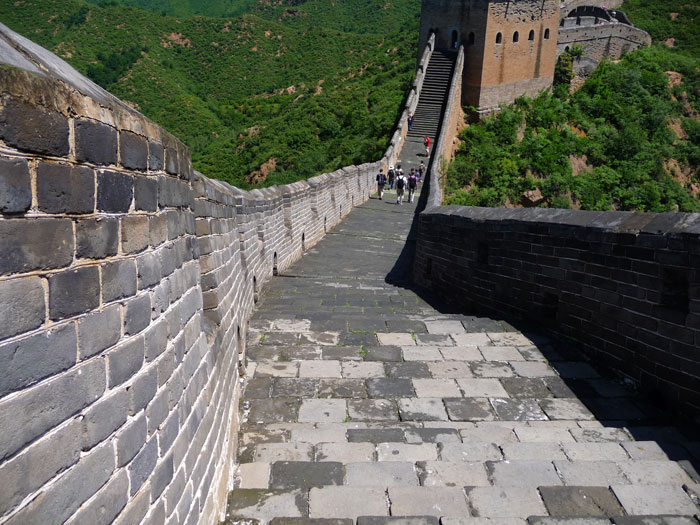
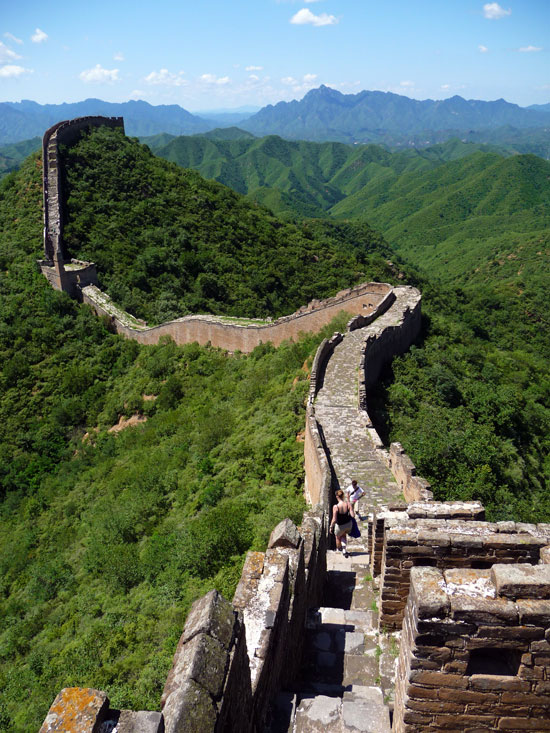
 The stairs follow one another and the hike becomes increasingly challenging, marked by the relief of the mountains. The Jinshanling section is indeed known for being quite demanding, so don't hesitate to bring good hiking shoes... Ségolène Royal will certainly appreciate your bravitude for sure!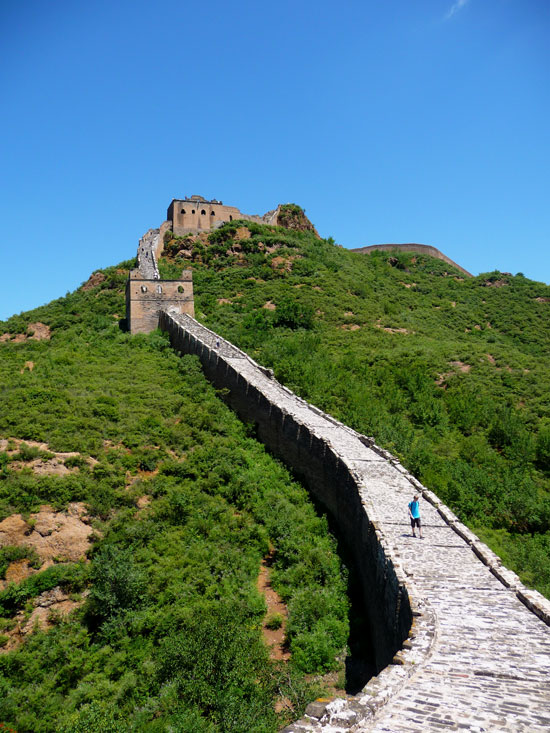
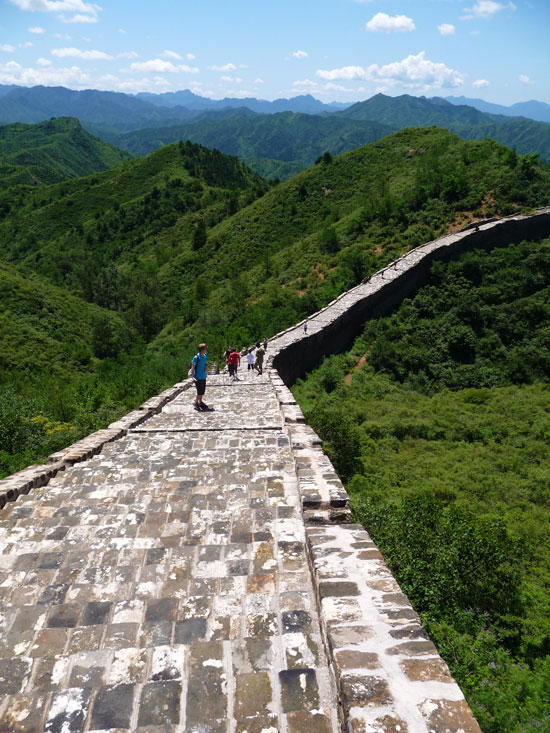
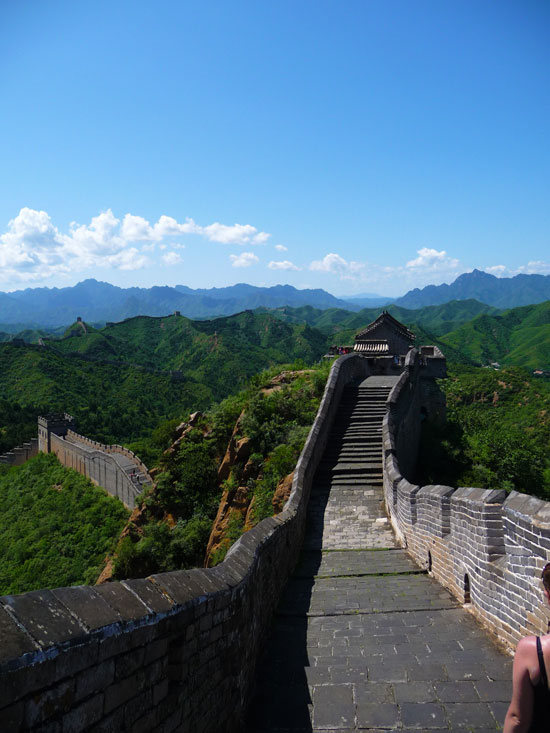
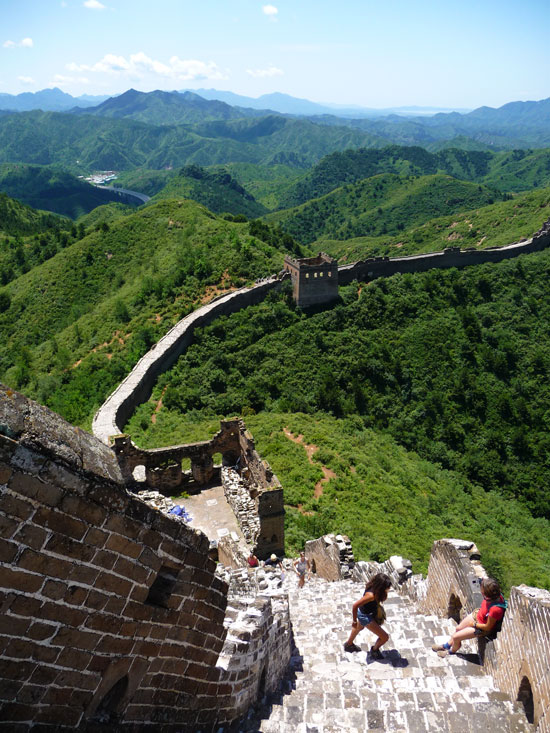 In return, we have the great satisfaction of not crossing too many tourists, the latter being no doubt concentrated at Badaling or Mutianyu. The sky is meanwhile azure blue and the air is definitely purer than in Beijing (not hard to do, mind you...). We are tempted to stop every 30 seconds to keep in memory and photograph a shot that seems more beautiful than the other, but it will obviously be impossible for us to distinguish between them. This selection of photos testifies to it, which we hope will give you a faithful overview of this section.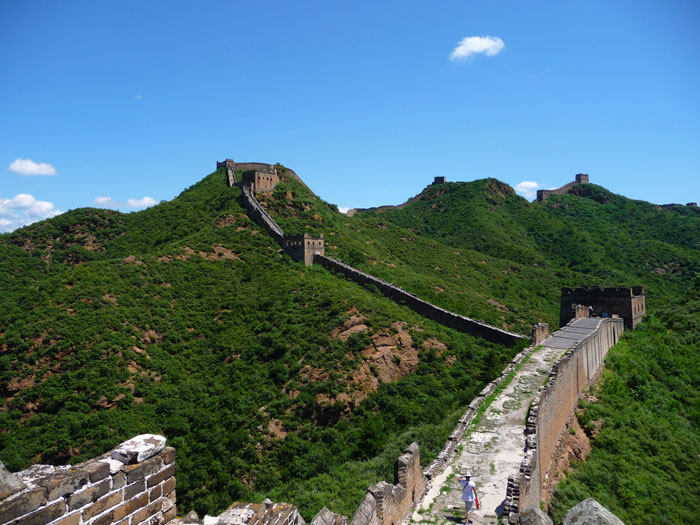
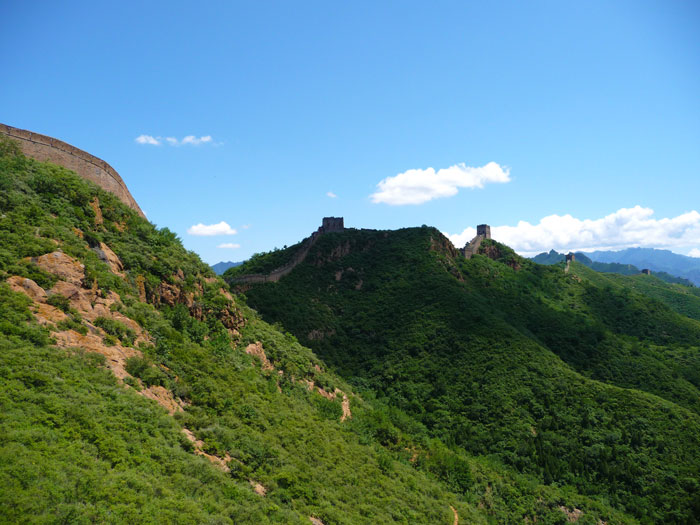
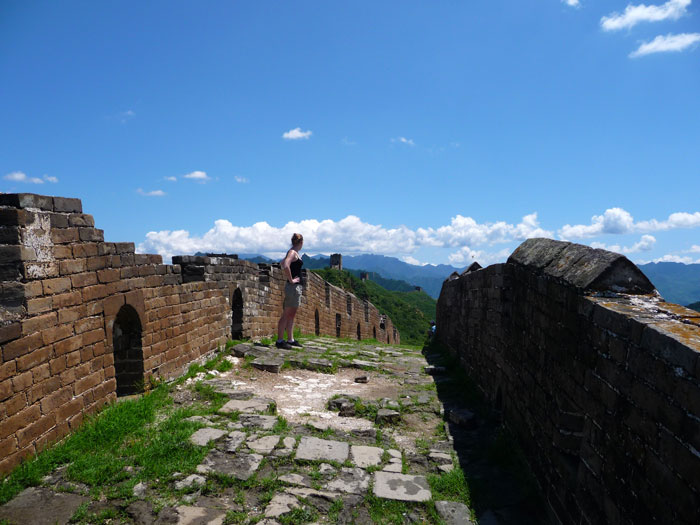 As we progress, the wall seems increasingly degraded despite some restoration work undertaken at Jinshanling. This serves to enhance the magnificence and charm of the place, offering us a journey not only in space but also in time.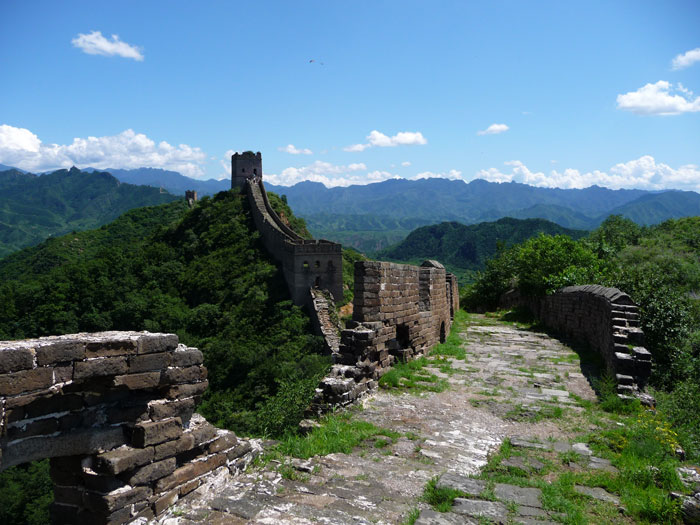
 Time is running out and despite our desire to progress we must already consider the return on our steps. We will at least have the satisfaction of having completed part of the 6 miles separating Jinshanling from Simatai. Better luck next time!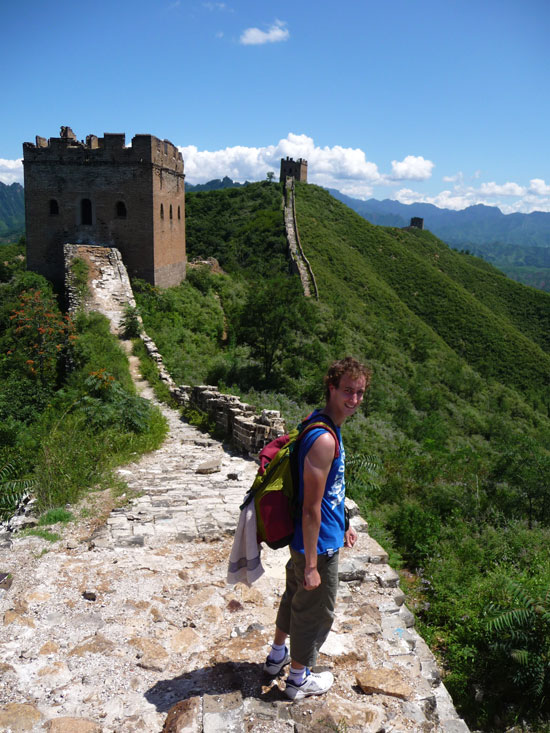
Frequently asked questions
It depends on your expectations. Badaling is the most easily accessible but very touristy (43 miles from Beijing). Mutianyu offers beautiful views with fewer crowds (56 miles). Jinshanling (75 miles) is ideal for hikers wishing to avoid crowds and discover an authentic section. Simatai (75 miles), connected to Jinshanling by 6 miles of hiking, offers the steepest and most abrupt passages.
Several options are possible: book an organized tour from your hotel (departure generally early in the morning, count over 3 hours of travel), rent a vehicle with a driver, or take a public bus from Miyun bus station. The organized tour option is the simplest and allows for a fixed departure and return time.
If you have limited time (4 hours of free time on an organized tour), opt for the cable car (about 20 minutes) to maximize time spent on the wall. The hike up takes about 2 hours. If your day is free, the hike offers good leg warm-up and progressive views of the landscape.
The 6-mile hike between Jinshanling and Simatai is considered challenging: significant elevation changes, irregular stairs and some steep passages. Good hiking shoes are essential. This section is not recommended for people with reduced mobility or in poor physical condition. Also check the opening status of Simatai before your visit.
Autumn (September-November) is the ideal season: pleasant temperatures, clear skies and colorful foliage that enhances the landscapes. Spring (April-May) is also recommended. Avoid the summer months (July-August) for heat and humidity, and Chinese national holidays (golden week in October notably) to limit crowds.
No, this is a widely spread myth. The Great Wall of China, though stretching over 4,160 miles from east to west (from the Yellow Sea to the Gobi Desert), is too narrow (between 13 and 26 feet wide) to be visible to the naked eye from space. Astronauts, including Chinese ones, have confirmed they could not see it.