Chinese Massage by the Blind
In Guangzhou, as in many major Chinese cities, massage salons abound. The appearance of salons, whether chic or very basic, has no bearing on the quality
In Guangzhou, as in many major Chinese cities, massage salons abound. The appearance of salons, whether chic or very basic, has no bearing on the quality of the massages.
Chinese massage (中式 按摩) is very commonly practiced for medical purposes. It rests on a technique called Tui Na (推拿), which relies on the use of pressure points and is what makes the massage so intense. Chinese massage is renowned for its healing properties—it not only relieves muscle or joint pain but works on the body's energy and tensions. In Chine, it is very common for people with visual impairments to become massage experts. Despite, or rather because of their disability, blind masseurs develop a particular touch that sets them apart as exceptional practitioners. After enduring a painful backache for several weeks, I finally decided to try this type of massage. On a friend's advice, I made my way to a salon that, at first glance, gave no hint of its activity. 
 The reception is relatively pleasant, with a welcoming glass of tea, as is customary in Chine. The receptionist then leads me to a room where several massage tables are arranged.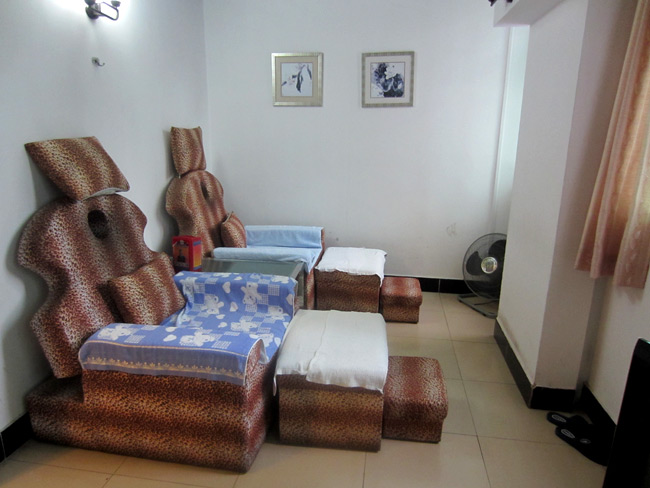
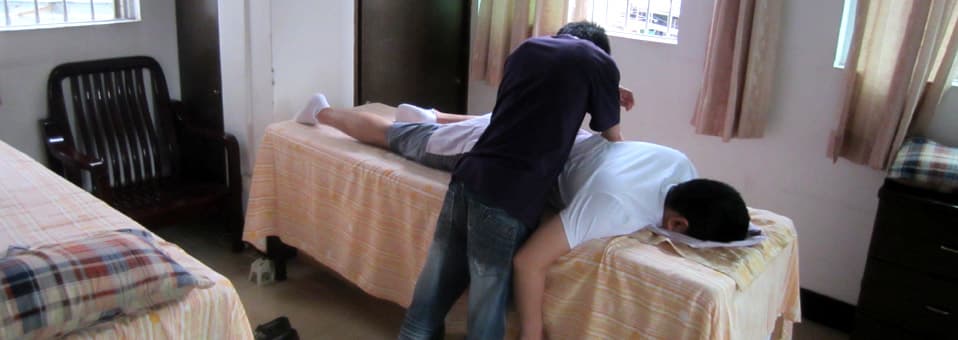
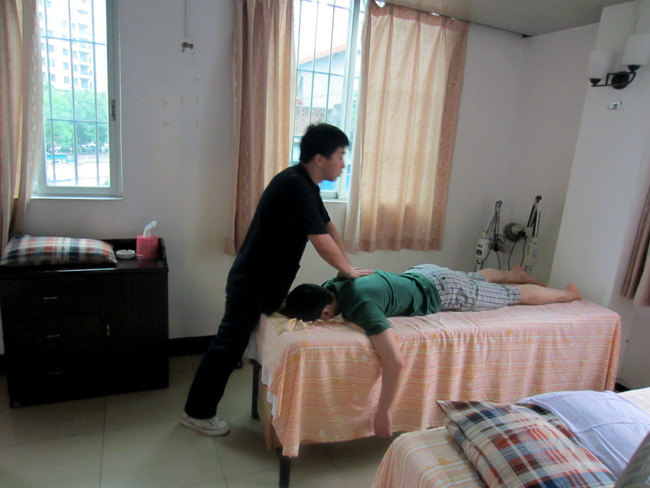 To my surprise, only my shoes need to be removed. Chinese massages don't require any nudity, so there's no need to undress as you would with a physiotherapist or osteopath. Modesty is very much respected, and even a simple sweater won't hinder the masseur's magical touch. Sitting on the table, I await the masseur with some apprehension. He arrives with a big smile and greets me with a cheerful "Hello". Though sightless, he is guided by a woman to my table. The session begins with a head massage that is truly enjoyable. These are very common in Chine—something you'll experience with every massage visit or at a hair salon for guaranteed relaxation. Happy to express himself with the little English he knows, the masseur explains that while he cannot see me, he can still perceive certain shadows. He ventures into conversation and manages to describe some of my physical features he perceives through his hands: "I cannot see you, but I know you have large eyes, and I know your hair is light." Quite surprised by this reality, I confirm what he says, which immediately satisfies him.
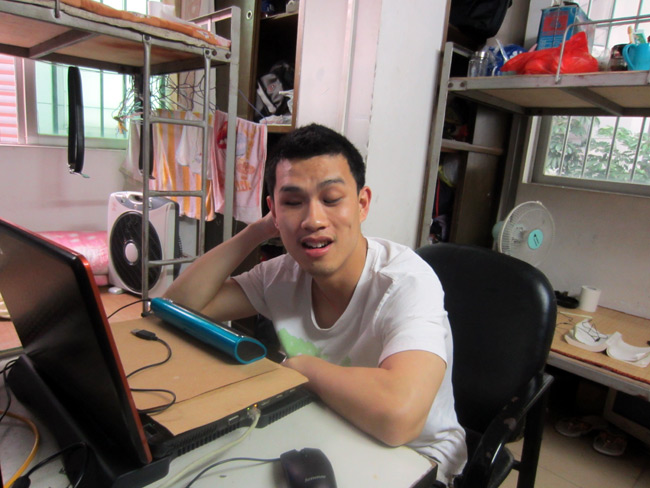
After about 10 minutes, with the head massage clearly finished, I quickly understand that the anticipated torment and pain are about to follow this brief moment of relaxation. Covering each massage area with a towel, the masseur applies insistent strong pressure to every region of my back that harbors tension. The pain is definitely present but paradoxically very soothing. His sense of touch becomes apparent quickly with his determination to linger on the sensitive area of my back. Only when the pain subsides does he continue the massage down my legs, all the way to my feet. 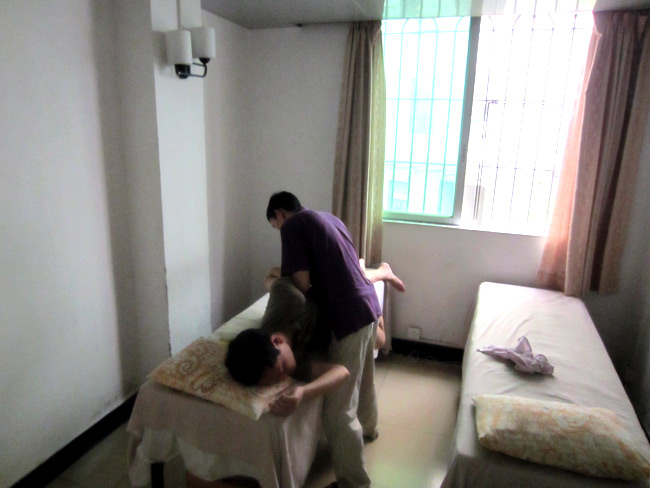 After a solid hour of discomfort, the blind masseur thanks me and returns to his quarters, leaving me alone, exhausted and relaxed. The price of such a massage doesn't exceed 60 yuan per hour. For me, only 48 yuan (about 5 euros) was charged. It's worth noting that massage in Chine is a highly sought-after profession for the blind—it allows them to secure work where they can flourish and develop their other senses. However, they must work hard to stand out from other sighted masseurs despite earning a very low salary of approximately 1,000 yuan per month, or about 120 euros. Given my interest in the massage salon, the owner allowed me to take several photos and gave me a tour of their living quarters, which were quite modest. Eight of them share two small rooms of about 15 square meters and a small kitchenette. Yet their good humor and broad smiles remain constantly present!
  Between relaxation, unwinding, and revitalization, Chinese massages truly have beneficial effects on our health. The various techniques used by each masseur are mastered in a remarkable way and guarantee you undeniable well-being. Moreover, people who are modest will particularly appreciate this experience. As for me, despite the discomfort inflicted, my backache has practically disappeared, and I don't hesitate to return regularly just for the pleasure and well-being that comes at the end of the session. And you—have you ever tried Chinese massage? What are your impressions of it?
Frequently asked questions
The price of a Chinese massage by a blind masseur is very affordable: expect between 48 and 60 yuan per hour, or about 5 to 7 euros. This is significantly cheaper than in Western salons, often with superior quality thanks to the exceptional tactile sensitivity developed by these practitioners.
No, Tui Na Chinese massage does not require nudity. Only shoes are removed. The masseur works through your clothes, making this practice particularly suited to modest individuals. However, loose and comfortable clothing is recommended.
In Chine, many people with visual impairments train in therapeutic massage. The absence of vision develops an exceptional sense of touch, allowing them to precisely locate muscle tensions and pressure points. This tactile acuity is culturally and institutionally recognized in Chine, where specialized massage schools train these practitioners.
Yes, Tui Na can be painful, especially on areas of tension. This technique relies on firm pressure applied to acupressure points and deep tissue manipulation. The pain is, however, described as 'paradoxically soothing': once the tension is released, relief is immediate and lasting.
Salons run by blind masseurs are widespread in major Chinese cities like Guangzhou, Shanghai, and Beijing. They are often discreet and not always clearly advertised. Ask for advice at your hotel or from locals. These salons are recognizable by a standard logo depicting a person with a white cane.