Top 10 Water Towns and Villages in China
China never ceases to amaze, offering landscapes as rich and diverse as they are breathtaking.
China never ceases to amaze, offering landscapes as rich and diverse as they are breathtaking. If your trip to China takes you to the eastern regions, don't miss out on the countless water villages.
According to a famous Chinese saying: "In heaven there is paradise, and on earth there are the cities of Suzhou and Hangzhou". And yes, it's quite true—these lands could be compared to little paradises perfect for romantic getaways. These small Chinese Venices exude an incredible charm, and their rich history adds undeniable interest to any visit.
Here's a curated list of the 10 most beautiful water towns and villages in China:
1. Zhouzhuang
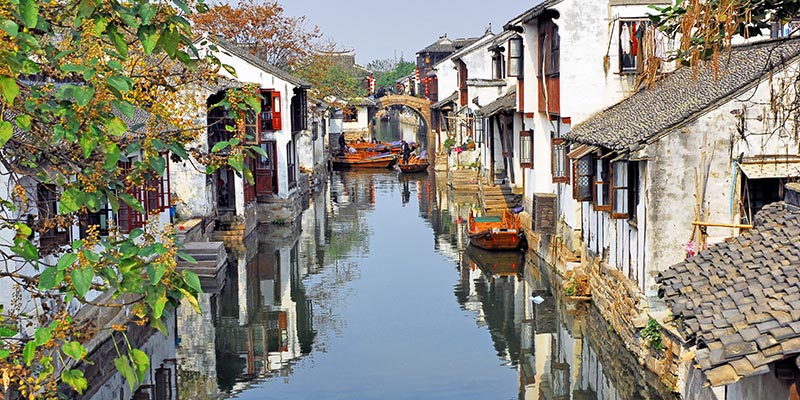
Located between the cities of Suzhou and Shanghai in Jiangsu Province, Zhouzhuang is a small town traversed by numerous canals. For many, it ranks as the most beautiful water town in all of China. Founded over 900 years ago, this town is home to countless buildings, many featuring traditional courtyards and others adorned with vaulted brick gateways with intricate carvings.
The best way to appreciate the beauty of this place is to stroll along the alleyways that follow the course of the canals. At every corner, a magnificent panorama unfolds with characteristic houses, waterways, and small stone bridges spanning the water.
2. Tongli
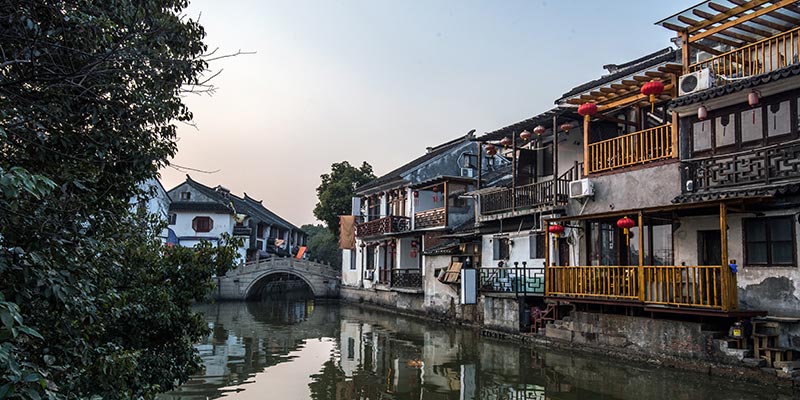
Tongli is a water village located 18 kilometers from Suzhou and 80 kilometers from Shanghai. This ancient village boasts over 1,000 years of history. Tongli is renowned for its charming stone bridges, private gardens, and temples. It is crossed by some fifteen rivers, over which 49 stone bridges of varying styles are built.
For Tongli's residents, these bridges are far more than simple monuments. Among the 49 bridges, three are particularly famous: Taiping Bridge (peace), Jili Bridge (luck), and Changqing Bridge (celebration). They are considered sacred architectural works. At major life events, such as weddings, people cross these bridges to attract peace, fortune, and happiness into their lives.
3. Xitang
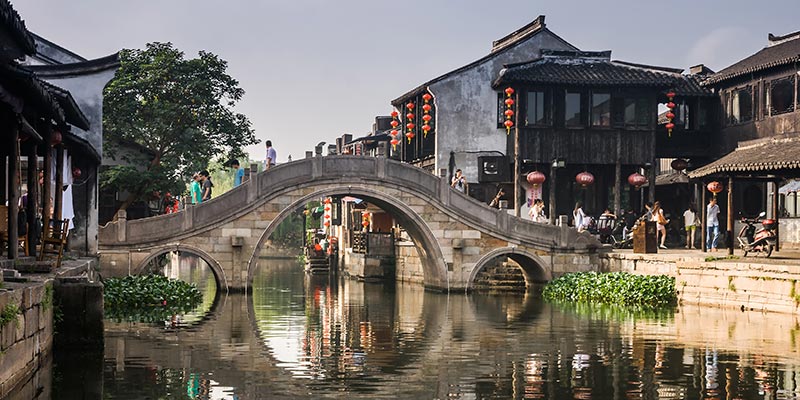
Situated approximately an hour and a half by car from Shanghai, the town of Xitang stands in stark contrast to its bustling neighboring metropolis. What makes it truly special is the impressive number of bridges found throughout. Indeed, it boasts 104 bridges, each constructed in a different style. Xitang is also celebrated for its charming houses built in authentic Chinese style, and especially for its well-preserved old town.
Still relatively unknown to international tourists, it nevertheless offers a pleasant and peaceful atmosphere that defines the charm of this unique destination. If you're seeking a tranquil escape from Shanghai's hustle and bustle, this town is the perfect place to unwind and enjoy the picturesque scenery of this distinctive city.
4. Wuzhen
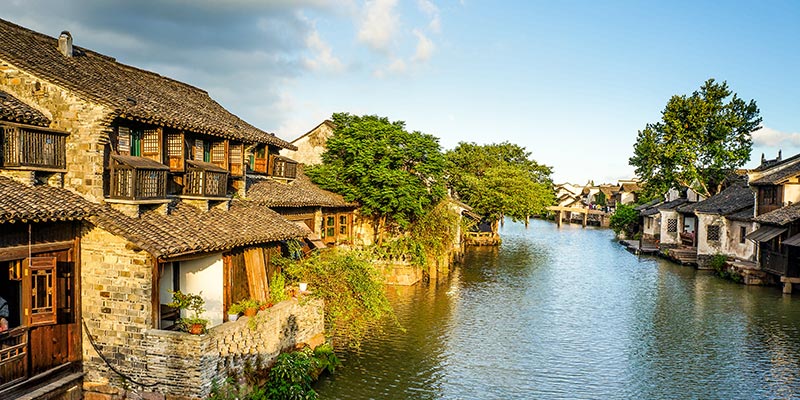
Wuzhen is a small water village located northwest of Tongxiang city in Zhejiang Province. It sits 80 kilometers from both Suzhou and Hangzhou, and 140 kilometers from Shanghai. Wuzhen is divided into two districts, each with distinct characteristics. The Eastern quarter represents the cultural heart of this water village. With its museums and exhibitions, it offers visitors insights into the customs and lifestyles of inhabitants in remote water villages.
The Western quarter, by contrast, is the most charming section of Wuzhen. This quieter district during the day and more expansive area offers a beautiful view of the Grand Canal, which stretches from Hangzhou to Beijing. Composed of canals, bridges, and small paved alleyways, it's delightful to stroll or take a cruise through the area, especially at dusk when the sun dips below the horizon.
5. Luzhi
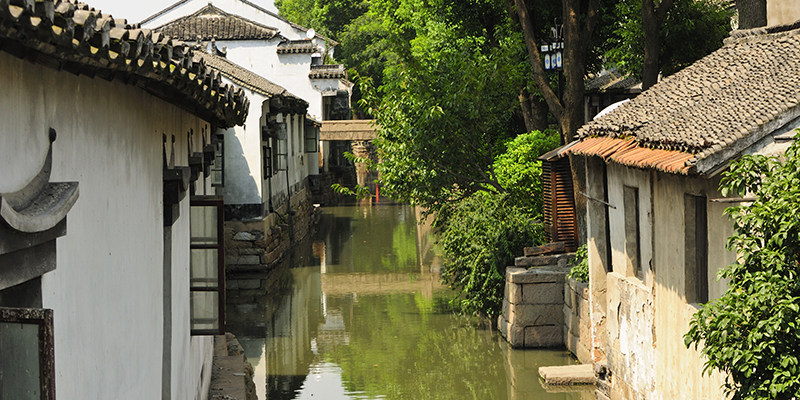
Luzhi is a small township in the Wuzhong District of Suzhou located in the city of Kunshan, approximately 25 kilometers from Suzhou in the Jiangsu Province of China. It boasts a history spanning over 2,500 years. This charming village is characterized by the numerous canals and rivers that flow through it, connected by several small bridges of varying designs. This distinction has earned it the title of the "Bridge Capital".
The antiquity of its culture, its numerous points of interest, its stone bridges and gateways, its typically Chinese architecture, and its Ginkgo tree over 1,300 years old that stands more than 50 meters tall make Luzhi an unmissable destination when exploring China.
6. Nanxun
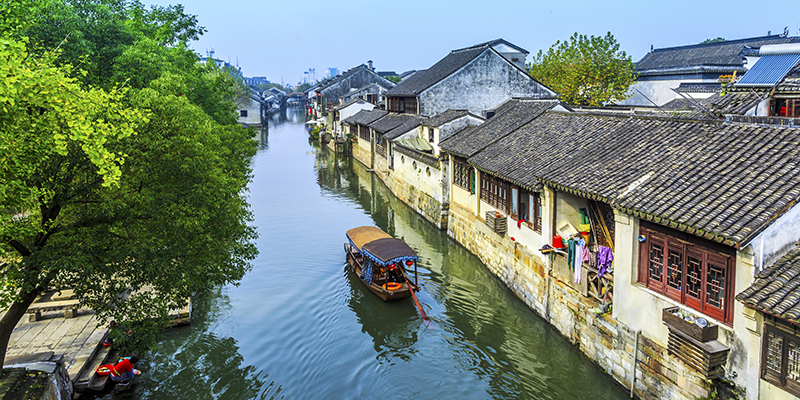
Nestled between Shanghai and Hangzhou, the small water village of Nanxun is a perfect place to escape, even for just a day, from the hustle and bustle of major Chinese cities. Its paved alleyways, traditional houses from the Ming and Qing dynasties, stone bridges, and canals shaded by weeping willows create a landscape that is both charming and authentic.
With more than 750 years of history, Nanxun balances tradition with modernity. While modernization has reached the village's edges, the heart of Nanxun has remained untouched. Indeed, houses are often separated from waterways only by a small paved alley, and canals shaded by centuries-old weeping willows inspire both charm and serenity.
7. Mudu
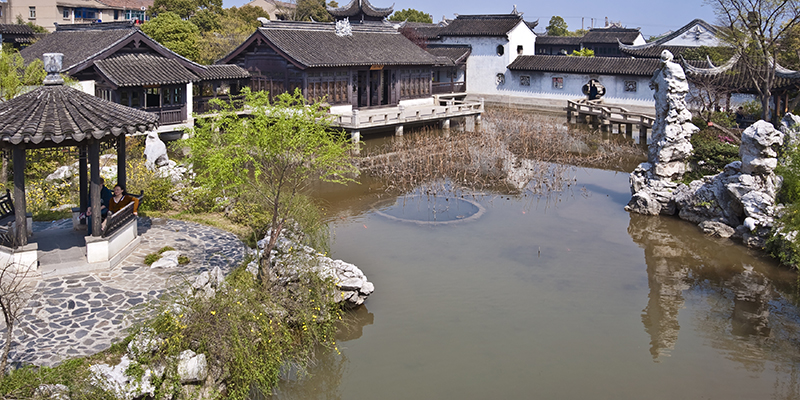
Located west of Suzhou on the shores of Lake Taihu, Mudu is a charming village with a history dating back over 2,500 years. It has witnessed the rise and fall of numerous dynasties that have enriched its cultural heritage. Among the 13 major tourist zones near Lake Taihu, Mudu holds the top position.
This distinction is due both to its geographical location and to the tranquil atmosphere created by its small bridges and waterways, as well as its numerous historical sites including private gardens and residences of celebrated figures.
8. Zhujiajiao
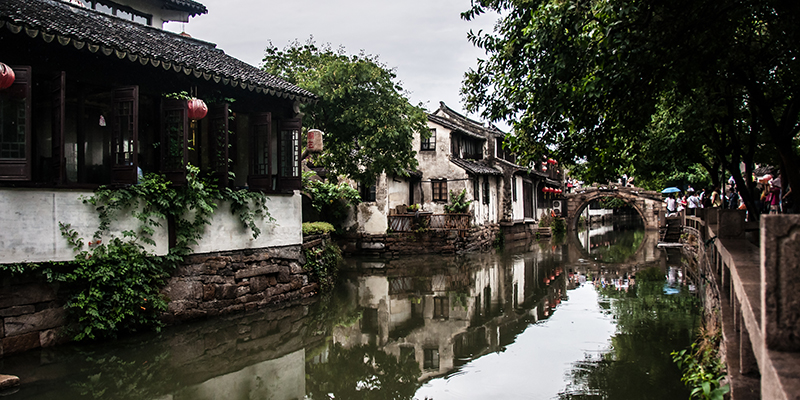
Dubbed the "Venice of Shanghai", Zhujiajiao is the best-preserved ancient water village in Shanghai. Located on the shores of Dianshan Lake in western Shanghai's suburbs, this village has a history dating back over 1,700 years to the period of the Three Kingdoms. Its streets and buildings were constructed during the Ming and Qing dynasties.
Among the must-see attractions:
Ancient streets: North Street, Jingting Street, Cimen Street, Jiaoli Alley.
Antique bridges: Fansheng Bridge, Taian Bridge, Pingan Bridge, Fuxing Bridge, Yongfeng Bridge, Covered Bridge.
9. Guangfu
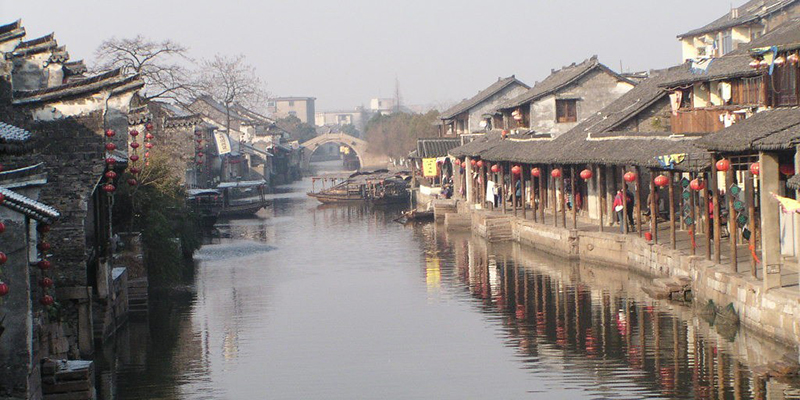
Guangfu is a typical northern China town situated 25 kilometers from Suzhou. Located on the banks of Lake Tai, Guangfu ranks among the oldest cities in Jiangsu Province. With a history spanning over 2,500 years, this city possesses substantial historical and cultural heritage. It is also one of the birthplaces of the renowned Suzhou embroidery.
10. Anchang
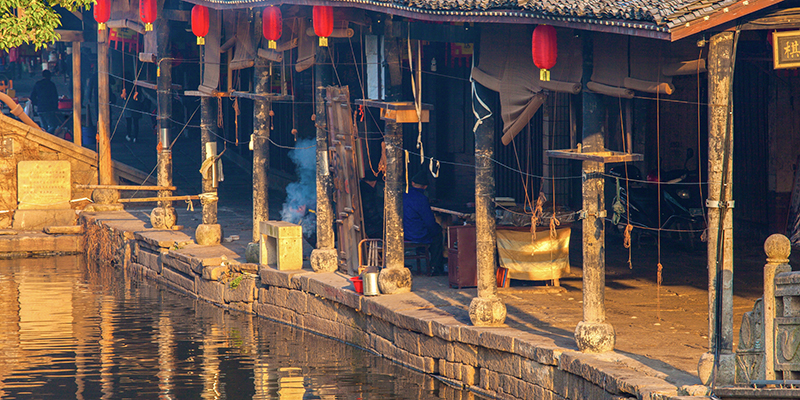
Anchang water village is one of the oldest and least visited water villages situated in the Yangtze River Delta. Formed around canals and stone bridges, this small village has maintained all its charm and traditions. Although Anchang developed as a commercial center for textiles and agricultural products, the village's heart has preserved the full allure of traditional water villages with its elegant bridges, small canals, white-walled and black-tiled houses, and communal living.
Frequently asked questions
Zhouzhuang is often considered the most beautiful water village in China. Located between Suzhou and Shanghai, this village founded over 900 years ago captivates visitors with its canals, stone bridges, and traditional houses featuring vaulted brick gateways with intricate carvings.
Spring (March-May) and autumn (September-November) are the best seasons to visit China's water villages. Temperatures are pleasant, vegetation is lush, and rainfall is less frequent than in summer. Avoid major Chinese national holidays (Golden Week in October) to escape the crowds.
Yes, most water villages are easily accessible from Shanghai. Xitang is approximately 1.5 hours by car away, Zhouzhuang and Tongli are less than 2 hours away, and Zhujiajiao is even located in Shanghai's western suburbs. Regular buses and organized excursions depart from the city.
Anchang is one of the least visited water villages in the region. Located in the Yangtze River Delta, it has preserved its authenticity with its canals, stone bridges, and white-walled, black-tiled houses, far removed from the bustle of more publicized sites.
Yes, it's entirely possible to combine several water villages in one trip. From Shanghai or Suzhou, you can visit Zhouzhuang, Tongli, and Luzhi in 2 to 3 days. Wuzhen and Nanxun, located between Shanghai and Hangzhou, can be included in a longer week-long itinerary.
These villages are nicknamed the 'Venice of China' because of their numerous canals that wind between traditional houses, connected by stone bridges. Like the Italian city, life revolves around water, and flat-bottomed boats often replace streets for traveling from one neighborhood to another.