China becomes the world's leading economic power
It's official: China has overtaken the United States to become the world's leading economic power.
It's official: China has overtaken the United States to become the world's leading economic power. According to IMF figures, China's GDP in terms of purchasing power parity has surpassed that of the USA.
China dethrones the United States, which had held first place for nearly 142 years. In 2013, Americans were still ahead with $16.8 billion in GDP compared to approximately $16.1 billion for China. In 2014, everything shifted, and China became the world's leading economic power with $17.6 billion of gross domestic product against $17.4 billion for the United States.
Forecasts are equally promising, with projections of a GDP of $24.8 billion for China and $21.1 billion for the Americans.
Exponential growth
Since 1980, GDP has doubled every ten years. It took off around the 2000s before finally surpassing $17.6 billion in 2014.
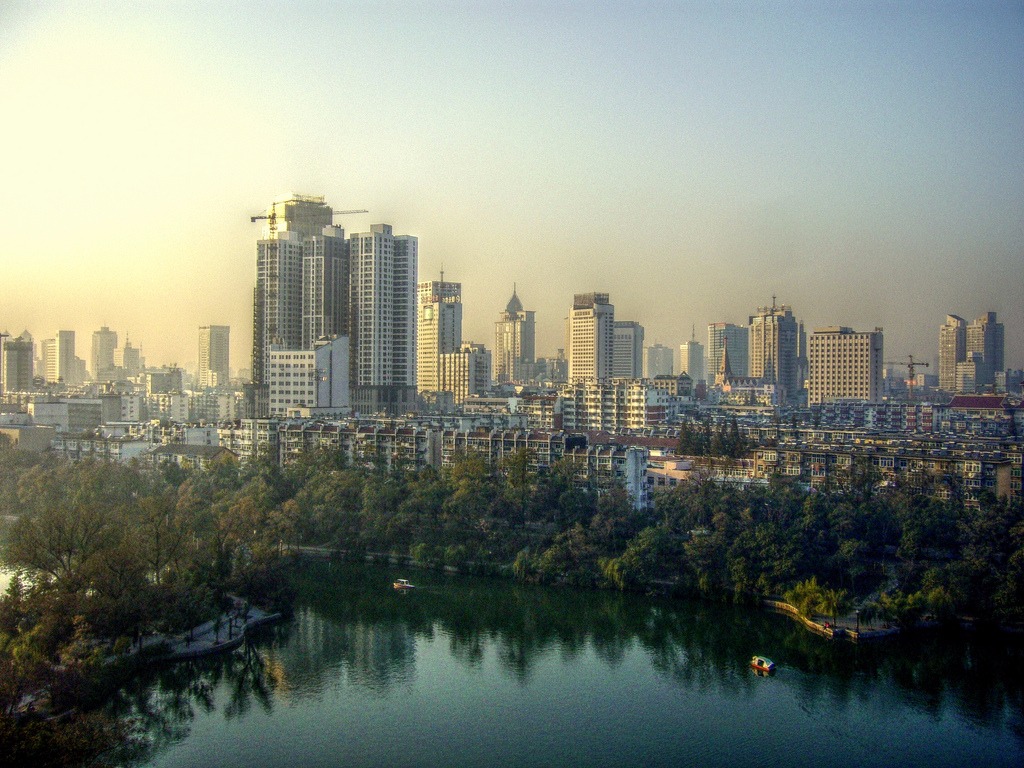
Just three decades ago, Shanghai offered only a modest port and a village of little consequence. Today, Shanghai is recognized for its skyscrapers and ranks among the most important financial centers in the country. This evolution rapidly propelled China to the rank of major global economic power.
In just a few years, China became what is known as "the world's factory". An indispensable economic partner, the Middle Kingdom is now essential to foreign markets. This major breakthrough emerged thanks to the country's unbridled growth.
Global wealth to be shared
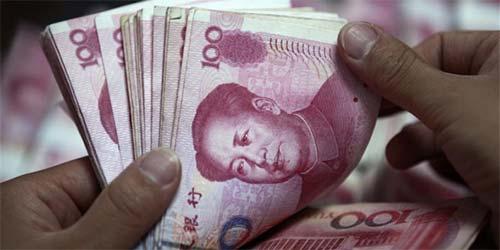
China concentrates a very large share of global wealth. Nevertheless, this wealth must be shared among nearly 1.3 billion inhabitants, which obviously impacts the results of average wealth per capita and places China at 89th rank, nowhere near the top position.
Inequalities continue to widen in this country where the minimum wage is equivalent to €220 per month. Although China has raised the minimum wage by more than 10% in certain areas, inequalities remain difficult to reduce in this country experiencing constant economic growth.
Frequently asked questions
According to IMF data released in early 2015, China surpassed the United States in 2014 in terms of GDP measured by purchasing power parity (PPP), with $17.6 trillion compared to $17.4 trillion for the United States.
Since 1980, China's GDP has experienced exponential growth, roughly doubling every ten years. This acceleration intensified particularly from the 2000s onward, propelling the country to the rank of world's largest economy by 2014.
No. Despite its very high total GDP, this wealth is shared among approximately 1.3 billion inhabitants, which places China at 89th rank globally in terms of GDP per capita. Internal inequalities remain significant, with a minimum wage around €220 per month in certain areas.
Over a few decades, Shanghai transformed from a modest port into a metropolis of skyscrapers, recognized as one of the most important financial centers in China and Asia, symbolizing the country's meteoric economic growth.
GDP in purchasing power parity (PPP) adjusts economic values to account for the cost of living in each country, enabling a more equitable comparison of actual wealth produced. On this basis, the IMF established that China surpassed the United States in 2014.