Fenghuang and Hunan
The time has come for us to leave Guangzhou, the city where we spent more than 5 months... A wave of sadness washes over us, quickly replaced by the excitement of the adventure ahead!
The time has come for us to leave Guangzhou, the city where we spent more than 5 months... A wave of sadness washes over us, quickly replaced by the excitement of the adventure ahead!
From Guangzhou to Changsha
There's no hiding it—we complete our final internship day in Guangzhou with a sense of nostalgia. Five months have already passed, during which we've learned enormously both professionally and personally. Having worked alongside different nationalities certainly shaped our working environment, and we depart with the satisfaction of having forged genuine friendships with our bosses and colleagues, along with the prospect of working together again soon...
For now, it's time to return the apartment after a quick visit from the landlady, who tried one last time to scam us out of fifty euros from our deposit... Not on our watch! As we mentioned in the first articles on this blog, our goal for July was to traverse Chine from South to North, with our return flight departing from Beijing.
First stop on this road trip: the city of Changsha, located in the Hunan province. Don't be fooled—this city offers little of touristic interest beyond a few monuments. It's simply very well connected and will serve as our gateway to the remote villages of the province, starting with Fenghuang. We head to the new Guangzhou South Railway Station (Guangzhou South Railway Station), opened in 2010 in the Panyu district. Its modernity is unmistakable compared to Guangzhou East Station, both in terms of its scale and infrastructure quality.
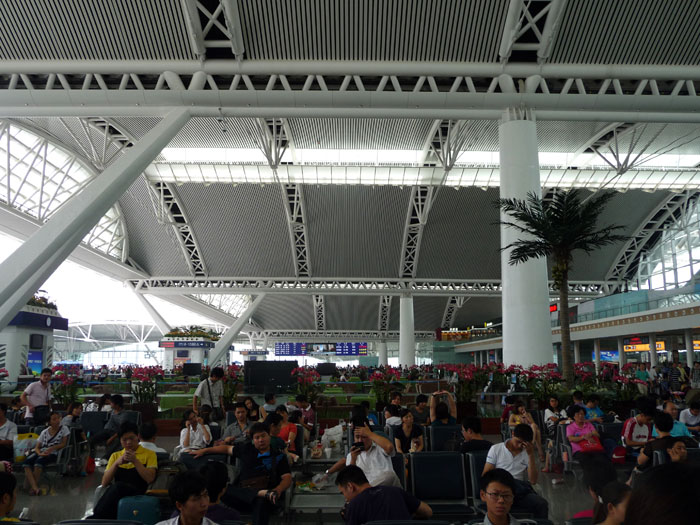
Guangzhou East Railway Station
We wait patiently for our 12:40 train with a few hundred other passengers. It's a type G train (High-Speed Electric Multiple Units), in other words one of the fastest in Chine, designed to connect Guangzhou to Changsha in under 2.5 hours.
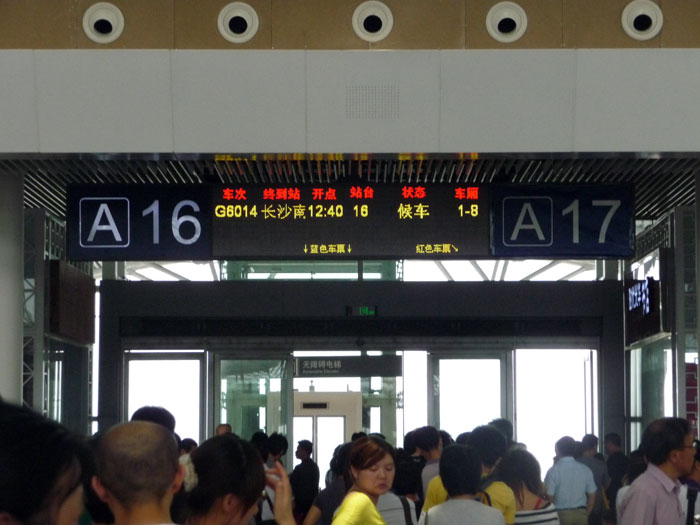
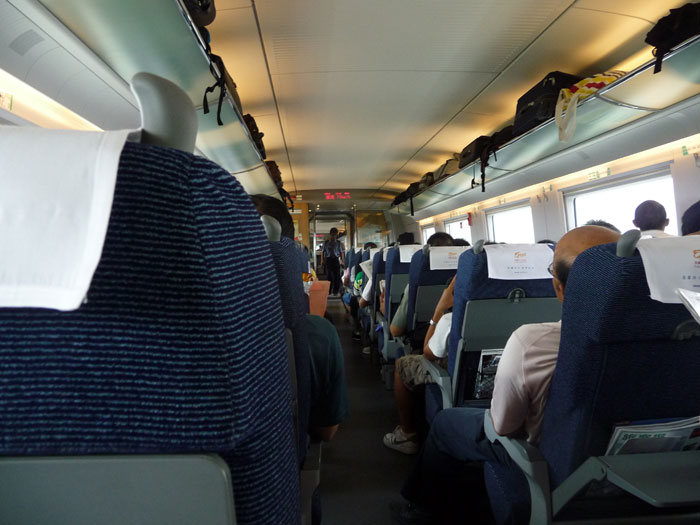
Indeed, for just under 30€ (300 yuan), comfort is assured and the sense of speed is very real, easily comparable to that of the French TGV.
From Changsha to Fenghuang
We arrive in the middle of the afternoon at Changsha South Railway Station, which won't leave us with particularly fond memories. It's yet another sprawling Chine conurbation, basically everything we wanted to avoid as much as possible before heading home. Resigned to spending a night in this city, we nonetheless have the good fortune to catch a bus to Fenghuang... The journey is off to a promising start! It will take the bus more than 6 hours to reach our destination, after navigating several tricky passages. It's worth noting the legendary cleanliness standards of the Chine people, which hold true here as well... See for yourself:
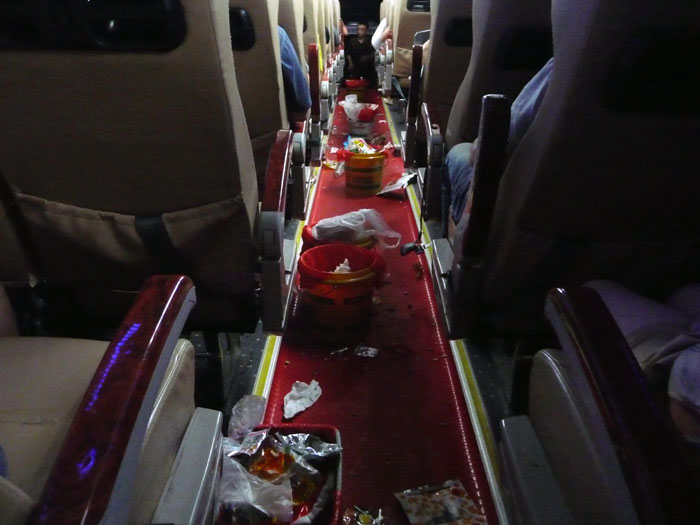
Who threw their peach in the trash?
Fenghuang, A Traditionally Touristy Village
Stepping off the bus, it's a shock. We're dropped in the middle of a boulevard, far from the image of a quiet little village we'd imagined Fenghuang to be. Off we go on a little walk meant to bring us to the historic heart of the village, which we'll finally spot from atop a bridge.
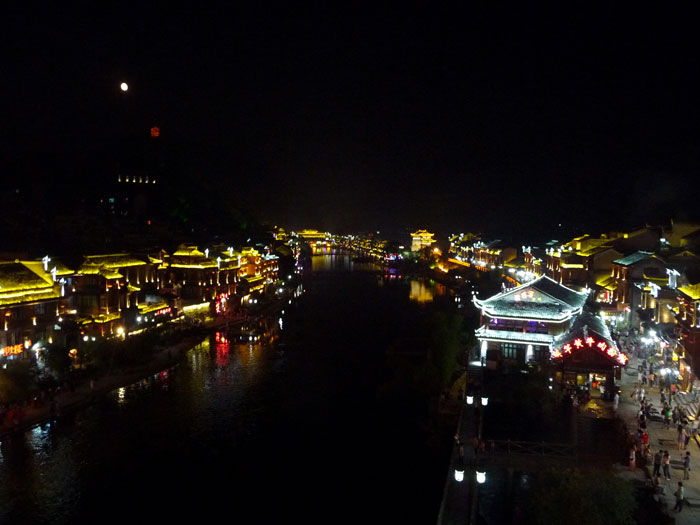

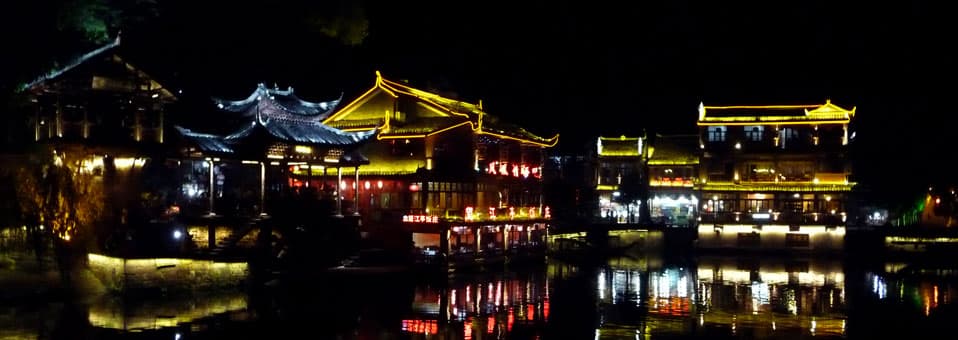
As you'll have gathered, the old town of Fenghuang sits on either side of the Tuo River (Tuo Jiang), which explains the need to navigate the numerous staircases before us. With 20 kg of luggage each and backpacks on our shoulders, it's naturally not an easy feat, but we manage nonetheless. Fenghuang is an entirely pedestrian village, allowing you to wander through the alleyways and admire the old buildings and ramparts upon which the place has built its reputation. You can access either riverbank via a wooden footbridge, or choose to hop from stone to stone.
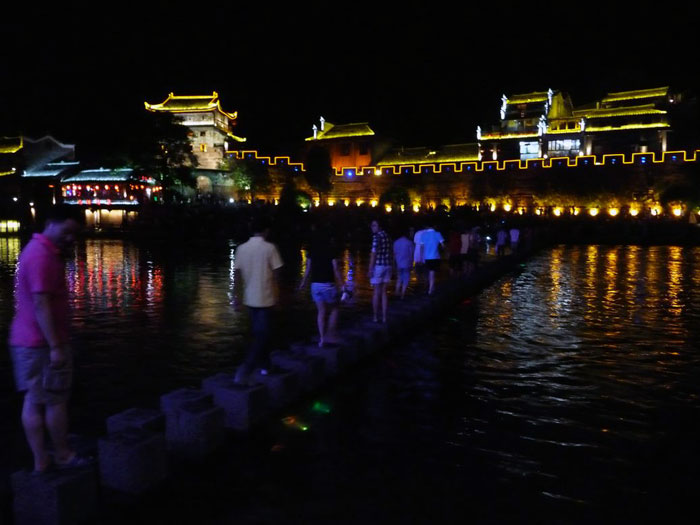
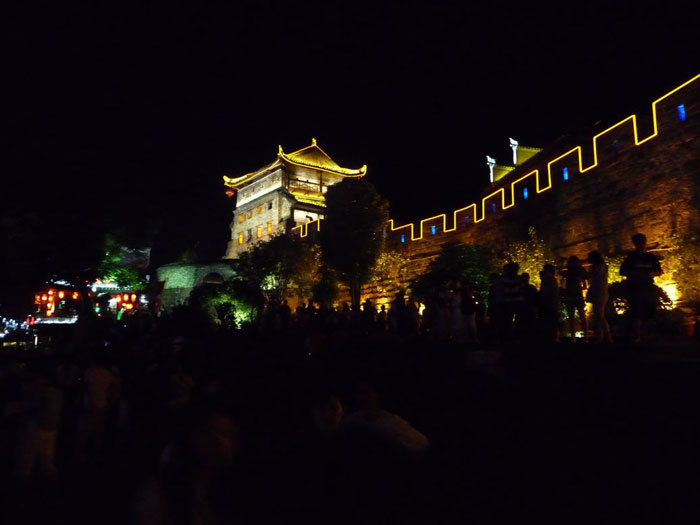
An enchanting vision to be tempered, however, given that we really weren't expecting such a throng of tourists. The streets are still packed at 11 p.m. and the hustle seems perpetual. It seems that mass tourism has gotten the better of the city's charm, which is truly a shame. Of course, we're in no position to speak of an era we never really knew, but the fact is that for the first time we thought we'd escape the Chine tourists who even harass us for a simple photo. That won't be the case...

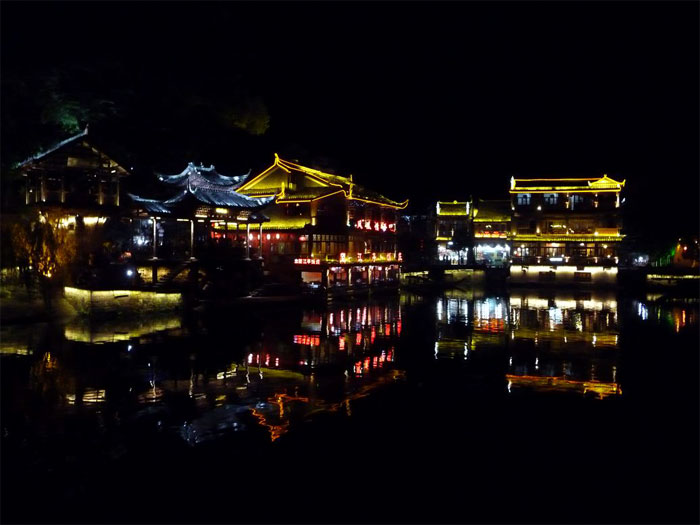
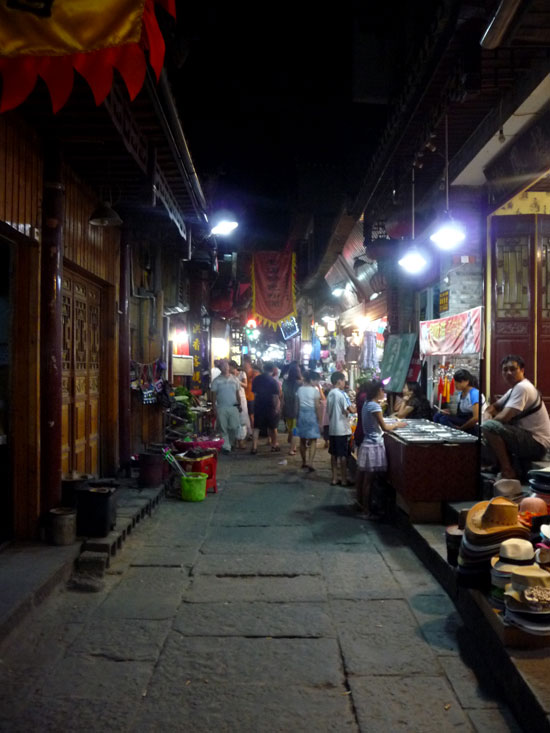
Our priority is to satisfy ourselves with something other than chips or chicken feet. We opt for a small traditional open-air restaurant that serves us rice and noodles, quite sufficient to satisfy our hunger. The alleyways never empty out and we're confronted with various local specialties: shrimp, crab, fish or potato skewers, spiced meat, tofu... all cooked before us on cast iron griddles.

The real disappointment comes when we search for a hostel, for the simple reason that they're all fully booked, including Koolaa's Home that we had in mind. Fortunately, we eventually find our solution, aided by a young woman who noticed our predicament. Much like our night in Hong Kong, the comfort is decidedly sparse, with beds resembling wooden planks topped with a blanket. Fatigue works in our favor, and we make do...
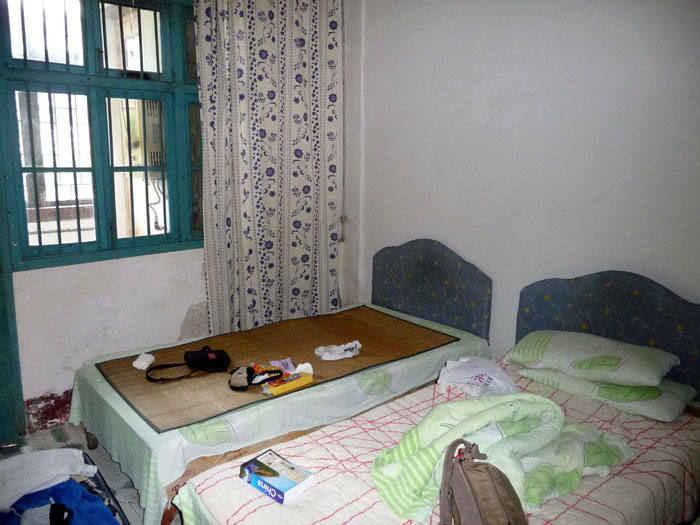
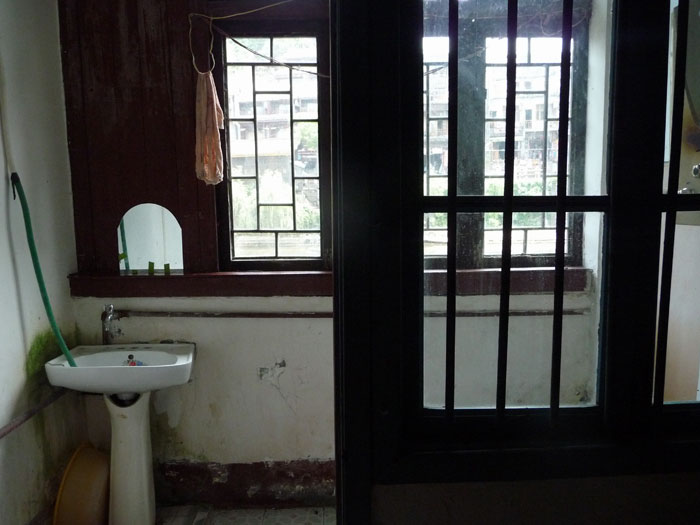
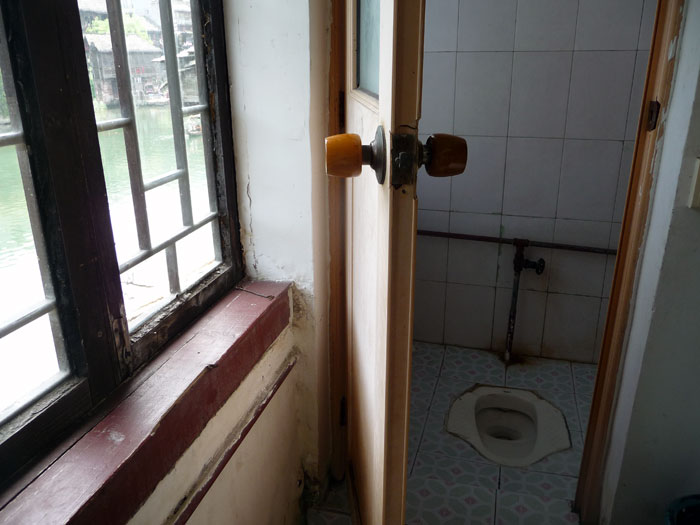
A good night's rest and we'll set out to discover this village that still holds a few surprises in store! To view the photos related to this article, don't hesitate to visit the gallery for Fenghuang.
Frequently asked questions
From Changsha railway station, buses serve Fenghuang in approximately 6 hours. Buses depart regularly from Changsha's coach station. It's advisable to check schedules on arrival as frequencies may vary by season.
In 2012, a type G high-speed train ticket between Guangzhou and Changsha cost around 300 yuan (less than 30€) for a journey of under 2.5 hours. Prices may have changed since then.
Yes, the old town of Fenghuang is entirely pedestrian. You can wander freely through the alleyways, stroll along the Tuo Jiang river, and cross from one bank to the other via a wooden footbridge or by hopping across stepping stones.
Absolutely. Fenghuang is a very touristy destination in Chine and hostels often fill up completely, even in the evening. It's highly advisable to book your accommodation before departure to avoid arriving without lodging.
Spring (April-May) and autumn (September-October) are generally the best times to visit Fenghuang, with pleasant temperatures and fewer crowds than during summer. Winter can be cold in Hunan province.
Fenghuang offers numerous local specialties: grilled shrimp, crab, fish, and potato skewers, marinated meat, and tofu, all often cooked fresh before you on cast iron griddles in the old town's alleyways.