Focus on Xi'an's Terracotta Army
It was in Xi'an, in eastern Chine, that the Terracotta Army of Emperor Qin Shi Huangdi was discovered in 1974. Approximately 8,000 life-size statues of soldiers and horses were unearthed.
It was in Xi'an in eastern Chine that the Terracotta Army of Emperor Qin Shi Huangdi was discovered in 1974. Approximately 8,000 life-size statues of soldiers and horses were unearthed. Archaeologists consider this discovery to be one of the most prestigious findings in the history of Chine.
To better understand what Xi'an's Terracotta Army represents, one must first understand who Qin Shi Huangdi was—the first man to unify Chine—and the context in which his mausoleum was erected.
Even today, Xi'an's Terracotta Army represents one of the most magnificent discoveries in Chinese archaeology. The 8,000 statues of soldiers and horses have become one of the symbols of Chine's ancient history spanning millennia.
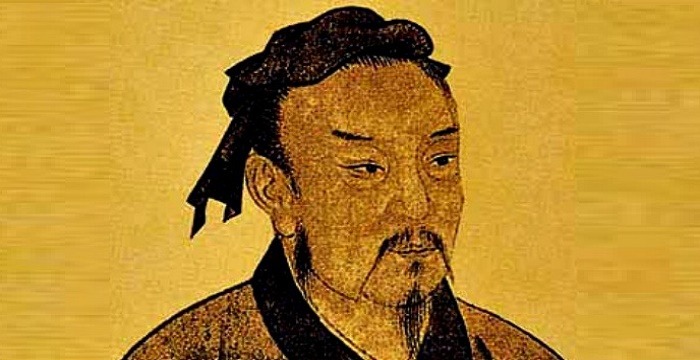
Qin Shi Huangdi, the Man Who Unified Chine
In 338 BC, Prince Zheng became sovereign of the Qin following the death of his father, King Zhuang Xiang (385–338 BC). At just 13 years old, Prince Zheng was crowned with the title of "King Zheng of Qin" in 246 BC and proclaimed himself "First August Sovereign" twenty years later in 221 BC.
He unified Chinese territory as well as its writing system, laws, weights and measures, road structure and width, and axle spacing. He committed himself to making Chine a vast unified country in every sense of the term. He connected the walls erected for protection, thereby creating the famous Great Wall.
The Mausoleum of Chine's First Emperor
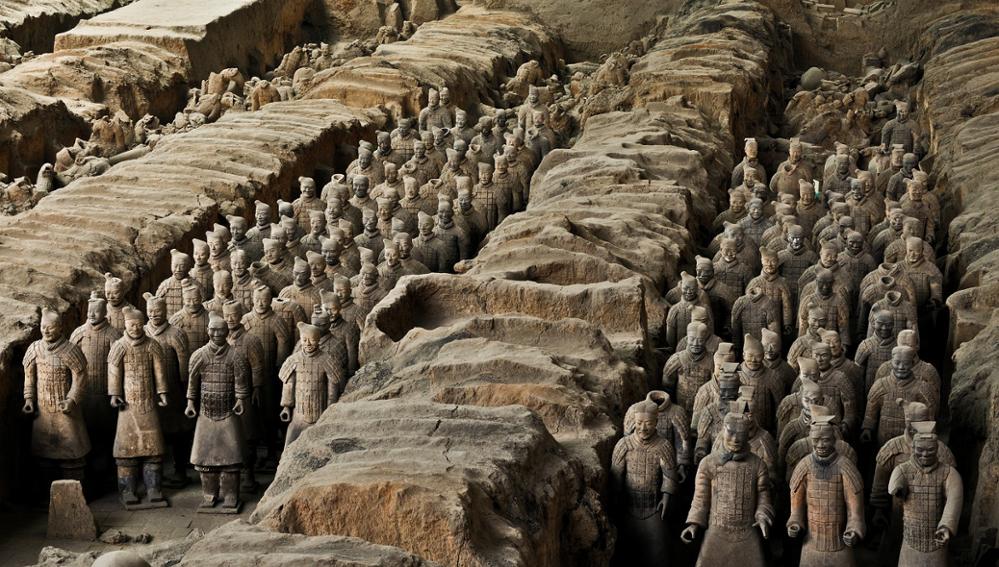
Arranged in ranks, the archers, cavalry, infantry, and generals of the emperor stand eternal watch over their sovereign. Each soldier assumes a posture of defense and protection as they did in life. Unwilling to pass into the afterlife alone, the emperor ordered sculptors to create replicas of his army.
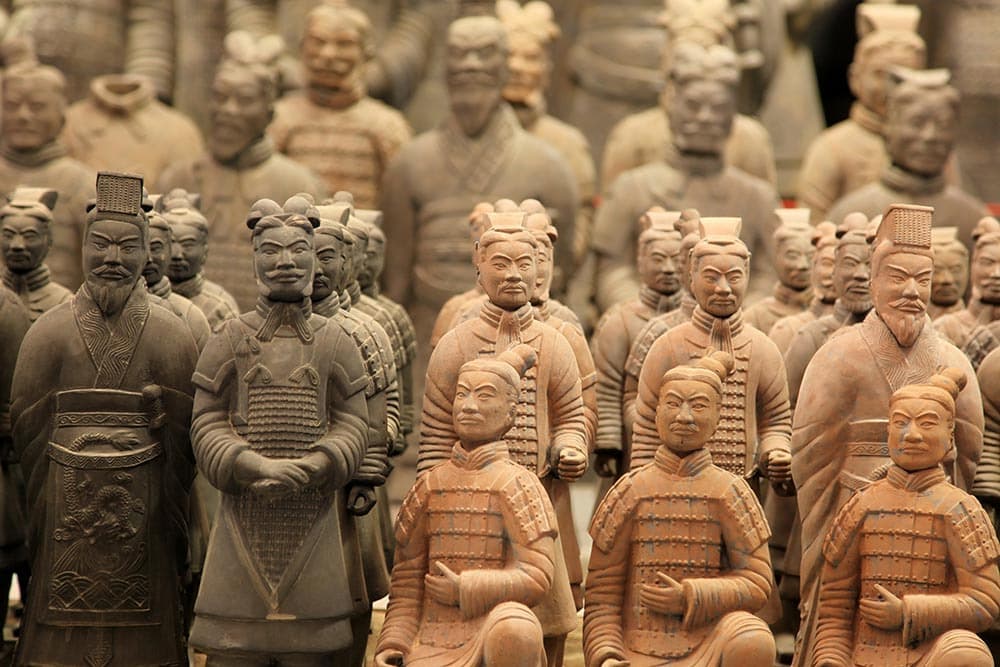
Thousands of replicas of soldiers, horses, and chariots were erected, each with distinct physiognomy, arm positions, and clothing. Moreover, some statues are taller than others, ranging between 1.72 meters and 2 meters. Danielle Eliseef, a French historian specializing in Chine, explained that the soldier statues served to "best preserve the body of the emperor." He was not perceived as "completely devoid of life."
This concept stems from how the Chinese perceive death and the deceased. In the case of the mausoleum, one part of the emperor's soul—his body—remained on earth. The second part of his soul—his spirit—ascended to heaven. Hence the importance of burial in Chinese culture.
The emperor's tomb was constructed so that he could maintain a lifestyle conforming to the one he had in life. It was in 246 BC that Qin Shi Huangdi decided to have his tomb built. He then organized an entire structure around the construction of his burial chamber.
The Construction of Xi'an's Terracotta Army
Built beneath a tumulus measuring between 115 meters and 1.5 km in height, the eight thousand soldier statues each possess a distinct facial expression. Each statue was molded in kilns at temperatures of 900°C, then decorated and painted. This technique represented a genuine advancement for the era. Archaeologists have discovered three main pits, the largest measuring 14,260 m². The second pit measures 6,000 m² and the third 376 m², each containing warriors, chariots, and horses.
It appears that the Emperor's tomb has not yet revealed all of its secrets.
Frequently asked questions
The Terracotta Army is located approximately 30 km east of Xi'an, in Shaanxi Province in Chine. The site is accessible from central Xi'an by tourist bus (line 306), taxi, or organized guided tours.
Approximately 8,000 life-size statues of soldiers and horses have been discovered to date. Each possesses unique posture, expression, and clothing. The statues range in height from 1.72 m to 2 m depending on military rank.
The Terracotta Army was discovered in 1974 by farmers digging a well in the Xi'an region. This chance discovery is considered one of the most significant archaeological finds of the twentieth century.
According to historian Danielle Eliseef, the soldier statues served to 'best preserve the body of the Emperor' in the afterlife. In Chinese culture, a part of the soul remains on earth after death. The army was therefore meant to protect the Emperor for eternity, allowing him to maintain his royal way of life after death.
The tomb of Qin Shi Huangdi itself has not yet been opened by archaeologists. Located beneath a tumulus, it has not yet revealed all of its secrets. However, the three pits containing the Terracotta Army are accessible to the public within the site museum.
Yes, the mausoleum of Chine's First Emperor, of which the Terracotta Army is part, has been inscribed on the UNESCO World Heritage list since 1987. It is recognized as one of the most significant archaeological sites in the world.