Sun Zi, the Brilliant Strategist
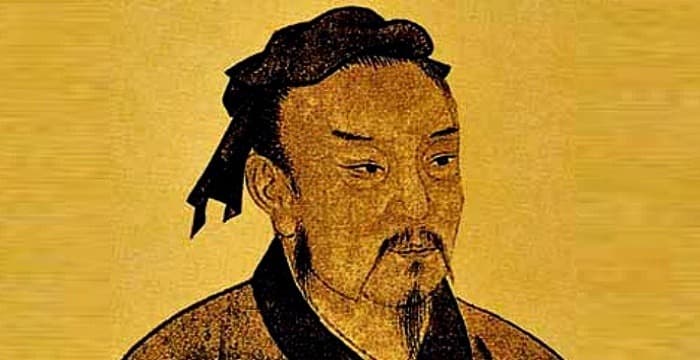
Presumed author of "The Art of War," Sun Zi embodies a Chinese ideal: the perfect strategist. His thinking profoundly influenced China and the entire Far East before conquering the world.
Presumed author of "The Art of War," Sun Zi embodies a Chinese ideal: the perfect strategist. His thinking profoundly influenced China and the entire Far East before conquering the world as a whole... His teachings, originally designed for warfare, continue to prove relevant in countless everyday situations today...
Sun Zi (孫子Sūn Zǐ)
Other transcriptions: Sun Tzu, Souen Tseu
Chinese general and great military strategist who is believed to have lived during the Spring and Autumn period (presumed dates: 544–496 BCE)
Traditionally recognized author of "The Art of War," the oldest and most brilliant military strategy treatise known in the world.
Worth Noting
The name Sun Zi means Master Sun, and may be only posthumous. The real name of the person, if he truly existed, was Sun Wu (孫武 Sūn Wǔ). The character Zi is therefore a sort of honorific title comparable to what was done for other important figures in Chinese history: Lao Zi, Confucius (Kong Zi) or Mencius (Meng Zi).
General Overview
Even if his existence is not historically certified, Sun Zi is traditionally presented as a formidable general and military strategist of the 5th century BCE (544 to 496 BCE). As such, he was regularly called upon to confer with officials of the state he served, the state of Wu...
The presumed author of "The Art of War," Sun Zi is believed to have lived during the Spring and Autumn period (722 to 453 BCE), though some sources present him as a contemporary of the Warring States era, due to apparent anachronisms in the famous military treatise.
His work, "The Art of War," shows that he regarded military conflict as an inevitable phase in a state's life, and that one must therefore be prepared to face it to restore peace at the lowest possible cost.
The impact of Sun Zi's ideas on Chinese (and even Asian) history and culture runs very deep: even today, it influences the strategy of Chinese military officers, political leaders, businessmen, and company executives.
This spread of Sun Wu's ideas quickly conquered Asia, particularly Japan, before establishing itself in the West as well, chiefly from the 19th century onward. Napoleon would be among the most famous historical figures to have drawn inspiration from the Chinese strategist's ideas.
He does not appear as an idealist waging war for honor, but rather as a realistic and pragmatic man seeking to gain advantage from each situation. It is quite likely that the figure of Sun Zi inspired very famous characters in Chinese literature, such as the tacticians Wu Yong and Zhu Wu (novel "Outlaws of the Marsh") or Zhuge Liang and Zhou Yu ("Romance of the Three Kingdoms").
One thing is certain today: Sun Zi and his ideas were born in China. But by their scope, both are now an integral part of world heritage.
Sun Zi's Work: The Art of War or Sun Zi Bingfa
孫子兵法 Sūn Zǐ Bīng Fǎ
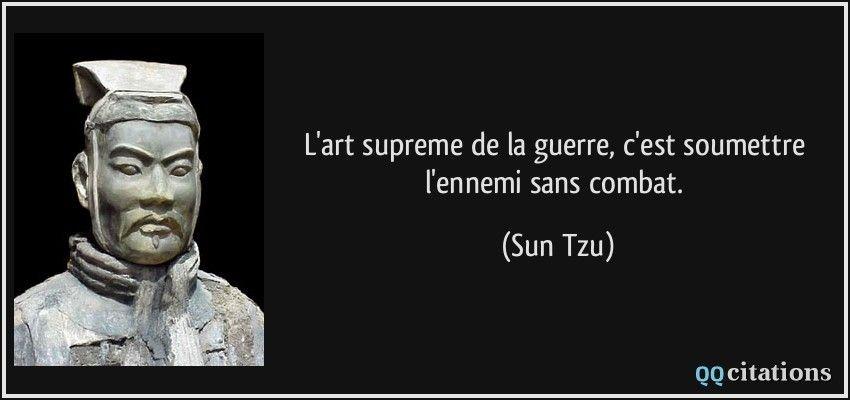
Sun Zi is the presumed author of the famous military strategy work entitled "The Art of War" (or sometimes simply Sun Tzu), which despite its antiquity remains a reference manual today.
The Art of War aims to help those who employ its principles to win a war in the least costly manner possible: it is therefore about avoiding war if possible, and finding means to end it as quickly as possible if it cannot be avoided.
The first principle of "The Art of War" is that conflict benefits no one, but if it is inevitable, it must be prepared in meticulous detail to ensure victory: knowing the terrain, the weather, and the enemy.
Many methods are presented, such as espionage and all manner of tricks. Sun Zi even indicates that sometimes success lies in patience and knowing when you have no chance of winning (avoiding conflict) and when you have every chance (the opportune moment to launch an offensive).
The ideas in "The Art of War" prove relatively subtle, as it speaks of how to use terrain to your advantage, the strategies to pursue both on the front and in the rear, the diplomacy surrounding war situations...
The work notably emphasizes the importance of human relationships in managing a battle:
justice and rigor are essential to maintain the obedience of soldiers
the general must have the courage to follow his convictions even if it means going against his sovereign's orders if he believes the sovereign is mistaken
respect for the civilian population that supports the war effort, but also enemy populations
Without describing specific situations, The Art of War addresses most imaginable aspects of conflicts of its time. Some of these principles withstand the test of time: they prove adaptable to the reality of our era and applicable in many contexts other than war (human relations, business...).
The principles outlined in the book advocate great flexibility to adapt to the changing nature of situations, as well as great pragmatism in establishing effective alliances. Even more remarkable, war here is not a matter of hatred and destruction: it is about achieving victory, and from this perspective, turning your enemy into a friend is far more valuable than destroying him...
Who Speaks of Sun Zi?
The main sources on Sun Zi are the "Shiji" (or Records of the Grand Historian) by Sima Qian, and "Spring and Autumn Annals of the States of Wu and Yue" by Zhao Ye.
Sun Zi is believed to have lived during the Spring and Autumn period, when he served the State of Wu under King He Lü, though he was born in the State of Qi. At that time, seven great states were fighting to achieve the unification of China: Zhao, Qi, Qin, Chu, Han, Wei, and Yan.
Sun Zi, or rather Sun Wu, was a true hero of the period, and his numerous military victories are said to have encouraged him to write his military strategy treatise. The power and depth of the work could be explained by the fact that these are theories tested on the battlefield, where they proved their worth. It is even said that Sun Zi orchestrated the famous attack of the State of Wu against the State of Chu...
Sun Zi, a Real or Fictional Figure?
If "The Art of War" is an internationally renowned book, we are not very certain of its authorship, a common phenomenon when dealing with ancient China. While Sun Zi is commonly presented as the author of the book, he is above all a mythical rather than truly historical figure.
Those who doubt Sun Zi's real existence rely on his absence from several historical sources of the era such as the Zuo Zhuan, and on certain anachronisms that tend to present "The Art of War" as written during the Warring States era.
Another problem has been raised by confusion between Sun Zi and Sun Bin, another figure from the later Warring States period.
But the discovery in two Han tombs of a book entitled "The Art of War of Sun Bin" proved to us that Sun Zi and Sun Bin were indeed two different individuals. The latter would probably be a descendant of the former, if the former really existed.
As with other classical Chinese works, "The Art of War" by Sun Zi may also have been written posthumously by direct or indirect disciples: such a hypothesis would justify the fact that the work resembles a text from the Warring States period, source of confusion with Sun Bin.
The main doubts about the historical veracity of Sun Zi arose from the difficulty in determining his dates of life, and also from the anachronisms and inaccuracies in the text "The Art of War" compared to the era in which it is supposed to have been written.
Sun Zi's Influence on the Great Ones
The first emperor of China, Qin Shi Huangdi, is said to have held "The Art of War" in very high esteem, according to him an indispensable tool for ending various conflicts and fulfilling his unifying ambitions...
The work also became a reference in Japan, where it was highly appreciated in the samurai caste. In France, Napoleon himself is said to have read "The Art of War" with interest, but without paying attention to all the details such as the importance of temporal factors like climate, which for some explains his defeat in Russia.
Closer to our time, Mao Zedong is said to have credited part of the Communists' victory over the Nationalists in 1949 to the principles of The Art of War.
Frequently asked questions
Sun Zi, whose real name is believed to be Sun Wu, is a Chinese general and military strategist presumed to have lived between 544 and 496 BCE, during the Spring and Autumn period. His existence is not historically certified, but he is traditionally recognized as the author of The Art of War, the oldest military strategy treatise in the world.
The Art of War (孫子兵法, Sun Zi Bingfa) is a military strategy treatise attributed to Sun Zi. It sets forth principles such as the importance of knowing the terrain and the enemy, the use of tricks and espionage, and the pursuit of victory at the lowest cost. Its teachings are still applied today in military, political, and commercial fields.
The historical existence of Sun Zi is uncertain. While Sima Qian's Records of the Grand Historian mention him, his absence from other sources of the era such as the Zuo Zhuan and certain anachronisms in his treatise fuel the doubt. The discovery of distinct manuscripts in Han tombs did, however, make it possible to differentiate Sun Zi from Sun Bin, another later strategist often confused with him.
Sun Zi and Sun Tzu refer to the same person: Sun Tzu is the pinyin transcription according to the old Wade-Giles romanization, while Sun Zi is the modern pinyin transcription. The term 'Zi' (or 'Tzu') means 'master' in Chinese, a posthumous honorific title. His real name is believed to have been Sun Wu.
Sun Zi's influence is worldwide. In Asia, his treatise was highly prized in Japan within the samurai caste. In the West, Napoleon Bonaparte is said to have studied The Art of War. In the 20th century, Mao Zedong attributed part of the Communist victory of 1949 to its principles. Today, his work is used in military, political, management, and business fields.
Yes, the city of Huimin, in Shandong province (China), is considered Sun Zi's birthplace. A dedicated museum, the Sun Tzu Museum, is located there. The region offers military history and Chinese philosophy enthusiasts a unique opportunity to immerse themselves in the world of the famous strategist.