The Great Wall of China, a symbol of Chinese grandeur
If you're traveling to China, particularly Beijing, the Great Wall is a must-see tourist destination. By itself, it symbolizes the wealth and grandeur of Chinese civilization
If you're traveling to China, particularly Beijing, the Great Wall is a must-see tourist destination. By itself, it symbolizes the wealth and grandeur of Chinese civilization, and represents the world's largest military architectural structure.
The Great Wall (长城; pinyin: Chángchéng; literally the "long wall")
Worth noting:
It is said that 10 million workers died during the construction of the edifice and were buried in its surroundings.
The Great Wall has been inscribed on UNESCO's World Heritage List since 1987
A Chinese symbol
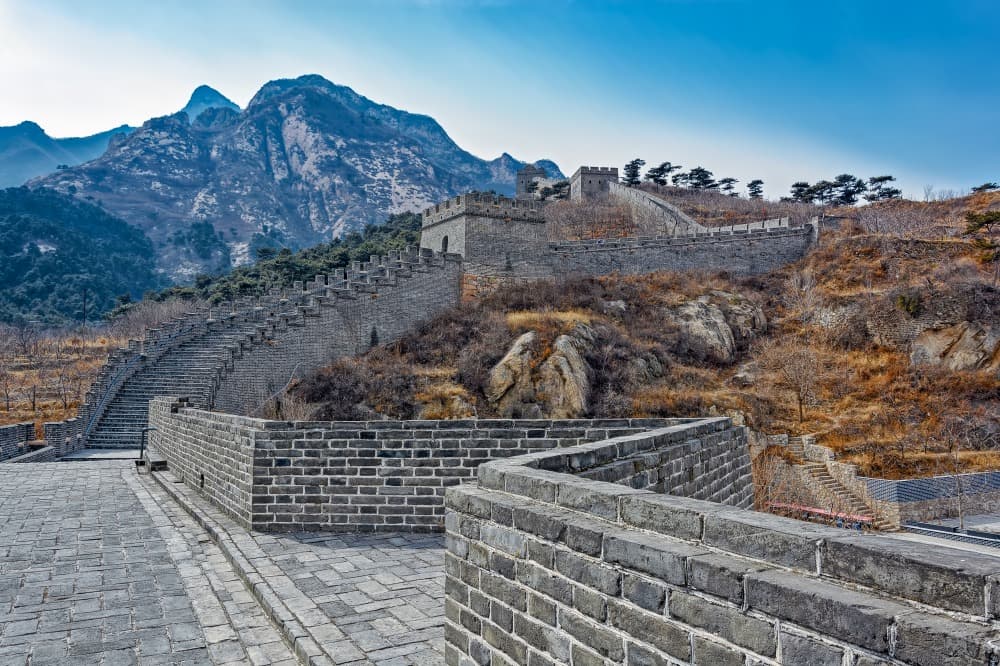
A symbol of China and an essential tourist destination, the Great Wall is often associated with the constructions of the Ming dynasty, in the surroundings of Beijing, where numerous visitors flock daily.
In fact, this section of the edifice constitutes only one of its more recent parts. The Great Wall is not a single construction but rather a collection of military fortifications that were erected, destroyed, rebuilt, or restored multiple times in different locations across Chinese territory.
The earliest sections, the oldest dating back to the 5th century BC, are believed to be the work of independent states and kingdoms before China's first unification. The latest additions or modifications took place in the 16th century under the Qing, the last imperial dynasty.
A military construction inscribed on UNESCO's World Heritage List
The primary purpose of these constructions was therefore military: to defend their borders for the various states that made up China at the time, and later to curb the threat of the nomadic Xiongnu peoples to the north, following the first unification.
The original section of the Great Wall, if we take the work begun under the Qin dynasty as a starting point, was located much further north than the current tourist site.
The total length of the Great Wall structures reaches 6,700 km, which earned it the nickname "The Wall of Ten Thousand Li" (萬里長城, wàn lǐ chángchéng). Li is the unit of length used by the Chinese; 6,700 km equals more than 13,000 li, and knowing that 10,000 symbolizes infinity, the name signifies that the Great Wall is endless.
But contrary to what certain rumors and legends had suggested, the titanic construction is not visible to the naked eye from space. Nevertheless, it remains the largest architectural structure built by humans in terms of length, surface area, and mass.
Since 1987, it has been inscribed on UNESCO's World Heritage List.
The history of the Great Wall
Today, the term "Great Wall" commonly refers to the military fortifications constructed under the Ming dynasty; however, other walls were built under several earlier dynasties.
The real founding moment would be around the unification of the empire by the Qin dynasty in 221 BC. Before that, during the Spring and Autumn period and then the Warring States period, the various kingdoms and states erected earthen walls to mark their boundaries and protect them.
Under the orders of Qin Shihuangdi
After the first unification of China, Emperor Qin Shi Huangdi launched the construction of a great wall to defend the northern frontier against barbarian tribes such as the nomadic Xiongnu. The work is said to have been carried out under the orders of general and architect Meng Tian, and it was meant to be a means of separating the civilized world, China, from the barbarians...
The only source on this subject remains the Shiji (or Historical Records) of Sima Qian. No exact information is provided regarding the construction dates and its layout, but many historians believe that the architect did not build anew, but rather restored and connected earlier works.
From this colossal work was truly born the legend of the Great Wall, which is said to have been built by the hands of thousands of men, soldiers, condemned prisoners, or simple peasants and workers. The name "Wall of Ten Thousand Li" comes from this era.
The reign of Emperor Wudi, the second golden age of the Great Wall
After the death of Qin Shi Huangdi, the Qin dynasty quickly gave way to that of the Han, founded by Gaozu.
The maintenance of the Great Wall is then virtually abandoned, the new emperor preferring to face the Xiongnu threat through peace treaties (and the Heqin policy) rather than through war.
Under Emperor Wendi (-180 to -127), small military colonies are nevertheless placed at the borders and protect themselves with small walls in order to colonize the northern part of the empire and hinder the Xiongnu in their incursions.
During the long reign of Wudi, the conciliatory policy toward the Xiongnu gives way to an offensive stance. In several expeditions, the barbarians are pushed back as far as Inner Mongolia.
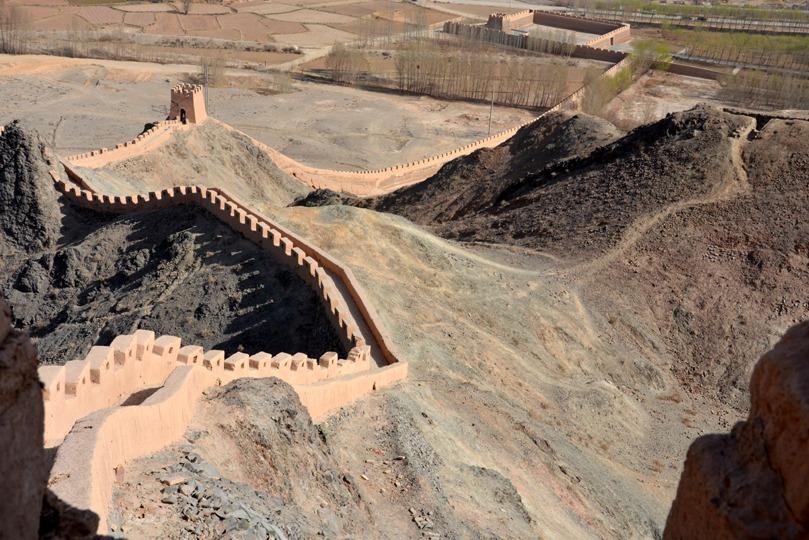
The emperor has sections of the Great Wall from the Qin restored and reconnected, extending it along what became the Silk Road. A new section of the Great Wall, 400 km long, is even built in Inner Mongolia, in the Gobi Desert.
Each fortification is constructed at the time using materials available locally. The reign of Wudi proves to be a great period of development for the Great Wall.
Subsequently, the state of constructions or restorations depends on the extent of the Xiongnu threat or internal situations in China. When the empire is divided, for example, the use of large walls is neglected.
After a long period during which several dynasties do not really use this strategy, the establishment of walls is revived by the Ming, in order to control the Mongol and Manchu tribes from the north.
The materials used are then mainly composed of bricks and stone, and as the Mongols become threatening, the dynasty invests considerable effort in the development and restoration of its defensive structures.
Subsequently, the monument takes its current form under the reign of the Manchu sovereigns Qing. During the Cultural Revolution (1966-1976), the Great Wall becomes a target because it is considered a vestige of imperial power. This results in acts of vandalism that damage certain sections of the wall.
Architecture: the greatest human construction
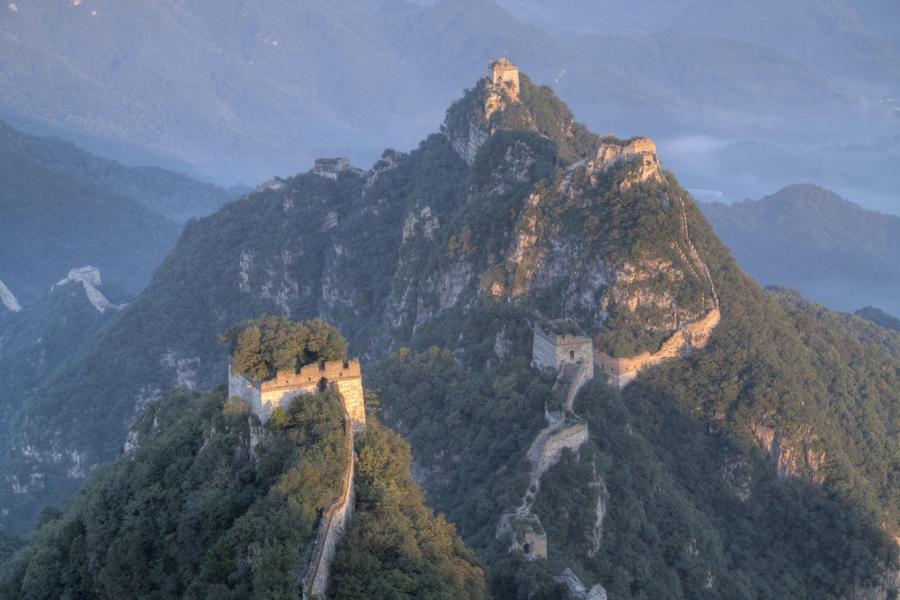
The world's largest human construction, the Great Wall today extends over nearly 6,700 kilometers. However, many sections are today buried underground, others threatened by erosion (with sandstorms) or simply by human activity.
On average, the width of the wall ranges between 5 and 7 meters wide, 5 and 17 meters high. It is organized by levels and has bastions and watchtowers arranged at regular intervals and in strategic locations.
At the time when its military use was essential, the various surveillance posts communicated through smoke signals.
An essential tourist destination in China and Beijing
Among numerous Chinese tourist sites, the Great Wall stands out without any doubt as the most famous, ahead of the Summer Palace, the Forbidden City, or Tiananmen. While there are different sections to visit, the most famous remains the one located on the outskirts of Beijing, called Badaling.
The four most frequented passes are Juyongguan (the northern pass, with Badaling being the northern section), Xifengkou, Jiayuguan (western extremity), and Shanhaiguan (eastern extremity).
Geography of the Great Wall
The Great Wall extends from Shanhaiguan in the city of Qinhuangdao (Hebei province) in the east to Jiayuguan in Gansu province in the west. To the north, it extends from Beijing to the Gobi Desert.
Many provinces in northern China contain at least an ancient section of the Great Wall within their territory: Liaoning, Hebei, Shanxi, Inner Mongolia, Gansu, as well as the cities of Tianjin and Ningxia.
Frequently asked questions
The Great Wall of China extends approximately 6,700 kilometers, making it the largest architectural structure ever built by humans in terms of length, surface area, and mass. The Chinese call it 'The Wall of Ten Thousand Li', with the number ten thousand symbolizing infinity in Chinese culture.
The most visited section from Beijing is Badaling, accessible in about an hour and a half from the city center. For a less touristy experience, Mutianyu offers stunning natural scenery with fewer crowds. The more adventurous will prefer Jinshanling or Simatai, which are less restored and more wild.
The Great Wall was not built all at once. The earliest fortifications date back to the 5th century BC. Major construction began under Emperor Qin Shi Huangdi in 221 BC. The Ming then gave it its most well-known form in the 15th and 16th centuries, and the final touches were made under the Qing dynasty.
No, this is a myth! Contrary to what certain legends suggest, the Great Wall of China is not visible to the naked eye from space. Its width (between 5 and 7 meters) is far too narrow to be seen from such a great distance, even though its length is exceptional.
The Great Wall was primarily built for military reasons: to defend the borders of various kingdoms and Chinese states, and later to protect the unified empire against incursions by northern nomadic peoples, particularly the Xiongnu. It also served as a communication route and for surveillance through its watchtowers and smoke signals.
The best times to visit the Great Wall are spring (April-May) and fall (September-October), when temperatures are mild and vegetation is beautiful. Summer can be very hot and crowded, while winter offers magnificent snowy landscapes but more challenging hiking conditions.