Cang Shan Mountain
Cangshan dominates Dali with its nineteen snow-capped peaks and eighteen torrents. The panoramic Yudai Lu trail, rhododendrons in spring and views of Erhai Lake: an unmissable mountain range in Yunnan.
Cangshan — literally "grey-green mountain" — is a massif of nineteen peaks that dominates the city of Dali in Yunnan. Rising above 4,000 meters, it forms the natural backdrop to the Dali plain and Erhai Lake. Designated a national nature reserve, it shelters coniferous forests, torrents and persistent snowfields. For the Bai people, it is also a cultural and spiritual landmark rooted in their identity.
Quick Facts
- Access: Cable car from the Old Town of Dali district (Gufeng Lu) or hiking trails from several entry points.
- Recommended duration: Half-day for the cable car ride and Yudai Lu trail; full day for high-altitude hiking.
- Clothing: Hiking shoes essential; warm clothing even in summer above 3,000 m.
- Altitude: The panoramic Yudai Lu trail sits around 2,600 m; peaks exceed 4,000 m.
- Accessibility: Limited to cable car facilities; trails are steep.
What to See
The massif comprises nineteen peaks separated by eighteen torrents that cascade toward Erhai. The Yudai Lu trail ("jade belt") traces the eastern flank at mid-height and offers clear views across the plain and lake. Higher up, snowfields persist much of the year along the ridges. Vegetation changes dramatically with altitude: oak and rhododendron forests below, alpine moorland at the summit.
History and Context
Cangshan is inseparable from the Nanzhao Kingdom (7th-9th century) and later the Dali Kingdom (937-1253), two states that shaped Bai culture. The eighteen torrents bear poetic names passed down through centuries. The mountain figures in local cosmology as one of two pillars of Bai territory, alongside Erhai Lake. Buddhist and Taoist temples have dotted its slopes since medieval times.
Highlights of a Visit
The Yudai Lu Trail
This horizontal path of several kilometres connects different points on the massif at mid-slope. It passes through forests, runs alongside waterfalls and offers panoramas of Dali's Old Town and Erhai Lake. It is the most accessible route to appreciate the mountain without technical climbing.
Waterfalls and Torrents
Each of the eighteen torrents bears a distinct name. Some form waterfalls visible from lower trails, particularly after the rainy season (summer). Meltwater feeds the rice paddies of the plain below.
Snow-Capped Peaks
Malong Peak and its neighbours retain snow much of the year. From Dali's old town, the snow-dusted ridgeline contrasts with the blue of Erhai Lake — an emblematic image of the region.
Alpine Flora
In spring, rhododendrons bloom on the intermediate slopes. The nature reserve protects several plant and bird species endemic to Yunnan.
Photography Tips
Morning light from the old town is ideal for photographing snow-capped peaks with the lake in the foreground. Along the Yudai Lu trail, forest gaps offer framing of Erhai in late afternoon. At altitude, weather changes quickly: plan for clear skies early in the day.
Location and Access
Cangshan borders immediately west of Dali's Old Town. A cable car departs from the Gufeng Lu district. Local minibuses connect the old town to various park entrances. From Kunming, Dali is accessible by high-speed train (approximately 2 hours). Accessibility is limited to the immediate cable car area.
Nearby Attractions
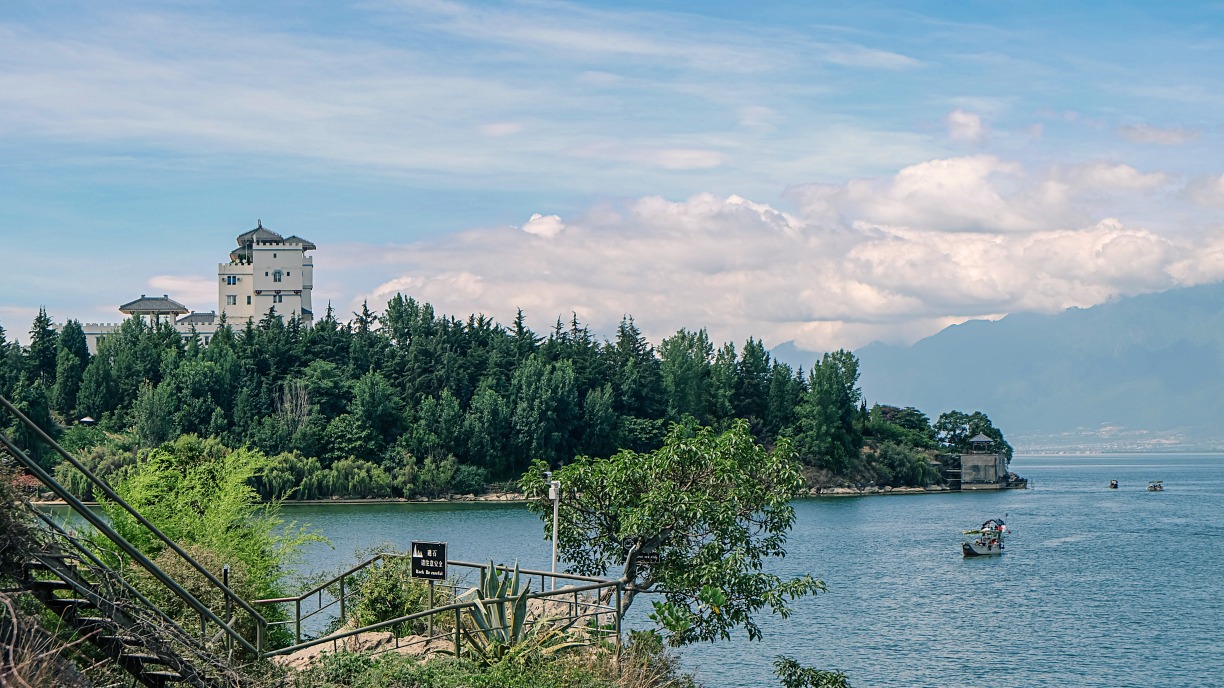
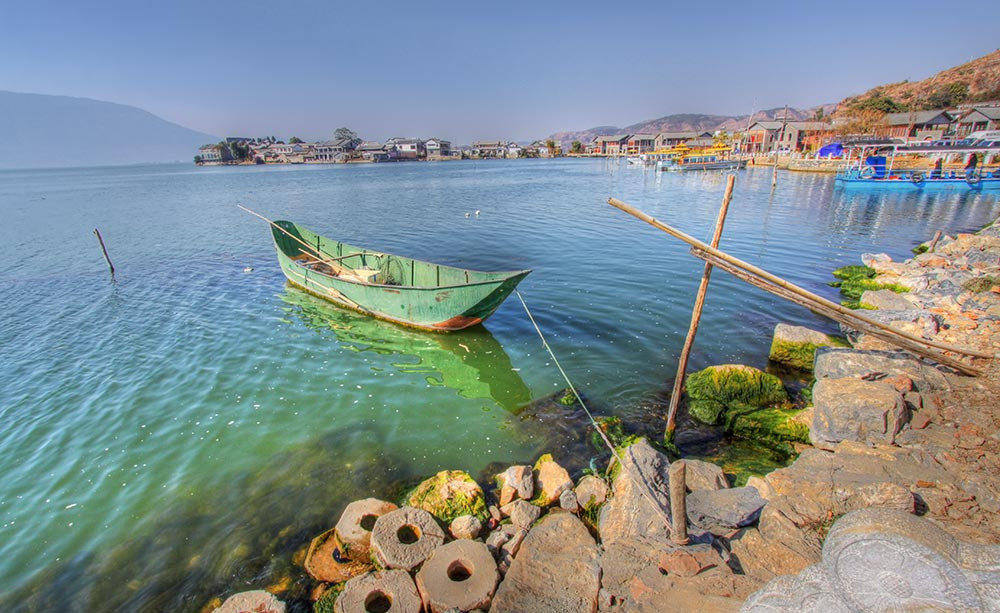
- Erhai Lake — the great lake east of Dali, visible from all heights on Cangshan; boat rides or cycling around its shores.
- Dali's Old Town — historic Bai city with cobbled lanes, markets and traditional architecture at the foot of the massif.
- Three Pagodas of Chongsheng — 9th-century Buddhist complex, one of Yunnan's most photographed monuments, with Cangshan as backdrop.
- Xizhou Village — well-preserved Bai town on Erhai's shore, renowned for its courtyard architecture and local gastronomy.
Frequently asked questions
Spring (March-May) is ideal for rhododendron blooms and clear skies. Autumn (September-November) offers colourful vegetation and less rain. Summer coincides with the rainy season: waterfalls are spectacular but trails may be slippery.
No. The cable car and Yudai Lu trail are accessible to most visitors in reasonable fitness. Climbs to peaks above 4,000 m, however, require serious preparation and proper equipment.
Yes, easily. The Three Pagodas of Chongsheng stand at the northern foot of the massif, close to the old town. Half a day on the Yudai Lu trail in the morning and a pagoda visit in the afternoon make for a full day.
Hiking shoes with gripping soles are essential once you leave the cable car area. Even in summer, pack a warm jacket: temperature drops rapidly above 3,000 metres.
Photography is free on trails and throughout the nature reserve. Some temples on the slopes may have restrictions inside buildings; respect signage on site.
Local agencies in Dali offer guided hikes on Cangshan, useful for identifying flora and understanding Bai culture. Enquire at old town accommodation or a local tour operator.
Interested in this visit?
We can include it in your personalised itinerary.