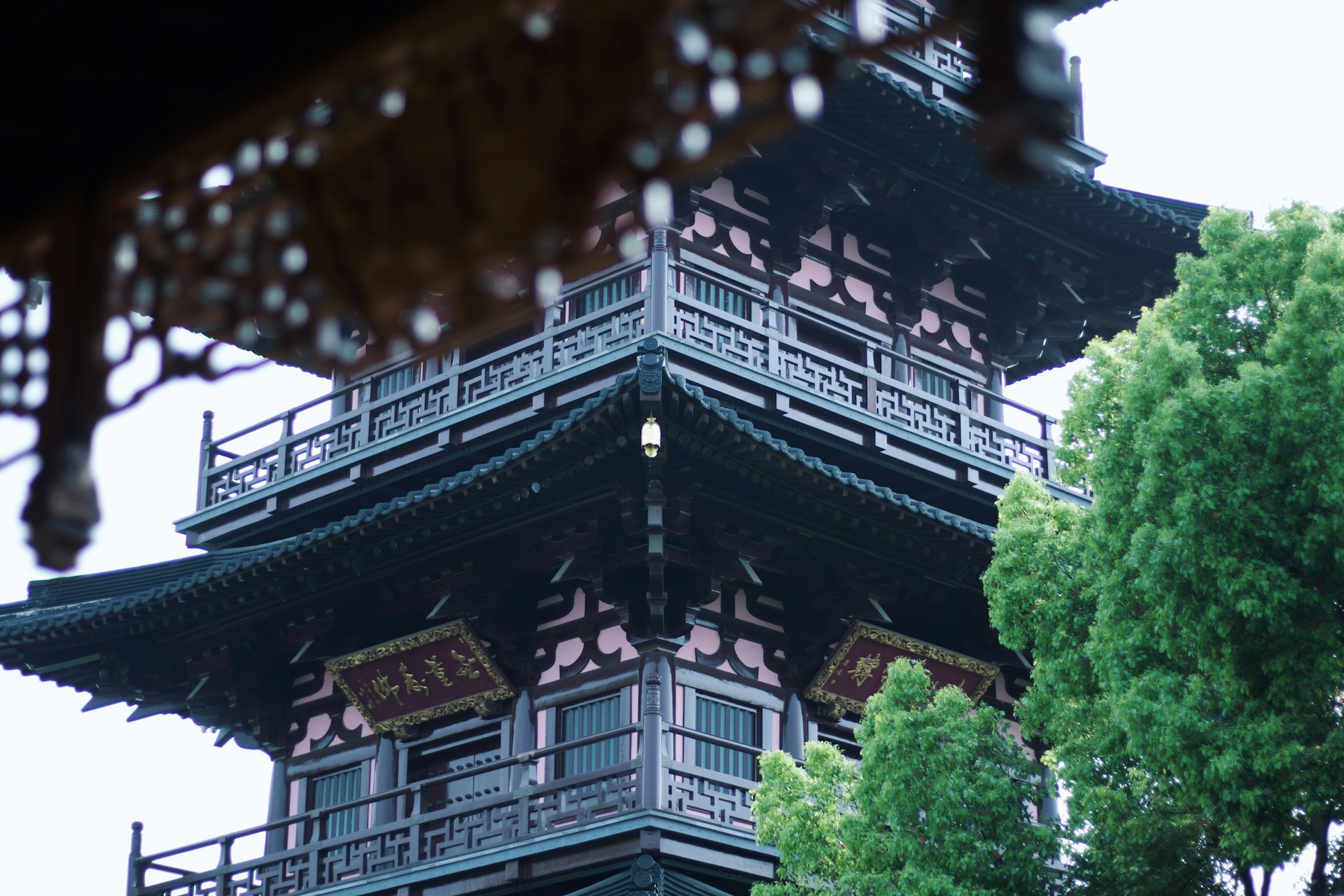
Mudu
Mudu is an ancient water town located 20 km from Suzhou, crisscrossed by canals and lined with private Ming and Qing gardens. Less touristy than Zhouzhuang, it offers an authentic immersion into Jiangnan architecture.
Mudu is an ancient water town nestled some twenty kilometers southwest of Suzhou. Threaded by several canals and lined with overhanging timber-frame houses, it retains the atmosphere of Ming and Qing era Jiangnan river towns. Less frequented than Zhouzhuang or Tongli, it draws visitors for its private gardens, cobbled lanes, and flat-bottomed boats that glide beneath stone bridges.
Quick Practical Information
- Getting There: Bus from Suzhou's main coach station or Suzhou Metro Line 4 (Mudu station), then walk or local bus.
- Recommended Duration: A half-day is enough for the canals and one or two gardens; a full day to explore everything.
- What to Wear: No special requirements; comfortable shoes recommended for cobblestone streets.
What to See
Mudu's heart revolves around the Xiangxi River and its tributaries. Arched stone bridges span the canals at regular intervals. Whitewashed façades and grey tile roofs create a rare visual coherence. Craft shops—silk, embroidery, painted fans—occupy the ground floors of historic houses.
History and Context
Mudu developed under the Ming dynasty as a prosperous merchant town, benefiting from its position on waterways linking Suzhou to Lake Taihu. It hosted scholars and officials who commissioned private gardens in the Suzhou tradition. The Qing writer Shen Fu stayed here, and the town appears in his Six Records of a Floating Life.
Highlights of a Visit
Yan Yu Tang Garden
This private Qing-era garden exemplifies Suzhou miniature landscape art: Taihu rocks, pools, pavilions, and covered galleries unfold across a compact space. The balance between void and form is characteristic of the classical style.
Hong Yin Shan Fang Garden
Another historic Mudu garden, it features a collection of standing stones and dense vegetation that filters light. The atmosphere feels more intimate than Suzhou's larger gardens.
Boat Tour on the Canals
Traditional flat-bottomed boats offer circuits through the inner waterways. It is from the water that one best perceives the architecture of riverside houses and the succession of bridges.
Mudu's Shantang Street
This commercial thoroughfare runs alongside a canal and concentrates local snack shops, silk merchants, and embroidery workshops. It is busier in the morning.
Photography Tips
Morning light, before the visitor crowds arrive, is ideal for photographing reflections in the canals. Arched bridges offer symmetrical compositions. In autumn, russet foliage contrasts with white walls. No known photography restrictions in public spaces; check rules at private garden entrances.
Location and Access
Mudu lies approximately 20 km southwest of central Suzhou. Suzhou Metro Line 4 serves Mudu station, a convenient starting point. By bus, several routes connect Suzhou's coach station to Mudu. The site is generally flat, though old cobblestones and bridge steps make wheelchair access difficult. English-speaking guided tours are not systematically available on-site; local Suzhou agencies can arrange them.
Nearby Attractions
- Classical Gardens of Suzhou — the UNESCO-listed gardens, about twenty kilometers away, form the natural complement to a Mudu visit.
- Lake Taihu — China's third-largest freshwater lake borders the region; its islands and Taihu rocks have supplied Suzhou gardens for centuries.
- Lingyan Si Temple — Buddhist monastery perched on Lingyan Hill, visible from Mudu, accessible on foot or by local bus.
- Tongli — another classic Jiangsu water village, worth comparing with Mudu for its different atmosphere and thematic museums.
Frequently asked questions
Spring (March–April) and autumn (October–November) offer pleasant temperatures and photogenic vegetation. Summer is hot and humid; winter remains mild but misty, creating a particular atmosphere over the canals.
Yes, boat rides generally appeal to children. The lanes are safe and lightly trafficked by cars. Watch for bridge steps when using strollers.
It's doable but tight. Better to spend the morning in Mudu, then return to Suzhou in the afternoon for one or two gardens. Avoid weekends when both sites are crowded.
Several restaurants and street stalls offer local specialties: river crab noodles in season, fermented tofu, rice cakes. The main commercial street has most of the dining options.
Several historic gardens are accessible for a separate entrance fee. Inquire on-site or with your local agency, as opening conditions may vary by season.
Interested in this visit?
We can include it in your personalised itinerary.