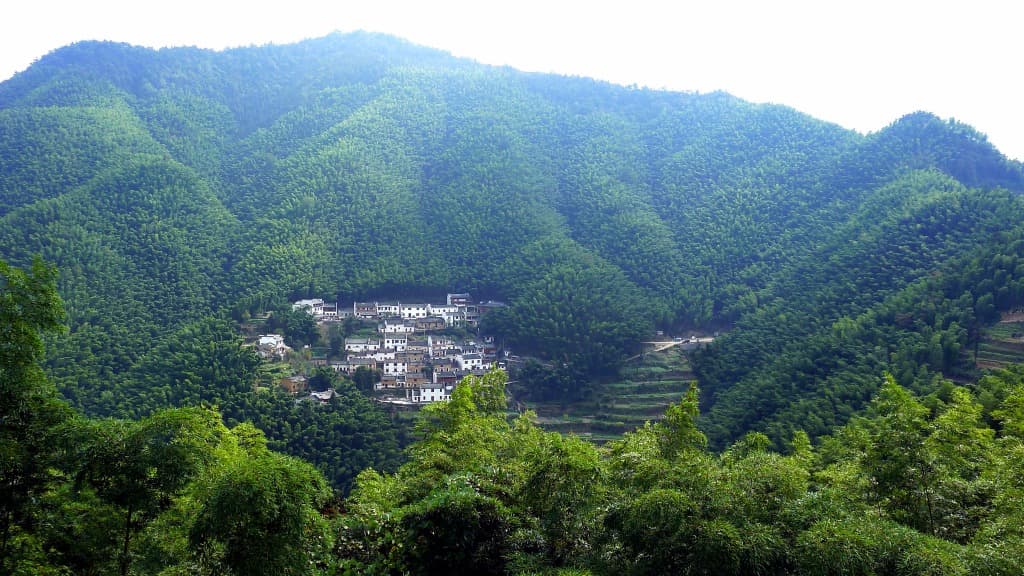
Mukeng Bamboo Forest (木坑竹海)
Mukeng Bamboo Forest (木坑竹海)
The Mukeng Bamboo Forest borders the village of Hongcun in Anhui. Its giant bamboo stalks, made famous by Ang Lee's film, can be explored in an hour along a wooden boardwalk that winds past a mountain stream.
The Mukeng Bamboo Forest, known in Chinese as 木坑竹海, spreads across the forested hills of Yixian County in the historic Huizhou region of Anhui. This valley densely planted with giant bamboo borders Hongcun village, a UNESCO World Heritage site. The location owes much of its fame to Ang Lee's film Crouching Tiger, Hidden Dragon (2000), several scenes of which were shot here.
Practical information at a glance
- Admission: paid entry (separate ticket from Hongcun; confirm current rates on-site or with your local travel provider)
- Access: on foot from Hongcun village, following the marked trail that climbs toward the forest
- Recommended duration: 1 to 1.5 hours for the main circuit
- What to wear: hiking boots recommended — trails can be slippery in wet conditions
What to see
Moso bamboo stalks (Phyllostachys edulis) rise over fifty feet high, forming a verdant canopy that filters light into golden shafts. A wooden boardwalk winds through the forest, skirting a stream and offering views of the surrounding hills. Panels along the route mark scenes filmed here for the movie.
History and context
Bamboo cultivation has been woven into Huizhou's rural economy for centuries—used as building material, for crafting utensils, and in traditional papermaking. Mukeng Forest was once a productive zone before becoming a tourist destination. Ang Lee's 2000 film shoot transformed this quiet valley into an internationally recognized attraction.
Highlights of your visit
The bamboo canopy
Walking beneath the tightly packed stalks, the sound of wind rustling through leaves and the creaking of culms create a distinctive atmosphere. Light shifts with the hour and season, making each passage unique.
The wooden boardwalk and stream
The maintained path runs alongside an incised watercourse. Several small bridges allow you to cross over and observe the vegetation from different angles without leaving the marked trail.
Viewpoints over Hongcun
As you climb toward the upper edge of the bamboo forest, grey tile roofs of Hongcun village come into view along with the Huizhou hills—a framing beloved by photographers.
Photography tips
Morning light (before 9 a.m.) strikes the stalks at an oblique angle and creates visible rays—this is the most sought-after time. On overcast days, greens appear more saturated and contrasts softer. Avoid midday sun in summer: overhead light flattens form. A wide-angle lens accentuates the vertical drama of the bamboo.
Location and access
The bamboo forest lies within minutes' walk of Hongcun village, the natural starting point for your visit. Hongcun is reachable from Tunxi (Huangshan) by bus or private vehicle. The site is on hillside terrain; wheelchair access to the heart of the forest is limited due to slopes and steps along the trail.
Nearby
- Hongcun village — UNESCO-listed Ming-Qing settlement, renowned for its water channels and whitewashed residences.
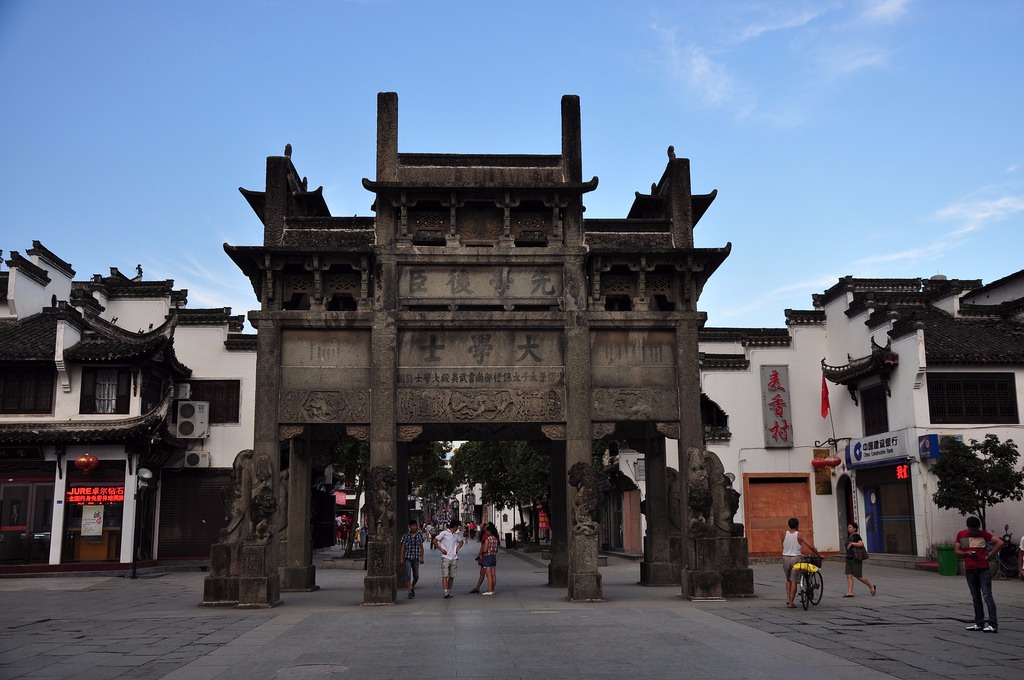
- Xidi village — another Huizhou heritage site, celebrated for its carved gateways and stone-paved lanes.
- Huangshan mountain — granite massif with gnarled pines and seas of mist, approximately one hour's drive away.
Photos
Nearby
Interested in this visit?
We can include it in your personalised itinerary.