Temple of the Pond and Wild Mulberries
Temple of the Pond and Wild Mulberries
Founded in 307 in the mountains west of Beijing, Tanzhe Temple is the region's oldest Buddhist temple, celebrated for its thousand-year-old ginkgos.
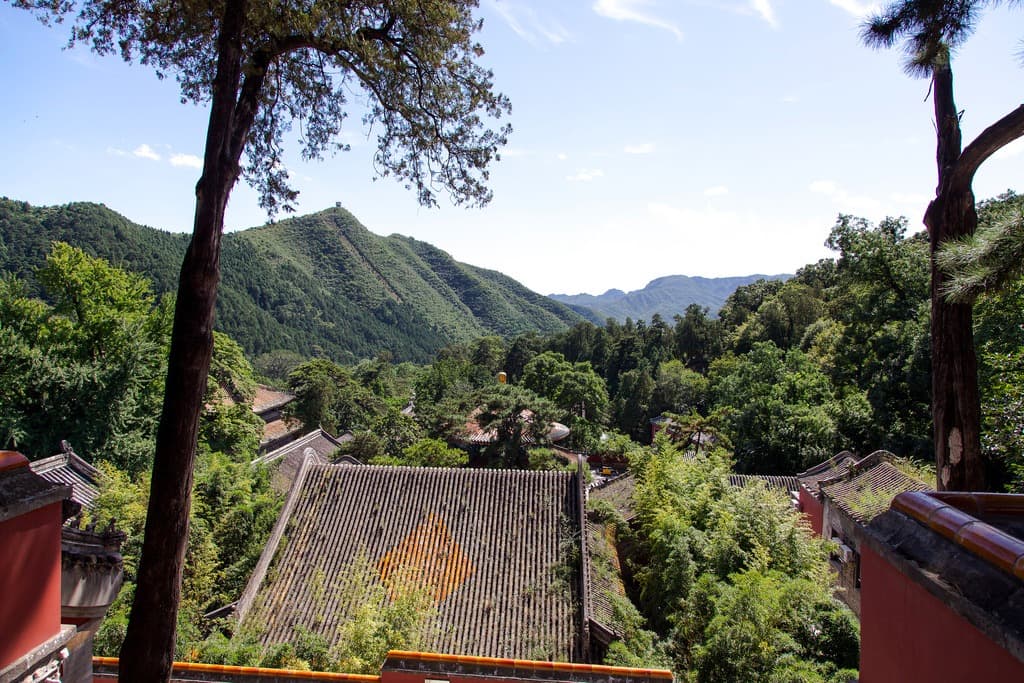
The Tanzhe Temple, also known as the Temple of the Pond and Wild Mulberries, stands in Mentougou District, west of Beijing, in a mountainous area. Founded in 307 during the Western Jin dynasty, it is the first Buddhist temple established after Buddhism's introduction to the region. Neighboring the Jietai Temple, it forms a classic pairing for excursions from the capital.
Why Visit Tanzhe Temple
Three main reasons warrant the detour. First, its age: a Beijing saying reminds us that "Tanzhe Temple existed before Beijing," which captures its historical depth well. Next, its scale: spanning 68,000 m² with buildings spanning multiple dynasties, from Jin and Yuan through Ming and Qing. Finally, its natural setting: the two thousand-year-old trees in the second courtyard and autumn foliage make it distinctly different from Beijing's urban temples.
A History Spanning Seventeen Centuries
Built in 307 under the Western Jin (264-420), the temple emerged during the first wave of Buddhism's spread across northern Chine. It truly flourished under the Tang dynasty, when Buddhism experienced its golden age in Chine.
Its location, nestled against a mountainside, made it long difficult to access. To facilitate pilgrims' passage, several roads were constructed, financed by the royal family and a pilgrimage association. Most buildings visible today date from the Ming (1368-1644) and Qing (1644-1911) dynasties, with some older structures inherited from Jin and Yuan periods.
What to See On-Site
The complex is organized around a central axis that structures your visit.
The Vairochana Pavilion
Located at the end of the central axis, the Vairochana Pavilion is the temple's highest building. Its roofs feature brick sculptures depicting phoenixes and dragons, recurring motifs in Chinese imperial iconography.
The Mahavira Hall
Measuring 24 m long and 33 m wide, the Mahavira Hall houses the statue of Mahavira alongside those of his disciples. It is the main ceremonial space, where Buddhist services are regularly held.
The Bronze Cauldron and Fish Statue
In front of the Maitreya Hall, an imposing bronze cauldron measuring 1.85 m in diameter and 1.1 m in depth commands attention: tradition holds it once served as a cooking vessel for monks during the temple's heyday. West of the Vairochana Pavilion, a stone fish statue roughly 1 m long and weighing 150 kg is associated with a local legend involving a dragon-king.
The Thousand-Year-Old Trees
In the second courtyard, two trees over a thousand years old reach approximately 30 meters in height and 4 meters in diameter. The ginkgo, nicknamed the "emperor's tree," and its neighbor Peiwangshu, the "emperor's companion tree," turn golden in autumn, creating striking contrast with the surrounding vegetation.
When to Visit
Autumn (October-November) offers the most photogenic window: the ginkgo leaves turn golden-yellow, and the site is renowned throughout the region for this spectacle. Spring provides pleasant temperatures and abundant blooms. Summer is possible but can be hot and humid, with frequent mountain storms. Winter, quieter and more austere, is noticeably colder than central Beijing due to the altitude.
Practical Information
- Duration: allow 2 to 3 hours to explore the entire site at a leisurely pace.
- Admission: paid entry at a moderate rate, with possible surcharges for certain demonstrations.
- Hours: daytime access with earlier closing in winter. Verify current hours before departure.
- What to wear: bring sturdy shoes (uneven terrain and stairs) and an extra layer in shoulder seasons.
How to Get There
The temple is located approximately 45 km west of central Beijing. The most common public transit route involves reaching Pingguoyuan station via metro (Line 1's western terminus), then catching a local bus toward Tanzhe Si. Seasonal tourist buses also serve the site from downtown on weekends and holidays. Since routes are subject to change, it's best to verify connections on the day itself. A taxi or ride-sharing vehicle remains the simplest option, especially when combining a visit with the nearby Jietai Temple.
Nearby
The Jietai Temple, located just a few kilometers away, is nearly always visited the same day: it is celebrated for its Buddhist ordination terrace and century-old pines. To extend exploration of Chinese Buddhist sites beyond Beijing, one can also mention the Great Wild Goose Pagoda in Xi'an or the Bezeklik Thousand Buddha Caves in Xinjiang. As for Beijing heritage, the Great Wall at Juyongguan logically rounds out a trip oriented toward history and mountains.
Frequently Asked Questions
Frequently asked questions
Including Tanzhe Temple in Your Trip
Tanzhe Temple fits naturally into Beijing's cultural itineraries, complementing the Forbidden City, Temple of Heaven, and Great Wall. To build a custom journey blending Buddhist heritage, imperial sites, and mountain landscapes, explore our Chine travel ideas.
Interested in this visit?
We can include it in your personalised itinerary.