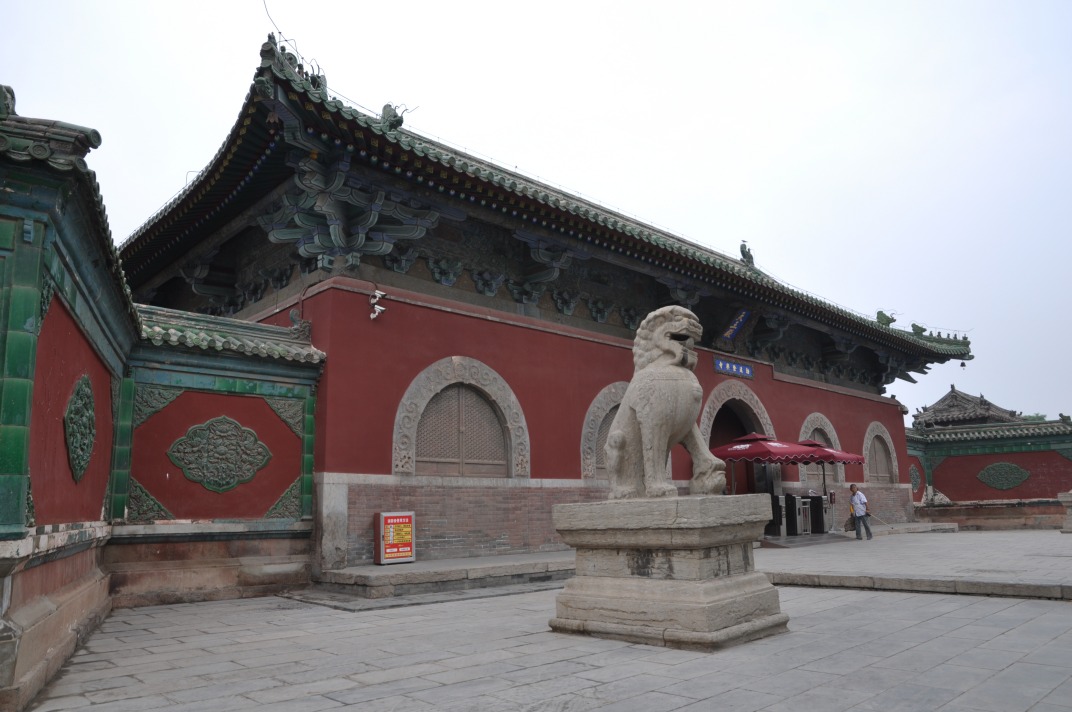
Tiantong Temple
Tiantong Temple
Located 5 km from Ningbo, Tiantong Temple is a major Chan monastery, birthplace of Japanese Sōtō Buddhism, spanning 58,000 m² at the foot of Taibai Mountain.
Tiantong Temple ranks among the great monasteries of the Chan (Zen) school of Buddhism in China. Established at the foot of Taibai Mountain, within a forest park, it sits approximately 5 km from Ningbo, in Zhejiang Province. The site combines a long monastic history, a defining role in transmitting Zen Buddhism to Japan, and an expansive architectural complex of over 700 rooms.
Why visit Tiantong Temple
- One of the historical birthplaces of Japanese Sōtō Buddhism, linked to the Chinese Caodong school.
- A monastic complex of 58,000 m² spread across multiple courtyards, halls, and pavilions.
- Imperial calligraphic works from the Qing dynasty and bas-reliefs attributed to Zhu Chan.
- A rare forested setting around Ningbo, with ancient pines and dense vegetation.
- A less-visited site than major temples in Hangzhou or Shanghai, conducive to a peaceful visit.
History of the monastery
The temple's foundation is traditionally attributed to the monk Yixing, who is said to have established a first hermitage on the site around the year 300. The complex developed over successive dynasties to become one of the primary centers of Chan Buddhism in the Zhejiang region.
Tiantong is most renowned as one of the birthplaces of Japanese Sōtō Buddhism, a branch of the Chinese Caodong school. According to tradition, a Japanese monk studied here under Master Soto Rujing for two and a half years before bringing this teaching back to Japan. This lineage explains why the temple remains, to this day, an important pilgrimage site for Japanese practitioners.
In the 15th century, during the Ming dynasty, the Japanese painter Xuezhou (Sesshū) stayed at Tiantong Temple, where he was received as the first foreign guest of honor. The landscape and architecture of the monastery left a lasting mark on his work. More recently, in 1980, the temple's abbot Yongping installed the stele commemorating Daoyuan's attainment of Buddhism, a tribute to a great Japanese Buddhist master and testament to the continuity of Sino-Japanese ties centered on the site.
What to see on site
The monastery spans 58,000 m² and contains over 700 rooms distributed among several buildings. The architecture, marked by the Ming dynasty style, is recognizable by its upturned roof eaves, sculpted verandas, and Chinese inscriptions carved above the main entrances.
The Celestial Kings Hall
Four celestial Buddha statues, 7.4 meters in height, frame the hall. They comprise one of the temple's most striking images.
The Arhats Hall
Here you can observe 18 stone arhats arranged along both sides of the hall. The adjoining chamber houses Buddhist texts used during sermons.
Imperial and artistic heritage
- Steles with calligraphy attributed to emperors Shunzhi, Kangxi, and Yongzheng of the Qing dynasty.
- Bas-reliefs signed by Zhu Chan.
- Paintings and inscriptions from successive dynasties.
The natural setting
The monastery is nestled within dense forest, with bamboo and pines, some dating back to the Ming dynasty. A long covered corridor connects the main halls, allowing circulation between buildings even in poor weather.
Practical information
- Duration of visit: allow 1.5 to 2.5 hours to explore all halls and gardens.
- Admission: modest entrance fee, within the standard range for Chinese temples.
- Hours: open during daylight hours, generally from morning through late afternoon. Verify current hours before visiting.
- Dress code: appropriate attire recommended, as the site remains an active place of worship.
- Best season: spring and autumn offer the most pleasant conditions, with moderate temperatures and favorable vegetation.
How to get there
Tiantong Temple is located approximately 5 km from Ningbo. From Ningbo East Bus Station, buses 362 and 365 serve the site. You can also reach the temple by taxi or ride-sharing service, a convenient option if you combine the visit with other sites in the surrounding area.
What to see in the area
If you extend your stay in the region, several sites complement a visit to Tiantong Temple well:
- Ningbo Maritime Museum, to understand the port's historical role in trade with Japan and Korea.
- West Lake in Hangzhou, accessible by high-speed train from Ningbo.
- Lingyin Temple, another major center of Chan Buddhism in Hangzhou.
- Yuyuan Garden in Shanghai, for a stop in a classical Ming garden.
Planning your trip
Tiantong Temple fits easily into an itinerary combining Ningbo, Hangzhou, and Shanghai, around the Yangtze River Delta. To build a custom trip including this type of Buddhist site, explore our trips to China.

Interested in this visit?
We can include it in your personalised itinerary.