Lingyin Temple
Lingyin Temple
Founded in 328 at the foot of Feilai Feng, Hangzhou's Lingyin Temple is one of the great monasteries of the Chan school, renowned for its colossal Sakyamuni statue and its rock sculptures.
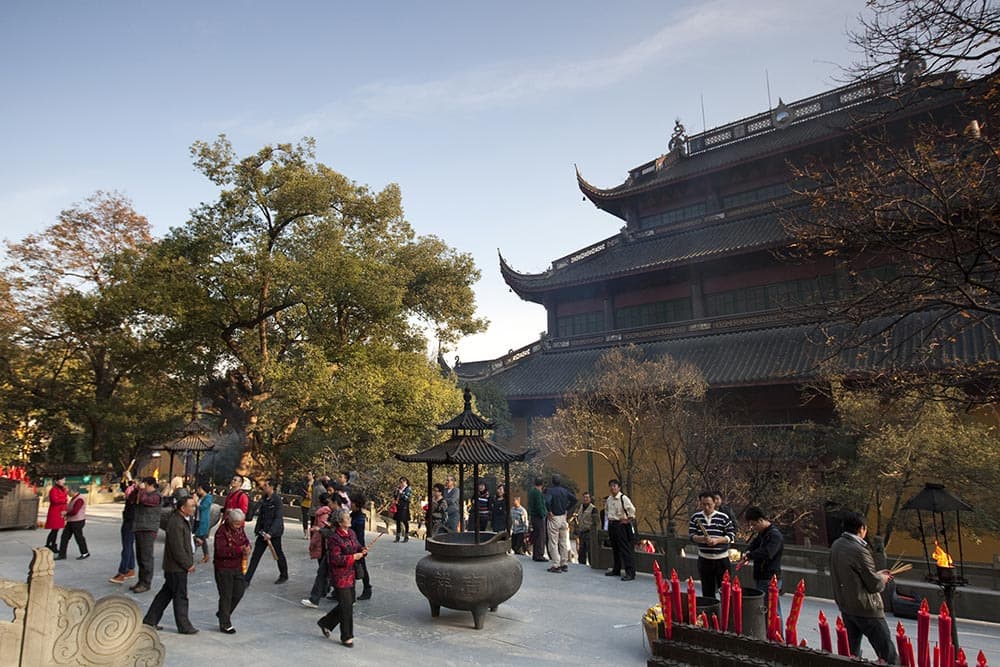
Lingyin Temple, one of the great monasteries of the Chan school in Chine, stands northwest of Hangzhou, in Zhejiang province, nestled between the peaks of Feilai Feng and Beigao, at the heart of the Wulin mountains. Also known as the "temple of the soul's retreat," it draws together Buddhist pilgrims and visitors drawn by its architecture, monumental statues, and the forest of sculptures that surrounds it.
Why visit Lingyin Temple
Founded in 328, the site encompasses over 1,600 years of religious history, a Sakyamuni statue exceeding 20 metres carved from camphor wood, hundreds of buddhas sculpted directly into the rock face of Feilai Feng, and a forested setting often shrouded in mist. It ranks among the most significant Buddhist sites in the Jiangnan region and complements a visit to the West Lake.
History of the temple
Founding by Huili (328)
Tradition attributes the temple's foundation to the Indian monk Huili. While travelling through the Wulin mountains, he recognised in the peak of Feilai Feng the silhouette of Vulture Peak in India, and resolved to establish a Buddhist monastery there. The temple was founded in 328, under the Eastern Jin dynasty.
Golden age under the Kingdom of Wuyue
The monastery reached its zenith under the Kingdom of Wuyue (907–978), during the period of the Five Dynasties. Over 3,000 monks then resided there, distributed across 1,300 dormitories, 18 pavilions, and 72 halls. The temple became one of the largest Buddhist complexes in Chine.
Destructions, reconstructions, and Zhou Enlai's intervention
Rebuilt more than 16 times over sixteen centuries, the temple bears the marks of successive fires, looting, and restoration. The structures visible today date essentially from the Qing dynasty. During the Cultural Revolution, Premier Zhou Enlai personally intervened to prevent the Red Guards from demolishing the complex; only two halls escaped degradation, with the remainder restored in subsequent decades.
What to see on site
The DaXiong Hall
Reconstructed in 1952, the main DaXiong hall, or "hall of courage and boldness," spans over 1,200 m². It houses a statue of Sakyamuni seated on a lotus flower, carved from 24 blocks of camphor wood and rising to over 20 metres in height. It is among the largest wooden representations of the historical Buddha in Chine.
The Yaoshedian Hall
Built in 1991, the Yaoshedian hall is dedicated to the Buddha of Medicine. It is adorned with sculptures representing the twelve signs of the Chinese zodiac. The left wing of the temple also preserves 500 statuettes of arhats, enlightened disciples of the Buddha.
Feilai Feng and its rock carvings
Facing the temple, the Feilai Feng peak ("the peak that flew here") concentrates 360 Buddha sculptures dating from the 10th–14th centuries, many of which are carved directly into the limestone cliff and caves. Before the monastery entrance stands the stone pagoda of Ligong (Ligong Ta), a funerary monument dedicated to the founding monk.
The forest and ancillary pavilions
Around the temple, monastic residences and several prayer pavilions are scattered across the wooded slope. Pathways allow circulation among the sculptures, smaller secondary temples, and Feilai Feng grottoes. The frequent mist enveloping the Wulin heights enhances the atmosphere of the site.
Practical information
- Visit duration: allow 2 to 3 hours for the temple alone, or half a day if you add Feilai Feng and its sculptures.
- Admission: moderate entry fee for the temple; combined tickets including Feilai Feng park are slightly higher.
- Hours: open during daylight hours, from morning through late afternoon. It is best to arrive early to avoid tour group crowds.
- What to bring: modest dress (shoulders and knees covered) in prayer halls; comfortable walking shoes for trails.
When to visit
The site is accessible year-round. Spring (March–May) and autumn (October–November) offer the most pleasant conditions, with mild temperatures and expressive vegetation. Summer is hot and humid, though the forest surrounding the temple remains relatively cool. Winter, quieter, sees mist settle over the Wulin peaks and drape the monastery in hushed atmosphere. If possible, avoid Buddhist holidays and Chinese national holiday weeks ("golden week" in early May and early October), when visitor numbers peak.
How to get there
Lingyin Temple is located approximately 10 km from central Hangzhou and 3 km west of West Lake. Several local bus lines serve Lingyin station; a taxi or ride-hailing service from the city centre remains the most direct option. From West Lake, the site is also reachable by bicycle or via tourist buses serving Hangzhou's main attractions.
Nearby attractions
- Feilai Feng peak and Ligong Pagoda: immediately adjacent to the temple, they naturally extend the visit.
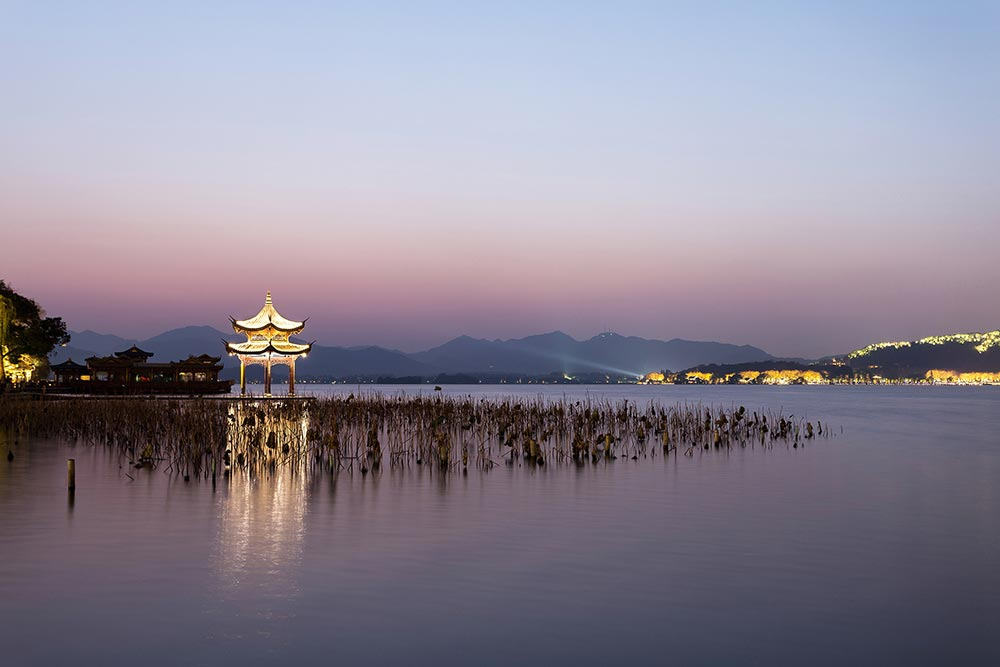
- West Lake: UNESCO-listed landscapes, about ten minutes by car.
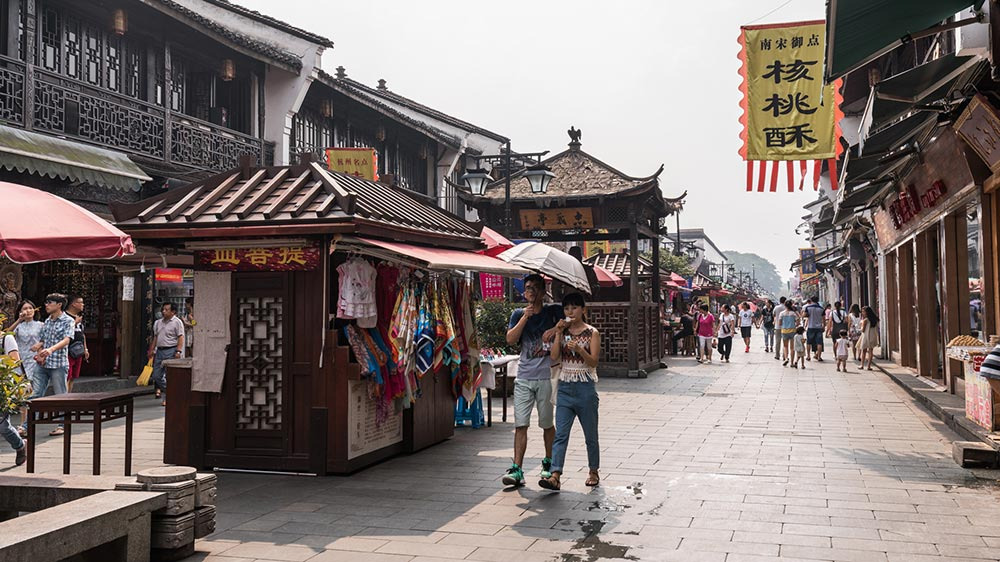
- Hangzhou: former imperial capital, Longjing tea plantations, historic Hefang quarter.
- Yuyuan Garden: in Shanghai, approximately 1 hour by high-speed rail, to extend your itinerary through the Yangtze River Delta.
Frequently asked questions
Frequently asked questions
Planning your trip
Lingyin Temple fits naturally into an itinerary combining Hangzhou, Shanghai, and the Yangtze River Delta. To build a custom journey featuring this site, consult our Chine travel itineraries.
Nearby
Interested in this visit?
We can include it in your personalised itinerary.