Tashkent
Tashkent
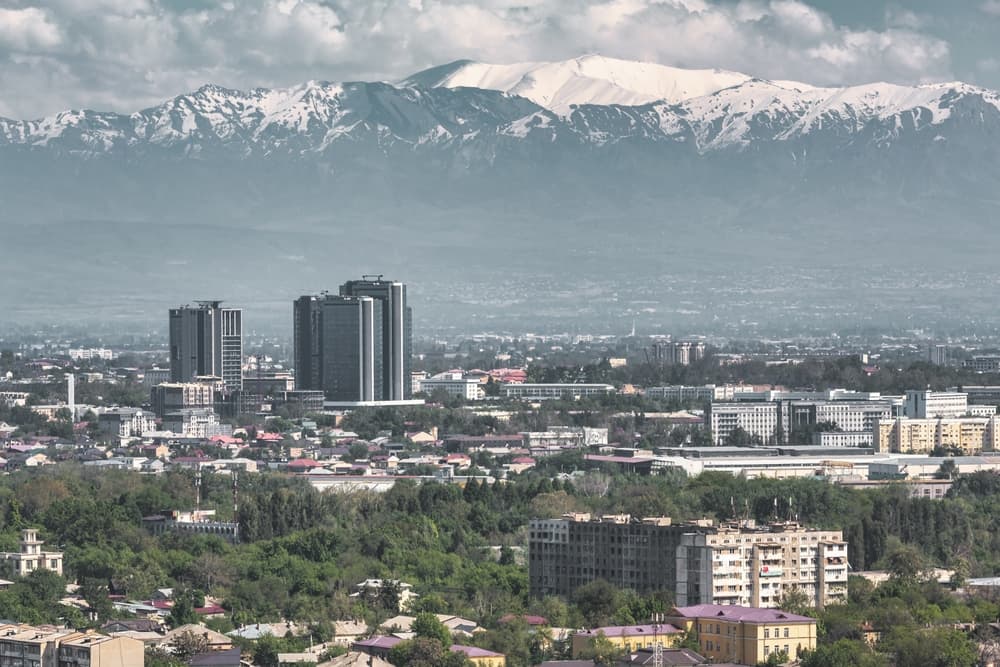
Tashkent, capital of Uzbekistan, blends medieval Islamic heritage, Soviet architecture and vibrant bazaars. The gateway to Samarkand and Bukhara, it deserves two to three days of exploration.
Tashkent is the capital of Uzbekistan, not China — a Central Asian city of over two million inhabitants and a historic crossroads of the Silk Road. Rebuilt after the 1966 earthquake, it blends monumental Soviet architecture, medieval mosques and bustling bazaars. It's the natural gateway to Samarkand and Bukhara, but deserves a stop in its own right.
Quick practical facts
Access: Islam Karimov International Airport, served by numerous European and Asian carriers.
City transport: Soviet-era metro (decorated stations, very affordable), taxis and local apps.
Currency: Uzbek sum (UZS); ATMs are common in the city centre.
Dress code: covered clothing recommended when visiting mosques and madrasas.
Recommended duration: two to three days to cover historic districts and main museums.
Language: Uzbek and Russian; English is rarely spoken outside hotels.
What to see
The old Khast Imam district concentrates the city's oldest Islamic monuments: the Khazrati Imam Mosque, Barak-Khan Madrasa and the Quranic Manuscript Museum, which houses a 7th-century Quran attributed to Caliph Osman. The Chorsu Bazaar, beneath its blue domes, overflows with spices, dried fruits and ceramics. Amir Timur Park and its museum trace the history of Tamerlane and the Timurid empire.
History and context
Founded over two thousand years ago, Tashkent was a major trading hub between China, Persia and Europe. Conquered by the Arabs in the 8th century, then by the Mongols, it fell under Russian rule in 1865. The 1966 earthquake destroyed much of the old city; the USSR quickly rebuilt it, leaving a pervasive Soviet architectural legacy. Independence in 1991 revived restoration efforts on Islamic sites.
Highlights of your visit
The Khast Imam Complex
The spiritual heart of the city, this complex brings together mosque, madrasa and library. The Osman Quran, one of the world's oldest Quranic manuscripts, is preserved and displayed to visitors here.
Chorsu Bazaar
Beneath the great turquoise domes, stalls offer spices, non bread (lepyoshka), dried meats and local crafts. Arrive early in the morning to watch vendors set up and avoid crowds.
Tashkent Metro
Opened in 1977, it is one of Central Asia's most elaborately decorated metros. Each station showcases a distinct theme — mosaics, crystal chandeliers, bas-reliefs — making it an attraction in its own right.
Museum of History of Uzbekistan
Archaeological collections spanning prehistory to the Soviet era, with pieces from Samarkand, Bukhara and Khiva. Essential for contextualizing your exploration of the country.
Amir Timur Park and Museum
An equestrian statue of Tamerlane dominates the city centre. The adjacent museum displays maps, armour and artefacts from the 14th-century Timurid empire.
Etiquette and visit guidelines
In mosques and madrasas: shoulders and knees covered, shoes removed at the entrance.
Avoid photographing worshippers in prayer without permission.
In bazaars, negotiation is common but should remain respectful.
Alcohol is available but public consumption is frowned upon near places of worship.
Photography tips
Golden morning light is ideal for the blue domes of Chorsu Bazaar and the facades of Khast Imam. Metro stations are best photographed on weekdays, outside rush hours. Check restrictions before bringing out your camera in museums — some galleries prohibit photography.
Location and access
Tashkent is located in north-eastern Uzbekistan, in the Chirchiq valley. The international airport is about fifteen kilometres from the centre. The Afrosiyob high-speed train connects Tashkent to Samarkand in approximately two hours, and to Bukhara in just over three hours — the most comfortable way to explore the country.
Around Tashkent
Samarkand — Registan, Shah-i-Zinda, Gur-e Amir: the ultimate Timurid city, two hours by train.
Bukhara — Nearly intact medieval city, mosques and caravanserais, three hours by train.
Khiva — Itchan Kala, a UNESCO-listed city-museum, accessible by plane or train from Tashkent.
Fergana Valley — Silk craftsmanship, Rishtan ceramics, agricultural landscapes, about three hours by road.
Frequently asked questions
Frequently asked questions
Spring (April-May) and autumn (September-October) offer pleasant temperatures. Summer often exceeds 40 °C; winter can be cold and misty.
French, Belgian and Swiss citizens benefit from visa exemption for tourist stays. Check the terms and conditions with the embassy before departure.
Two days are sufficient for the main sites. Three days allow you to explore museums, the metro and Soviet residential neighbourhoods at a leisurely pace.
Yes, this is the classic itinerary. The Afrosiyob high-speed train connects the three cities comfortably. Allow a minimum of one week for all three stops.
Restrictions have been relaxed in recent years and photography is generally tolerated. Avoid photographing staff or security equipment.
Shoulders and knees covered for both men and women. Women should cover their heads inside mosques; a light scarf is sufficient.
Want to discover this destination?
Our local advisors design your tailor-made trip.