Wuhan
Wuhan
Three districts, a mythical river, and 3,500 years of history: a practical guide to visiting Wuhan, capital of Hubei and cradle of modern Chine.
Name: Wuhan
Chinese name: 武汉
Province: Hubei
Status: Sub-provincial city
Population: 10,220,000 inhabitants
Area: 8,494.4 km²
Wuhan is a modern city, capital of Hubei province in central Chine. Divided into three parts by the Yangtze River, Wuhan encompasses the districts of Wuchang, Hankou, and Hanyang.
Often compared to Shanghai for the modernity of its buildings, this city ranks among Chine's largest. Its varied landscape, where contemporary structures blend seamlessly with historic architecture, makes Wuhan a surprisingly compelling destination.
History
Archaeological discoveries have traced Wuhan's history back over 3,500 years. The city was the birthplace of the brilliant Chu civilization, and merchants began settling here to take advantage of the extensive Yangtze River network and lakes, developing commerce that eventually spread throughout the country.
During the Qing dynasty, Hankou became one of the four most renowned cities in the nation. For centuries, it served as the commercial and transportation hub of central Chine. The Treaty of Nanking opened trade to foreigners, and British, French, Russian, German, and Japanese concessions established themselves in Hankou.
In October 1911, a revolt initiated by Sun Yat-sen erupted in Wuhan, triggering the 1911 Chinese Revolution and transforming the imperial rule of the Qing dynasty into the Republic of Chine.
Today
Wuhan is one of Chine's largest cities and sprawls across three segments separated by the Yangtze River. To the southeast, Wuchang faces Hankou and Hanyang. Each section, separated by the river, is connected by major bridges or accessible by ferries crossing the Yangtze throughout the day.
Its geographical position on the middle course of the Yangtze River between Beijing and Guangzhou has ensured significant industrial and port development. Nevertheless, Wuhan has preserved some remarkable vestiges and structures from its past, offering visitors fascinating discoveries.
Hankou is undoubtedly the most popular district for travelers. As the true heart of the city, the majority of hotels, restaurants, and shops cluster here among residential neighborhoods. Majestic buildings with Western architecture bear witness to foreign influences and form an ensemble strikingly reminiscent of Shanghai's Bund district. You'll encounter historic banks and a perfectly preserved Russian Orthodox church.
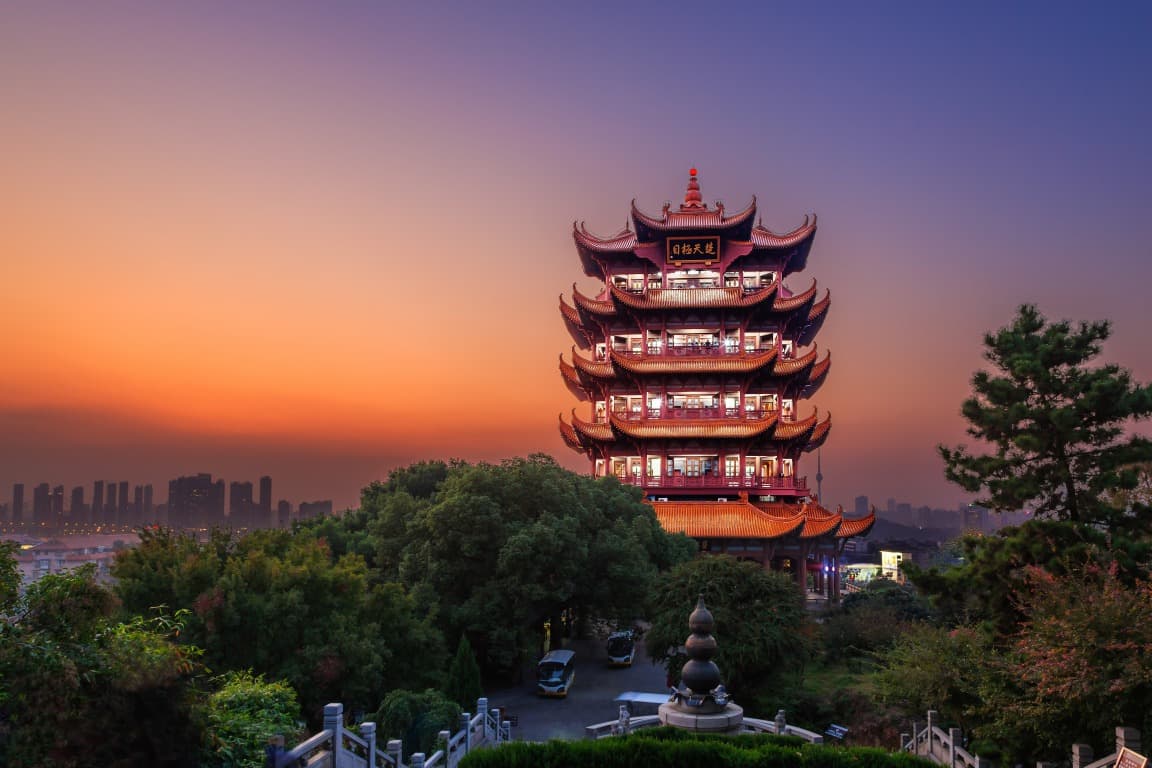
Wuchang hosts the main tourist attractions, including the Hubei Provincial Museum, and offers sweeping views over Hankou and its business district. The Yellow Crane Tower, a former military observation post, and the historic headquarters of the Wuchang Uprising reflect the city's military past. The district also houses Mao Zedong's Villa, a residence where the Great Helmsman took refuge and which today serves as a pilgrimage site for Mao enthusiasts.
Wuhan University, closely tied to France, is a prestigious institution offering programs in law, medicine, and French. You can wander among its buildings and encounter students delighted to practice their French.
Climate
Wuhan enjoys a humid subtropical climate with abundant rainfall and four distinct seasons.
Wuhan is known for its oppressive, humid summers. Due to stifling summer heat, Wuhan is commonly ranked as one of Chine's three furnaces, alongside Nanjing and Chongqing.
Spring and autumn are generally pleasant, while winters are cold with occasional snowfall.
The average annual temperature is 16.63°C, with monthly averages ranging from 3.7°C in January to 28.7°C in July. A heat record of 39.6°C was recorded in August 2003. Rainfall is concentrated primarily between May and July.
The best times to visit Wuhan are spring from March to May or autumn from September to October.
Air
Tianhe International Airport, located 30 km northwest of Wuhan, is served by major Chinese cities including Beijing, Shanghai, Guangzhou, and Xian.
International flights operate between Wuhan and Paris, Bangkok, Hong Kong, Seoul, Singapore, Los Angeles, and San Francisco.
Train
As capital of Hubei province, Wuhan serves as a major transportation hub for central Chine's rail network. The city has three railway stations: Wuhan Station, Wuchang Station, and Hankou Station. Trains connect cities throughout Hubei province as well as most major Chinese cities: Beijing, Shanghai, Xian, Guangzhou, Shenzhen, and beyond.
It is therefore relatively straightforward to reach Wuhan by train.
Boat
As a major river port on the Yangtze River, the city welcomes cruise passengers from Chongqing, Shanghai, and other riverside cities.
Long-distance Bus
Wuhan has several long-distance bus terminals. With road development, it is now easy to reach Wuhan by long-distance bus from major cities in neighboring provinces.
It is thus possible to reach Wuhan from Nanchang, Yichang, Nanjing, Jiujiang, Shanghai, Xiangfan, and Wanzhou.
The city's rapid expansion has congested its roads, and traffic is increasingly disrupted.
Buses operate throughout the city but often move slowly. A tourist bus allows you to focus on the main tourist attractions in the city.
Ferries are available for crossing the Yangtze, offering an excellent opportunity to appreciate the city's grandeur.
A light rail in Hankou enables easy movement and allows travelers to discover elevated views of the beautiful neighborhoods.
What to Do in Wuhan?
- Stroll through the beautiful neighborhoods of Hankou and stop at the Hankou Bund.
- Meet English-speaking students at Wuhan University.
- Immerse yourself in the city's past at the Yellow Crane Tower.
- Visit the Hubei Provincial Museum to learn more about the province.
- Take a short cruise on the Yangtze to experience the city's grandeur.
- Discover Mao Zedong's former retreat at Mao Zedong's Villa.
Attractions in Wuhan
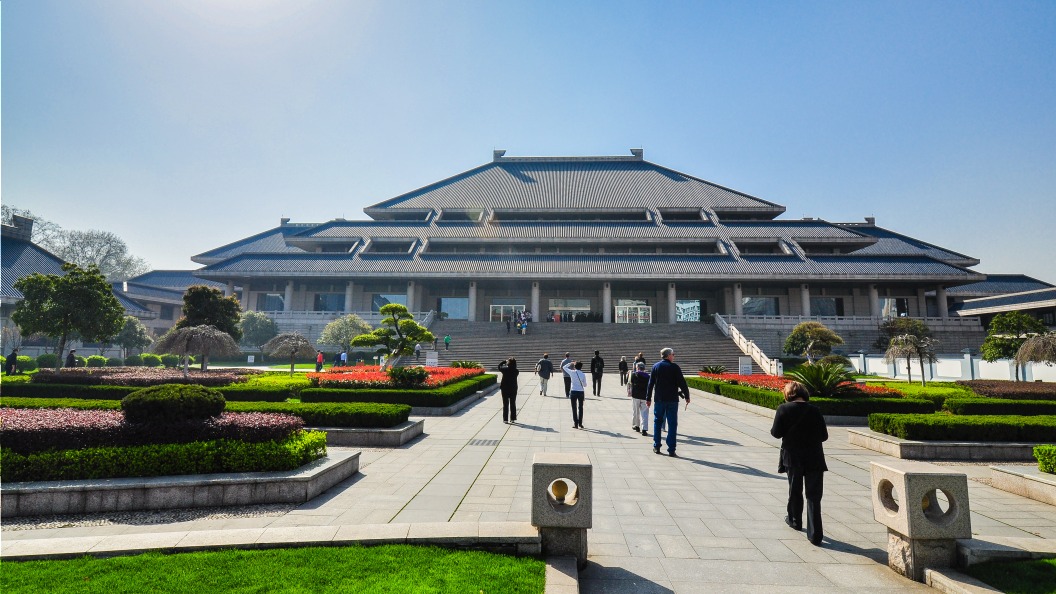
Musée provincial du Hubei
À Wuhan, le Musée provincial du Hubei conserve 150 000 reliques, dont le carillon de cloches du Marquis Yi de Zeng et les trésors de la culture Chu.
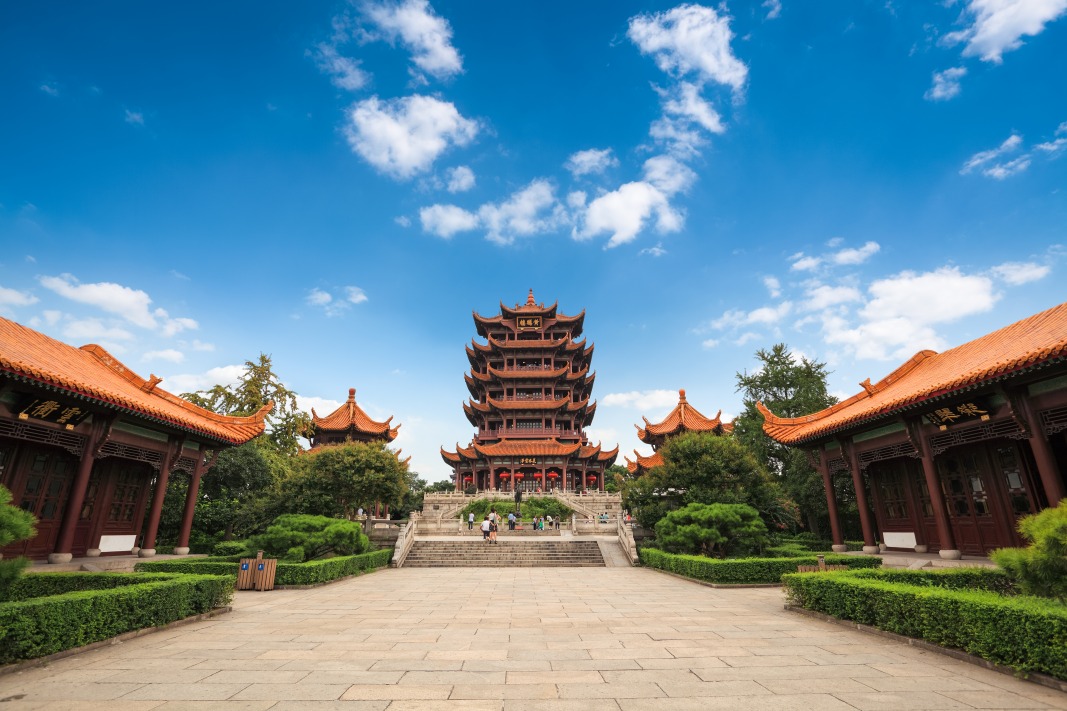
Tour de la Grue Jaune
Édifiée en 223 sur la colline du Serpent à Wuhan, la Tour de la Grue Jaune conjugue histoire militaire, héritage poétique Tang et panorama sur le Yangtsé.
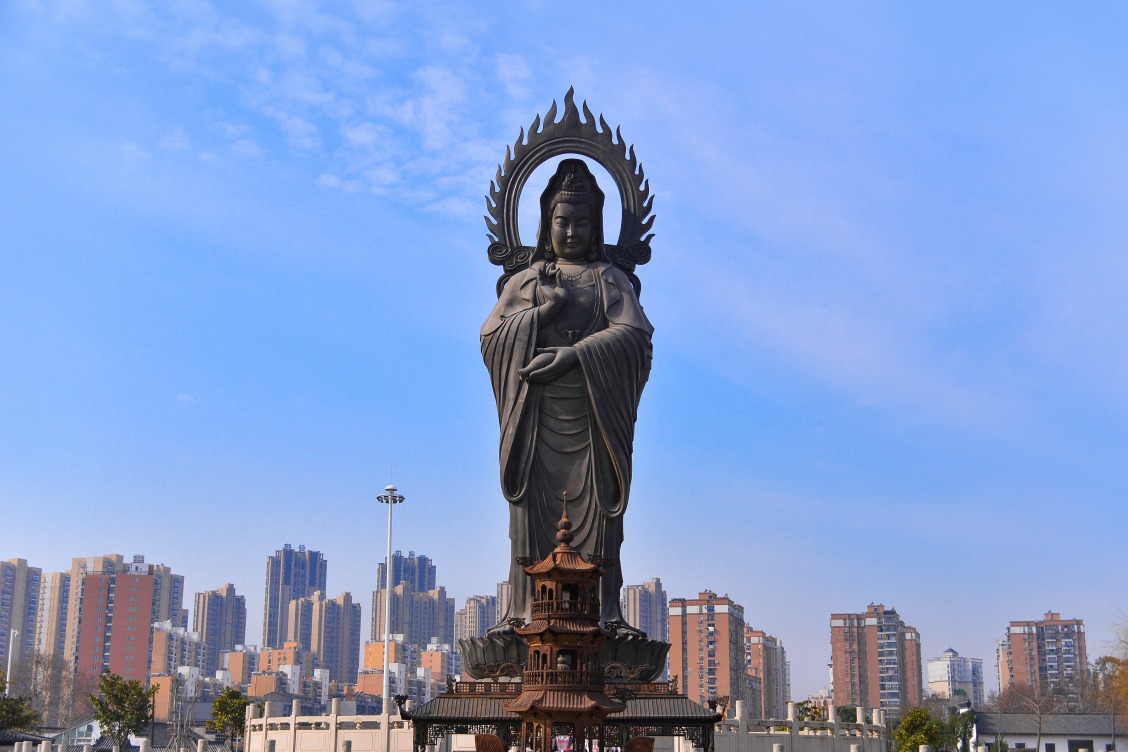
Temple Guiyuan
Fondé en 1658 dans le district de Hanyang à Wuhan, le temple Guiyuan réunit 500 statues d'Arhats, un pavillon des Sutras et le siège des bouddhistes locaux.
Want to discover this destination?
Our local advisors design your tailor-made trip.