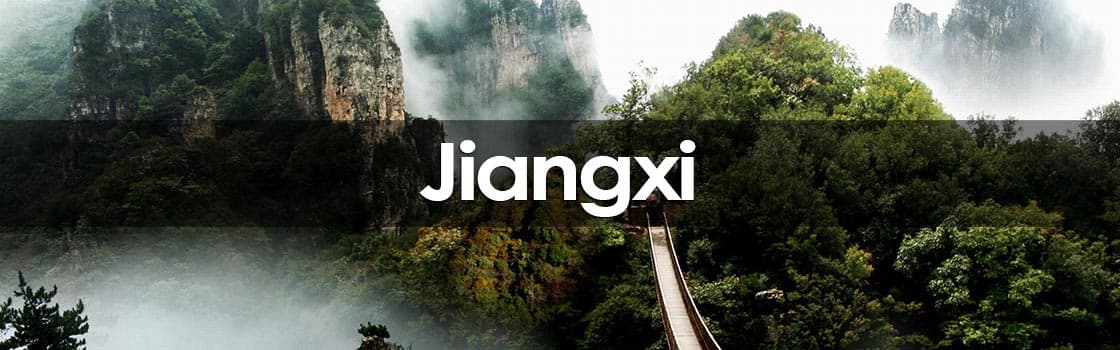
Jiangxi
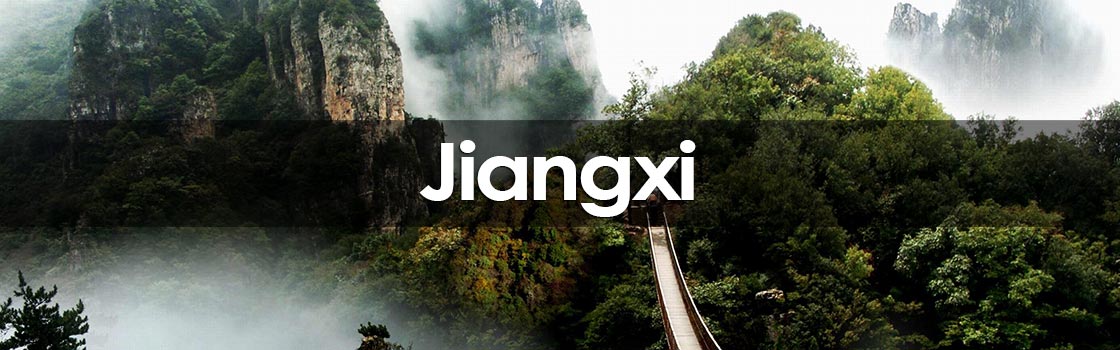
Name : Jiangxi
Chinese name : 江西 (jiāngxī)
Status : Province
Capital : Nanchang
Population : 45,221,500 inhabitants (2013)
Area : 166,900 km²
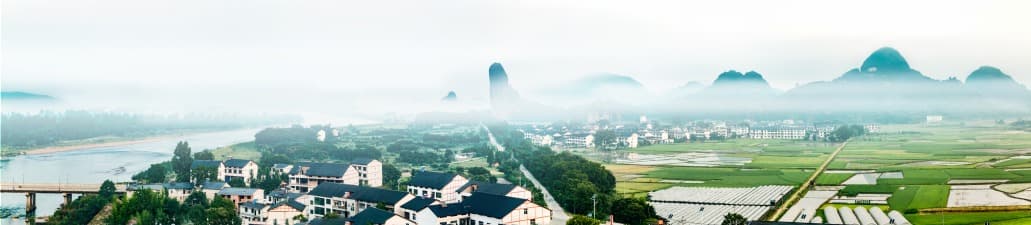
Jiangxi is a province in central-southern Chine, traversed by the Gan River and bordered to the north by the Yangtze River. The province offers remarkable diversity for travelers, blending recognized historical sites with the splendor of its natural landscapes. Jiangxi is home to two UNESCO World Heritage sites: Lushan National Park and Sanqingshan National Park. The wild beauty of its mist-shrouded mountains and freshwater lakes enchant all nature-seeking visitors.
Jiangxi also hosts the porcelain capital, Jingdezhen, perfect for discovering magnificent authentic vases.
History
From the 7th century onward, the construction of the Grand Canal (which linked major waterways) opened up the southeastern regions and established Jiangxi as an important crossroads on the merchant route from Guangdong. The development of industries, including silver mining and tea cultivation, gave rise to a wealthy merchant class.
In the 19th century, the importance of the Jiangxi trade route to Guangzhou declined with the opening of coastal ports to foreign ships, which led to the downturn of Chinese commerce.
Among the province's most famous native sons is English writer Mervyn Peake (1911-1968), renowned for his gothic fantasy novel, the Gormenghast trilogy.
Today
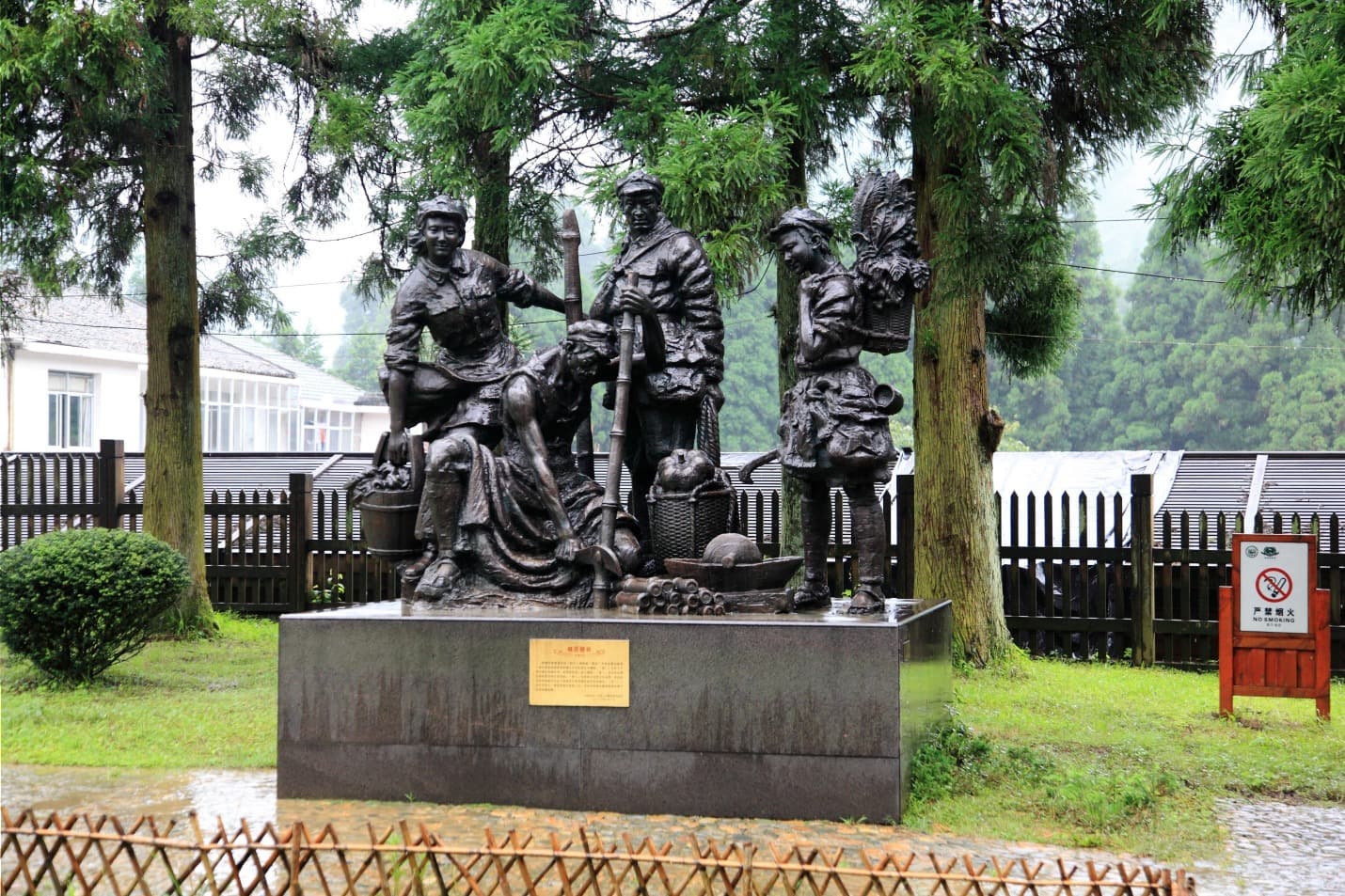
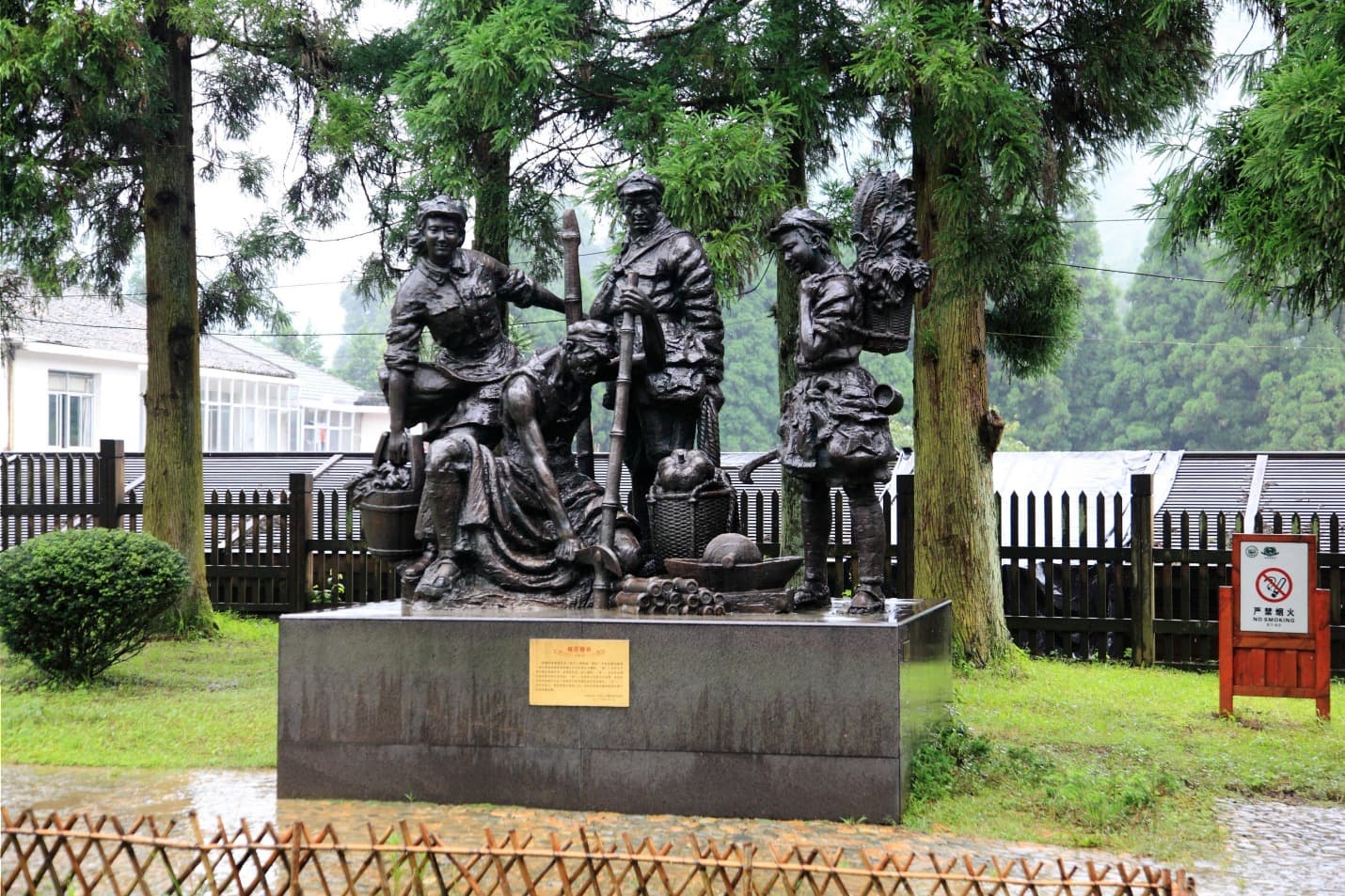
Made famous by the brilliant porcelains fired in the imperial kilns of Jingdezhen, Jiangxi has also entered contemporary legend as the starting point of the great revolutionary Long March.
This prominence sometimes overshadows the province's exceptional natural sites. Suspended along the middle and lower reaches of the Yangtze, Jiangxi occupies one of Chine's most significant river basins. The country's largest freshwater lake, Poyang Lake (Poyang Hu), supplies the majority of drinking water for the southeast and Hong Kong. More than 2,400 rivers and lakes of critical ecological importance dot the province, with 60% covered in forests. A landscape of mountains and hills completes this tableau of extraordinary rural beauty.
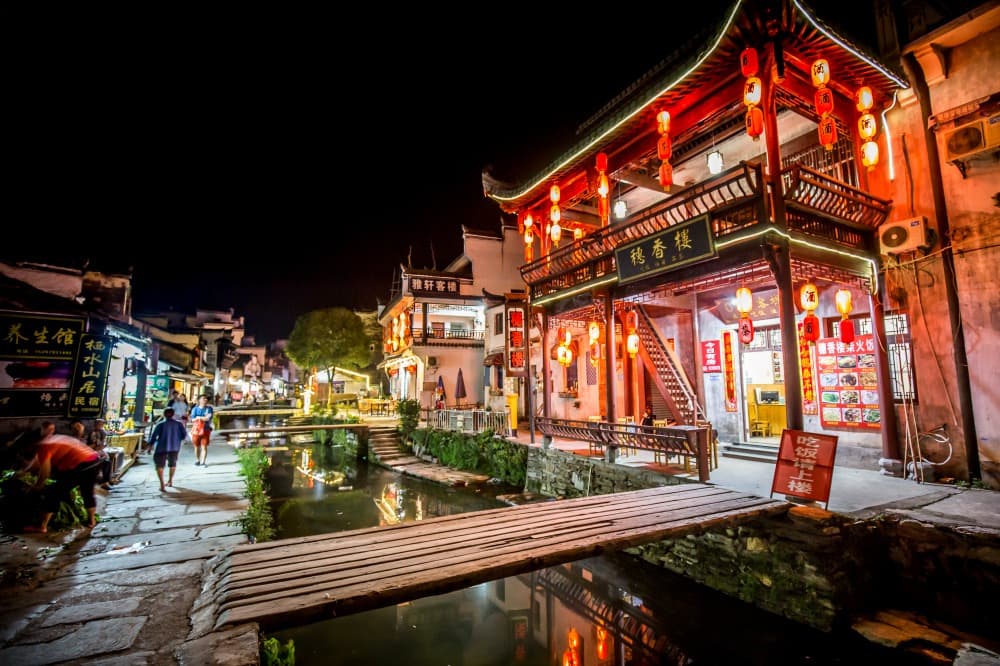
Lushan and Jinggangshan are celebrated for their spectacular mountain panoramas, which draw visitors in great numbers. But the apotheosis of several days of amazed exploration awaits in the province's northeast, around Wuyuan. The ancient villages of this region, a geographical and cultural extension of the magnificent province of Anhui, offer some of Chine's most stunning vistas. These landscapes will leave you with the magical memory of shimmering streams crossed by stone and wooden bridges.
Even Nanchang, the province's vibrant capital, is encircled by traditional old villages (such as Luotiancun), where you can breathe in fresh air deep within the rural landscapes of ancient Chine.
Climate
The north-central region of Jiangxi, situated in the Gan Jiang Plain, experiences a subtropical climate with four distinct seasons. In summer (mainly July), average temperatures can reach up to 30°C. Residents of the region therefore flock to the surrounding mountains to escape the heat.
In winter, average temperatures range from 3°C to 9°C from north to south.
Annual precipitation is generally more abundant in the northeast, reaching 120 to 190 cm. The rainy season is concentrated from April to June.
How to Reach Jiangxi?
The principal sites are increasingly connected by major routes. Nanchang and Jingdezhen both have airports.
Rail connections provide access to most major cities, from which buses depart for neighboring provinces such as Guangdong, Hunan, Hubei, Anhui, and Zhejiang.
Languages
Most native Jiangxi residents speak one of the countless local variants of Gan, a dialect whose name is also the province's abbreviation. Those familiar with Cantonese will note similarities with this Guangdong dialect, especially in southern Jiangxi.
What to Do in Jiangxi?
- Step back in time wandering the ancient villages around Wuyuan.
- Marvel at the granite peaks of Sanqingshan, one of eastern Chine's most underrated national parks.
- Discover the forgotten Taoist cultural center.
- Escape the urban greyness of Nanchang in its traditional alleyways.
- Witness the ethereal spectacle of mists enveloping Mount Lushan.